
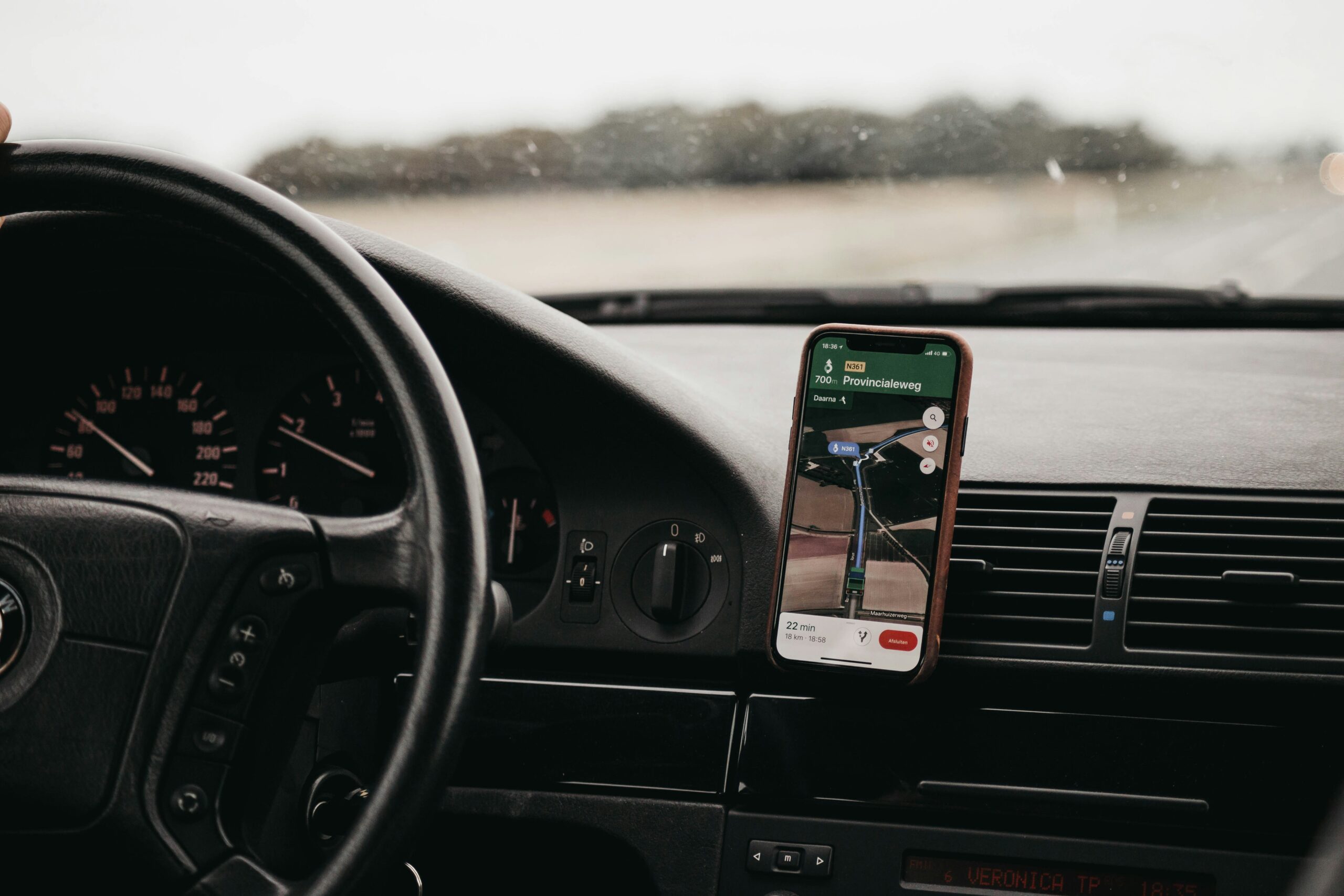
Source: Unsplash (CC0)
There was a time when a car and a phone were completely separate things. Your vehicle handled the driving. Your phone stayed in your pocket.
But those days are long gone.
Today, many drivers rely on their smartphones for navigation, communication, entertainment, vehicle access, and real-time travel updates. In some cases, a modern vehicle loses a surprising amount of functionality the moment a connected phone stops working properly.
That’s because today’s cars are smarter than ever, but much of that intelligence actually comes from the device sitting in your hand.
Your dashboard is only as smart as your phone
Modern dashboards look incredibly sophisticated. Large touchscreens, voice assistants, streaming services, and advanced navigation systems have become common features in new vehicles. However, many of these capabilities depend heavily on smartphone integration.
Apple CarPlay and Android Auto are perfect examples. Rather than doing all the work themselves, many car infotainment systems rely on a connected phone to provide maps, messages, music, podcasts, contacts, and voice commands. When the phone experiences glitches or connection problems, the effects are immediately noticeable. Navigation may freeze. Music libraries disappear. Hands-free calling stops working.
Smartphones are becoming car keys
The relationship between phones and vehicles is becoming even closer. Many manufacturers now allow drivers to unlock, lock, and even start their vehicles using digital keys stored directly on a smartphone. The convenience is impressive. There are no key fobs to carry, no spare keys to lose, and access can often be shared digitally with family members.
Of course, there is a downside. If a phone suffers a major software failure, battery issue, or hardware malfunction, access to the vehicle can become much more complicated. Suddenly, a phone problem becomes both a technology and transportation problem.
When the phone fails, the data matters most
Most people focus on replacing a broken phone. The bigger issue is often recovering what’s stored inside it. Imagine a device suffering water damage during a road trip or crashing completely before an important journey. Beyond the hardware itself, valuable information may suddenly become inaccessible. Travel photos, saved destinations, work documents, login credentials, and personalized vehicle settings can all disappear without warning.
That’s where phone data recovery services become valuable. Much like a roadside mechanic helps get a vehicle moving again, recovery specialists work to retrieve important files and information when conventional troubleshooting isn’t enough. In many situations, recovering the data is far more important than saving the device itself.
Real-time data powers smarter journeys
One of the biggest advantages smartphones bring to driving is access to live information. Navigation apps continuously monitor important data such as traffic conditions, accidents, road closures, and construction zones. Drivers get these updates that help them avoid delays and make better decisions while travelling. It’s hard to imagine driving without it these days.
And for electric vehicle owners, phones can also provide real-time charging station availability, route planning, and energy consumption data. Without that constant stream of information, many modern driving conveniences simply disappear. The vehicle still works, but the intelligence behind the journey becomes far less effective.