
In the far north of Europe, where national borders blur into vast wilderness and Indigenous traditions continue to shape daily life, a new generation of filmmakers is finding fresh ways to tell stories that have long remained on the margins of global cinema.
One of the most exciting examples is Borderline (På Grensa), a short film that has rapidly emerged as a standout on the international festival circuit. Following a major award win in Norway and a selection at one of the world’s leading Indigenous film festivals, the film is now set to reach an even wider audience as part of the Opening Night Program at the 2026 Palm Springs International ShortFest.
For many filmmakers, a screening at Palm Springs represents a significant milestone. For the sibling creative team behind Borderline, it signals something even larger: the growing international recognition of contemporary Sámi storytelling.
A Story Set Where Nations Meet
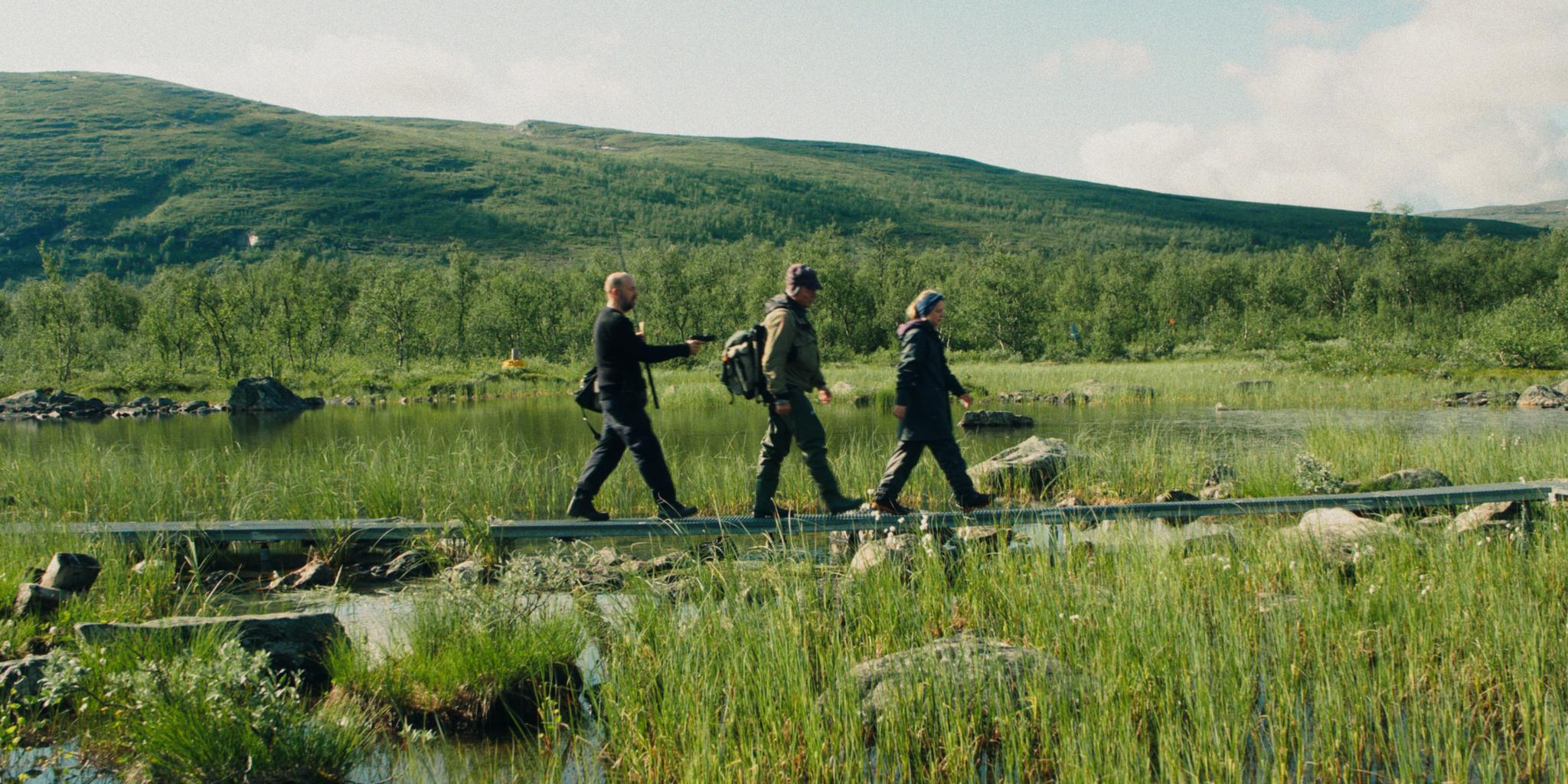
At its core, Borderline is a tense and atmospheric drama set in a remote northern region where Norway, Finland, and Sweden converge.
The story follows an uneasy encounter involving a Norwegian customs officer, a Finnish poacher, and a mysterious Swedish traveler. What begins as a seemingly routine interaction gradually transforms into something more complex as suspicion grows, misunderstandings deepen, and questions of identity and authority come to the surface.
What makes the premise particularly compelling is the setting itself. Borders are often treated as fixed lines on a map, but in many Arctic regions they are far more complicated. Communities, cultures, languages, and histories frequently extend beyond national boundaries. For Indigenous Sámi people, whose traditional homeland stretches across several modern countries, these divisions can carry a unique significance.
The film uses this tension not merely as a backdrop but as a narrative force. The landscape becomes a character in its own right, reflecting themes of belonging, power, and uncertainty.
The Rise of a New Sámi Creative Generation
What stood out to me most about Borderline is not simply its festival success, but the story behind its creation.
The film is the result of a close collaboration between three siblings: director and producer Johannes Vang, writer Wilhelmina Silba, and editor Jonathan Vang. In an industry often defined by large production teams and complex hierarchies, there is something refreshingly intimate about a family working together to bring a shared vision to life.
Family collaborations are not uncommon in cinema, but successful ones are rare. They require trust, creative chemistry, and a willingness to challenge one another. In Borderline, that collaboration appears to have produced a work that feels both personal and universally resonant.
The emergence of the Vang siblings also reflects a broader shift occurring within Indigenous filmmaking. Around the world, Indigenous creators are increasingly taking control of their own narratives, moving beyond stories filtered through outside perspectives.
Rather than presenting Indigenous culture as a historical curiosity or cultural artifact, contemporary filmmakers are exploring present-day realities, modern identities, and complex human experiences. The result is work that feels relevant not only to Indigenous audiences but to viewers everywhere.
Why Indigenous Cinema Is Having a Global Moment
The success of Borderline arrives during a particularly important period for Indigenous cinema.
Over the past decade, audiences and festivals have demonstrated a growing appetite for stories that challenge conventional viewpoints and expand the cultural conversation. Indigenous filmmakers have responded with work that is bold, innovative, and deeply rooted in lived experience.
Film festivals have played a crucial role in this transformation. Events dedicated to Indigenous storytelling, alongside major international festivals, have helped create pathways for filmmakers whose voices were historically underrepresented.
This year’s selection of Borderline at imagineNATIVE in Toronto is especially significant in that regard. The festival has become one of the most influential platforms for Indigenous film and media arts globally, serving as both a showcase and a meeting place for creators from diverse Indigenous communities.
Its inclusion there, alongside its Palm Springs selection and recent award recognition, suggests that Borderline is resonating across cultural and geographic boundaries.
The Power of Stories from the Arctic
The Arctic has long fascinated filmmakers, writers, and travelers. Yet many portrayals have focused on the region’s dramatic landscapes while overlooking the people who call it home.
A new generation of Nordic Indigenous artists is changing that narrative.
Films like Borderline offer audiences a more nuanced understanding of life in northern communities. They present the Arctic not as an isolated frontier but as a living, evolving place filled with contemporary challenges, relationships, and identities.
This perspective feels particularly relevant today. Discussions about Indigenous rights, environmental stewardship, cultural preservation, and representation continue to gain momentum worldwide. Stories emerging from Arctic communities contribute valuable voices to those conversations.
What I find particularly interesting is how these films manage to remain deeply local while speaking to universal themes. Questions about trust, identity, belonging, and power are not confined to northern Scandinavia. They resonate across continents and cultures.
That ability to connect the specific with the universal is often what separates memorable cinema from merely competent filmmaking.
Looking Ahead
For Johannes Vang, Wilhelmina Silba, and Jonathan Vang, the journey of Borderline appears to be only the beginning.
Their growing international profile reflects a broader movement within global cinema, one that increasingly recognizes the importance of Indigenous perspectives and regional storytelling. As audiences continue to seek authentic voices and fresh viewpoints, filmmakers from historically underrepresented communities are finding opportunities to reach wider audiences than ever before.
The success of Borderline is therefore more than a festival achievement. It is a reminder that some of the most compelling stories often emerge from places far from traditional cultural centers.
From the northern reaches of Sámi territory to festival screens in Toronto and California, the film’s journey demonstrates the power of storytelling to cross borders, challenge assumptions, and connect people through shared human experiences.
And if the reception so far is any indication, the world is ready to hear much more from this new generation of Sámi filmmakers.
For more information visit here.