
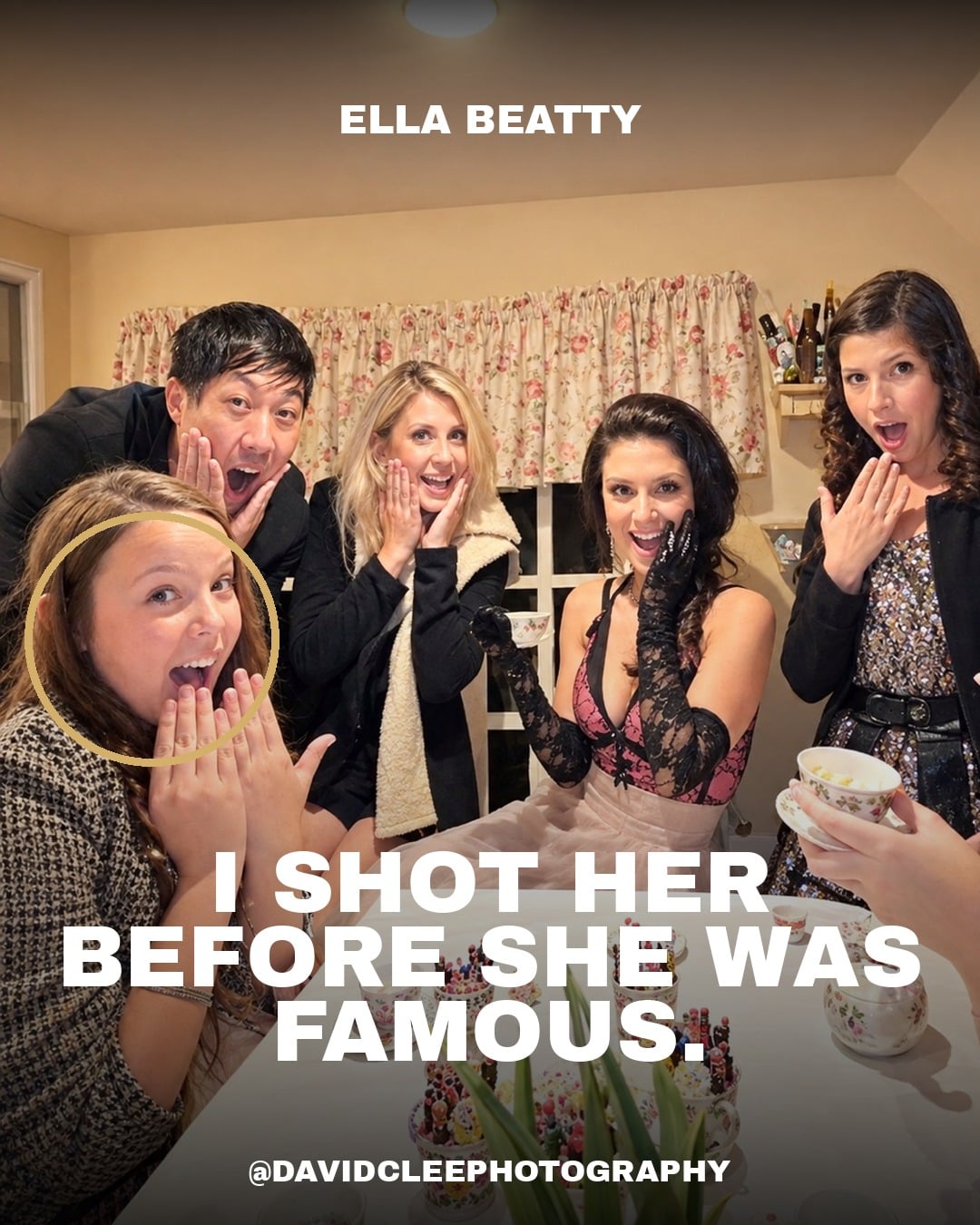
Over twenty-seven years of shooting fashion, celebrities, and commercial campaigns, you learn that the most defining images rarely happen when the client is staring over your shoulder at a tethered monitor.
The shots that survive decades in your memory are usually the ones that happen in the margins. The thirty seconds between lighting setups. The moment the talent lets their guard down. The frame you grab when nobody is paying attention.
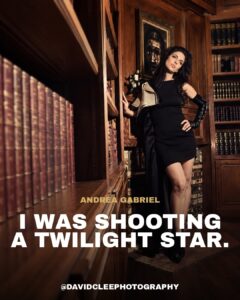
Years ago, I was booked for a major editorial campaign at a private estate in Los Angeles. The primary subject was Andrea Gabriel, fresh off her roles in The Twilight Saga: Breaking Dawn and Lost. She was wearing high-end couture pieces designed by Anne Bowen.
When you run a high-fashion set, the machinery is relentless. You have racks of designer wardrobe pulled from showrooms, hair and makeup artists working under tight timers, publicists monitoring call sheets, and assistants adjusting flags and c-stands. Everyone is locked into an itinerary. Every minute costs money, and the pressure is on the photographer to hit the exact mood board the client approved weeks prior.
We were moving through the looks, working our way across the interior rooms of the estate. While the team was prepping Andrea for a wardrobe change, I stepped out into the backyard to get fresh air and scout ambient light for the next outdoor sequence.
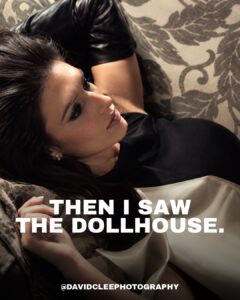
Tucked into the lawn was a weathered, vintage wooden dollhouse.
It was large enough for children to crawl into, but comically small against the backdrop of the estate. Inside, there was a tiny table and miniature plastic chairs.
Looking at it, an idea hit me. Rather than waiting around for wardrobe, why not bring everyone outside and stage an absurd, high-camp tea party?
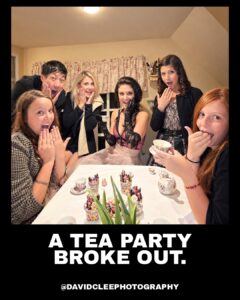
I called Andrea out, still dressed in full styling, along with several people from the production team and house guests. The concept was simple: crowd adults and kids around a miniature table and have everyone treat it with deadpan, melodramatic seriousness. We pulled up toy chairs, arranged miniature teacups, and crowded into the frame.
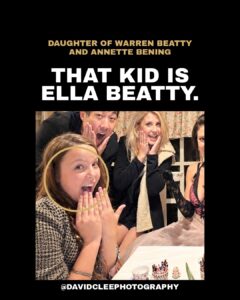
Sitting right in the center of the dollhouse was a young girl playing dress-up with her friend Sophie Antebi.
When I lifted the camera to frame the scene, she did not flinch or look away. Instead, she leaned directly into the theatrical energy of the room. She planted both hands on her cheeks, threw her eyes wide open, and gave the lens an exaggerated, picture-perfect comic expression.
That young girl was Ella Beatty.
Her parents are Hollywood royalty, Warren Beatty and Annette Bening. But on that afternoon, there was no red carpet, no press junket, and no publicist. She was simply a kid in a backyard having fun, playing pretend, and matching the energy of a room full of adults acting ridiculous.
The Fast Forward
Years passed. The editorial ran, the campaign wrapped, and the images were cataloged away into my hard drives alongside terabytes of other commercial work.
Then came 2024 and 2025.
Suddenly, Ella Beatty was everywhere. She delivered an incredible performance as Kerry O’Shea in Ryan Murphy’s Feud: Capote vs. The Swans. She stepped onto Broadway in Branden Jacobs-Jenkins’ Tony-winning play Appropriate, holding her own alongside Sarah Paulson.
And now, she is headlining the latest installment of Ryan Murphy’s hit Netflix anthology series, starring as Lizzie Borden in Monster: The Lizzie Borden Story.
When I saw the premiere announcements and trailers, the memory clicked immediately. I went straight back into my archive vaults, pulled up the raw folders from that afternoon, and there she was: wide-eyed, hands on her cheeks, completely owning the frame inside a wooden dollhouse.
The Camera Does Not Know Who Is Famous Yet
Looking at those frames today brings back a fundamental truth that every photographer needs to internalize early in their career:
The camera does not know who is famous yet.
A lens does not care about pedigree, follower counts, agent rosters, or box office numbers. It only registers light, presence, curiosity, and authenticity.
When young photographers start working in Los Angeles or New York, they often make the mistake of treating celebrities differently than anyone else. They tense up. They become timid. Or worse, they ignore everyone on set who does not hold a title on the call sheet.
That is how you miss the best photographs of your life.
If you only bring your best energy to people who have already arrived, you are playing catch-up. Your job is to walk into every room and photograph every single person like they are already a legend. Treat the production assistant, the background actor, the client’s guest, and the kid playing in the yard with the exact same focus and respect you give the lead star.
Hunger, curiosity, and raw presence photograph better than fame ever will.
The Creative Business Case: Never Delete Your Outtakes
There is also a critical production and business lesson here for creators, visual directors, and entrepreneurs:
Your archive is your proprietary equity.
Most photographers finish a client delivery, select the ten or twenty approved hero frames, deliver the high-res files, and ignore the rest of the shoot. Some even purge the outtakes and secondary cards to save drive space.
That is a massive strategic mistake.
The commercial deliverables pay your day rate. But the whitespace between commercial setups, the candid outtakes, and the unscripted moments capture cultural history.
Ten or fifteen years ago, that dollhouse frame was simply a fun, candid moment between wardrobe changes. Today, it is a rare, irreplaceable piece of early Hollywood history documenting a future star before the industry knew her name.
Hard drives, solid-state storage, and cloud backups are cheap. Losing your creative history because you were too lazy to organize an archive is permanent.
Every shoot you produce should be cataloged, tagged, and preserved. You never know who is sitting across the table, and you never know which frame will carry cultural weight a decade later.

Technical Breakdown
For the photographers and gearheads who want to know how the shot was built:
- Camera Body: Canon 5D Mark III
- Lens: 14mm ultra-wide prime
- Lighting: Single on-camera speedlight, angled upward and bounced directly into the low wooden ceiling of the dollhouse
- Why it worked: The 14mm ultra-wide allowed me to physically cram myself into the small entrance of the playhouse and fit everyone around the table into one frame. Bouncing the flash off the raw wood ceiling turned the entire roof of the dollhouse into an oversized softbox, filling the shadows without requiring light stands, cables, or power packs.
It took less than two minutes to set up, shoot, and clear the yard.
Stay curious, keep your eyes open between setups, and never trash your archives.
Portfolio and bookings: dclee.net