
By Paulina Phan, Senior Editorial Contributor
Two days after the United States struck Iran, the debate in Washington is focused on the Middle East. The economic debate is focused somewhere else. Analysts who have mapped the administration’s policies on energy, trade, manufacturing, and housing see the strikes as one component of a broader strategy, and at the center of that strategy sits China.
What follows is an examination of that strategy on its own terms: the logic its architects describe, the data behind each link in the chain, and the points where economists and critics say the logic is weakest.
The Oil Connection: Beijing Is the Buyer
China is the dominant buyer of crude from both Iran and Venezuela, purchasing the overwhelming majority of Iran’s oil exports, according to tanker tracking analysts, much of it at a discount that reflects the sanctions risk attached to those barrels. The arrangement benefits both sides. Sanctioned producers gain a revenue lifeline, and Chinese refiners gain cheap feedstock.
Remove or constrict those supplies, and Beijing’s alternatives are limited, analysts note. Russia, the other major sanctioned producer, is absorbed by its own war and already sells heavily to China. Canada, under Prime Minister Mark Carney, is the other obvious source, which is why energy analysts are watching Ottawa’s trade posture toward Beijing closely. Whether Canada would expand oil sales to China under pressure is an open question, and a central one for the strategy.
The Cheap Energy Thesis, and Its Immediate Tension
The administration’s domestic economic case rests on a chain that begins with fuel. Transportation costs run through the price of nearly every good, so lower fuel prices, the argument goes, lower the cost of food and consumer products, which in turn lowers inflation and increases the purchasing power of wages.
This is the stated reasoning behind the administration’s push to expand oil production and to shift household energy demand away from electricity where possible. A related priority is reserving electricity supply for the artificial intelligence buildout, which administration officials have described as a strategic race the United States cannot afford to lose on power constraints.
Critics note an immediate tension. Military strikes in the Gulf historically push crude prices up, not down, and energy markets reacted to the weekend strikes with exactly that concern. Whether any price increase is a brief risk premium or a sustained shift depends largely on shipping through the Strait of Hormuz, a point returned to below.
The Proxy Funding Argument
Iran’s network of regional partners and proxies, including Hamas, the Houthis, and Hezbollah, is financed substantially from Iranian state revenue, of which oil is the largest source. The strategic argument is arithmetic: reduce the oil revenue, and the funding available to those groups contracts with it.
A second, longer-horizon argument is attached to the Abraham Accords framework, which links regional normalization to trade, investment, and property rights. Proponents contend that populations with employment, business ownership, and assets to pass to their children are less susceptible to recruitment by armed groups. Skeptics respond that proxy funding has proven adaptable, moving through front companies and barter arrangements, and that sanctions pressure has historically reduced, but not eliminated, those flows.
The Reshoring Backdrop
The strikes arrive alongside an industrial policy already in motion. Foreign and domestic investment announcements since 2025 have included artificial intelligence data centers, automobile plants, and semiconductor facilities, and the administration cites these as evidence that manufacturing is returning to American soil.
The economic chain claimed by supporters runs from factory employment to consumer spending to housing demand. Economists are more divided on the scale and timing. Capital-intensive facilities such as data centers employ relatively few permanent workers per dollar invested, while traditional manufacturing plants employ more but take years to build and staff. The direction of the shift is broadly agreed; its size is not.
Rare Earths and the Greenland Question
China’s dominance of rare earth processing is the other supply chain fact that recurs in the strategy’s documents and speeches. Rare earth elements are essential inputs for electronics, electric vehicles, and defense systems, and China controls the large majority of global refining capacity.
It is in this context that analysts place the administration’s sustained interest in Greenland, whose untapped mineral deposits include rare earths. Developing those resources, or securing preferential access to them, would not displace Chinese supply quickly. Mining and processing capacity takes a decade or more to build. But strategists frame the issue as one of trajectory rather than immediate substitution.
Pharmaceuticals: The Other Dependence
A similar dependence exists in medicine. A large share of active pharmaceutical ingredients used in American drugs is manufactured in China and India, a vulnerability that entered public debate during the pandemic and has remained there. The administration has pressed drugmakers to build production in the United States and has promoted direct purchasing models, including the TrumpRx platform, which allows patients to buy certain medications directly from manufacturers at negotiated prices.
Supporters argue that domestic production plus direct distribution lowers prices and removes a strategic vulnerability simultaneously. Industry analysts caution that ingredient supply chains are global and layered, and that relocating them is a multi-year undertaking with cost implications that could push some prices up before they come down.
Housing and the Institutional Buyer
On housing, the administration has moved to restrict large institutional investors from purchasing single family homes, a policy aimed at the segment of the market where corporate buyers compete directly with households. The stated objective is to prevent investor demand from constraining the supply available to owner-occupants, particularly first-time buyers.
Housing economists note that institutional investors own a small share of the national single family stock, though their share is concentrated in specific metropolitan markets, where measurable effects on prices and rents are more plausible.
The Projected Endgame: Jobs, Inflation, and Interest Rates
Assembled, the strategy’s projected sequence is as follows. Stability in the Middle East and reduced dependence on Chinese supply chains support expanded domestic production and employment. A larger private sector workforce, combined with lower energy-driven inflation, gives the Federal Reserve room to reduce interest rates. Lower rates reduce borrowing costs for homebuyers and businesses, reinforcing the cycle.
Each link in that sequence is contested. The Federal Reserve sets policy independently and has cited tariff-related price pressures and geopolitical risk among its considerations. Rate relief on the timeline the strategy implies is a projection, not a consensus forecast.
The Counterfactual
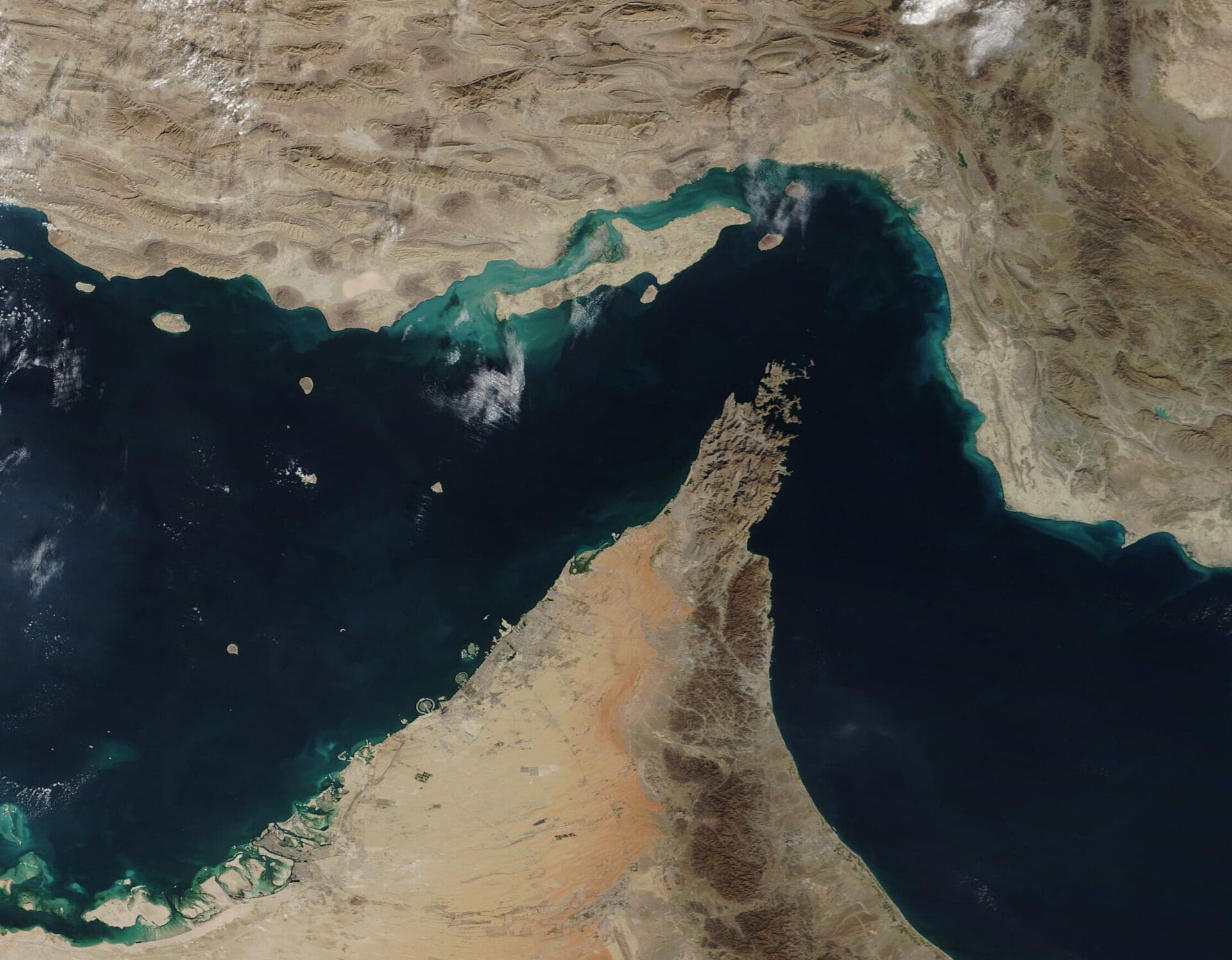
The final element of the case is the alternative. If the United States does not contest Iranian oil sales, the argument goes, Chinese purchases continue funding Tehran and its proxies, and Iran retains the ability to threaten shipping through the Strait of Hormuz, the narrow waterway through which roughly a fifth of the world’s petroleum liquids pass.
Maritime analysts broadly agree on one underlying fact, whatever their view of the strikes themselves: global trade routes are secure in large part because the US Navy patrols them, and no other navy currently performs that role at the same scale. The disagreement is over whether military action in the Gulf protects that system or puts it at risk.
That disagreement is unlikely to resolve quickly. The strategy, however, is coherent enough to be evaluated as a whole rather than as a series of unrelated decisions, and its success or failure will be measurable in the data its architects themselves cite: oil flows, factory openings, drug prices, and the path of interest rates.