
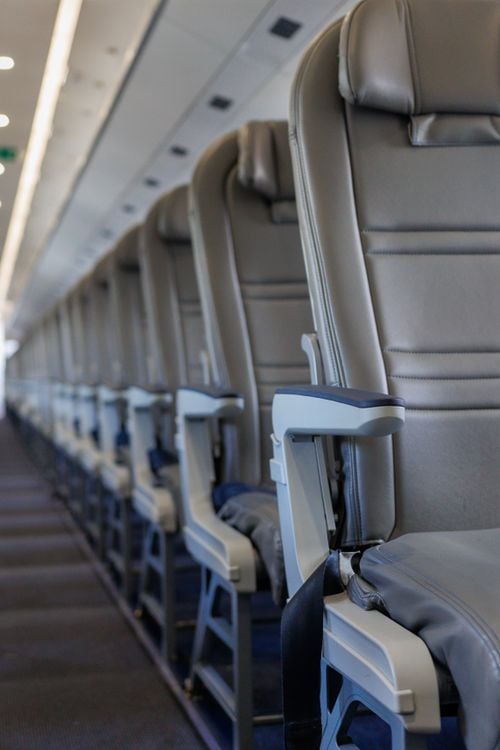
You have the points but you cannot find business class award seats because airlines release only a few saver seats per flight, and they go to whoever searches 11 to 14 months out or grabs last-minute releases. Your points are not the problem. Your timing and your search method are. Here is how the game actually works, and how to win it.
How many business class award seats does an airline actually release?
Fewer than you think. On competitive long-haul routes, an airline might release just a couple of saver-priced business seats per flight. Sometimes one. The logic is simple: a cabin full of paying business class passengers is far more profitable than a cabin full of award redemptions, so airlines only release seats they do not expect to sell for cash. They also hold back seats for last-minute revenue bookings, because someone will always pay full fare the week before departure.
This is why two people can search the same route and get different results. The seats were there. Someone faster took them.
When do airlines release business class award space?
There are two windows, and almost everyone searches in the dead zone between them.
Window one: the schedule opening. Most airlines release international business and first class award space to partner programs 11 to 14 months before departure, according to travel advisor Andre Battah. The travelers who search the day that window opens are the ones who find the seats. Plan 12 months out and you are shopping with a full shelf. Plan three months out and you are picking through leftovers.
Window two: last minute. Airlines that have not sold the cabin will sometimes release unsold business seats as awards in the final one to two weeks. This is real, and it is how flexible travelers score Qsuites and Polaris at saver prices. But it is not a plan. It is a lottery ticket with better odds.
The dead zone is everything in between. If you are searching four months out for peak-season business class to Europe and finding nothing, that is not a glitch. That is the system working as designed.
Should I search the airline’s site or a partner program?
Both, because they do not show the same thing. The airline operating the flight and the loyalty program you book through are often different companies with different award charts and different access.
A few realities for 2026. Delta’s devaluation pushed partner business class awards to Europe to 95,000 SkyMiles one-way, up from 75,000 in September, per Mighty Travels. That same seat might cost fewer miles booked through a partner program with access to the same flight. Alaska’s Atmos Rewards prices US to Spain in business from 45,000 points one-way out of Boston, per Upgraded Points. Air Canada’s Aeroplan can price Vancouver to Singapore in business around 102,500 to 110,000 points at the saver level.
The rule: find the seat first, then figure out which program prices it cheapest. Never transfer points speculatively. Transfers are one-way streets.
If I can’t find business class, should I book economy and hope it opens later?
This is one of the most asked questions in the points world, and the honest answer is no, not as a strategy. The Points Guy’s Brian Kelly has fielded this exact reader question: book the economy award now and hope business opens later? His answer: if you would never actually fly economy on that trip, do not book a dummy ticket. Many airlines charge reticketing fees to move cabins, you are holding a seat someone else would use, and an oversold economy cabin can actually suppress business award releases.
The exception: if you have elite status that waives change fees and you would genuinely be fine flying economy, booking economy as a placeholder is defensible. Otherwise, keep your miles where they are and keep searching.
For the related question of whether the cabin is even worth chasing, read our breakdown of business class vs. premium economy and whether first class is worth it on long-haul flights.
What tools actually find award availability?
Stop searching one airline site at a time. That is how you miss everything.
Seats.aero is the tool the serious award searchers use. It scans multiple programs and dates at once, so you can see an entire month of availability instead of clicking day by day. Use the airline’s own search tool first to confirm, then check partner programs for better pricing on the same seat.
Set alerts where the program offers them. Award space appears and disappears in hours on competitive routes. The person with the alert beats the person who checks on weekends.
How many points does business class actually cost in 2026?
Devaluations keep moving the goalposts, so anchor on current numbers, not old blog posts:
- US to Europe: Delta now charges 95,000 SkyMiles one-way for partner business class after its 2026 devaluation. United saver business to London from Newark runs 80,000 to 88,000 MileagePlus miles one-way on many dates, per JourneyGetaway.
- US to Spain: from 45,000 Atmos Rewards points one-way from Boston in business class, per Upgraded Points.
- West Coast to Asia: Vancouver to Singapore in business around 102,500 to 110,000 Aeroplan points at saver pricing.
When the cash fare is low, do the division before you redeem. Paying cash on a cheap business fare while earning miles and status credit often beats burning points at a poor redemption value. Points are a currency. Spend them where they buy the most.
Which routes still have decent award availability?
Some routes are structurally more generous than others. United’s hubs, Newark, Dulles, and O’Hare, see notably better saver business availability to Europe, Amsterdam, Munich, Frankfurt, and London, than most other US gateways. If your home airport is not a hub, a cheap positioning flight to one can unlock the award seat that does not exist from your doorstep.
Flexibility is the whole game. One seat almost always appears before two. Midweek beats weekend. Shoulder season beats peak. The travelers who consistently fly business on points are not lucky. They are early, flexible, and willing to position.
What do I do when nothing shows up?
Work the checklist in order:
- Widen the dates. Search a full month, not a weekend.
- Widen the airports. Check every gateway within a cheap positioning flight.
- Check partner programs. Same seat, different price, different availability display.
- Split the cabin. Business on the long-haul leg, economy on the short connection, via a mixed-cabin award.
- Set alerts and wait. Last-minute releases are real, one to two weeks out.
- Price the cash fare. If business is cheap for cash, buy it, earn the miles, and save your points for the trip where cash is brutal.
And keep earning while you search. The fastest way most travelers build a usable balance is credit card welcome bonuses and category spend, which is why the math on cards like the Amex Platinum still matters for anyone playing this game seriously. See our look at whether the Amex Platinum is worth it for travel.
Frequently asked questions
Why can’t I find business class award seats even though I have enough points?
Because availability, not your balance, is the constraint. Airlines release only a few saver business seats per flight, mostly 11 to 14 months out or in the last one to two weeks. Search earlier, search wider, and check partner programs.
How far in advance should I book business class with points?
Eleven to 14 months before departure, when airlines first release award space to partner programs. That is when the most saver seats exist.
Is it better to book with the airline or transfer points to a partner?
Find the seat first, then compare pricing across programs that can book it. Partner programs often price the same flight for fewer miles. Never transfer points before you have confirmed the seat exists.
Should I book economy and upgrade later with points?
Generally no. Most airlines charge to reticket across cabins, and holding an economy seat you do not want can suppress business releases. Only do it if you would happily fly economy and your status waives the fees.
