
Every traveler has stared at that booking page. The economy fare to Tokyo, London, or Sydney looks reasonable, and then the first class fare appears beside it, often five to ten times higher. The question follows immediately: is first class worth it on a long-haul flight, or is it an expensive way to arrive at the same time as everyone else?
At David’s Guide, we have flown premium cabins across dozens of airlines, and the honest answer is that it depends on the route, the airline, how you pay, and what you value. Here is a clear-eyed breakdown of what international first class actually delivers, what it costs, and when the splurge makes sense.
What International First Class Actually Includes
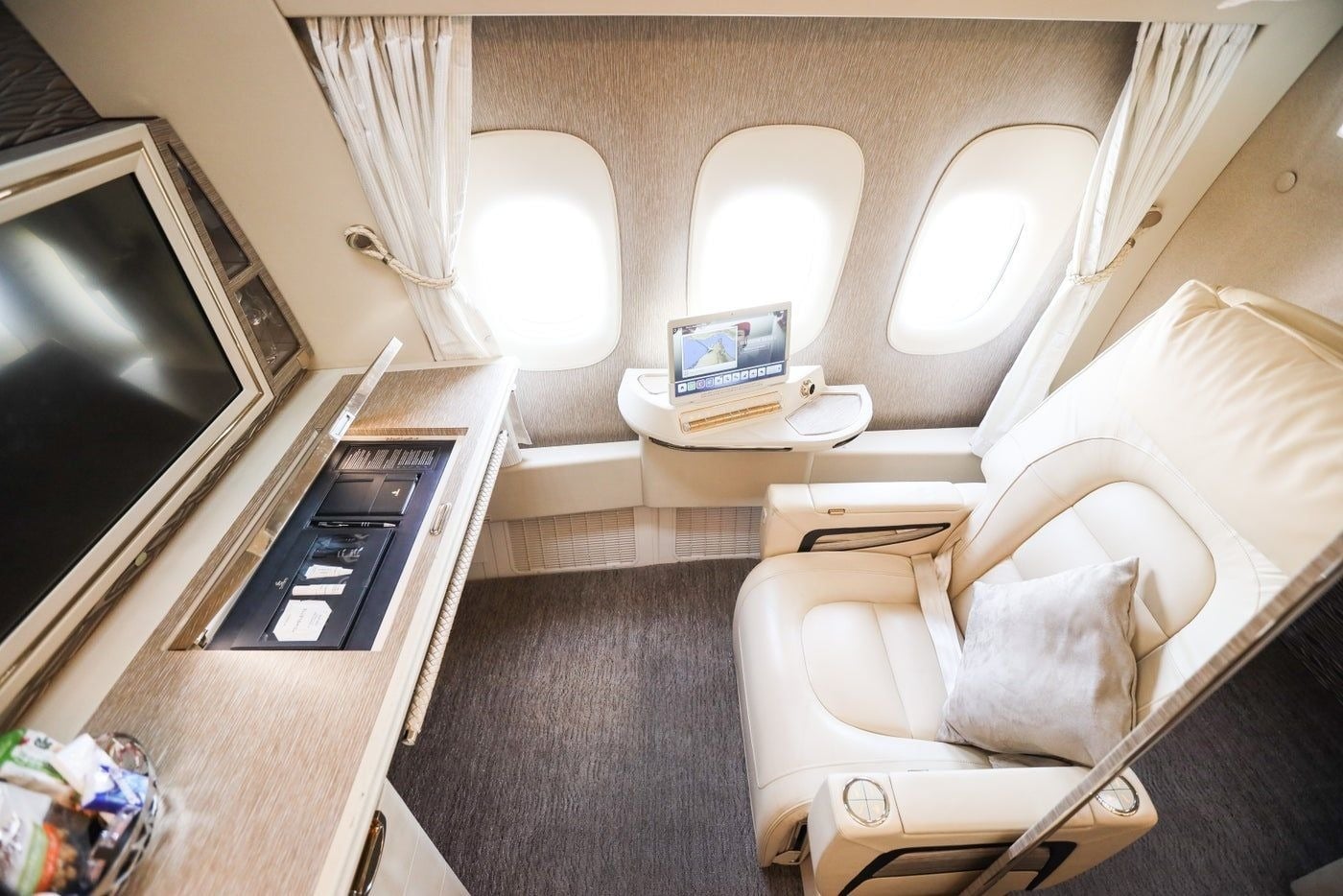
First class on a long-haul flight is a different product from domestic first class in the United States, which is closer to a wider economy seat with a free drink. True international first class, offered by carriers such as Emirates, Singapore Airlines, ANA, Lufthansa, Air France, and a handful of others, typically includes several distinct upgrades over business class.
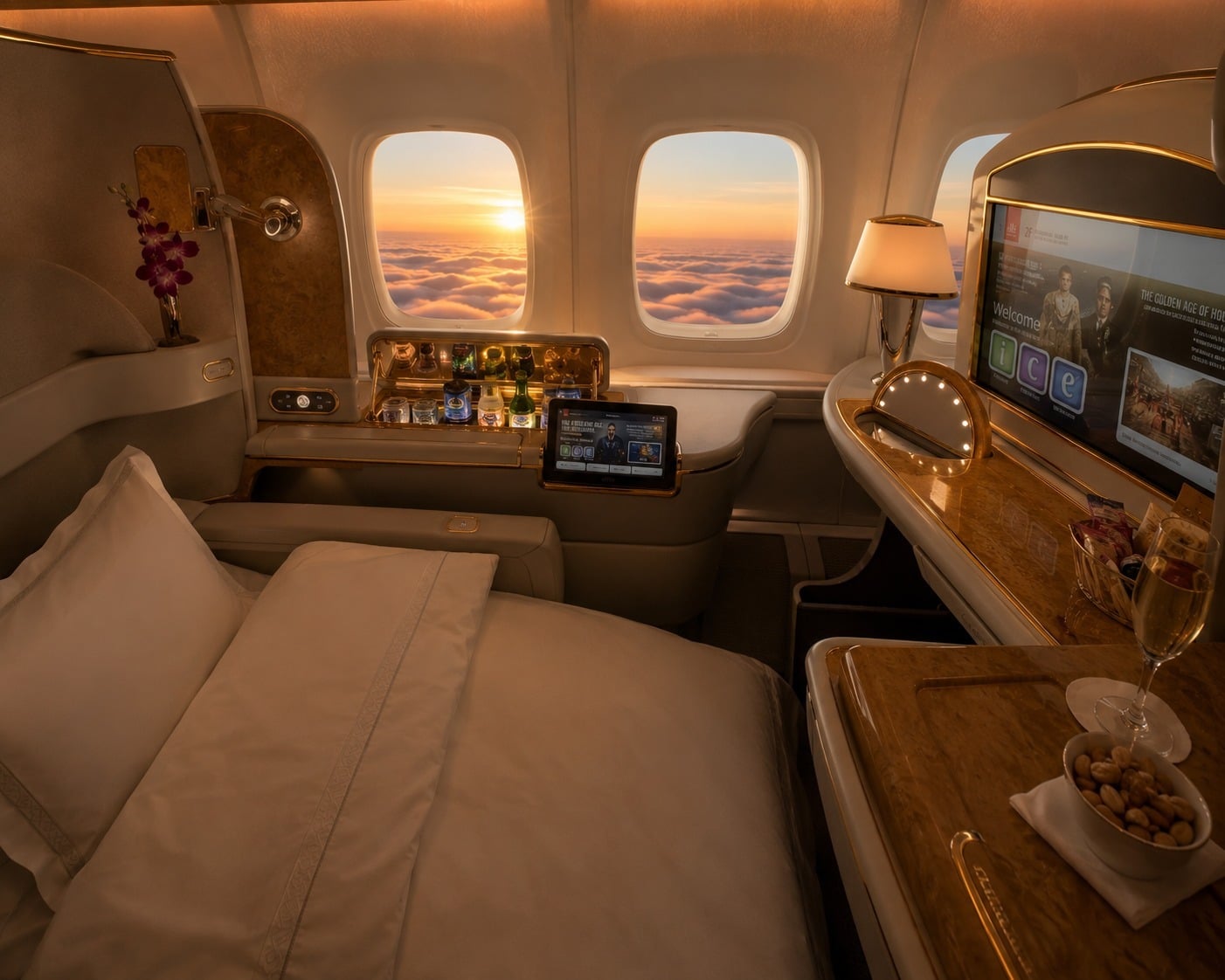
The seat itself is the headline. Many airlines now offer fully enclosed suites with closing doors, beds that stretch past six feet, generous side storage, and in some cases a separate armchair and bed, as with Etihad’s Residence-style products and Singapore Airlines’ Suites. You are not just getting more legroom. You are getting a small private room at 38,000 feet.
Dining is the second pillar. First class menus are usually designed with noted chefs, plated course by course, and served on your schedule rather than the cabin’s. Expect multi-course tasting-style meals, premium wines and champagnes, and in some cases caviar service or an onboard lounge bar, as on Emirates’ A380. It is the closest thing to a fine restaurant that exists in the sky.
Service ratios are far richer than in business class. A first class cabin might have eight or fewer passengers served by two or three dedicated crew members, which means genuinely personal attention, pajamas and amenity kits from luxury brands, and turndown service for your bed.
The ground experience rounds it out. First class tickets usually include access to an airline’s flagship lounge, with sit-down dining, spas, and showers. Some carriers add private terminal check-in or chauffeur service to and from the airport. The pampering starts hours before takeoff.
What It Costs: Cash Fares
Let us talk numbers, because the sticker shock is real. On major long-haul routes, typical round-trip cash fares look roughly like this: economy often runs $800 to $1,800, premium economy $1,500 to $3,000, business class $3,500 to $7,000, and international first class $8,000 to well over $20,000 depending on the route and airline.
That means first class can cost ten times the economy fare on the same flight, arriving at the same gate at the same minute. When you compare first class vs economy cost, the math only works if the experience itself is the point, or if you are not paying anything close to the published fare. Almost nobody who flies first class regularly pays full price in cash, which brings us to the smarter path.
The Smarter Way to Fly First Class: Miles and Points
The great open secret of first class travel is that a large share of its passengers booked with miles. Airline loyalty programs and transferable credit card points can unlock first class award seats for a fraction of the cash price, provided you plan ahead and stay flexible.
Typical award pricing for long-haul first class through partner programs often falls in the range of 80,000 to 130,000 miles each way, plus modest taxes and fees. Compared against a $10,000 cash fare, that represents outstanding value per point, often two to five cents apiece. The catch is availability. Airlines release very few first class award seats, sometimes only one or two per flight, and the best options get booked the moment schedules open, nearly a year out.
If you are serious about trying first class without the five-figure fare, the playbook is simple. Earn transferable points from cards with strong travel rewards, learn which partner programs offer the best rates on your target airlines, set award alerts, and book the moment you see space. Flexibility on dates and routings multiplies your odds enormously.
When First Class Is Worth the Money
There are real scenarios where first class earns its price.
- Overnight flights with a packed arrival. If you land at 7 a.m. and walk straight into meetings, a wedding, or the first day of a long-planned trip, arriving genuinely rested has tangible value. A flat bed in a private suite delivers far better sleep than any economy seat.
- Once-in-a-lifetime occasions. Honeymoons, milestone anniversaries, and bucket-list journeys are exactly the moments the splurge exists for. You will remember the flight as part of the trip, not just the transit.
- Health, comfort, or mobility needs. For travelers who cannot comfortably sit upright for twelve hours, the space and lie-flat bed of first class are functional, not frivolous.
- When the fare gap collapses. Sales, upgrade offers at check-in, and mileage bargains can shrink the premium dramatically. A $500 buy-up from business to first at the airport is a completely different decision than a $6,000 fare difference at booking.
- When someone else is paying. Corporate travel policies and client-paid itineraries change the equation entirely. If the company covers it, enjoy every course.
When You Should Skip It
First class is not worth it in plenty of situations, and honest luxury travel advice says so.
- Daytime flights. If you will be awake, working, or watching movies for most of the journey, the lie-flat bed, the main event, goes unused. Business class delivers nearly all the daytime comfort for far less.
- Shorter long-hauls. On a seven or eight hour flight, the value per hour of a first class suite drops sharply compared with a twelve to sixteen hour ultra-long-haul.
- When business class is nearly as good. On airlines with excellent business class products, the step up to first buys you better food and more privacy, but not a fundamentally different seat. The marginal gain rarely justifies doubling the fare.
- When the destination deserves the budget. Ten thousand dollars buys an extraordinary week at one of the best luxury hotel chains in the world, or a remarkable deep dive into luxury travel in South Korea. Sometimes the trip, not the transit, should get the money.
First Class vs. Business Class: The Real Comparison
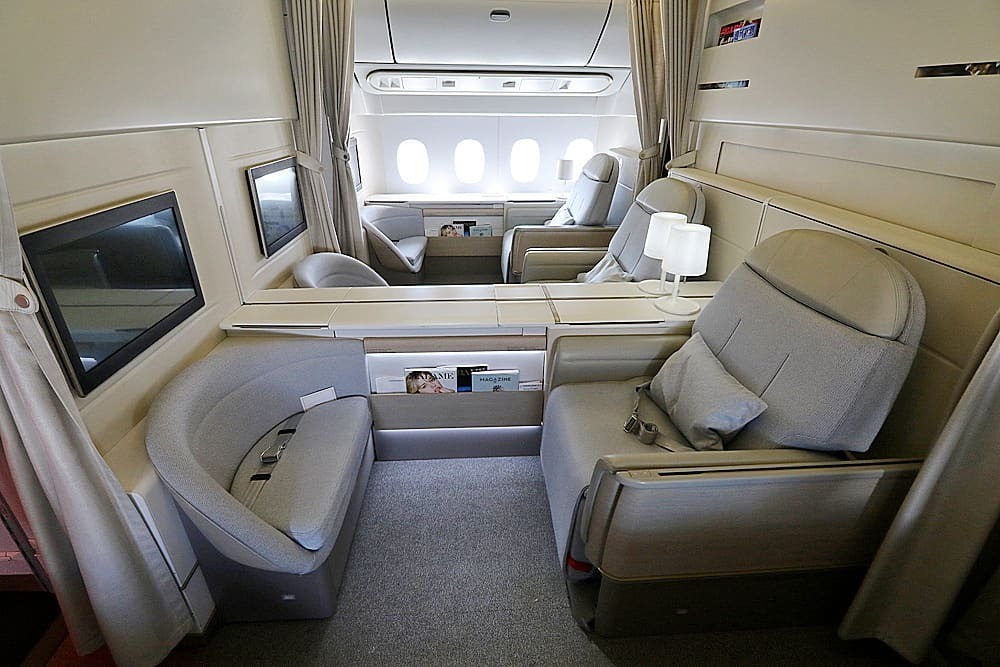
Here is the comparison most travelers are actually making. Modern business class, with direct aisle access, lie-flat beds, and strong dining, covers about 80 percent of what makes first class special. First class adds the final 20 percent: a door that closes, more refined food and drink, fewer fellow passengers, and more attentive service.
If your budget forces a choice between the two, business class wins on value in the large majority of cases. Save first class for the routes and airlines famous for it, Emirates, Singapore Airlines, ANA, Cathay Pacific, and a few others, where the gap between cabins is widest and the experience is genuinely distinct.
The Verdict
Is first class worth it on long-haul flights? At full cash price, rarely, unless the occasion or your schedule makes arriving rested genuinely valuable. With miles and points, often yes, because the out-of-pocket cost collapses while the experience stays the same. And on the world’s best first class products, booked smartly, it can be one of the great travel experiences available anywhere, a private suite, a tasting menu, and a bed above the clouds.
The savviest travelers we know fly business class with points as their default, save first class for special routes and special trips, and put the savings toward the destination. That is a philosophy David’s Guide can stand behind.
Frequently asked questions
At what point is first class worth it?
At full cash price, rarely, unless the occasion or your schedule makes arriving rested genuinely valuable — for instance on an overnight flight with a packed arrival, a once-in-a-lifetime occasion, or when health or mobility needs demand it. With miles and points, often yes, because the out-of-pocket cost collapses while the experience stays the same.
