
By Paulina Phan, Senior Editorial Contributor
Housing economists disagree on the exact size of the United States housing shortfall, but most estimates put it in the millions of homes. Against that backdrop, the Department of Housing and Urban Development (HUD) has spent 2026 pursuing an unusually specific strategy: change the rules governing factory-built housing, widen the financing channels that support new construction, and pressure state and local governments to remove barriers of their own. The agenda is the most active federal push on housing supply in years, and its centerpiece is the manufactured home.
The Supply Gap in Numbers
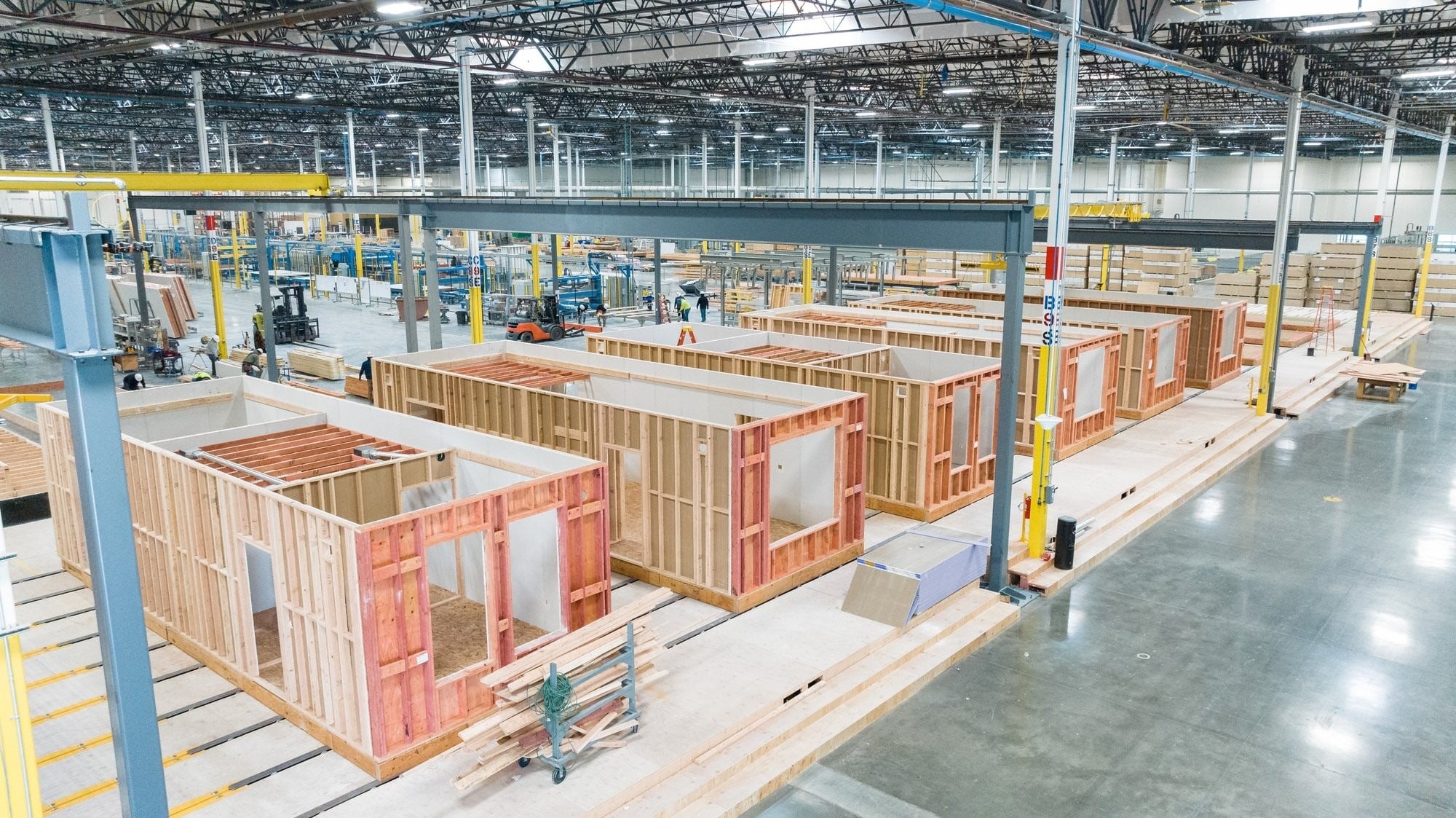
The scale of the challenge is visible in the production data. Total housing starts, counting single-family and multifamily construction, were about 1.36 million in 2025, according to Census Bureau figures compiled by the Manufactured Housing Institute (MHI). Manufactured homes, built in factories to the federal HUD Code, accounted for 102,737 shipments that year, roughly 7 percent of combined production. More than 20 million Americans live in manufactured homes, according to HUD, yet the segment produces about 100,000 homes a year, far below its late 1990s peak of more than 370,000.
Price is the reason policymakers keep returning to the category. The average new manufactured home sold for $134,800 in April 2026, according to the Census Bureau’s Manufactured Housing Survey, and that figure excludes land. On a per-square-foot basis, Census data compiled by industry groups put manufactured homes near $84 per square foot, compared with about $169 per square foot for site-built construction. In a market where the average site-built home costs more than $400,000, factory production is one of the few channels that delivers new homes at entry-level prices without subsidy.
A New Law Rewrites the Foundation
The statutory reset came on July 11, 2026, when the 21st Century ROAD to Housing Act became law. Its manufactured housing title made several structural changes:
- The permanent chassis requirement ended. Since the HUD Code took effect in 1976, a manufactured home had to be built on a permanent steel chassis. Industry estimates cited by the Real Estate Roundtable put the cost of that requirement at roughly $5,000 to $10,000 per home, and it constrained design, foundations, and financing. Homes may now be built with or without a chassis.
- FHA Title I loan limits rose and are now indexed annually. The limits are $106,405 for a single-section home, $195,322 for a multi-section home, $149,782 for a single-section home with lot, $238,699 for a multi-section home with lot, and $43,377 for a lot alone.
- Loan terms lengthened. Personal property (chattel) loans for manufactured homes may now run up to 30 years, which lowers monthly payments on the financing channel most manufactured home buyers actually use.
- Modular homes received a federal definition for the first time, and the PRICE program, which funds preservation of manufactured housing communities, was reauthorized for seven years.
The law also requires states to certify, generally within one year, that chassis-free homes receive the same treatment as traditional manufactured homes for financing, titling, insurance, taxation, and installation. That certification process is the hinge on which the rest of the agenda swings.
HUD’s Implementation Agenda
Congress changed the statute; HUD has to change the code. In June 2026, the department published a proposed rule updating the definition of a manufactured home so that upper floor sections can be transported and built without a permanent chassis, a step aimed at multi-story manufactured housing. Secretary Scott Turner framed the proposal in supply terms, stating that manufactured housing is part of the solution to the national shortage.
On October 7, 2026, HUD unveiled the Next Generation Manufactured Housing Action Plan, a seven-action program to modernize the 50-year-old HUD Code. According to HUD and industry summaries, the plan covers updated energy efficiency standards, design and installation rules for chassis-free homes, a performance-based code for larger factory-built residential structures, and guidance for states and lenders on zoning, appraisal, lending, and insurance. In October 2026, a White House executive order added a Task Force on Manufactured Housing Innovation, co-chaired by the HUD Secretary and the Director of the Federal Housing Finance Agency, to coordinate factory-built housing policy across agencies.
HUD has also run place-based experiments. In June 2026, the department joined Jacksonville, Florida, officials to launch a manufactured housing initiative intended as a replicable model for other cities, with FHA financing tools under consideration for the homeownership component.
Financing Moves Beyond the Factory
The supply agenda extends to rental construction. On October 14, 2026, HUD announced that build-to-rent communities, developments of single-family homes, duplexes, or triplexes, including manufactured homes, now qualify for FHA-insured financing under the Section 221(d)(4) new construction program and the Section 223(f) acquisition and refinance program, on the same terms as conventional multifamily projects. The change treats a professionally managed rental neighborhood of factory-built homes as what it functionally is: multifamily housing.
Combined with the higher Title I limits and longer chattel terms on the consumer side, the policy pattern is consistent. Federal housing finance is being re-pointed at the lowest-cost forms of new supply, and at the financing structures, rental as well as ownership, that can deliver them at volume.
What Still Stands in the Way
Implementation risk is substantial, and the early data show why. HUD-compiled production statistics reported in October 2026 showed manufacturers produced 58,885 homes through August 2026, compared with 62,053 in the same period of 2025, a decline even as the new framework was taking shape. Factories cannot retool for chassis-free, multi-story designs overnight, lenders must rewrite guidelines before the new loan limits and terms reach borrowers, and local zoning remains the most frequently cited barrier in industry surveys. HUD’s own action plan acknowledges the point by including zoning guidance among its seven actions.
The department’s bet is that rules, financing, and standards were the binding constraints, and that removing them will let an industry with idle capacity respond. The shipment data over the next four quarters will test that assumption more directly than any press release.
FAQ
What is the HUD Code? It is the federal Manufactured Home Construction and Safety Standards, in effect since 1976. Homes built to the HUD Code are regulated nationally rather than under local building codes, which is a central reason they cost less to produce.
What changed for FHA Title I manufactured home loans in 2026? The ROAD to Housing Act raised the loan limits, to $106,405 for a single-section home and up to $238,699 for a multi-section home with lot, made the limits adjust annually, and allowed personal property loan terms of up to 30 years.
When will chassis-free manufactured homes reach the market? HUD’s rulemaking and state certification are still in progress. Manufacturers have already shown prototypes, including a chassis-free Cavco model displayed at HUD’s 2026 housing showcase, but broad availability depends on final rules and state action.
Sources and Methodology Note
Figures are drawn from HUD press releases dated June 12, 2026 (proposed chassis rule), October 7, 2026 (Next Generation Manufactured Housing Action Plan), and October 14, 2026 (FHA build-to-rent policy); the 21st Century ROAD to Housing Act as summarized by NerdWallet and the Real Estate Roundtable; Census Bureau Manufactured Housing Survey data as reported by AmeriSave and MHI; and HUD-compiled production statistics reported by MHARR on October 5, 2026. Prices for manufactured homes exclude land unless noted. Where industry estimates are used, they are attributed in the text.