
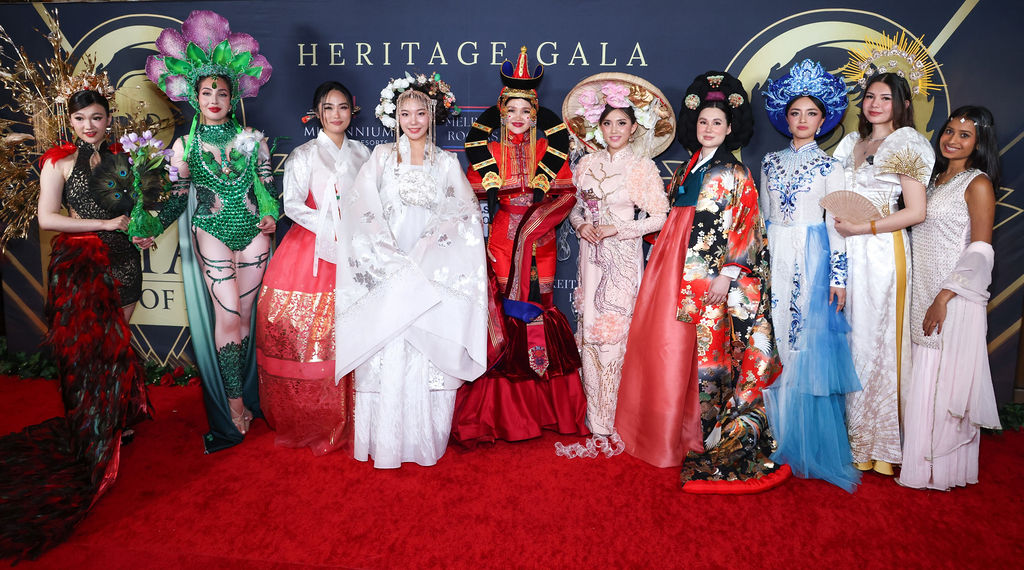
Los Angeles knows how to host a gala, but every so often, an evening stands out not just for its elegance, but for the intention behind it. The Asian Hall of Fame’s 2026 Heritage Gala was one of those moments. Held on May 1 at The Biltmore Los Angeles, the black-tie event brought together a select group of 150 patrons from across California, Washington, Hawaii, and New York for a night that felt both celebratory and purposeful.
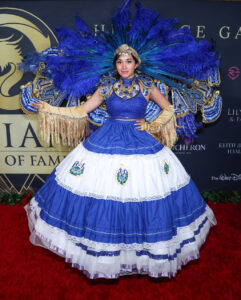
What stood out to me from the outset was the tone. The setting, the design, and the pacing of the evening all felt considered without being overly formal. With custom designs by official partner TAO shaping the visual experience, the atmosphere leaned toward understated sophistication rather than spectacle.
A Gala with Purpose
Beyond the setting, the evening carried clear significance. The Heritage Gala marked the official opening of Asian Heritage Month and introduced the Asian Hall of Fame’s Class of 2026 Inductees. At the same time, it served as a major fundraising effort supporting women and girls through the Women In Tech, Entertainment, Science & Sports (WinTESS) Scholarship program.
The scale of that impact is already notable. In the previous year alone, 120 applicants from 36 states, Puerto Rico, and two countries competed for grants ranging from $500 to $5,000. It is a reminder that the gala is not only about recognition, but also about creating opportunities that extend well beyond the event itself.
Honoring Leadership and Legacy
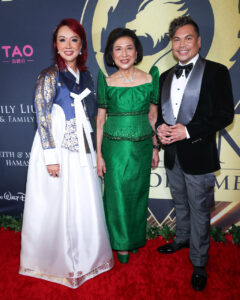
The most prominent recognition of the evening went to Melinda Rogers, who was named Woman of the Year. The award was presented by her brother, Sir William Rogers, adding a personal dimension to the moment.
The Rogers family legacy dates back to the early 1900s, when they established the Union Rock Company, once the largest sand, rock, and gravel enterprise in the world. Their contributions helped shape key Southern California infrastructure, including projects that became the Pasadena Freeway, The Grapevine, and The Wedge at Newport Beach.
Since stepping into her role as Chairwoman, Rogers has focused on expanding the organization’s reach through partnerships with institutions such as the San Marino Motor Classic, The California Club, The Athenaeum at Caltech, and The Lincoln Club. She also played a key role in merging the Asian Hall of Fame with the Women Investing In Nonprofits (WIN) volunteer guild, while advancing efforts toward a Honolulu expansion and a future center in the Pasadena and San Gabriel Valley.
A Diverse and Global Class of Inductees
The Class of 2026 reflected one of the most diverse groups in the organization’s history, spanning sports, entertainment, business, science, and culture.
Among those honored were baseball pioneer Hideo Nomo, NASA astronaut Dr. Kjell N. Lindgren, Emmy Award-winning anchor Frank Buckley, and ukulele virtuoso Jake Shimabukuro.
The entertainment world was represented by K-pop icon Rosé, while business and philanthropy honorees included Maggie Tseng, Jerry Lee and Charlene Lee, Dave Lu, and Miky Lee.
Cultural and global contributions were recognized through figures such as Yue-Sai Kan, Dr. Charles Huang, and Kitty Lo, along with Emmy-winning producer Simran Baidwan.
The evening also honored institutions and families, including the Yang family behind Din Tai Fung and the Valbuena Family of Yuhaaviatam of San Manuel Nation. Semiconductor leader TSMC was represented by Morris Chang and Sophie Chang.
Goodwill Ambassadors Robert Vargas and Dennis Quaid, along with Cultural Ambassador Jin Ye, were also formally appointed during the ceremony.
A Voice of Experience
One of the more reflective moments of the evening came from Loida Nicolas Lewis, an Asian Hall of Fame inductee since 2007. She shared insights from her memoir Why Should Guys Have All the Fun?, offering a perspective shaped by her leadership of TLC Beatrice International, a $2.2 billion multinational company.
Her story carries a rare distinction. She became the first Asian woman to pass the New York bar without attending law school in the United States, and later led the company following the passing of her husband, Reginald Lewis, widely recognized as America’s first Black billionaire.
What stood out here was the depth of experience she brought to the room. It added a layer of reflection to an otherwise celebratory evening.
Performance, Music, and Cultural Expression
The evening was guided by Suzie Suh, whose presence as Master of Ceremonies set a composed and welcoming tone.
Headlining the performances was Maki Mae, a Grammy Voting Member and multi-lingual vocalist who performed selections from her upcoming classical album New Moon. Her story, including being born mostly deaf and later performing on global stages such as America’s Got Talent and the Special Olympics World Games, added a powerful dimension to the evening.
Musical accompaniment by Dr. Jason Lo and Ryan Phipps provided continuity throughout the program, while the Los Angeles Taiko Collective opened the raffle segment with a performance that brought a different kind of energy into the room.
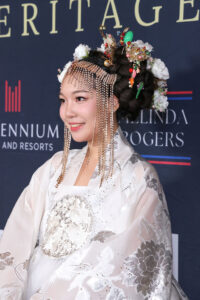
The inaugural Heritage Costumes Fashion Show introduced a visual element that felt both celebratory and cultural, featuring pageant titleholders including Nicole Ho, Michelle Ho, Tsengel Ganbat, and Alejandra Ranaudo.
A Legacy That Continues to Expand
The Asian Hall of Fame traces its origins to the Robert Chinn Foundation, with roots dating back to 1863. Since then, it has grown into a nationally recognized nonprofit with a presence across multiple states.
Since 2022, the organization has delivered $3.7 million in direct impact through 216 grants, scholarships, and fellowships, supporting 1,860 jobs. These numbers reflect a scale of influence that extends far beyond the gala itself.
The 2026 season was supported by title sponsors Millennium Hotels & Resorts, Melinda Rogers, and TAO, along with partners including Microsoft, MHG Capital, and BGW. Institutional support came from organizations such as Walt Disney Studios, Boeing, and Yuhaaviatam of San Manuel Nation.
An Evening That Balanced Celebration and Purpose
What stayed with me most about the evening was its balance. It managed to celebrate achievement, culture, and community while maintaining a clear sense of purpose.
The setting, the performances, and the recognitions all contributed to a cohesive experience, but it was the underlying mission that gave the night its weight.
The next Asian Hall of Fame induction ceremony is set for November 7, 2026, again at The Biltmore Los Angeles. If this gala is any indication, it will continue to build on a legacy that is both evolving and firmly rooted in impact.
Follow the latest updates on the INDUCTION 2026 event page.