
Some events feel timeless, not because they resist change, but because they carry their identity forward with clarity. The Viennese Opera Ball in New York has always belonged to that category. Returning for its 70th annual gala on May 8, 2026, the evening once again takes place at Cipriani 42nd Street, a setting that mirrors the grandeur and ceremony the Ball is known for.
This year’s edition carries an added sense of occasion. Alongside its milestone anniversary, the Ball also honors 270 years since the birth of Wolfgang Amadeus Mozart and recognizes the 250th anniversary of the United States. Together, these elements reinforce what the evening has long represented, a cultural bridge between Austria and America, expressed through music, dance, and tradition.
A Tradition Rooted in Cultural Exchange
Since its founding in 1955, the Viennese Opera Ball has brought the elegance and ritual of Vienna’s grand ball tradition to Manhattan. Held under the auspices of the U.S. Austrian Chamber of Commerce, it has evolved into one of New York’s most enduring international cultural events.
What stood out to me is how consistent its identity has remained. The Ball has never tried to modernize for the sake of relevance. Instead, it preserves a sense of ceremony that feels increasingly rare, while still welcoming a contemporary audience of diplomats, cultural figures, philanthropists, and leaders from across industries.
It is not simply a social gathering. It is a cultural expression, one that brings together different worlds through a shared appreciation for music, tradition, and refinement.
A Theme That Sets the Tone
The 2026 theme, “A Magical Night, a Fairy Masquerade Ball,” introduces a sense of visual storytelling that complements the evening’s structure. Masks are encouraged, adding a layer of intrigue without disrupting the formality that defines the event.
What I find particularly compelling is how the theme enhances rather than replaces tradition. The white tie dress code remains unchanged, with gentlemen in tails and ladies in full-length ball gowns. The masquerade element adds texture, but the foundation stays intact.
Music, Performance, and Artistic Presence
The program reflects the Ball’s deep connection to classical performance.
Among the featured opera stars are Angel Blue, Lawrence Brownlee, Hera Hyesang Park, Adam Smith, and Golda Zahra. Their presence brings a level of artistic authenticity that anchors the evening.
The ballet component is led by Liudmila Konovalova, whose performance reflects the precision and elegance associated with Viennese tradition.
Music throughout the evening is provided by the Viennese Opera Ball Orchestra under the direction of Rainer Sulzgruber. What stood out to me here is the continuity. The music does not feel like a segment of the evening, it carries through it, shaping the atmosphere from beginning to end.
The Ceremony That Defines the Evening
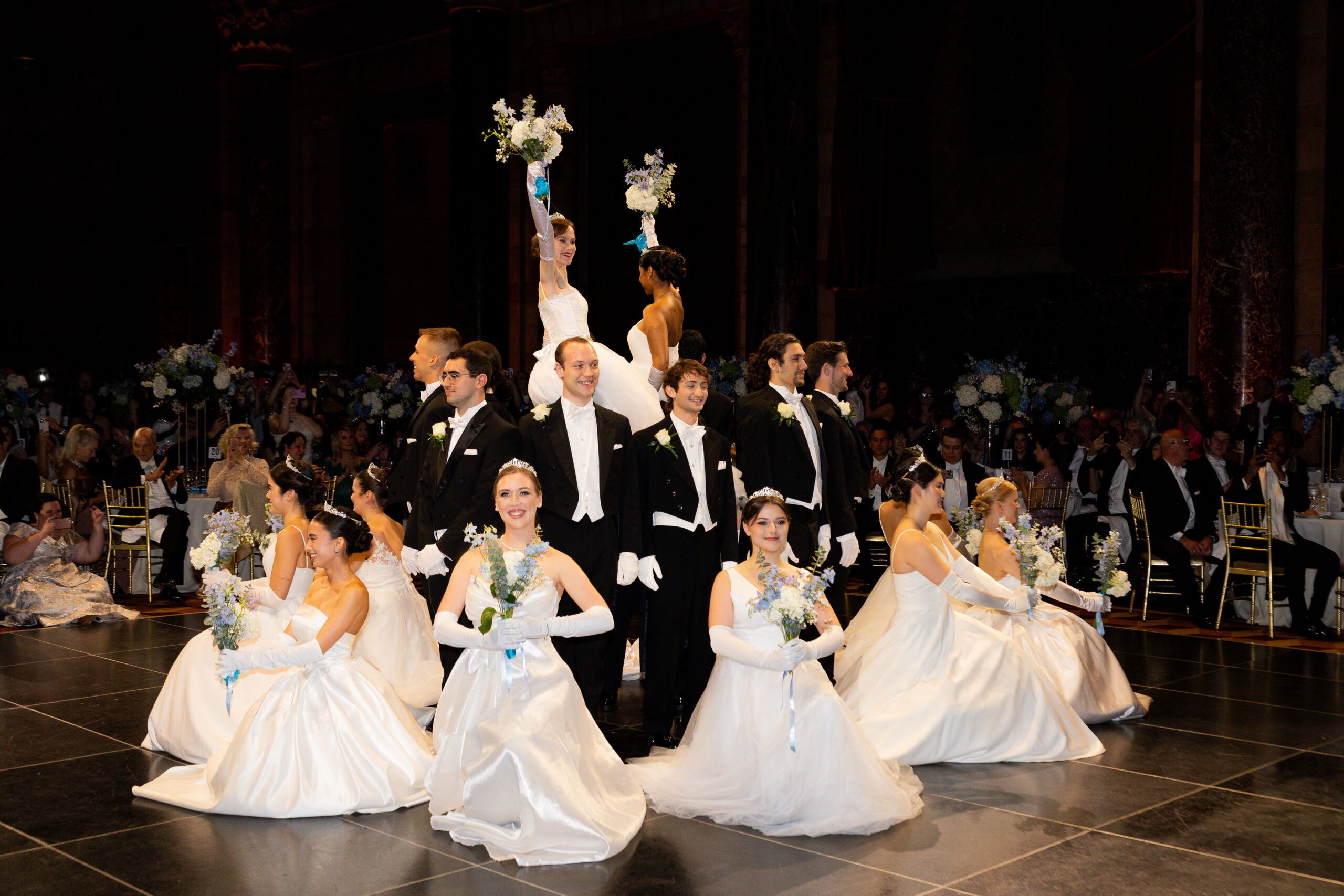
One of the most anticipated moments remains the opening ceremony, featuring the formal presentation of debutantes and their escorts. Choreographed by Sandra Stockmayer of Dancing School Svabek, this procession is central to the Ball’s identity.
There is a precision to it that feels almost ceremonial. The movement, the timing, and the visual symmetry all reflect a tradition that has been preserved with care. It is not simply a performance, it is a continuation of a cultural ritual.
What stood out to me is how this moment sets the tone for everything that follows. It establishes a sense of order and elegance that carries throughout the evening.
An Evening That Unfolds in Layers
Following the opening, the evening moves through a series of experiences that feel both structured and fluid. A formal dinner gives way to dancing, while live and silent auctions introduce a philanthropic dimension.
At midnight, the traditional Quadrille invites guests to participate in a shared dance, breaking the boundary between observer and participant. It is one of those rare moments where the room shifts from formality to collective energy.
Later in the evening, the Tanzbar, featuring DJ Olivier, introduces a more contemporary note without disrupting the overall tone. What I noticed is how naturally the evening transitions between these phases. Nothing feels abrupt. It evolves gradually.
Philanthropy at the Core
While the visual and cultural elements define the experience, the Ball’s philanthropic mission remains central. Over the years, it has supported a wide range of charitable, cultural, and humanitarian initiatives, while continuing to promote Austrian heritage in the United States.
This dual purpose, celebration and contribution, is what gives the event its depth. It is not only about preserving tradition, but also about extending its impact into the present.
A Legacy That Continues to Evolve
Reaching its 70th anniversary, the Viennese Opera Ball stands as both a historical milestone and a living tradition. It has managed to maintain its identity while remaining relevant, not by adapting to trends, but by staying true to its purpose.
What stayed with me most is the sense of continuity. The Ball connects generations, cultures, and disciplines in a way that feels intentional rather than symbolic.
Where Tradition Meets the Present
In a city known for constant movement, the Viennese Opera Ball offers something different. It slows time, if only for an evening, and allows tradition to take the lead.
The combination of music, ceremony, and cultural exchange creates an experience that feels complete. It is not just about what you see, but how the evening unfolds around you.
As New York marks this 70th annual edition, the Ball reaffirms its place as more than a social event. It is a space where heritage, artistry, and human connection come together with clarity and purpose.
And in that sense, it remains as relevant now as it was when it began.
For more information, please visit here