
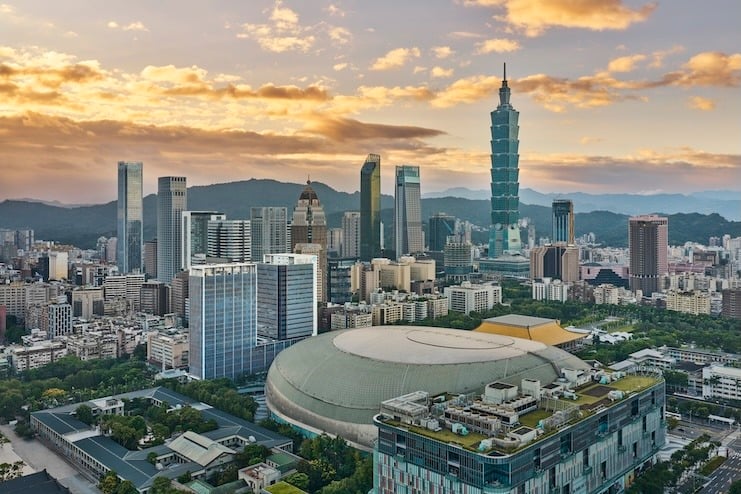
InterContinental Taipei: Inside IHG’s New 347-Room Flagship at the Taipei Dome
On October 12, 2026, IHG Hotels & Resorts opened the doors to InterContinental Taipei, a 347-room luxury hotel at the heart of the Taipei Dome complex in Xinyi District. The opening gives Taiwan’s capital its first full-service InterContinental, and IHG is positioning the property as the brand’s flagship in the Taiwan market. The timing is deliberate: the debut coincides with InterContinental Hotels & Resorts celebrating its 80th anniversary.
This is not a quiet soft opening. Within hours of the announcement, the story was being covered by travel outlets across three continents, which tells you how rare a genuine new-build flagship in a major Asian capital has become. If Taipei is on your travel list, or if you collect IHG One Rewards points, here is everything worth knowing, in numbers.
InterContinental Taipei by the numbers
347 — guest rooms and suites in the new hotel.
80 — the anniversary InterContinental Hotels & Resorts is celebrating in 2026, the year the Taipei flagship opens.
4 — InterContinental properties now operating in Taiwan. Taipei joins InterContinental Kaohsiung (opened 2021), InterContinental Taichung (2024), and InterContinental New Taipei Hot Spring (2025).
2 — InterContinental collaborations between IHG and Farglory Group, the developer behind both this hotel and InterContinental Kaohsiung. Farglory also built the Taipei Dome itself, and the two partners have additionally signed the Hualien Farglory Hotel, which will join IHG’s Vignette Collection.
38 — square metres (about 410 square feet) of the entry-level Classic Room, a comfortable size for a city hotel in Taipei.
76 — square metres where the residential-style suites start, each with a full kitchen, a dining area, and in-suite laundry.
202 — square metres (about 2,175 square feet) covered by the Presidential Suite at the top of the range.
7 — food and drink outlets, including two restaurants carrying the name of chef Akira Back.
55 — the inch count of the TV in every Classic Room, alongside a Bose Bluetooth speaker, a Nespresso machine, a Toto washlet, a Dyson hairdryer, and Byredo bath amenities.
358 — the U.S. dollar starting nightly rate for an entry-level Classic Room, including taxes and fees, with no destination fee. Across the year the average entry-level rate sits around $425.
71,000 to 76,000 — the IHG One Rewards points an award night costs in most months. Saturdays run 81,000 points, while a few dates in December and February drop as low as 63,000.
20 — minutes by car from Taipei Songshan Airport (TSA) to the hotel, or about 30 minutes by public transport. From Taiwan Taoyuan International Airport (TPE), the car journey takes around 50 minutes and public transport around 75 minutes.
5 — the number of MRT stops west on the Bannan (Blue) Line from the hotel to Taipei Main Station, where you connect to the Airport MRT for Taoyuan.
06:00 to 22:00 — the indoor pool’s daily hours. The gym runs 24 hours.
Where it is
The hotel sits at No. 535, Section 4, Zhongxiao East Road, inside the Taipei Dome complex in Xinyi District. The complex also holds the Dome itself and the Far Eastern SOGO Garden City mall, and Songshan Cultural and Creative Park sits on the hotel’s other side. The nearest MRT station is Sun Yat-sen Memorial Hall on the Bannan (Blue) Line, with Exit 5 landing you at the south-west corner of the Dome complex. City Hall station is also under a 10-minute walk away.
The location’s real selling point is the Dome. The Taipei Dome has become a major concert and baseball venue, and a growing number of travelers now fly to Taipei specifically for shows there. Being able to walk back to your room after a concert instead of fighting the post-show crowds at the MRT is a genuine perk. The trade-off runs in the other direction too: room rates on event nights are likely to spike, so checking the Dome’s calendar before locking in your dates is smart planning.
The rooms
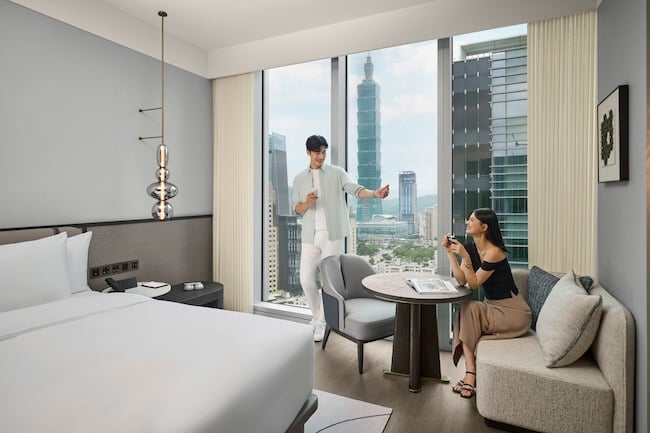
The entry-level Classic Room covers about 38 square metres (roughly 410 square feet) and comes with a sitting area, a 55-inch TV, a Bose Bluetooth speaker, a Nespresso machine, a Toto washlet, a Dyson hairdryer, and Byredo bath amenities. That is a strong spec list for a base room, and it reads like a hotel that knows exactly who it is competing with.
Higher-floor Classic Rooms and Classic Rooms facing Taipei 101 are sold as separate room types, so if the view matters to you, check which category you are actually booking rather than leaving it to chance at check-in. Selected rooms frame views of Taipei 101, and it is worth requesting a Taipei 101-facing room at the time of reservation.
Junior Suites run between 43 and 48 square metres (about 460 to 515 square feet). The entry-level suite above those is the Premium Suite Taipei 101 View at 55 square metres (about 590 square feet), which names its view in the room category itself.
The more interesting product is the set of residential-style suites, which start from approximately 76 square metres and come with a full kitchen, a dining area, and in-suite laundry. They are pitched at extended stays and guests who want apartment-scale space. At the very top sits the Presidential Suite at 202 square metres (about 2,175 square feet). For the math on when the splurge earns it, see our take on whether luxury hotel suites are worth the money.
Seven restaurants and bars, two by Akira Back
Seven outlets is a lot for a 347-room hotel, and it suggests the property is pitching itself as much at Taipei locals as at international guests. Two of the seven carry the name of Akira Back, the Korean-American chef whose restaurants span Asia, the Middle East, and North America:
- NTD Eatery (1st floor, Italian): breakfast 08:00 to 11:00 Monday to Friday, lunch 11:30 to 15:00 daily, dinner 17:30 to 22:00 Sunday to Thursday and 17:30 to 00:00 Friday and Saturday.
- Yi Social (5th floor, international buffet): breakfast 06:30 to 10:00, lunch 11:30 to 14:30, dinner 17:30 to 21:00, all daily.
- Rough Cuts (5th floor, grill): dinner 18:00 to 00:00 Tuesday to Sunday, lunch 11:30 to 14:30 Sunday only.
- Akira Back (2nd floor, modern Japanese): dinner 18:00 to 23:00, every day except Tuesday.
- Dosa by Akira Back (2nd floor, Korean open kitchen): dinner 18:00 to 22:00, Thursday to Monday.
- Thea Lounge (1st floor, coffee, tea, desserts and light bites, with cocktails in the evening): 09:00 to 00:00.
- Simple Sips (5th floor, cocktail bar): 17:00 to 01:00.
In-room dining runs 24 hours a day. One timing note: Taiwan’s Global Views magazine has reported that the two Akira Back restaurants will not open until November, even though the hotel’s website lists hours for all seven. The hotel is still getting things in order, so confirm before you plan a dinner around them.
Pool, gym, and Club InterContinental
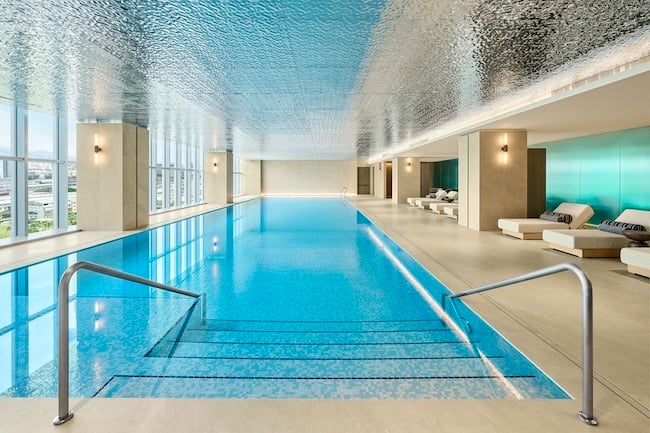
The indoor pool is open from 06:00 to 22:00, and the gym runs 24 hours with treadmills, elliptical machines, stationary bikes, a rower, and free weights. IHG’s announcement confirms the hotel has a Club InterContinental lounge, though the hotel’s website and the IHG booking engine give no details yet on access, hours, or what is included, and none of the room types in the booking engine are labeled as club rooms. What is known: all full suites appear to get lounge access.
One loyalty wrinkle worth knowing: club access is not a published benefit for IHG One Rewards Diamond Elite members, so if lounge access matters to you, you will need to book a Club InterContinental room or rate rather than counting on status.
What it costs
Cash rates for the entry-level Classic Room start at $358 a night, including taxes and fees, with no destination fee. Across the year, the average cost of an entry-level room sits around $425 a night. That positions the hotel in the upper tier of Taipei luxury without pushing into the stratosphere, which is notable given that Xinyi is an already crowded luxury market, with W Taipei and Grand Hyatt Taipei both within walking distance.
On points, an entry-level award night costs between 71,000 and 76,000 IHG One Rewards points in most months. Saturdays are priced higher at 81,000 points, while a few dates in December and February drop as low as 63,000. From a points perspective this looks promising but not amazing: most nights deliver around 0.56 cents of value per point, which beats the standard 0.4-cent benchmark for IHG points and the 0.5-cent value IHG places on points during a 100% bonus sale. It is a decent use of points rather than an outsized one, though Asia pricing remains far friendlier than what the same points buy in Europe and North America.
One more thing to watch: IHG has not yet added the hotel to its “save 15% on award nights at new properties” list, so better deals may appear in the coming weeks.
Why this opening matters
Taiwan has had InterContinental hotels since 2021, but the capital never had a flagship, and IHG members heading to Xinyi have had to look elsewhere for a full-service luxury stay. That gap is now closed. The property also anchors a real network: with Kaohsiung, Taichung, the New Taipei hot spring resort, and now Taipei, plus the signed Hualien Vignette Collection property in the pipeline, IHG’s Luxury and Lifestyle footprint in Taiwan is starting to look like a proper circuit rather than a scattering of properties. Pair a city stay in Xinyi with a couple of nights at the hot spring property and you have a genuine two-stop Taiwan itinerary.
The design concept, “In Taipei, For Taipei,” draws on the city’s architecture, culture, and collective memory, from the lobby installation to musical motifs woven into the event spaces, alongside details inspired by old Taipei. It is a local-first story in a market where international luxury can feel interchangeable.
It also lands in a busy month for hotel openings. Marriott opened the world’s first JW Marriott all-inclusive resort this month, another October 2026 hotel opening we just covered in Costa Rica, and the broader signal is that Asia’s luxury travel momentum keeps building, as our look at why South Korea is the luxury travel destination of 2026 argued earlier this month.
Should you book now?
The honest answer is that it depends on your tolerance for opening-week quirks. At the time of writing, no images of the restaurants appear on the hotel’s website, several restaurant links are not working, and the site does not mention most of the room types the hotel actually offers. The two headline Akira Back restaurants do not open until November. None of that is unusual for a brand-new hotel, and the standard advice applies: give it a few months to sort out the teething issues and get all seven restaurants running.
Three practical tips if you are booking anyway: request a Taipei 101-facing room at the time of reservation rather than leaving it to chance; check the Taipei Dome’s event calendar, because rates on concert and game nights will spike; and keep an eye on IHG’s new-property award discount list, since the 15% savings have not landed yet and could make the points math meaningfully better.
For more top-tier stays, browse our ranking of the best hotels in the world.
