
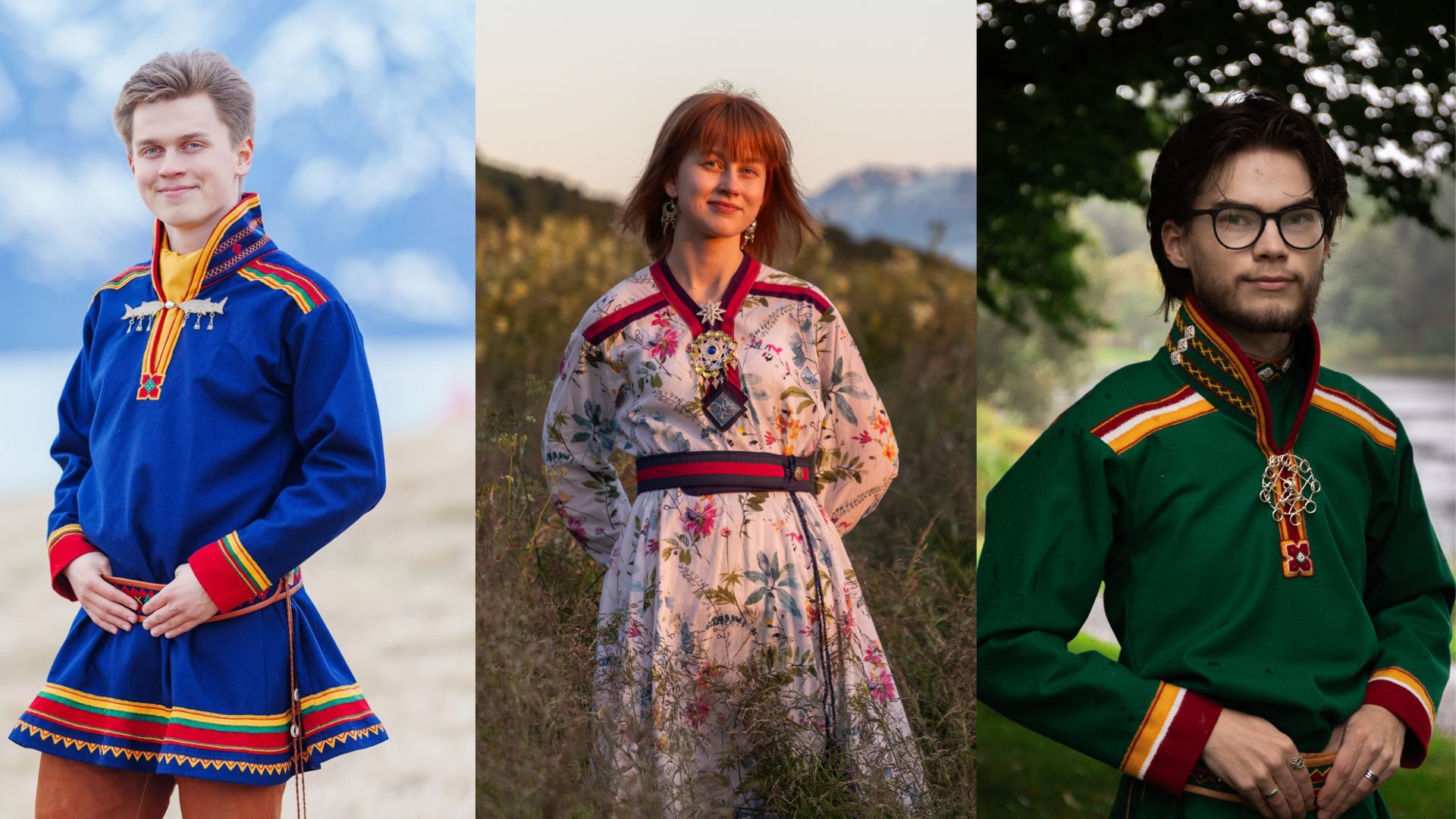
L to R: Johannes Vang, Wilhelmina Silba, Jonathan Vang
There is a particular kind of tension that emerges in stories set near borders, places where geography, identity, and authority intersect in unpredictable ways. BORDERLINE, the award-winning short film from Sámi sibling creative team Johannes Vang, Wilhelmina Silba, and Jonathan Vang, appears to explore exactly that terrain with precision and restraint.
Following its win for Best Short Film at the 2026 Tromsø International Film Festival, the film is now set to make its North American premiere at the imagineNATIVE Film + Media Arts Festival, taking place June 2 through June 7, 2026, in Toronto.
What stood out to me immediately is how the project combines a tightly constructed thriller atmosphere with broader themes surrounding identity, control, and Indigenous visibility. It feels grounded in a very specific region while also speaking to tensions that resonate far beyond it.
A Story Set at the Edge of Three Nations
Set in a remote northern territory where Norway, Finland, and Sweden meet, BORDERLINE centers on a tense encounter involving a Norwegian customs officer, a Finnish poacher, and a mysterious Swedish traveler.
As suspicion grows and misunderstandings begin to escalate, the situation at the border crossing becomes increasingly unstable. The film examines how quickly authority can shift when trust disappears, and how fragile perceptions of control become under pressure.
What I find compelling is the balance the film reportedly maintains between suspense and subtle humor. Rather than presenting its themes in a heavy-handed way, it appears to let tension emerge naturally through character interaction and uncertainty.
The border itself becomes more than a location. It functions as a psychological and cultural space where assumptions are constantly challenged.
A Family Collaboration at the Center of the Film
One of the most distinctive aspects of BORDERLINE is the creative team behind it.
The film is directed and produced by Johannes Vang, written by Wilhelmina Silba, and edited by Jonathan Vang. Together, the siblings represent an emerging wave of Sámi filmmakers bringing Indigenous perspectives from northern Europe into international cinema conversations.
What stood out to me is how collaborative the project feels even from its structure. The fact that direction, writing, and editing remain within the same family dynamic gives the film a sense of cohesion and shared perspective that feels personal rather than purely professional.
Their participation at imagineNATIVE also carries broader significance. It reflects the growing visibility of Sámi voices within global Indigenous filmmaking spaces, particularly at a time when international audiences are becoming increasingly interested in regionally grounded storytelling.
A Growing International Presence
For Johannes Vang, the premiere arrives during a period of expanding recognition. In addition to directing BORDERLINE, he was also selected as a 2026 Indigenous Cinema Alliance Fellow, an acknowledgment that further positions him as a filmmaker to watch within the international Indigenous cinema landscape.
Meanwhile, Wilhelmina Silba’s writing is already being recognized as part of a bold new generation of Indigenous storytellers, while Jonathan Vang’s editorial work has been noted for its instinctive cinematic rhythm and precision.
What I noticed while reviewing the project is how naturally each creative role seems aligned with the film’s tone. The writing, editing, and direction appear built around atmosphere and emotional tension rather than overt dramatics.
imagineNATIVE Continues to Expand Global Indigenous Cinema
The inclusion of BORDERLINE at imagineNATIVE Film + Media Arts Festival feels especially fitting given the festival’s long-standing commitment to Indigenous storytelling from around the world.
Over the years, imagineNATIVE has become one of the most influential platforms for Indigenous filmmakers, artists, and media creators, creating space not only for visibility but for international creative exchange.
What stood out to me is how films like BORDERLINE expand the conversation around Indigenous cinema itself. Rather than being confined to a single narrative framework, the film appears to blend thriller elements, political tension, and dark humor while remaining deeply connected to Sámi identity and northern European geography.
That layered approach reflects how Indigenous storytelling continues to evolve beyond expectations or categories often imposed on it.
Screenings and Festival Appearances
The North American premiere of BORDERLINE is scheduled for Thursday, June 4 at 8:30 PM at TIFF Lightbox Cinema 2.
Following its in-person screening, the film will also stream online beginning June 8 through June 14, making it accessible to a wider audience beyond the festival itself.
In addition to the screening, Johannes Vang will participate in a panel discussion titled Indigenous Resistance in the Industry + Building Cross-Racial Solidarity. The conversation is scheduled for Saturday, June 6 at The Well Wellington Event Venue in Toronto.
That discussion feels particularly relevant given the themes surrounding visibility, authority, and identity that BORDERLINE itself explores.
A Film Rooted in Place, Yet Universally Resonant
One of the strongest impressions surrounding BORDERLINE is how specifically rooted it is in its setting. The remote northern region where the film takes place is not simply background scenery, it appears central to the emotional and political tension of the story.
At the same time, the themes feel widely recognizable. Questions of control, suspicion, borders, and cultural identity resonate far beyond Scandinavia.
What stayed with me most is how the film seems to approach those ideas through human interaction rather than broad statements. The tension comes from people navigating uncertainty, misunderstanding, and shifting power dynamics in real time.
A New Generation of Indigenous Storytelling
The emergence of filmmakers like Johannes Vang, Wilhelmina Silba, and Jonathan Vang signals something larger happening within international cinema. Indigenous storytelling is becoming increasingly global, interconnected, and formally diverse.
Rather than adapting to established industry expectations, many of these filmmakers are creating work that remains deeply tied to their own communities while still reaching international audiences.
That balance is part of what makes BORDERLINE feel significant even before its wider release.
It is not simply a festival short gaining momentum. It represents a new generation of Sámi creatives bringing stories from the far north into a broader cinematic conversation, on their own terms.
For more information, visit here.
She’s All Over the Place Podcast