
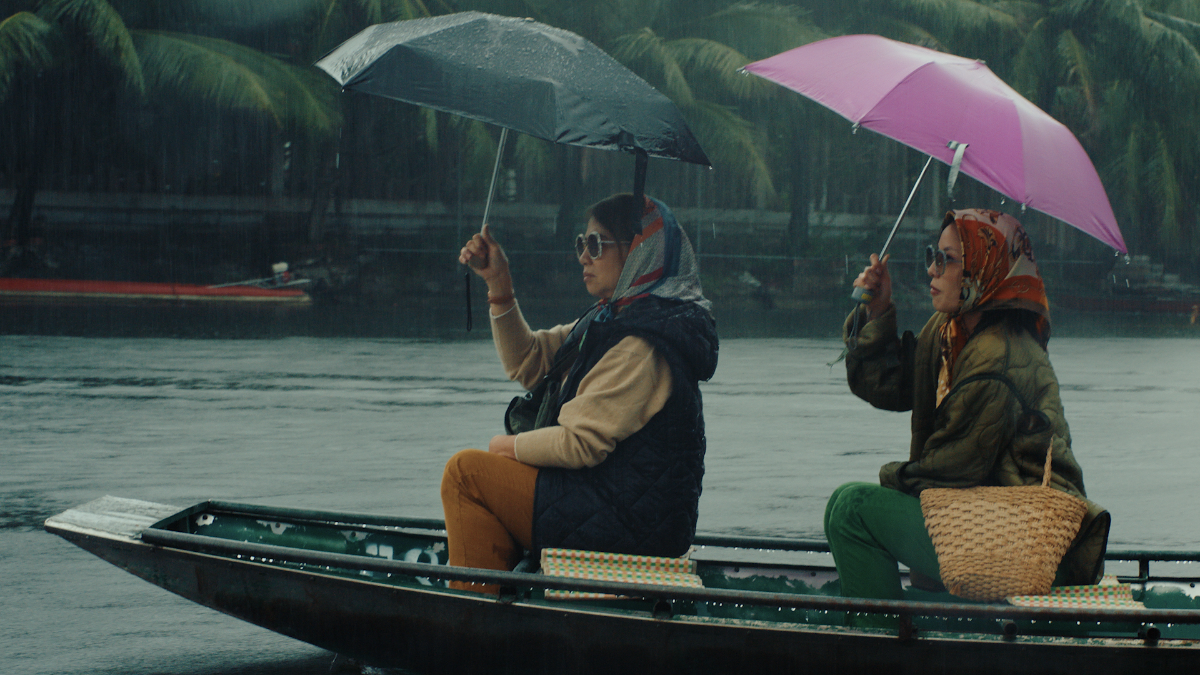
Some documentaries begin with historical research. Others begin with personal loss. Y VÂN: The Lost Sounds of Saigon seems to emerge from both at once.
Directed by Khoa Ha and Victor Velle, the documentary follows a young Vietnamese American artist searching for her late grandfather’s missing musical recordings, a journey that gradually unfolds into something much larger than archival recovery alone.
What starts as a personal investigation becomes an exploration of memory, displacement, cultural identity, and the overlooked history of pre-war Vietnamese music. As the film moves between generations and continents, it reveals how sound itself can carry traces of family history long after people and places begin to disappear.
What stood out to me while reading about the project is how intimate the premise feels. Rather than approaching Vietnamese cultural history from an academic distance, the documentary appears rooted in emotional inheritance, the kind passed down quietly through music, stories, and absence.
Recovering a Forgotten Musical Legacy
At the center of the film is legendary Vietnamese composer and musician Y Vũ, whose recordings and artistic contributions form the emotional backbone of the documentary.
As the younger generation searches for his lost work, the film gradually uncovers hidden family narratives alongside broader cultural history connected to Saigon’s musical past.
What I find particularly compelling is that the search is not framed simply as preservation. It appears to be about reconnection, reconnecting with memory, with identity, and with a version of Vietnamese culture that many younger generations may only know through fragments.
The title itself, The Lost Sounds of Saigon, carries a certain emotional weight. It suggests not only missing recordings, but also the disappearance of entire cultural atmospheres shaped by war, migration, and time.
Music as Cultural Memory
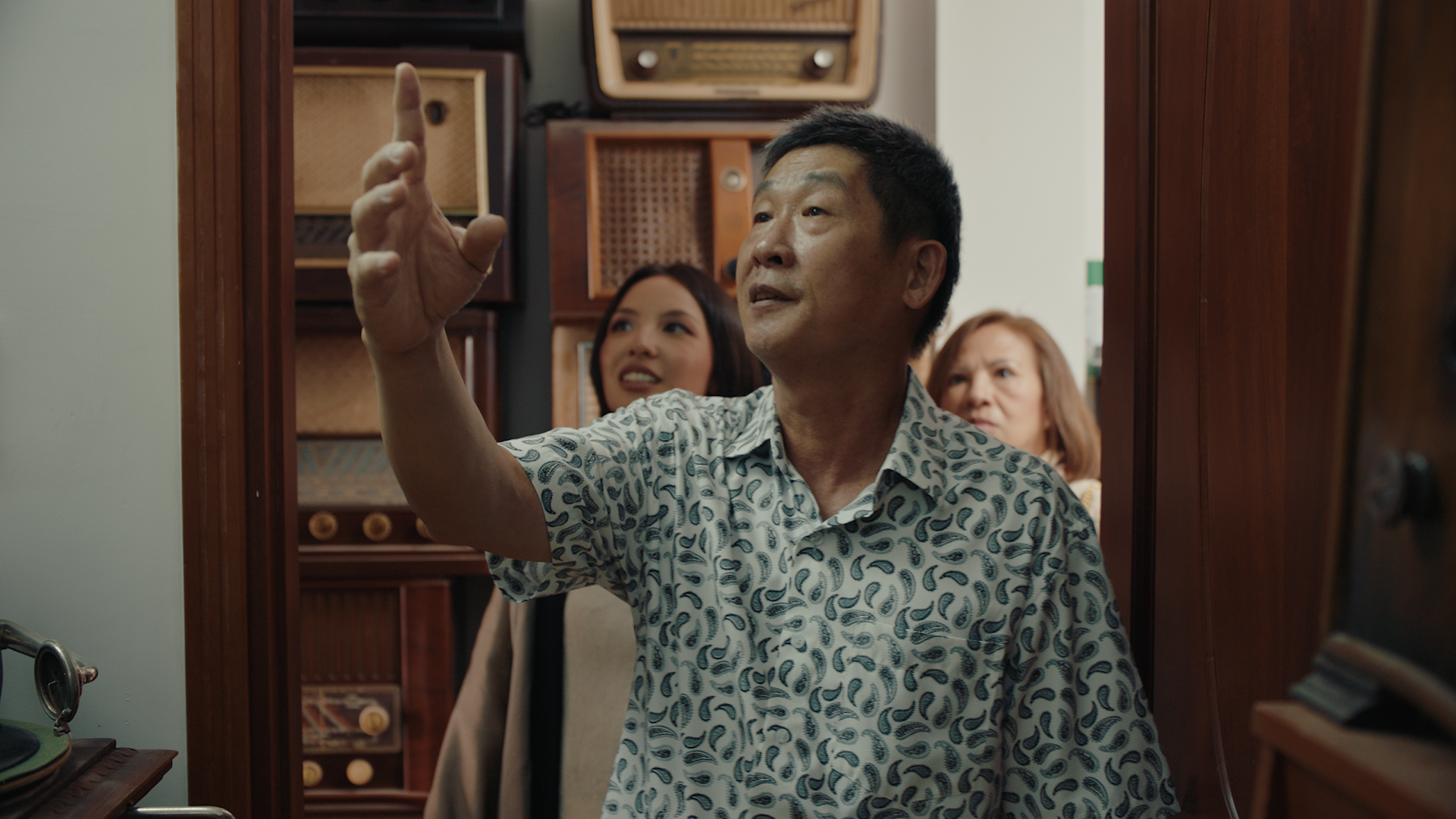
The documentary seems deeply interested in how music functions as an archive of emotional and historical experience.
Before the fall of Saigon, Vietnamese popular music reflected a vibrant and evolving artistic culture that blended traditional influences with global sounds. Much of that history became fractured through displacement and political upheaval following the Vietnam War.
What stood out to me is how the film appears to approach those historical realities through family connection rather than broad political narration. The emotional entry point remains deeply personal.
As recordings are rediscovered and conversations unfold, music becomes a bridge between generations, linking contemporary Vietnamese American identity with histories that were interrupted, scattered, or forgotten.
That emotional approach gives the documentary a sense of warmth that feels distinct from more conventional music-history films.
A Broad Community of Voices
The documentary features an extensive cast of artists, musicians, historians, family members, and cultural voices, including Tuyền Trần, Hà Trần, Phương Tâm, Mark Gergis, and Jason Gibbs among many others.
What I noticed while reviewing the project is how collaborative the film appears to be. Rather than focusing solely on one individual biography, the documentary seems to create a wider portrait of cultural memory shared across generations and diasporic communities.
That collective perspective feels especially important in stories connected to migration and displacement, where cultural preservation often depends on community networks rather than formal institutions.
A Visually Intimate Documentary
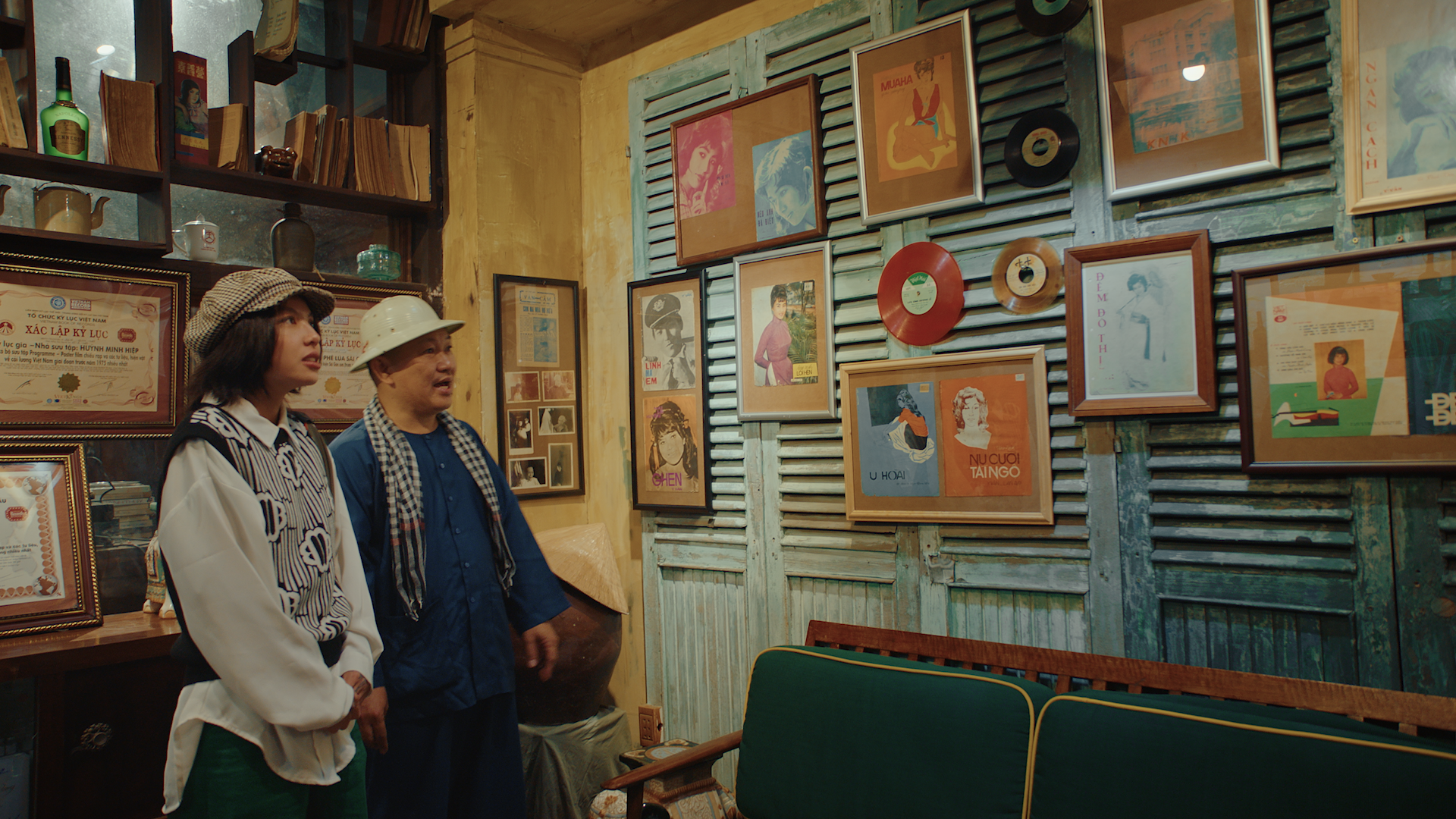
The film’s visual language is shaped by cinematographer Jake L. Mitchell and editor Benjamin Shearn, whose work appears designed to balance archival material with present-day emotional observation.
What stood out to me is how naturally music and imagery seem intertwined throughout the documentary. The film does not appear interested solely in explaining history. It wants audiences to feel its emotional texture.
That atmosphere becomes especially meaningful in stories involving memory and diaspora, where sensory details, songs, recordings, photographs, voices, often become the strongest surviving links to the past.
A Growing Festival Presence
Y VÂN: The Lost Sounds of Saigon has already begun building momentum across the 2026 festival circuit, screening at multiple film festivals throughout the spring and summer season.
The documentary’s lineup includes the San Luis Obispo International Film Festival, Atlanta Film Festival, San Diego Asian Film Festival, DOC LANDS Documentary Film Festival, Los Angeles Asian Pacific Film Festival, and HAAPIFEST.
What I find interesting is how naturally the film seems positioned between multiple audiences. It functions as a music documentary, a family story, a cultural archive, and a diasporic exploration all at once.
That layered identity may explain why it resonates across such varied festival spaces.
Vietnamese Stories Through a New Generational Lens
There has been a noticeable shift in recent years toward more personal and nuanced storytelling within Asian American and diasporic cinema. Rather than focusing solely on broad historical trauma, many filmmakers are now exploring how history survives quietly through family relationships, creative expression, and inherited memory.
Y VÂN: The Lost Sounds of Saigon appears deeply connected to that movement.
What stayed with me while reading about the film is how much of the story revolves around listening, not only listening to music itself, but listening to older generations, hidden stories, and overlooked histories.
That act of listening feels especially meaningful in diasporic communities where cultural memory is often fragmented across languages, countries, and generations.
More Than a Music Documentary
Although music sits at the center of the film, the documentary appears to extend far beyond musical nostalgia.
At its core, the project seems concerned with questions many immigrant and diasporic families quietly carry. What gets preserved across generations? What gets lost? And how do younger generations reconnect with histories they inherited only partially?
The search for lost recordings ultimately becomes a search for continuity itself.
What I found most compelling is that the film does not appear driven by grand revelations or dramatic twists. Instead, its emotional power seems rooted in accumulation, conversations, songs, memories, and fragments slowly forming a fuller picture over time.
A Film About What Survives
In many ways, Y VÂN: The Lost Sounds of Saigon feels like a documentary about survival, not only of people, but of culture, sound, and memory.
Even when physical archives disappear, traces remain in songs, recordings, stories, and emotional connections passed between generations.
That idea gives the film a quiet resonance that feels especially timely right now, as more filmmakers explore how personal archives shape collective identity.
And perhaps that is what makes the documentary feel so affecting. It understands that recovering the past is rarely only about history itself. Sometimes it is about understanding who we are once those lost sounds begin to return.
For more information, visit here.
She’s All Over the Place Podcast