

Horror has always reflected cultural anxieties, but every so often a filmmaker arrives who seems less interested in frightening audiences than in exposing the emotional chaos already living underneath them. Jane Schoenbrun has quickly become one of those filmmakers.
Following the haunting emotional impact of I Saw the TV Glow, Schoenbrun now returns with Teenage Sex and Death at Camp Miasma, a feverish, erotic, emotionally unstable slasher film that already feels impossible to neatly categorize.
And honestly, that may be exactly why it feels so exciting.
WATCH TRAILER
Set for theatrical release on August 7, the film appears to transform classic slasher mythology into something deeply psychological, queer, seductive, and emotionally raw. Early reactions are already describing it as “a new gospel” and “the sexy sapphic slasher tribute we need right now,” while others suggest Schoenbrun may have created an entirely new cinematic subgenre altogether.
That kind of praise sounds hyperbolic until you remember what Schoenbrun accomplished with I Saw the TV Glow, a film that turned nostalgia, loneliness, identity, and media obsession into one of the most emotionally devastating horror experiences in recent memory.
This new project appears even bolder.
A Slasher About Desire, Obsession, and Reinvention
The premise itself already feels wonderfully strange.
After years of failed sequels and declining relevance, the fictional Camp Miasma horror franchise is handed to an ambitious young filmmaker hoping to resurrect it for a new generation. But when she visits the now-reclusive actress who starred in the original film, the two women become trapped inside a surreal, blood-soaked emotional spiral filled with desire, fear, fantasy, and delirium.
What immediately makes the concept compelling is that it operates simultaneously as:
- slasher homage
- industry satire
- queer psychological horror
- exploration of fandom and identity
- meditation on female desire and performance
That layered structure feels deeply aligned with Schoenbrun’s filmmaking style, where genre is never simply genre. Horror becomes emotional metaphor.
And honestly, few contemporary filmmakers understand that relationship between emotional vulnerability and horror aesthetics better than they do.
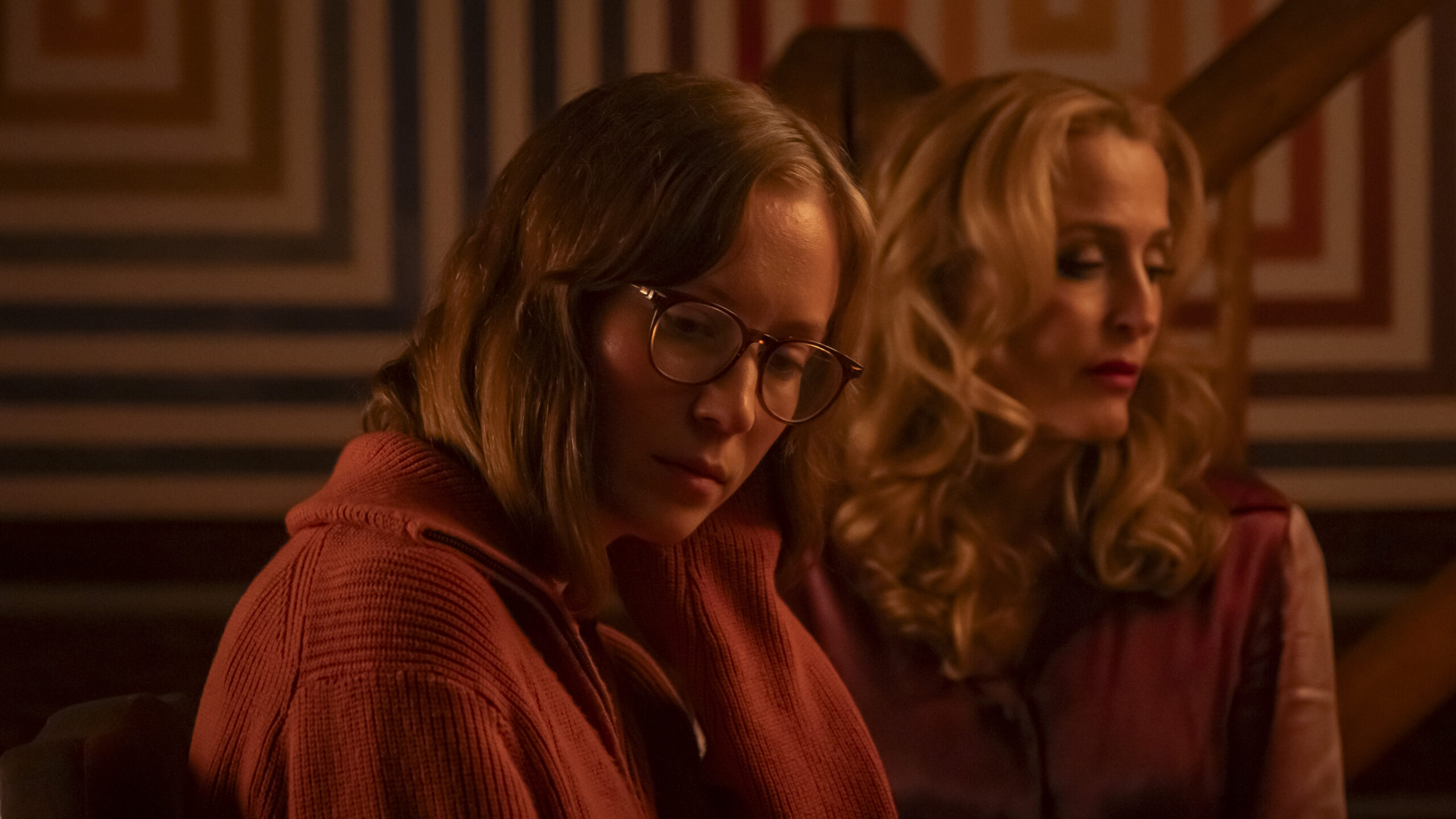
Jane Schoenbrun Continues Redefining Modern Horror
With only a handful of features, Jane Schoenbrun has already emerged as one of the most distinct voices working in genre cinema today.
Their previous films, including We’re All Going to the World’s Fair and I Saw the TV Glow, transformed internet alienation, identity crisis, and emotional dissociation into deeply unsettling cinematic experiences.
But what makes Schoenbrun’s work so unique is that the horror rarely comes from traditional scares alone.
Instead, their films explore the terror of emotional disconnection, longing, repression, and fractured identity. Characters often seem suspended between realities, between fantasy and memory, between who they are and who they fear becoming.
That emotional instability appears central to Teenage Sex and Death at Camp Miasma as well.
The film sounds less interested in replicating slasher formulas than in dissecting why those stories continue haunting audiences emotionally decades later.
Gillian Anderson and Hannah Einbinder Lead an Extraordinary Cast
The casting alone suggests the film is operating on a very particular wavelength.
Gillian Anderson plays the reclusive original scream queen at the center of the mystery, while Hannah Einbinder stars as the young filmmaker attempting to revive the franchise.
That pairing feels brilliant.
Anderson brings decades of emotional intensity and layered performance history into the role, while Einbinder, best known for Hacks, has quietly become one of the most emotionally compelling younger performers working today.
Together, they seem perfectly positioned to anchor a story built around obsession, reinvention, performance, and emotional collapse.
The supporting cast only deepens the intrigue, featuring performers including Eva Victor, Sarah Sherman, Jasmin Savoy Brown, Quintessa Swindell, and Jack Haven.
It is an ensemble filled with performers who thrive in emotionally unconventional material.
Horror Through a Queer Lens
One reason the film already feels culturally important is how openly it embraces queer identity and sapphic desire within horror, not as subtext, but as emotional foundation.
Historically, queer themes have often existed within horror indirectly, hidden through metaphor, coded imagery, or outsider narratives. Schoenbrun’s work instead places those emotional experiences directly at the center.
And according to early reactions, Teenage Sex and Death at Camp Miasma appears to push that exploration even further.
But importantly, it does not sound interested in sanitizing horror for respectability. The film reportedly remains messy, sensual, chaotic, frightening, and emotionally overwhelming.
That tension feels intentional.
Because desire itself, especially repressed desire, has always functioned as one of horror cinema’s most powerful emotional engines.
A Slasher Film About the American Sexual Psyche
One review quoted in the film’s promotional materials suggests the movie “might heal the American sexual psyche,” which honestly sounds absurdly ambitious until you consider what Schoenbrun seems interested in examining.
The slasher genre has always been deeply connected to sexuality, repression, shame, performance, voyeurism, and punishment. Yet mainstream horror often treats those themes mechanically rather than emotionally.
Schoenbrun appears determined to confront them directly.
By centering female filmmakers, aging scream queens, queer desire, fandom culture, and emotional vulnerability inside the framework of a slasher film, Camp Miasma sounds less like parody and more like genre exorcism.
A horror movie unpacking decades of buried emotional tension embedded within the genre itself.
Alex G’s Music Likely Shapes the Emotional Atmosphere
Another detail that immediately stood out is the involvement of Alex G composing the score.
Alex G’s music has always carried a strange emotional instability, simultaneously intimate, unsettling, nostalgic, and dreamlike. That emotional texture feels perfectly suited to Schoenbrun’s cinematic world.
Music in their films rarely functions as background alone. It becomes part of the emotional architecture itself.
Given how central atmosphere appears to this project, the soundtrack may ultimately become one of the film’s defining elements.
Why Films Like This Matter Right Now
At a time when much of mainstream horror increasingly prioritizes formula, franchise expansion, and algorithm-friendly familiarity, filmmakers like Jane Schoenbrun represent something much more unpredictable.
They are not simply making horror movies.
They are interrogating horror itself.
And perhaps more importantly, they are using genre cinema to explore emotional and psychological experiences many audiences rarely see reflected honestly onscreen.
That willingness to create emotionally vulnerable horror, particularly through queer and female-centered perspectives, feels increasingly vital for the genre’s future.
Final Thoughts
Teenage Sex and Death at Camp Miasma already sounds less like a conventional horror film and more like a full emotional hallucination.
A slasher movie about desire.
A queer fever dream about identity and performance.
A meditation on fandom, repression, and cinematic memory wrapped inside blood-soaked genre imagery.
And honestly, only Jane Schoenbrun seems capable of balancing all those elements while still making something emotionally coherent.
If I Saw the TV Glow established Schoenbrun as one of modern horror’s most original voices, this new film feels poised to push that vision even further into something stranger, riskier, and potentially unforgettable.
For more information, visit here.
She’s All Over the Place Podcast