
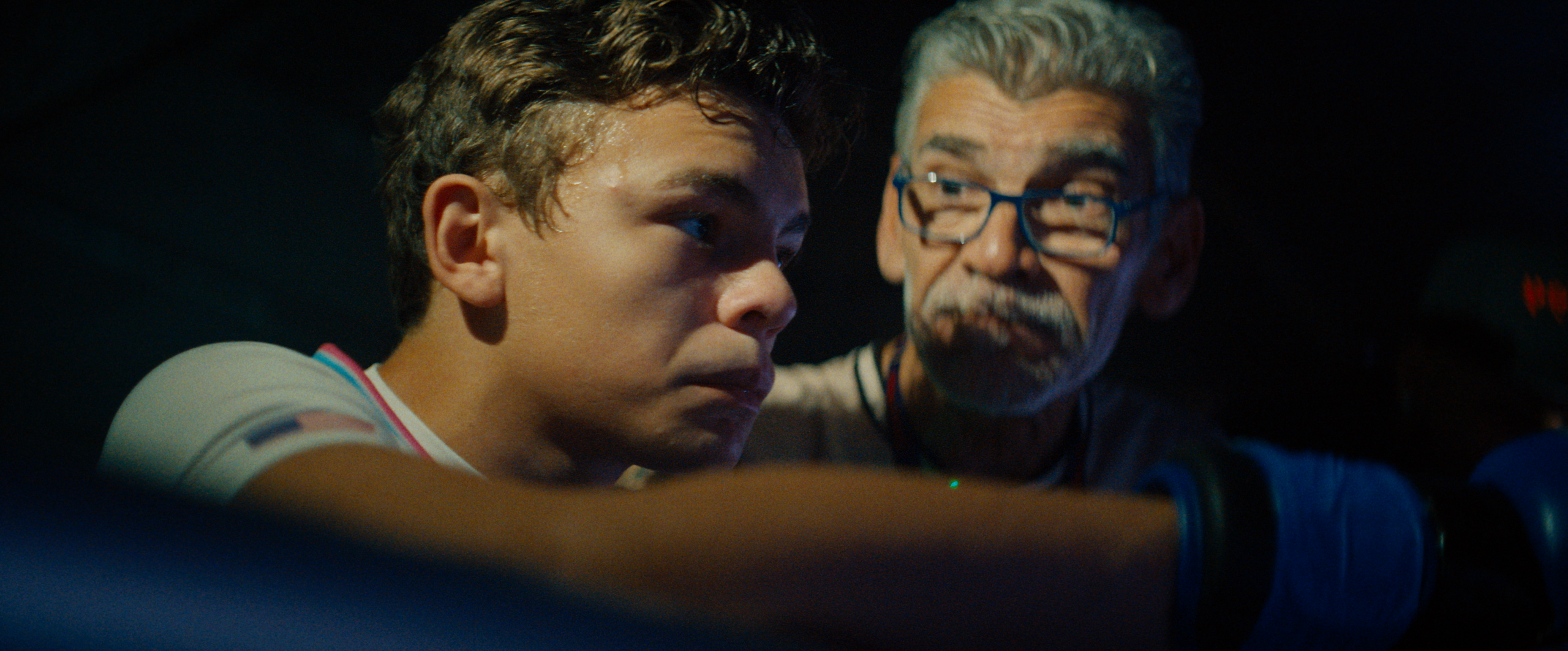
At the 2026 Toronto International Film Festival, a story about a father, a son and the pressure of pursuing a dream has emerged as one of the festival’s standout Canadian shorts. Michael Del Monte’s Fight Kid has won the Best Canadian Short Film Award, announced at the TIFF Awards Ceremony on September 20 in Toronto.
Del Monte’s debut narrative short takes audiences into the working-class neighbourhoods of Miami, where an unexpected MMA opportunity forces a father and his 13-year-old son to confront the complicated boundary between parental love and ambition.
One Fight, One Day, and Everything at Stake
At the centre of Fight Kid is Eddie, a father who sees extraordinary potential in his 13-year-old son, Isaiah. When Isaiah is offered an unexpected MMA title fight, the opportunity appears to offer the family a possible way forward amid financial pressures.
But there is a catch. Isaiah must lose 10 pounds before he can enter the cage, leaving father and son with just one day to prepare.
The immediate goal is straightforward: make weight and get ready for the fight. Yet Del Monte uses that compressed timeframe to examine a much more complicated question — what happens when a parent’s belief in a child’s talent begins to shape the child’s life?
As Eddie and Isaiah pursue one potential opportunity after another, Fight Kid explores the emotional territory between sacrifice and pressure, and between supporting a child’s talent and expecting that talent to deliver a family from difficult circumstances.
When Love and Ambition Become Difficult to Separate
The film’s emotional centre is the relationship between Eddie and Isaiah.
Eddie’s motivation is not presented simply as ambition. He loves his son and believes in what Isaiah can achieve. His willingness to sacrifice and push forward comes from a desire to create opportunities that may otherwise be unavailable to the family.
That is what makes the relationship more complicated. The same qualities that can define a devoted parent — belief, sacrifice, determination and persistence — can become burdensome when taken too far.
Del Monte describes the central conflict as a story about a father who does not want his son’s talent to go to waste. The question is not whether Eddie cares about Isaiah, but where parental influence should end and a child’s own identity should begin.

A Real MMA Family Brings the Story to Life
The film’s authenticity comes in part from its casting. Fight Kid stars a real-life MMA fighting family: Eddie, Isaiah and Wanda Triana, alongside renowned coach Roger Krahl.
That connection between the performers and the world depicted on screen gives the film an intimate physicality. The intensity of the cage is only part of the story; the family dynamics surrounding the sport carry equal weight.
The result is a film in which the pressure of competition extends beyond training and fighting. Every decision has consequences for a family attempting to navigate financial uncertainty, opportunity and the expectations attached to talent.
From Documentary to Narrative
For Del Monte, Fight Kid represents a significant shift in filmmaking.
The project originally began as a documentary series before evolving into a narrative short and eventually becoming the foundation for a feature film. His documentary background shaped the way he approached the material, particularly because the family at the centre of the story already lived within the world being portrayed.
That distinction was important to Del Monte. Rather than inventing the emotional truth of the family, the narrative format gave him a way to structure and dramatize experiences that already existed.
The film therefore sits at an interesting intersection between documentary authenticity and narrative filmmaking. Del Monte could shape scenes and performances, while retaining the lived reality that first drew him to the story.

A Personal Story Behind the Camera
The filmmaker’s connection to the material goes beyond the subject of MMA.
Fight Kid grew from Del Monte’s own experiences as both a son and a father. As a child, he was a talented runner whose father encouraged him toward international competition. Those experiences left him with a complicated understanding of what can happen when parental love and ambition become intertwined.
That personal history informs the film’s central question: when a parent sees potential in a child, how much should that parent push?
The film does not reduce the answer to a simple conflict between good intentions and bad decisions. Instead, it examines how love itself can become complicated when a parent’s hopes for a child begin to overlap with the child’s own choices.
Del Monte’s Documentary Roots
Before making his narrative debut, Del Monte established himself through documentary filmmaking.
His previous work includes Transcend, Transformer, His Name Is Ray and Clear Sky. His documentaries have earned recognition at major documentary festivals, including the Rogers Audience Award for Best Canadian Documentary and the Emerging Canadian Filmmaker Award at Hot Docs for Transformer.
He is also the co-founder of The Art of Documentary, a filmmaking academy and creative community established with filmmaker Mark Bone. The organization provides filmmaking education through online courses, certification and a global member community, while its production entity, AOD FILMS, finances, produces and licenses films created by its members.
That background helps explain the documentary sensibility running through Fight Kid: an interest in real people, lived experience and the emotional complexity beneath a seemingly straightforward story.
A Short Film With a Feature Future
The TIFF recognition arrives as Fight Kid begins its next stage. The story is currently being developed into a feature film, allowing Del Monte to expand its exploration of parent-child relationships and the limits of parental influence.
The short establishes that tension through one intense day. The feature has the opportunity to explore the people and circumstances behind it in greater depth.
For now, Fight Kid has already made its mark at TIFF 2026. By combining the urgency of an MMA drama with a deeply personal family story, Michael Del Monte has transformed a fight for a place inside the cage into a larger examination of what parents ask of their children — and what children must eventually decide for themselves.
If you enjoyed this article, please stay connected and follow Katie Chonacas here