
By Paulina Phan, Senior Editorial Contributor | March 4, 2026
Preseason testing is usually a polite affair. The drivers say the car feels promising, the engineers say there is more to come, and everyone agrees to learn the truth in Melbourne. This year was different. This year, the drivers came out of the new cars and started arguing with each other in public, which is how you know something genuinely interesting is happening.
The disagreement, in short, is about whether the 2026 Formula 1 car is a thrilling glimpse of the future or a worrying science experiment. Lando Norris, the defending world champion, warned during testing that the straight-line speed differences between cars could cause real danger, saying "we're going to have a serious accident." Lewis Hamilton, meanwhile, landed on the opposite side of the debate, and after the Melbourne opener he would deliver the counter-verdict in four famous words: "personally, I loved it."
So who is right? To answer that, you need to understand what actually changed. The 2026 regulations are the most ambitious rewrite of the Formula 1 rulebook in a generation: new power units built around electric deployment, active aerodynamics in place of DRS, smaller and lighter cars, and fuel made from one hundred percent renewable sources. It is a lot. Let us break it down together, the way a smart friend would explain it, with all the drama included.
The Boost Button: Your New Favorite Phrase
If you learn one concept before Melbourne, make it this: energy deployment. It is the beating heart of the 2026 car, the thing drivers think about on every single lap, and the reason the racing is about to look and feel different.
Half the power is electric
The new power units draw roughly half their total power from electric deployment. Read that again. Half. The previous formula used electrical energy too, but as a supporting act. Now the electric half is a co-star, and the internal combustion engine and the electric motor have to work together in a delicate, constantly shifting balance.
That balance is managed through energy boost systems. The car harvests energy under braking and deploys it as electrical power, and the driver is the conductor of this orchestra, deciding moment by moment when to spend the stored energy and when to save it. Out of a slow corner with a long straight ahead? Spend it. Defending into a braking zone? Maybe save it for the exit. Every lap becomes a rolling calculation, and the drivers who do the math fastest will have a weapon their rivals cannot match.
Five manufacturers are building these power units: Mercedes, Ferrari, Red Bull-Ford, Honda, and Audi. Because the formula is new for everyone, the starting grid for engine development is as level as it gets. Whoever interpreted the regulations most cleverly gets an advantage that could define the next several seasons.
Managed lap by lap
Here is where it gets really interesting for us watching at home. Drivers must manage their energy deployment lap by lap, which means the speed of a car is no longer just about how good the car is. It is about how good the driver is at being an energy manager while driving at 200 miles per hour.
Picture two cars chasing each other down a straight. One driver has a full battery of deployment available and the other has spent his. The speed difference between them will be dramatic, far bigger than the old DRS-assisted passes. That is the source of both the excitement and the anxiety. When it works, you get spectacular, strategic overtaking, with drivers setting up moves laps in advance by saving energy. When it does not, you get what Norris was worried about: alarming closing speeds between cars in very different energy states.
Why testing chatter called it "artificial"
During preseason testing, a word kept coming up in driver briefings and media sessions: "artificial." Some drivers felt the new cars rewarded energy accounting more than pure driving, that the racing would be decided by battery states rather than bravery. It is a fair concern, and it is worth taking seriously, because the drivers are the ones strapping themselves into these machines.
But here is the counterpoint, and it matters. Every great era of Formula 1 was called artificial by someone at the start. DRS was called artificial. Hybrid power units were called artificial. The sport has a habit of turning its controversies into its character. The question is never whether the new thing feels strange at first. The question is whether it produces great racing once everyone understands it. Melbourne will give us our first real answer.
Goodbye DRS, Hello Active Aero
The most visible change, the one you will actually see with your eyes, is the death of DRS and the arrival of active aerodynamics. This deserves a proper explanation, because it changes what overtaking looks like.
What DRS was
Since 2011, overtaking in Formula 1 has been helped by the Drag Reduction System: a flap in the rear wing that opened in designated zones when a driver was within one second of the car ahead, reducing drag and boosting straight-line speed. It was effective, sometimes too effective, producing passes that felt preordained. Fans and drivers argued about it for fifteen years. It made passing possible, but it rarely made passing beautiful.
What active aero does
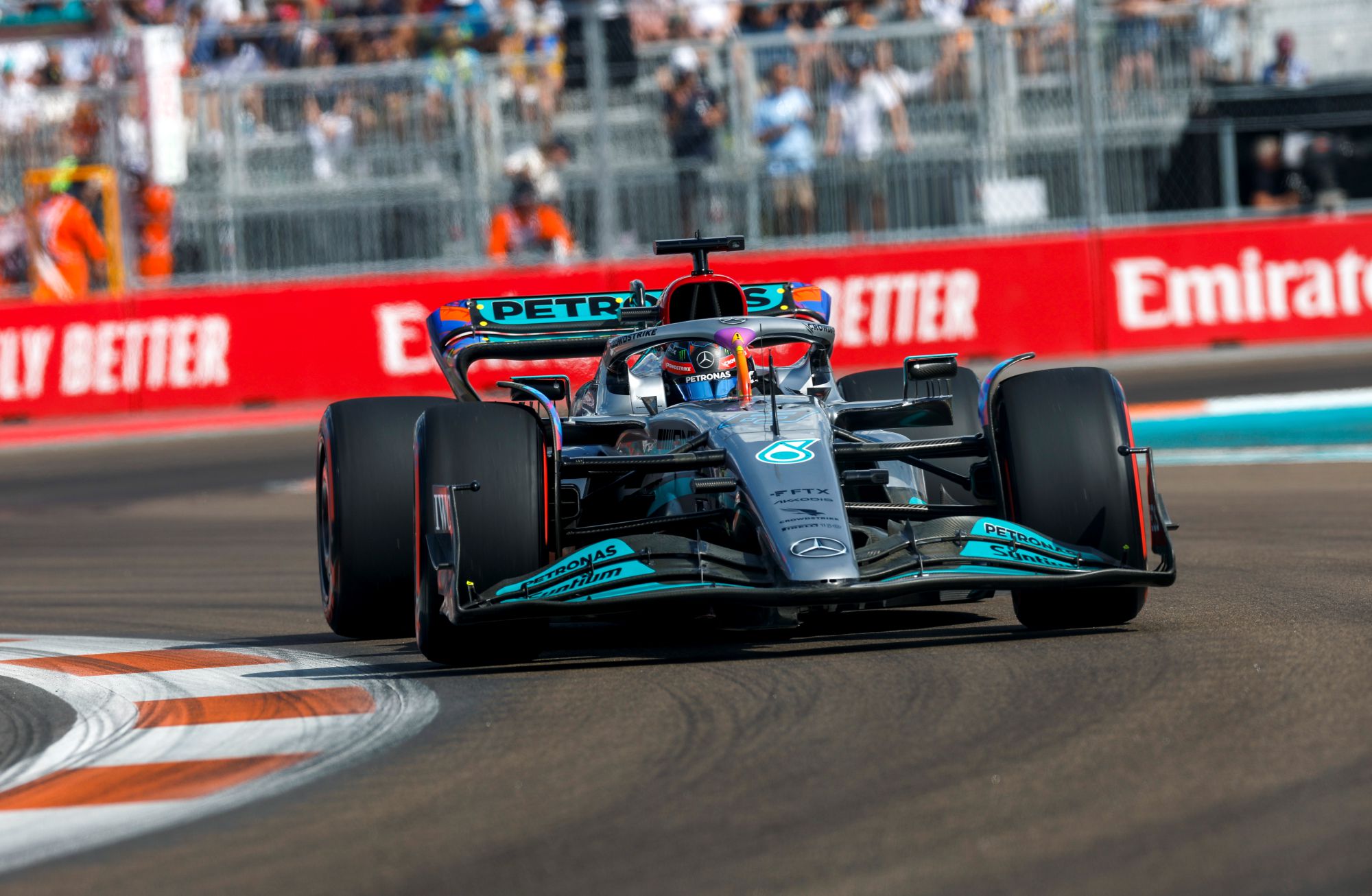
Active aerodynamics replaces the single DRS flap with something far more sophisticated. The front and rear wings now adjust themselves between two modes: a low-drag configuration for the straights and a high-downforce configuration for the corners. The car effectively changes shape as it laps the circuit, trimming itself out where it wants top speed and digging in where it needs grip.
Think of it as the car breathing. On the straight, the wings flatten and the car slips through the air. Into the braking zone, everything closes up and the car finds its grip. The driver can also use the system tactically, and combined with the energy boost, the modern overtake becomes a two-part maneuver: deploy your electrical energy and trim the aero, all while the driver ahead tries to do the same in reverse.
Why DRS had to go
The philosophy behind the change is simple to state and hard to execute: overtaking should come from cars that can follow each other closely, from clever energy management, and from driver skill, not from a button that opens a flap in a painted zone on the track. The rulemakers want passing to be earned again, a product of the whole lap rather than a single straight.
Will it work? The honest answer is that nobody knows yet, and that includes the people who wrote the rules. The aerodynamicists have modeled it. The drivers have tested it. But twenty cars racing wheel to wheel in Melbourne, all managing energy differently, all learning in real time, is an experiment you cannot run in a simulator. That uncertainty is uncomfortable, and it is also the most exciting thing about the new season.
The Fuel Switch
Quieter than the aero revolution but just as significant, every car on the grid now runs on one hundred percent renewable fuel. Not a blend, not a target for someday. One hundred percent, this season.
This is a genuine engineering triumph. Racing fuel has to do an absurd job: detonate precisely, thousands of times a minute, inside an engine operating at extremes no road car will ever see. Doing that with fuel from sustainable sources, while keeping performance identical, took years of development. And it matters far beyond the circuit. Formula 1 has always been a laboratory for the automotive world, and sustainable fuels proven at racing extremes have a direct line to the future of transportation. When the sport gets this right, the whole world gets a little cleaner.
Smaller, Lighter, Trickier
The cars themselves are smaller and lighter, and if you have watched Formula 1 for a while, you will feel the difference immediately. Shorter wheelbases. Narrower track. Less mass. The heavyweight machines of recent seasons, brilliant as they were, had grown so large that they struggled to race wheel to wheel on tighter circuits. The new cars are meant to be nimbler, more agile, more willing to dice through corners side by side.
For the drivers, it is a different physical and mental challenge. A lighter car changes direction more eagerly, which sounds like fun until you remember that it also punishes mistakes more sharply. Combined with the energy management workload, the 2026 driver is busier than ever: managing deployment, managing the active aero, managing tires, and racing the car ahead, all at once. The great all-rounders, the drivers who can think while driving at the limit, should thrive. The one-dimensional speed merchants might find this era less forgiving.

The Great Driver Debate
Now we come to the part everyone is talking about. The drivers do not agree on whether these cars are a thrill or a threat, and the disagreement is delicious because both sides have a point.
Norris sounds the alarm
Lando Norris did not mince words during testing. The defending champion warned that the straight-line speed differences between cars in different energy states could lead to disaster, saying "we're going to have a serious accident." That is an extraordinary statement from a reigning world champion, and it deserves to be taken seriously.
His concern is specific and technical. When one driver has full electrical deployment available and another is running on empty, the closing speed between them on a straight can be enormous. In racing, big speed differentials are where danger lives. Norris is essentially arguing that the sport has built unpredictability into the cars in a way that could hurt someone, and as the man with the number 1 on his car, his voice carries enormous weight. When the champion says he is worried, the sport listens.
Hamilton's counter-verdict
And then there is Lewis Hamilton, who heard the same concerns and came to the opposite conclusion. Where Norris saw danger, Hamilton saw racing. His verdict, delivered after the Melbourne opener, was pure Hamilton: direct, unbothered, and impossible to argue with on style points. "Personally, I loved it."
It is worth pausing on what that disagreement represents. Norris is the analytical champion, the driver who thinks in systems and sees the risks. Hamilton is the racer's racer, the seven-time champion who has seen every era of the sport and trusts his instincts. When two drivers of that caliber look at the same car and see different things, it tells you the truth is complicated. The new Formula 1 is both thrilling and alarming, often in the same corner. That tension is not a bug. It might be the whole show.
What "artificial" really means
Strip away the rhetoric, and the debate comes down to one question: should racing reward the driver or the engineer? The "artificial" complaint is really a complaint that energy management, an engineering parameter, matters as much as car control, a driving skill. But Formula 1 has always been a partnership between the two. The best drivers in history were also the best at managing whatever their era demanded: fuel loads, tire wear, engine modes, battery deployment. The greats adapt. The ones who cannot adapt become cautionary tales.
Here is our take, offered with love: give it time. New regulations always feel strange before they feel normal. The drivers complaining loudest in testing are often the ones winning by midseason, because complaining is what the smart ones do while they are figuring it out. Watch Melbourne with open eyes. Watch who is smiling after the race. That will tell you more than any preseason quote.
Who Wins a Reset?
Regulation changes are supposed to shake up the competitive order. That is the entire point. The teams that dominated the old rules have to unlearn what they knew, and the teams that were lost get a fresh map. So who was supposed to benefit, and who actually looks dangerous?
The shake-up theory
In theory, a reset this comprehensive should compress the field. When everyone starts from zero, the advantages of the old era, the perfected concepts, the years of accumulated understanding, evaporate overnight. A midfield team with a clever idea can leapfrog a giant that guessed wrong. That is the dream the rulemakers sell, and sometimes it even comes true.
In practice, resets tend to reward the same thing they always reward: resources, organization, and the ability to correlate the wind tunnel with the track. The teams with the best facilities and the deepest engineering benches usually figure out new rules fastest. Money cannot buy a good idea, but it can buy a thousand bad ideas quickly enough to find the good one. So while the order will shuffle, do not expect a fairy tale where the smallest team suddenly dominates. Expect the big teams to be big, but expect the order among them to be gloriously uncertain.
Why Mercedes was tipped as the team to beat
From the moment testing began, one name kept surfacing in every paddock conversation: Mercedes. The silver team was immediately tipped as the team to beat, and the reasoning was straightforward. Mercedes has the deepest power unit operation in the sport, and in a formula where the power unit is half the performance equation, that matters enormously. The early running suggested their interpretation of the energy systems was the most mature, their deployment the most efficient, their straight-line performance the most ominous.
Tipping Mercedes in a reset year is also about history. This is the team that dominated the last great power unit reset, turning the 2014 regulations into an era-defining advantage. Institutional memory is real. The people who got it right last time are still in the building, and they remember what winning a reset feels like. None of that guarantees anything, and testing times lie as often as they tell the truth. But when the smartest people in the paddock all point the same direction, it is worth listening.
The five-way engine war
Do not sleep on the subplot that could decide the championship: the battle among the five power unit manufacturers. Mercedes arrives as the favorite. Ferrari has the resources and the motivation of a team desperate to return to the top. Red Bull-Ford is the great unknown, a brand-new works partnership with everything to prove. Honda brings championship-winning pedigree. Audi brings German engineering might and a point to prove on its full works debut.
Power unit formulas are won in the details: thermal efficiency, energy recovery, packaging, reliability. A ten-horsepower advantage, invisible to the naked eye, becomes three tenths a lap, which becomes pole positions, which becomes championships. The engine war will be fought in dyno rooms and data traces long before it reaches the track, but we will see its results every Saturday afternoon.
What to Watch in Melbourne
So when the lights go out at Albert Park on March 8, what should you actually look for? Forget the lap times for a moment and watch the racing itself.
Watch the straights. The speed differences between cars in different energy states will be visible to the naked eye, and the first time a driver with full deployment devours a rival who is saving, the grandstands will gasp. Watch the restarts and the opening laps, when energy stores are full and everyone is aggressive. Watch the closing laps, when the accountants take over and the clever savers come alive.
Watch the drivers' body language after the race. Who looks exhilarated? Who looks exhausted? Who is already talking about the next upgrade? The first race of a reset year is a psychological event as much as a sporting one. It tells every team whether their winter was genius or folly, and there is nowhere to hide.
And watch the debate continue. Norris will be watching the speed differentials like a hawk. Hamilton will be driving like he has never been happier. The rest of the grid will be choosing sides, lap by lap. Whatever happens in Melbourne, one thing is certain: nobody will call this season boring.

FAQ
What is the energy boost system in the 2026 cars?
The new power units draw about half their total power from electric deployment. Drivers harvest energy under braking and deploy it as electrical power, managing their deployment lap by lap to decide when to attack and when to save.
Why did Formula 1 get rid of DRS?
DRS, the movable rear wing flap used since 2011, was replaced by active aerodynamics, with wings that switch between low-drag and high-downforce modes. The goal is overtaking earned through close racing and clever energy management rather than a push-to-pass button in designated zones.
What fuel do the 2026 cars use?
All cars run on 100 percent renewable fuel this season, a first for the sport.
Why was Mercedes tipped as the team to beat?
Mercedes has the deepest power unit operation in Formula 1, and in a formula where the power unit is half the performance, that is an enormous advantage. The team also dominated the last great power unit reset, and early testing suggested its energy systems were the most mature on the grid.
A Note on Sources
Technical regulation details in this explainer were compiled from FIA regulatory publications and official Formula 1 technical briefings, and cross-checked with coverage from Reuters, BBC Sport, Sky Sports, The Race, and Autosport. Driver quotes are from published preseason testing interviews and post-race media sessions. Competitive expectations reflect published paddock reporting and are presented as informed analysis, not confirmed results.