
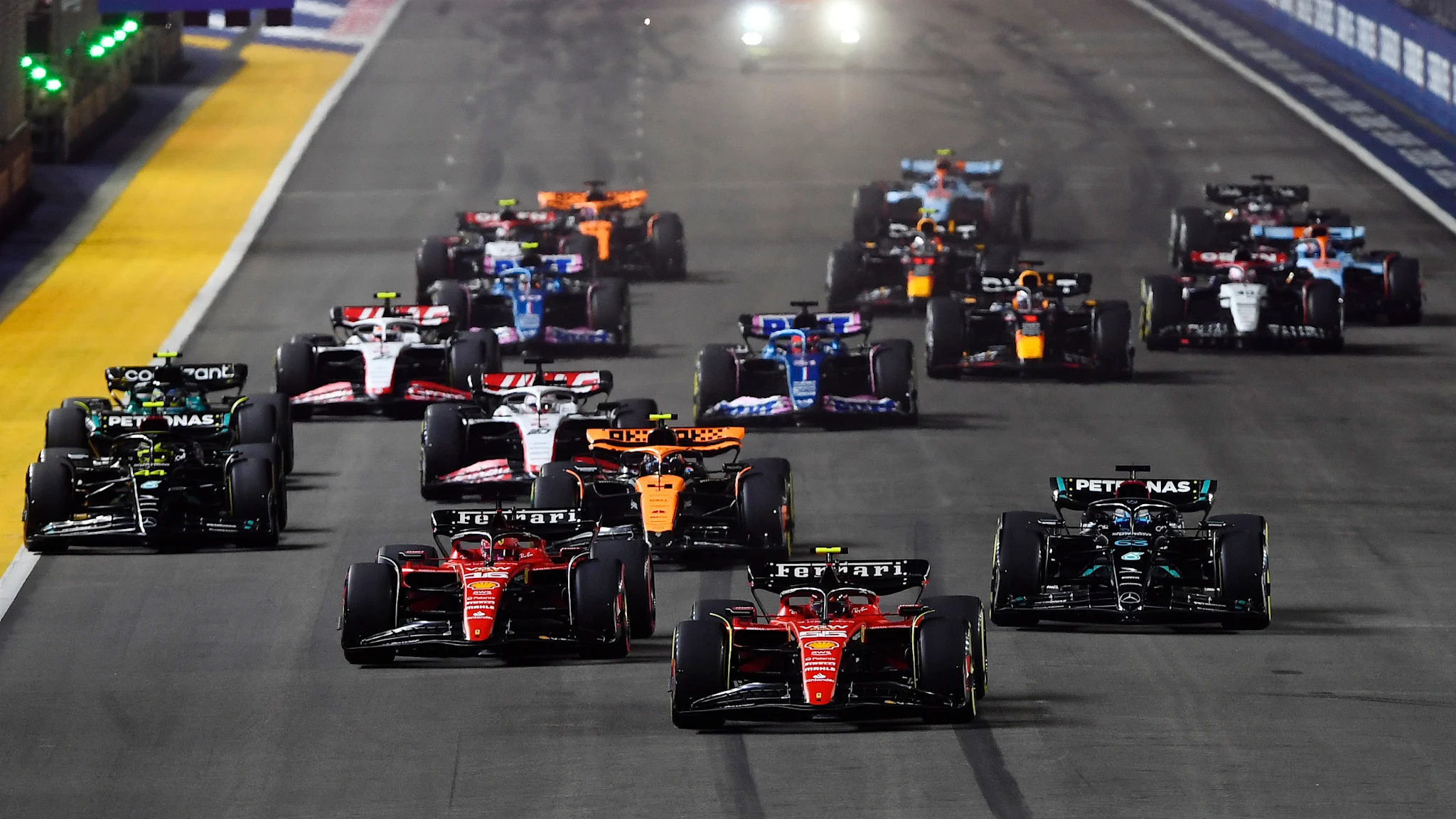
By Paulina Phan, Senior Editorial Contributor, David's Guide Published Wednesday, October 7, 2026. The Singapore Grand Prix runs Sunday, October 11, at the Marina Bay Street Circuit.
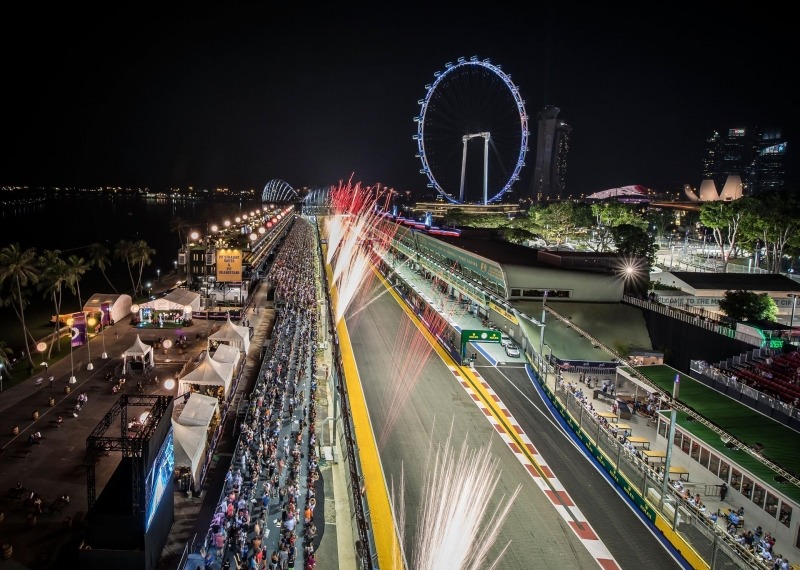
There is a particular hour in Singapore when the whole city seems to hold its breath. Just past eight in the evening, the air still thick as a warm towel, twenty-two cars launch down a street circuit wrapped in artificial daylight. The floodlights make the Marina Bay skyline glitter while the same air tries to melt everyone inside a cockpit. Welcome to the Singapore Grand Prix, the race every driver dreads and every fan loves.
This Sunday's race is where Formula 1's glamour and its grind collide. On one side: the night race, the skyline, the rooftop parties. On the other: the sauna, with Sunday forecast at about 30 degrees Celsius, humidity that rarely dips below 70 percent, and cockpits drivers describe between 50 and 60 degrees. The most physically demanding race of the season, and also the prettiest. That contradiction is why we are here.
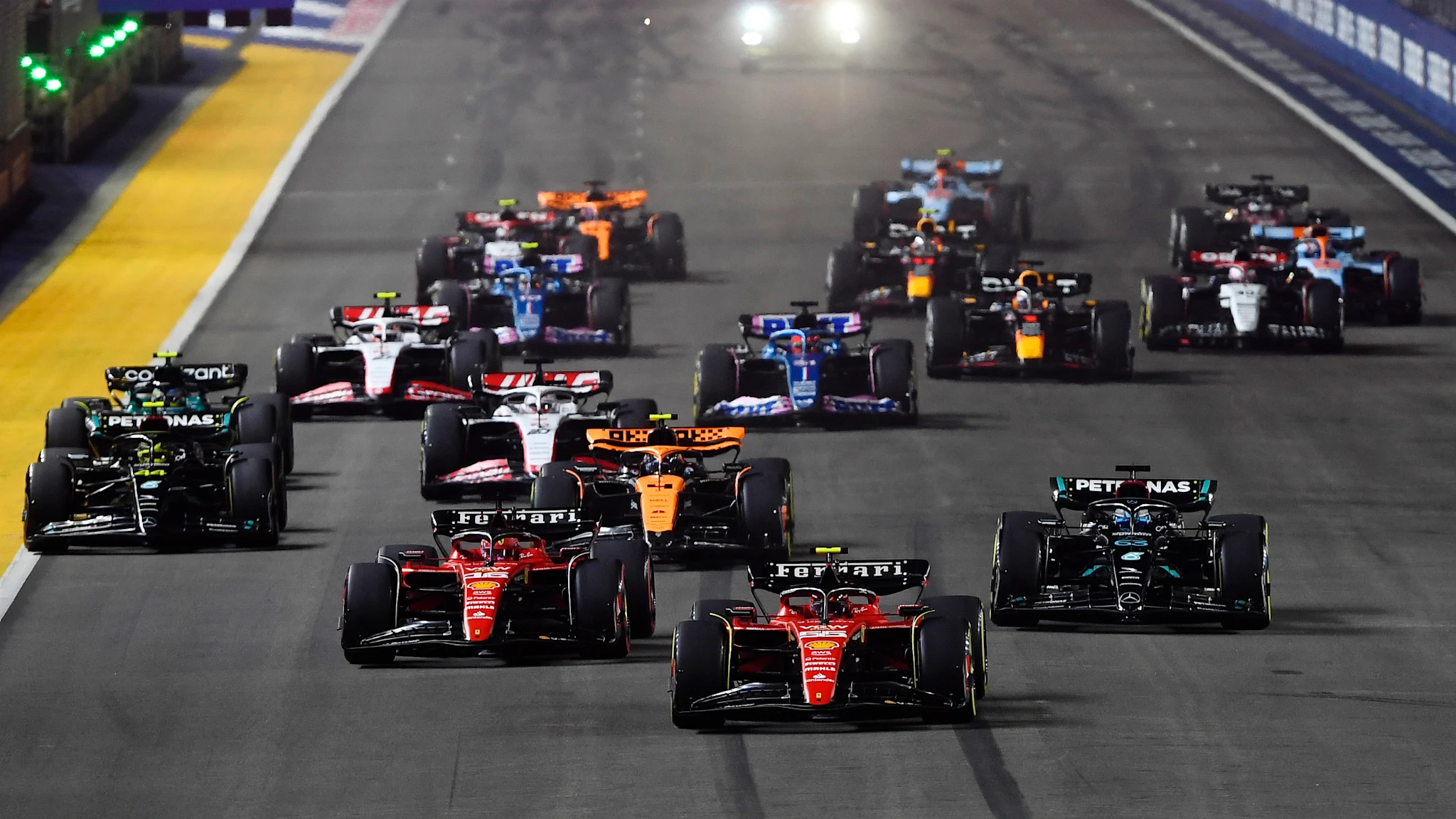
The Furnace Has Numbers
The weather report nobody asked for
Singapore's heat is not a vibe, it is a dataset. Sunday's forecast: about 30 degrees Celsius, a 35 percent chance of rain, and stubbornly high humidity. That combination is what matters. Dry heat is negotiable. Humidity is not, because sweat cannot evaporate into saturated air, and evaporation is the body's entire cooling strategy.
George Russell put it bluntly in the FIA's 2024 Singapore press conference: the conditions are "probably more of a humidity in all honesty than the heat," adding that it feels "kind of like 40 degrees out there." The thermometer reads one thing; the body experiences something worse. Racing after dark brings real relief from the daytime peak, but relief is relative: kinder than a Singapore afternoon, still a sauna in absolute terms.
The cockpit runs hotter than the street
Put a carbon fiber tub around the driver, bolt a power unit behind his back, wrap him in fireproof kit, and send him out for the better part of two hours. Russell told that same FIA press conference that cockpits get "on for 50 degrees Celsius" as a matter of routine. More recently, ahead of the 2026 Malaysian round, he described racing in 90 percent humidity with cockpits "getting on for 60C," as reported by Crash.net. The honest range, from the people sitting in it: 50 to 60 degrees.
Everything conspires against the driver. The engine sits inches behind the seat, the electronics bake, the tires throw heat off the asphalt. Helmet vents and the drink system help, but the physics do not change: a sealed machine generating its own heat, in a climate that refuses to absorb yours. Add 62 laps of a 4.940-kilometer street circuit with 19 corners, on a lap too slow for much cooling airflow, and you have the season's fitness exam.
The sweat ledger
Here is the statistic that ends every debate about whether drivers are athletes. Russell told the FIA press conference that drivers lose "almost four kilogrammes of fluids in an hour and a half race." Formula 1's own previews put Singapore weight loss at up to 3kg, and track guides cite as much as three kilograms. The reported range: three to four kilos, sweated out while braking at forces that would blur a normal person's vision.
Teams cannot fully replace it. Formula1.com reports each car carries a hydration system holding only about 1.5 litres, and that drivers spend the race week hydration loading on water and electrolytes. After the race, drivers are weighed in parc ferme under FIA scrutineering; Autosport explains the scales check minimum-weight compliance and measure how much the driver has shed, data physios use to plan recovery. A driver kilos lighter at the finish has not had a bad race; he has had a Singapore race.
How the Grid Survives the Sauna
Train in the layers
You do not survive Singapore by being brave; you survive by being prepared. Russell told the FIA press conference he trains with "three layers on the bottom, three layers on top" when he runs, deliberately overdressing so his body learns to perform while overheating. Asked when Singapore preparation begins, he said: "a few months ago," adding the last week of the summer break was "purely getting ready for Singapore."
The logic is simple: you cannot make Singapore cooler, so you make your body better at being hot. Heat acclimatization teaches the body to sweat earlier and keep core temperature stable under load. Drivers arrive with weeks of it banked: heavy clothing, saunas, cardio in cockpit-like conditions. It does not make it pleasant, but it makes it survivable.
Drink your weight, then drink more
Hydration at Singapore is race strategy with its own engineering. Each car carries an onboard drink system, a small reservoir with a straw feed. In theory, a lifeline. In practice, as Kevin Magnussen told the FIA's 2023 Singapore press conference, the first 15 to 20 minutes offer drinkable cold water, and after that "it gets almost like tea, too hot to drink." Lance Stroll, sitting beside him, confessed: "I drink the tea."
Drivers preload electrolytes for days, drink aggressively on race morning within limits, then sip on straights. Magnussen warned it is hard to swallow while being thrown around the car, and too much fluid upsets the stomach. The margin is miserably small: drink too little and concentration fades. In the sauna, the drink button matters as much as the throttle.
The ice vest era
The FIA's heat hazard protocol is now part of the Singapore story. The 2025 edition was the first race with a formal heat hazard declaration, triggered when temperatures are forecast at or above 31 degrees, per Motorsport reporting. Once declared, cars must carry the cooling hardware, and drivers may wear a vest circulating cooled liquid around the torso. Wearing it is optional, but declining costs 0.5kg of ballast, so there is no free lunch.
Russell wore the vest while winning the 2025 Singapore Grand Prix, and told Crash.net ahead of the 2026 Malaysian round: "We should all be wearing it." Mercedes, though, raced the October 4 Sepang round without a reliable vest after spending its development budget on the car instead, as reported by GrandPrix.com, and Russell said he would have preferred the vest for both Malaysia and Singapore. Expect the vests to be discussed again this weekend.
Living on European time
The paddock's strangest Singapore tradition is its body clock. Formula1.com's preparation guide explains drivers do not switch to Singapore time at all: they stay on European hours, waking in the early afternoon, eating breakfast around 2pm, and finishing the day well past 3am, with blackout curtains for sleeping through the morning. The Wall Street Journal quoted Audi's Nico Hulkenberg calling the upside-down life "quite pleasant": "You don't have that much jet lag."
The reasoning is straightforward: circadian rhythm governs reaction time and temperature regulation, and the 8pm race then feels like a European afternoon start. By Sunday, the paddock runs a small European timezone in Southeast Asia.
The Night Race That Started It All
September 28, 2008
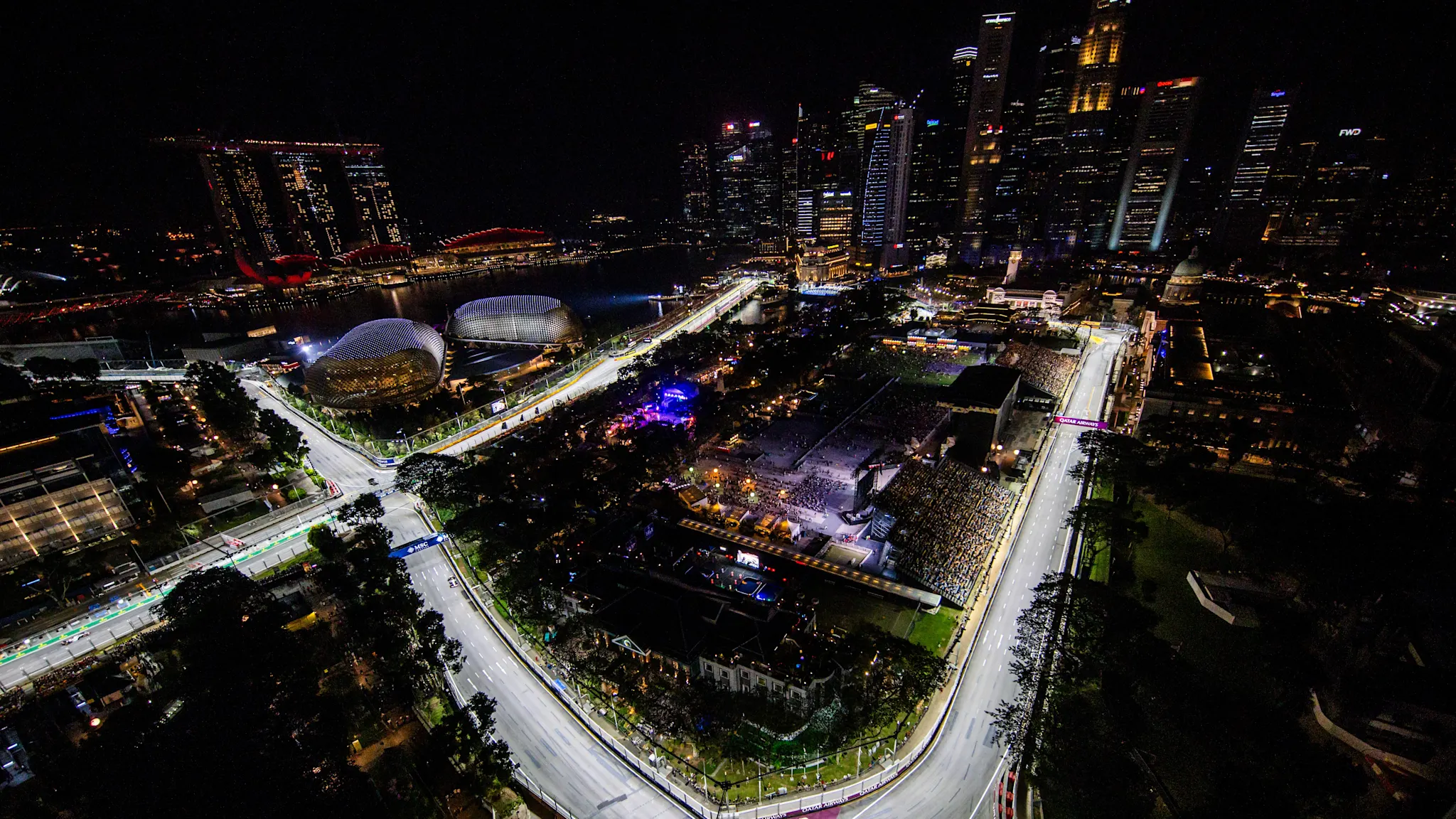
Every floodlit race on the modern calendar owes its existence to one evening: September 28, 2008, when Singapore staged Formula 1's first-ever night race. Nobody had run Grand Prix cars under artificial light at full racing speed, and the sport held its breath over the lighting. It worked: over 100,000 spectators attended the sold-out inaugural race, per the race promoter, and the images from Marina Bay that night rewrote what a Grand Prix could look like.
The headline goal was an 8pm start convenient for the European TV audience, the sport's largest, with the bonus of dodging Singapore's punishing afternoon peak. Nearly two decades on, the format is so established that younger fans may not realize how radical it once seemed. Others followed the template. Singapore built it.
Three thousand lux
The lighting system is one of the great unsung engineering feats in sports. Per the race promoter's technical records, the circuit is lit by nearly 1,500 projectors delivering about 3,000 lux on average, almost four times brighter than a typical stadium, all designed to eliminate glare for drivers and spectators. A driver at 300 kilometers per hour needs uniform light with no dark patches, no blinding hotspots, no flicker strobing through a visor. The floodlights must turn night into day while staying gentle enough that a driver sees the racing line, not a whiteout.
For the rest of us, the effect is pure theatre: long shadows, silver spray when it rains, the skyline reflecting off bodywork. If you attend this weekend, look up from the track occasionally. The circuit at night, ringed by the city, is one of the great sights in world sport.
Why darkness helps
The night race is also a safety decision. Daytime in Singapore is punishing, and while the evening stays brutally humid, it is meaningfully kinder than the afternoon. An 8pm start keeps the European TV audience happy and keeps the cars out of the worst heat. Drivers still climb out hollowed, but under lights instead of a tropical sun. The most visually spectacular race on the calendar exists in its current form partly because the alternative was medically inadvisable.
A Street Circuit With No Mercy
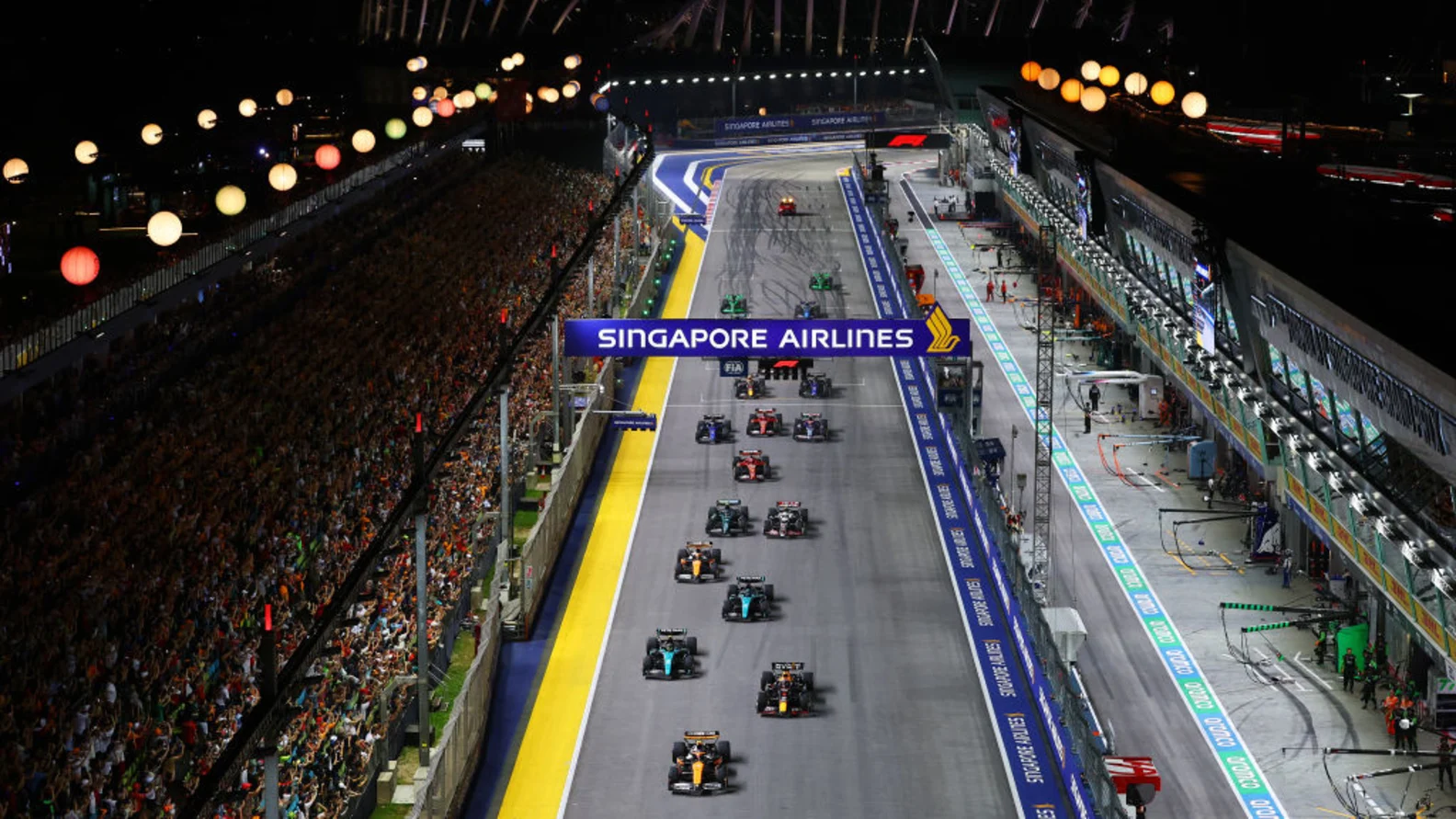
Nineteen corners, sixty-two laps
The heat gets the headlines, but the circuit is a second opponent, and a cruel one. Since the 2023 layout revision, Marina Bay packs 19 corners into 4.940 kilometers, and the race runs 62 laps over 306.143 km. That is 1,178 corners per race: more than eleven hundred steering inputs and braking events, each placing the car centimeters from a concrete wall while the body is wrung out like a towel.
Street circuits punish differently: no runoff, no forgiveness. The slow-speed lap means less airflow through the cockpit, so the driver gets even less cooling exactly when muscling the car through tight corners demands the most effort. The circuit and the climate are one challenge wearing two masks.
The two-hour marathon
Singapore races regularly approach the two-hour time limit, among the longest physical ordeals on the calendar. Magnussen told the 2023 FIA press conference the race "often goes close to two hours," and five Singapore editions have been won in more than two hours of racing. Attach the humidity, the 50-to-60-degree cockpit, the 1,178 corners, and the walls, and the final twenty minutes usually decide it, because that is when the exhausted start making mistakes. The closing stages are a slow reveal of who did their summer homework.
The sprint wrinkle
This year's edition is a sprint weekend. Friday packs practice and sprint qualifying into one day, Saturday brings the sprint at 5pm local followed by qualifying at 9pm, and the Grand Prix starts Sunday at 8pm. One hour of practice before committing to setups is a thin margin on a street circuit, and the daylight sprint is the only real look at tire behavior in heat the night race will not replicate. Sunday's forecast also carries a 35 percent chance of rain; two of the last four Singapore races were rain-affected, in 2017 and 2022.
The safety car habit
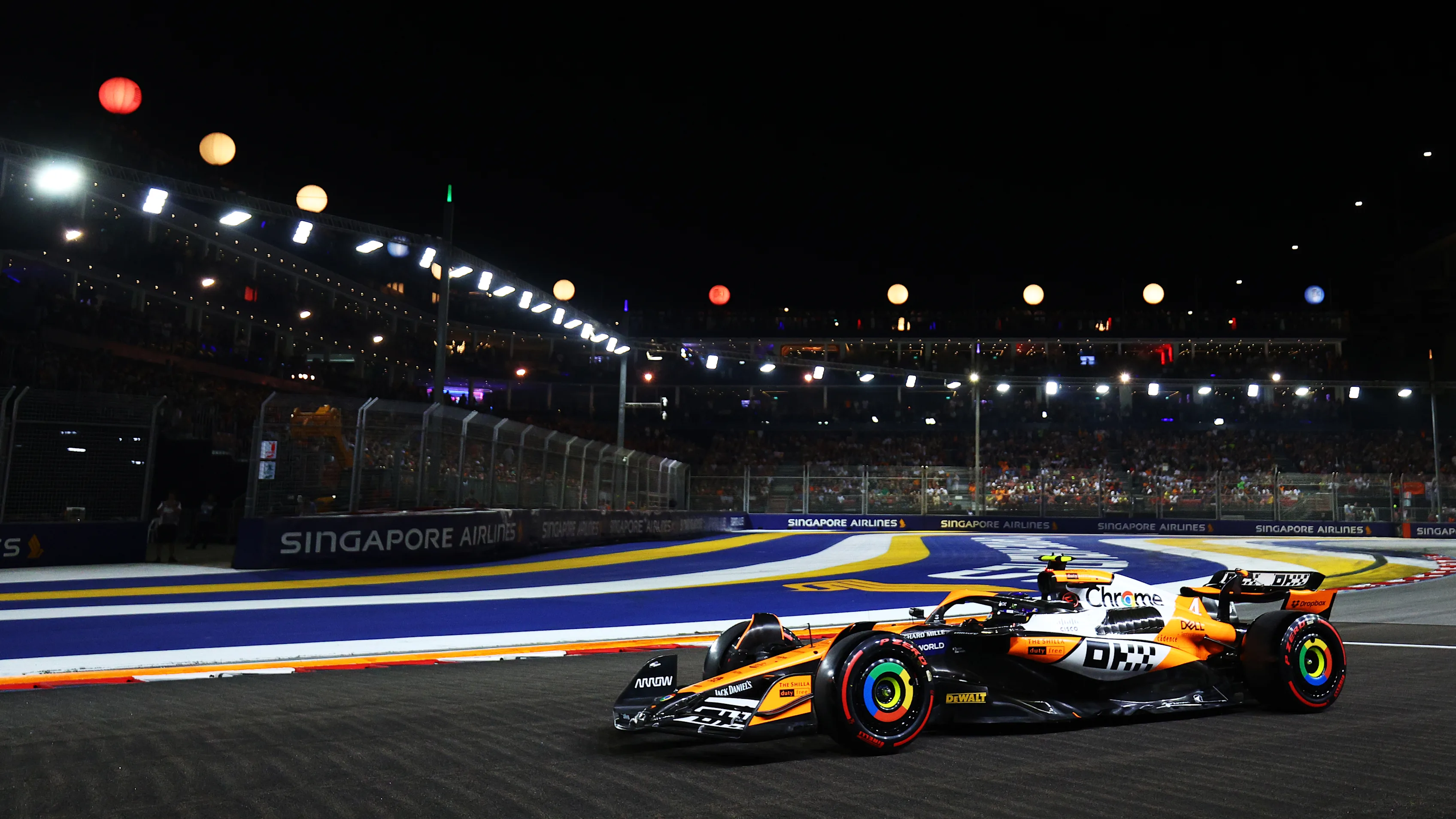
One more Singapore tradition: chaos. Every Singapore Grand Prix from 2008 through 2023 featured at least one safety car, per Formula1.com's race statistics. Then 2024 broke the pattern: the first Singapore race with no safety car and no yellow flags at all. The walls do not move and the drivers get tired, so the safety car remains the likeliest plot twist.
A safety car can erase a fifteen-second lead in a single lap and turn a procession into a lottery. If you are watching Sunday, do not get comfortable when a leader pulls away. In Singapore, the safety car was the norm for sixteen years. Normality may resume at any moment.
Glamour After Dark
A lifestyle note before we continue: what follows is editorial opinion, not reporting. Nobody issued a dress code for Marina Bay. This is simply how we would do it.
The tropical-heat dress code
Here is the beautiful problem of the Singapore Grand Prix: the most glamorous evening on the calendar, and the sweatiest. The dress code starts with fabric. Breathable is survival, not suggestion: linen, lightweight cotton, silk blends, technical fabrics that wick.
The night format is a genuine gift: no sunburn, no squinting, no melting makeup under direct sun. The 3,000 lux floodlights are flattering and cinematic. Dress for the camera, but choose fabrics that forgive the climate: the slip dress, the wide-leg linen trouser, the open weave, hair that was always meant to move.
What the paddock wears
The paddock has its own visual language. Team kits are engineered like the cars: lightweight, moisture-wicking, cut for movement. Guests and sponsors lean into resort polish, tailoring that looks sharp under floodlights without trapping heat. Expect open collars and dresses that move; anyone in a full suit by 9pm made a tactical error.
Our verdict: the Singapore paddock rewards ease over effort, because the humidity punishes anything fussy. A pressed linen shirt beats a wilted dress shirt. And footwear deserves real thought, because Marina Bay is a street track and you will walk. Block heels, polished flats, clean sneakers. Save the stilettos for the rooftop after-party.
Our Marina Bay packing list
If you are going this weekend, here is the edit we would pack. Breathable base layers in light colors, because dark fabrics show every drop of perspiration and the cameras are everywhere. One statement piece for the evening, because the floodlights reward a silhouette. Comfortable, genuinely walkable shoes, broken in before you fly. A small handheld fan, which sounds unglamorous until you are in a grandstand at 8pm. Blotting papers, the highest-value item per gram in tropical climates. And a light layer for the trip home, because every air-conditioned space afterward is freezing.
None of this is official. Singapore is where you can look like a fashion editorial and feel like a marathon runner; the best dressed planned for both.
The Championship Picture
Antonelli's cushion
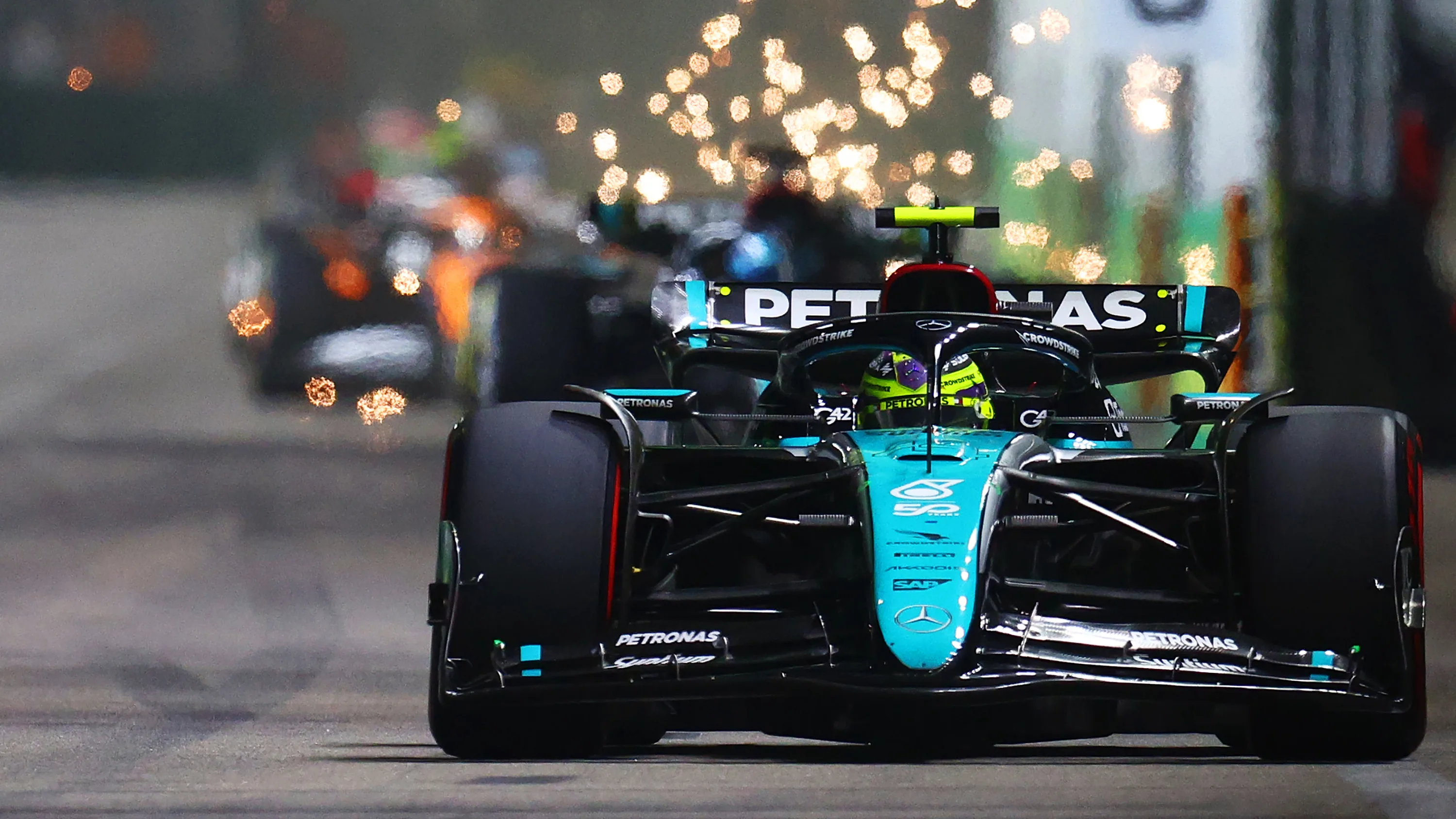
Kimi Antonelli arrives in Singapore leading the championship with 320 points and 8 wins, 84 points clear of Mercedes teammate George Russell on 236 points and 3 wins. A serious cushion with six races remaining after Sunday, but not a coronation. Singapore loves humbling comfortable leaders.
Championships are won on Sundays, and Singapore specializes in difficult ones. A retirement here, a safety car at the wrong moment, a qualifying brush with the wall: the 84-point gap can look very different by Sunday night. Antonelli must play the percentages while everyone else swings.
Russell's repair job
For George Russell, Singapore is personal, and not only because of the points. He retired from P3 at Sepang on October 4 with a mechanical problem, a gutting end to a weekend where a podium was his for the taking. But he is also the defending Singapore winner, having taken the 2025 edition, per Sky Sports and Crash.net. He is the driver who has spoken most openly about what Singapore takes out of a body: the extra-layer training, the summer sacrificed to heat preparation, the "almost four kilogrammes of fluids in an hour and a half."
The mathematics are stark: 84 points down, six races after Sunday to close it. Russell cannot afford another Sepang. He needs wins, and Antonelli to have a bad Sunday. Singapore, with its safety car habit and two-hour war of attrition, is exactly where bad Sundays happen to good drivers. If this is a championship fight rather than a coronation procession, the fightback starts under the floodlights.
Verstappen has momentum, Ferrari has form
The two championship leaders will not have the weekend to themselves. Max Verstappen just took his first win of 2026 at Sepang, the Bahrain Grand Prix held at the Malaysian circuit, in rain-chaos conditions on October 4, and arrives with genuine momentum. A first win changes a campaign's psychology: the winless-streak pressure is gone, the car is coming alive, and Verstappen with confidence and nothing to lose is the most dangerous proposition in the sport.
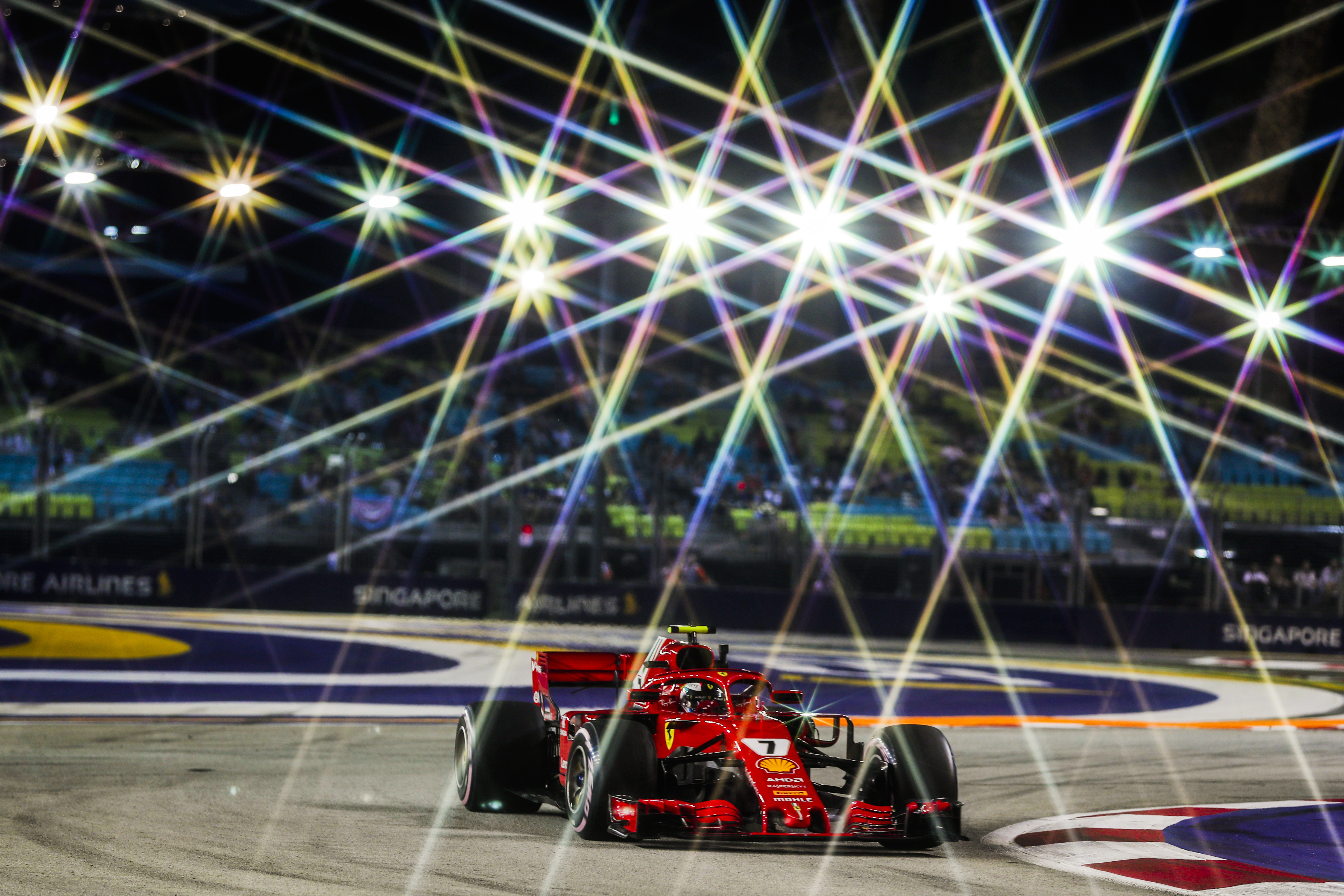
Then there is Ferrari, which suddenly has form. Lewis Hamilton took P2 in qualifying and P3 in the race at Sepang, suggesting the red cars have found something real. Marina Bay has historically been kind to cars with strong mechanical grip and traction out of slow corners, so if Ferrari's Sepang pace translates, Hamilton could be the interloper who ruins everyone's championship arithmetic.
The run home
Whatever happens Sunday, the season's final act is set. After Singapore: the US Grand Prix in Austin on October 25, Mexico City on November 1, Sao Paulo on November 8, Las Vegas on November 21, Qatar on November 29, and the finale in Abu Dhabi on December 6. Six races, three continents, and a title fight Singapore could either settle or detonate.
Antonelli can take a giant step toward the championship with a controlled weekend. Russell can reignite the fight with a statement win. Verstappen can announce the second half belongs to him. Ferrari can crash the party. All of it in humidity that rarely dips below 70 percent, in cockpits drivers describe between 50 and 60 degrees, on a circuit that has never made anything easy.
FAQ
When is the 2026 Singapore Grand Prix? Sunday, October 11, 2026, at the Marina Bay Street Circuit. This year it is a sprint weekend: sprint qualifying on Friday, the sprint and qualifying on Saturday, and the Grand Prix at 8pm local time on Sunday.
How hot does it get inside an F1 cockpit in Singapore? George Russell has described cockpits getting "on for 50 degrees Celsius" (FIA press conference, 2024) and more recently, with humidity at 90 percent, "getting on for 60C" (Crash.net, October 2026). Drivers report losing between three and four kilograms of body weight through sweat during the race.
Why is Singapore a night race? Singapore staged F1's first-ever night race on September 28, 2008, with an 8pm start that suited the European TV audience and avoided the worst daytime heat. The circuit is lit by nearly 1,500 projectors delivering about 3,000 lux, per the race promoter.
Who leads the championship heading into Singapore? Kimi Antonelli (Mercedes) leads with 320 points and 8 wins, 84 points clear of teammate George Russell (236 points, 3 wins).
Methodology Note
Circuit facts (4.940 km, 19 corners, 62 laps, 306.143 km race distance, the 2023 layout revision, and the 2008 inaugural race details) are drawn from the race promoter's records and track references. Driver quotes on heat, hydration, and preparation (George Russell, Kevin Magnussen, Lance Stroll, Nico Hulkenberg) come from official FIA press conference transcripts and published interviews. Details of the FIA heat hazard protocol and the cooling vest come from Motorsport reporting and GrandPrix.com's October 2026 coverage. The safety car record (every edition 2008-2023, first clean race 2024) is per Formula1.com's race statistics. Weather figures reflect the weekend forecast as of October 4, 2026. Championship standings and calendar dates reflect the 2026 season as of October 5, 2026. The fashion and style commentary is editorial opinion, not reporting.