
By Paulina Phan, Senior Editorial Contributor | March 16, 2026
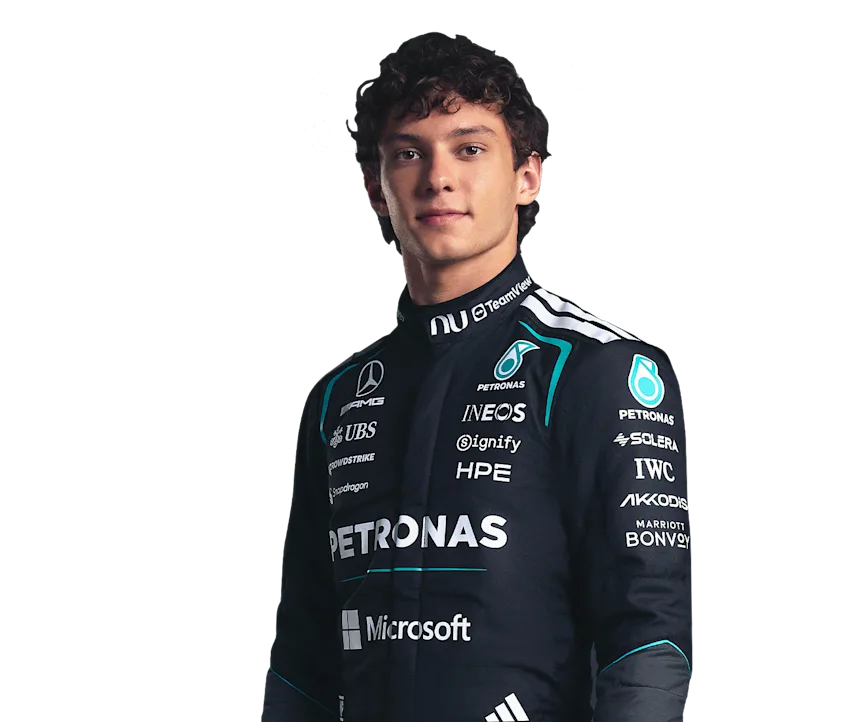
Some victories announce themselves slowly, building over seasons of near misses and podiums until the breakthrough feels inevitable. This was not one of those. Kimi Antonelli's first Formula 1 victory arrived like a thunderclap on Sunday afternoon in Shanghai: a nineteen-year-old on pole, a nineteen-year-old leading almost throughout, a nineteen-year-old surviving a heart-stopping lock-up at Turn 14 in the closing laps to become the second-youngest Grand Prix winner in the history of the sport. The Formula 1 Heineken Chinese Grand Prix, held at the Shanghai International Circuit on March 15, will be remembered as the afternoon a generational talent stopped being a prospect and became a winner.
Consider everything this win contains. Antonelli is the youngest pole sitter in Formula 1 history, at nineteen, after his stunning 1:32.064 on Saturday. He is the second-youngest winner ever, behind only Max Verstappen. He is Italy's first Grand Prix winner in twenty years, since Giancarlo Fisichella triumphed at the 2006 Malaysian Grand Prix, ending a drought that had started to feel permanent. And he did it on a weekend when the sport around him seemed to be falling apart: four cars failing to start, a safety car rewriting strategies, his own teammate hunting him down in the closing laps. Through all of it, the teenager never blinked.
"What an incredible day! This win is a fulfilment of one of the dreams I've had ever since I first drove a go-kart," Antonelli said afterward, and you could hear the disbelief underneath the joy. Every driver says winning was the dream. Few of them get to say it at nineteen, in their first full season, with the whole paddock watching to see if they are really as good as the hype. Antonelli did not just answer the question. He made it look like the wrong question entirely.
The Short Version
You are busy, so here is everything that mattered, fast.
The podium
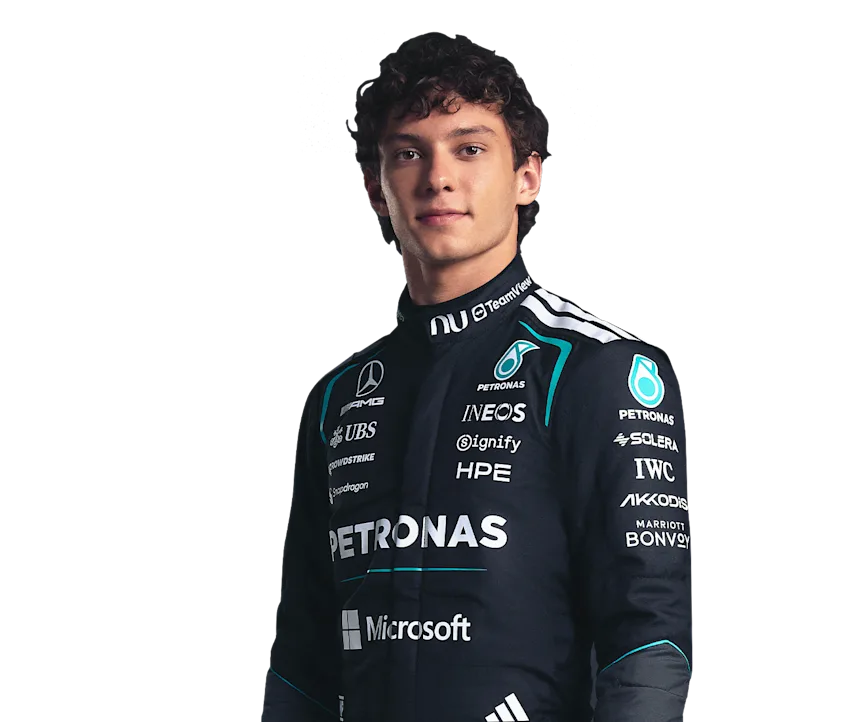
Kimi Antonelli won the Chinese Grand Prix for Mercedes, his maiden Formula 1 victory, ahead of teammate George Russell in a Mercedes one-two. Lewis Hamilton finished third for Ferrari, his first podium in red, after a glorious wheel-to-wheel duel with teammate Charles Leclerc that the team wisely refused to interfere with. It was the kind of podium that tells three stories at once: the arrival of a superstar, the strength of the Silver Arrows, and the promise of a Ferrari pairing that is allowed to race.
How the grid looked
Saturday belonged to the kid. Antonelli took pole position with a 1:32.064, becoming the youngest pole sitter in Formula 1 history at nineteen. George Russell, the sprint winner earlier in the weekend, lined up alongside him, and the Ferraris of Charles Leclerc and Lewis Hamilton filled the second row. Then came the chaos: both McLarens were wheeled off the grid with separate electrical failures, joined on the sidelines by Gabriel Bortoleto's Audi and Alex Albon's Williams. Eighteen cars took the start. Oscar Piastri, after his Melbourne out-lap crash, had now completed zero laps of the 2026 season after two full rounds.
Saturday: The Youngest Pole Ever
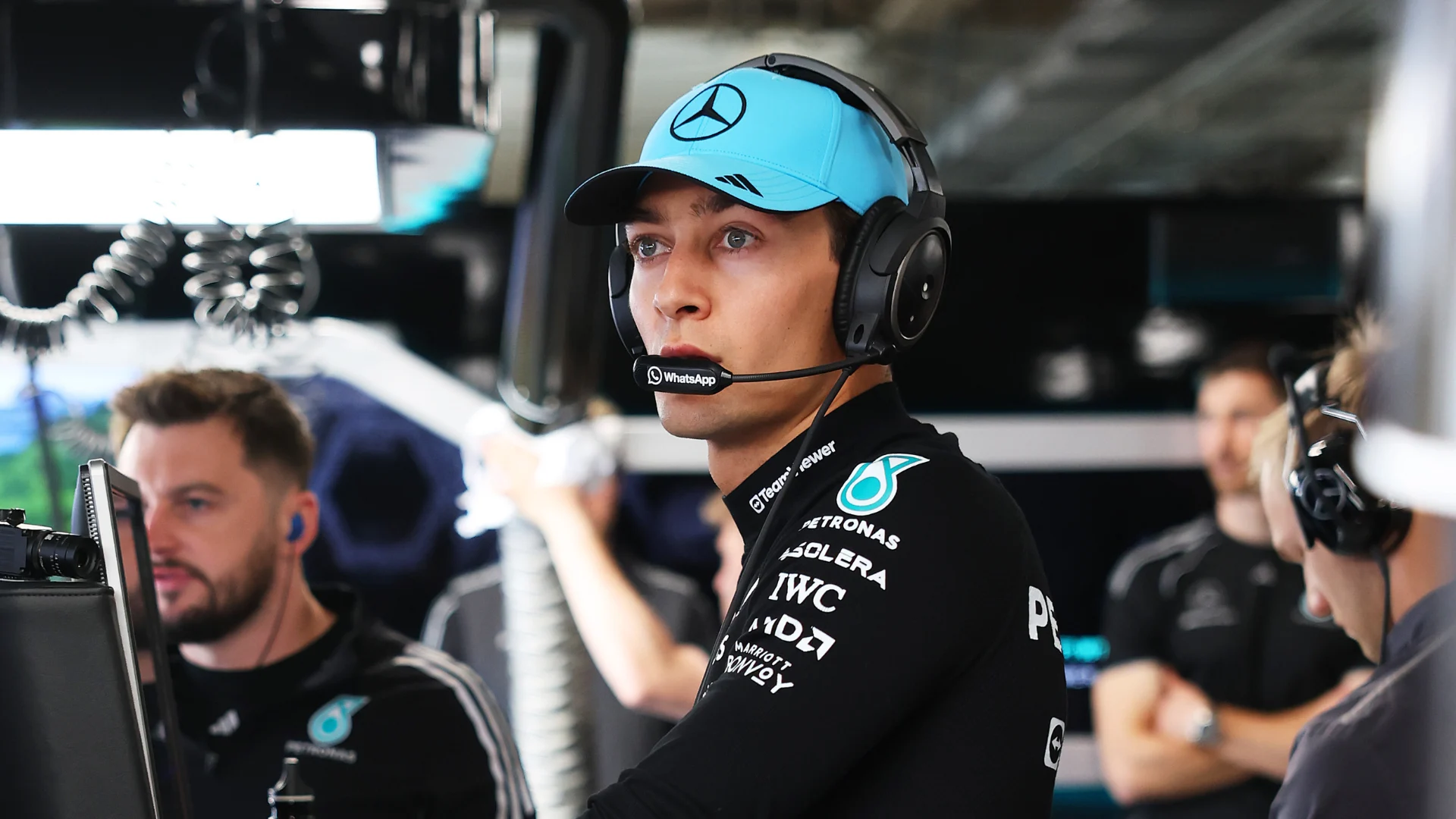
Let us linger on qualifying, because 1:32.064 deserves its own paragraph, its own moment, its own small ceremony. Kimi Antonelli, nineteen years old, in his first full Formula 1 season, in just the second qualifying session of a brand-new regulation era, went faster than every driver on the grid, including his highly rated teammate, including two Ferraris, including a four-time world champion. The youngest pole sitter in the history of Formula 1. Not the youngest of the modern era, not the youngest in a while: the youngest ever, full stop.
There is a particular electricity to a lap like that. The timing screens turn purple, the pit wall erupts, and for a few seconds the entire sport holds its breath while it processes what it just witnessed. Pole positions at nineteen do not happen by accident. They happen when a driver has the car, the confidence, and the sheer audacity to put it all together on a single lap, and Antonelli has been showing flashes of that audacity since he arrived. Saturday was the flash becoming a floodlight.
The sprint belonged to George
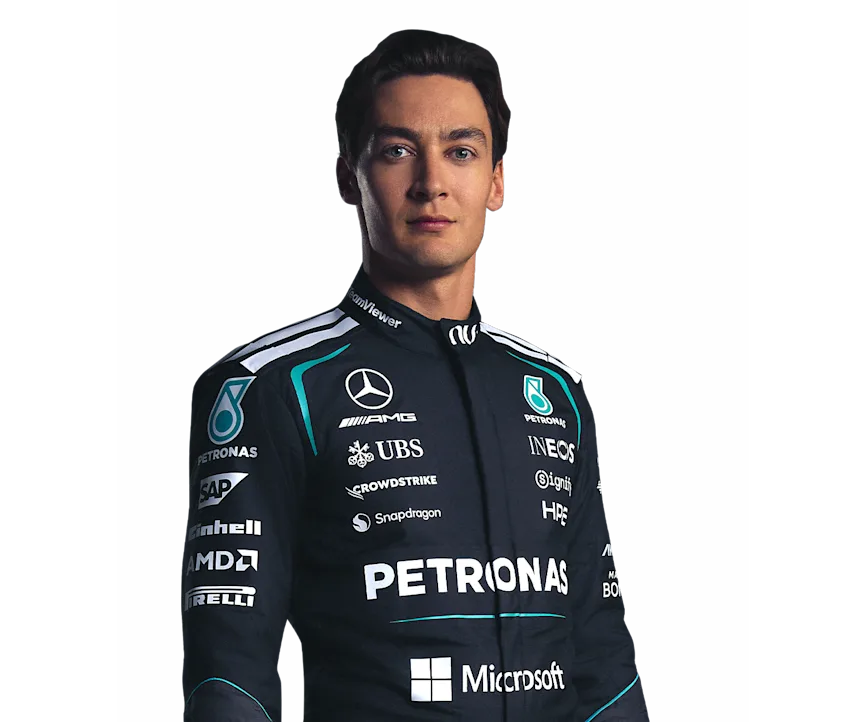
Sunday's main event was not the only racing in Shanghai, because China was a sprint weekend, and Saturday's sprint gave us a appetizer with real flavor. George Russell won it, ahead of Charles Leclerc and Lewis Hamilton, a result that underlined Mercedes' early-season authority and gave Russell a useful haul of points before the Grand Prix had even begun. The sprint also offered a preview of the Ferrari intra-team battle to come: Leclerc and Hamilton racing hard, clean, and fast, with neither willing to yield.
For Russell, the sprint win was the perfect start to a weekend that would end with him second in the Grand Prix and still leading the championship. He won the sprint, started on the front row, finished second on Sunday, and left Shanghai at the top of the standings. Not every weekend needs a victory to be a triumph.
The Grid That Shrank
But before any racing could happen on Sunday, Shanghai produced one of the most startling pre-race scenes in recent memory. Both McLarens were wheeled off the grid with separate electrical failures, the gremlins from Melbourne returning with a vengeance, this time traced to the Mercedes power unit itself. They were joined by Gabriel Bortoleto's Audi and Alex Albon's Williams, both also failing to start. Four cars, gone before the lights. Eighteen cars lined up for the Chinese Grand Prix, and the empty grid slots told the story of the 2026 season more eloquently than any press release: the cars are fast, and the cars are fragile.
Stop and think about what a double McLaren DNS means. This is one of the great teams in the sport's history, with two of the brightest drivers of their generation, and neither car made the start. The failures were separate but shared a root cause in the power unit, which means this was not bad luck but a systemic problem, the kind that sends engineers back to the drawing board and keeps team principals awake. Melbourne's warning had become Shanghai's catastrophe.
Zero laps
And spare a thought for Oscar Piastri. After his out-lap crash in Melbourne, the Australian had now completed zero laps of the 2026 season after two full rounds. Zero. Two race weekends, two continents, thousands of miles of travel, and not a single racing lap to show for it. There is no version of this that is not miserable for a driver of his caliber, and no version where the frustration does not start to compound. Piastri is too good for this to define his season, everyone in the paddock knows it, but the numbers are the numbers: two rounds, zero laps. The only way is up, and surely, surely, Suzuka will be kinder.
Ferrari, Unleashed
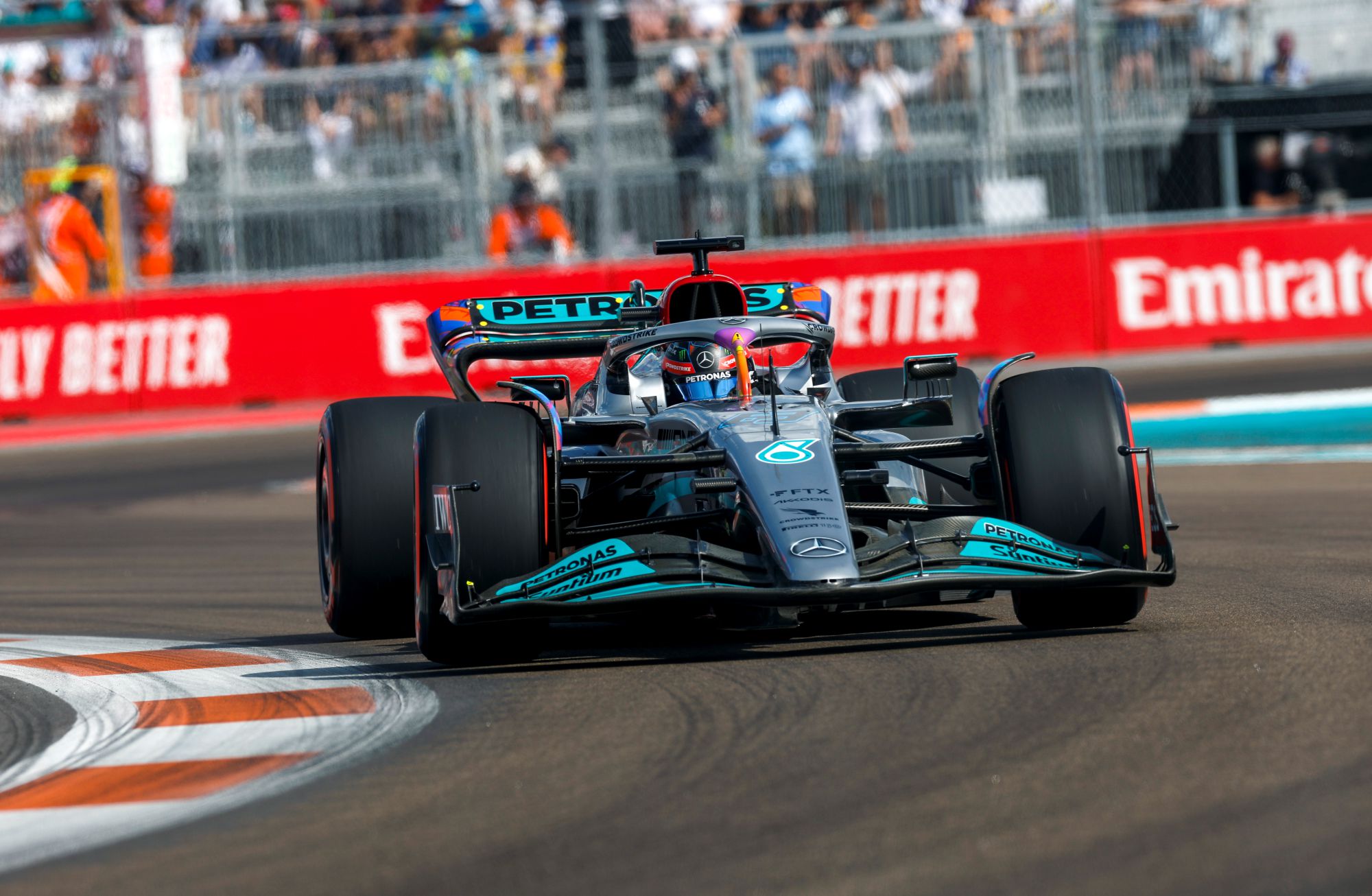
Now to the duel that lit up the middle of the race, because for twenty laps Shanghai gave us something Formula 1 fans always say they want and rarely get: two teammates, in the two red cars, racing each other properly, with the team brave enough to let them.
From lap 25, Lewis Hamilton and Charles Leclerc ran side by side, properly side by side, the kind of racing that makes you lean forward on the sofa. And here is the beautiful part: there were no team orders. Ferrari let them race. In an era when pit walls micromanage everything down to the steering angle, the scarlet pit wall simply watched two of the greatest drivers of their respective generations go at it, lap by lap, with a podium at stake. It was a decision that deserves applause, because it is always easier to manage than to trust, and Ferrari chose trust.
Hamilton led the duel, until his battery ran dry. That is the 2026 formula in a sentence: the electric deployment that gives you the weapon to attack is finite, and when it is gone, you are vulnerable. Hamilton had spent his energy fighting his teammate, and when George Russell arrived, the Ferrari had nothing left to defend with. Russell passed him cleanly on lap 28, part opportunism and part inevitability, and just like that the Mercedes one-two was set.
Hamilton's first podium in red
But Hamilton was not done. What followed was a defensive masterclass: the seven-time champion, on depleted energy, holding off Charles Leclerc for the final podium place, lap after lap, with his teammate's Ferrari filling his mirrors. This was Hamilton's first podium for Ferrari, and he earned it the hard way, against his own teammate, with nothing in hand. There is a particular satisfaction in a result like that. Joining Ferrari was always going to be a project, and podiums are the milestones that prove the project is working.
And Leclerc deserves credit too, for racing hard without racing dirty. Teammate battles can curdle quickly; this one never did. They fought, Hamilton won the fight, and both cars came home intact with a podium between them. Ferrari left Shanghai with third and fourth, a sprint podium apiece, and the knowledge that their driver pairing might be the most exciting on the grid. On pure entertainment value, the scarlet cars were the story of the afternoon.
The Safety Car That Rewrote the Race
Every Grand Prix has a hinge, a moment when the race pivots, and in Shanghai it arrived on lap 10. Lance Stroll's Aston Martin, continuing the team's miserable start to the season, came to a stop and triggered the safety car. On its own, a routine neutralization. But the timing was exquisite and cruel in equal measure: Max Verstappen had committed to a full pit stop exactly one lap earlier, on lap 9, which meant he missed the free stop that the safety car handed to everyone else. One lap. The difference between a routine strategy and a ruined afternoon was a single lap.
This is the cruelty of safety car timing, and it is why strategists age in dog years. Verstappen and Red Bull had made a reasonable call, pitting just before the window they could not have predicted would open. Had the Aston Martin failed one lap earlier, Verstappen would have looked like a genius. Instead, he watched the entire field file past into the pits for effectively free stops while he had paid full price. The race was not over for him at that point, but the mathematics had turned ugly.
Max's miserable afternoon
It got worse. Verstappen later retired with a suspected power unit issue, ending a weekend that had promised so much and delivered so little. For the four-time champion, in Red Bull's first season with its own power unit project, retirements like this one sting twice: once for the lost points, and once for what they suggest about the project. The Ford partnership power unit is fast, nobody doubts that, but Shanghai suggested the reliability is not yet where it needs to be. Sound familiar? It should. It is the story of the entire 2026 season.
The one bright spot for the team was Isack Hadjar, who finished eighth and scored Red Bull's only points of the weekend. On an afternoon when the senior team's machinery failed and its strategy was torpedoed by timing, the young Frenchman kept his head, stayed out of trouble, and brought home points. It was the kind of quiet, professional drive that builds careers, and on this particular Sunday, it was the only thing Red Bull had to celebrate.
The Lock-Up at Turn 14
And now, the moment that nearly broke the fairy tale. A few laps from home, with the win seemingly secure, Antonelli suffered a huge lock-up at Turn 14. The tires howled, the car twitched, and the gap that had looked comfortable suddenly collapsed to within two seconds. George Russell, his teammate, the championship leader, the sprint winner, was coming. You could feel the entire grandstand, the entire paddock, the entire sport hold its breath.
What happened next is why this win will be remembered as a coronation rather than just a victory. Antonelli did not panic. He did not overdrive the next lap trying to rebuild the gap instantly. He gathered it up, settled the car, managed the tires he had just punished, and drove the remaining laps with the composure of a veteran. The gap stabilized. The flag fell. The nineteen-year-old had survived his first real test as a Grand Prix leader, and he had passed it.
Composure as a superpower
Think about what that lock-up represented. Leading your first Grand Prix, in only your second season weekend, with your teammate and championship leader hunting you down, the temptation to push too hard is overwhelming. Most young drivers would have either crashed or faded. Antonelli did neither. He made a mistake, recognized it instantly, and managed the consequences with a calm that cannot be taught. That is the difference between fast and special. Fast gets you pole position. Special gets you through Turn 14 with the win intact.
This is the quality that has had the paddock whispering about Antonelli since he was in junior formulae: not just the speed, which was never in doubt, but the temperament. The great champions share an ability to shrink the moment, to make the most pressurized laps of their lives feel routine. At nineteen, in Shanghai, Antonelli shrank the biggest moment of his career to the size of a lock-up and a recovery. The rest of the grid should be worried. This is what the beginning looks like.
The Title Picture
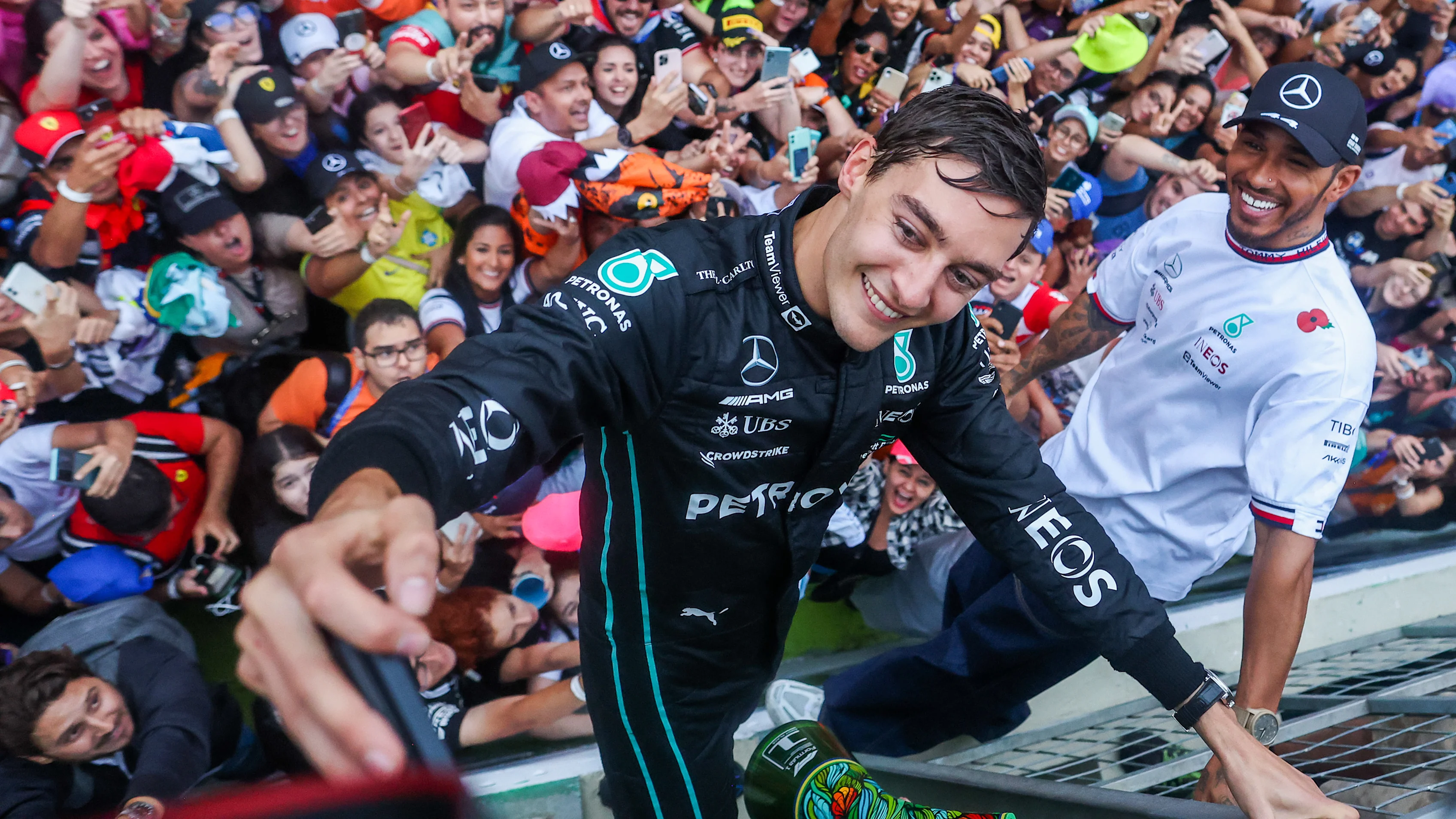
So where does the championship stand after two rounds? George Russell still leads, and deservedly so. A win and a pole in Melbourne, a sprint win and second place in Shanghai: it is the most complete start to a season anyone has made, and it has given him a cushion at the top. But the cushion is thinner than it looks, because his teammate is now a Grand Prix winner, and teammates with momentum are the most dangerous rivals in the sport.
Antonelli's victory changes the dynamic at Mercedes in the most delicious way. Russell is the established star, the team leader, the championship frontrunner. Antonelli is now the teenager who took pole and won at nineteen, the story of the season, the driver every camera follows. Managing that dynamic, keeping both drivers happy and fast, is the defining challenge of Toto Wolff's season. So far, so good: a one-two in both the opening rounds suggests a team in harmony. But harmony is easy when everyone is winning. The real test comes later.
Behind them, the picture is murkier. Ferrari has pace and a podium but needs wins. McLaren has two brilliant drivers and zero finishes between them, a crisis by any measure. Red Bull has speed and fragility in equal measure. Two rounds is nothing, the season is long, but the early evidence points to a Mercedes era taking shape, and everyone else is already playing catch-up.
Next Stop: Suzuka
The paddock does not rest, and neither does the story. Formula 1 heads to the Japanese Grand Prix at Suzuka on March 27-29, one of the great circuits on the calendar and a fitting stage for the next chapter. Suzuka rewards bravery and punishes mistakes, which makes it the perfect test for a nineteen-year-old winner carrying the momentum of Shanghai and a championship leader carrying the pressure of expectation.
The questions write themselves. Can Antonelli do it again, or was Shanghai lightning in a bottle? Can McLaren finally get both cars to the grid, and will Piastri finally complete a racing lap in 2026? Can Ferrari convert its obvious pace into a genuine challenge to Mercedes? And can Red Bull find the reliability to match its speed? Two rounds down, a long season ahead, and a sport that feels more alive than it has in years. See you at Suzuka.

FAQ
Who won the 2026 Chinese Grand Prix?
Kimi Antonelli won the Formula 1 Heineken Chinese Grand Prix in Shanghai on March 15, 2026, driving for Mercedes. It was his maiden Formula 1 victory, ahead of teammate George Russell and Lewis Hamilton's Ferrari. Antonelli also took pole with a 1:32.064, becoming the youngest pole sitter in F1 history at nineteen.
How old was Antonelli and what records did he set?
At nineteen, Antonelli became the second-youngest Grand Prix winner in Formula 1 history, behind only Max Verstappen, and Italy's first Grand Prix winner in twenty years, since Giancarlo Fisichella won the 2006 Malaysian Grand Prix. His pole position lap of 1:32.064 made him the youngest pole sitter the sport has ever seen.
Why did so few cars start the Chinese Grand Prix?
Both McLarens were wheeled off the grid with separate electrical failures traced to the Mercedes power unit, while Gabriel Bortoleto's Audi and Alex Albon's Williams also failed to start. Only eighteen cars lined up, and Oscar Piastri had completed zero laps of the 2026 season after two rounds.
Who won the Chinese Grand Prix sprint race?
George Russell won the sprint on Saturday, ahead of Charles Leclerc and Lewis Hamilton. Russell went on to finish second in the Grand Prix and still led the drivers' championship after the weekend.
A Note on Sources
Race results, sprint results, qualifying times, pole position records, Did Not Start classifications, and driver quotes in this recap were verified against the official Formula1.com race and sprint reports for the 2026 Chinese Grand Prix and cross-checked with coverage from Reuters, BBC Sport, Sky Sports, and The Race. Historical records on youngest winners and pole sitters reflect Formula 1's official statistical archives.