
By Paulina Phan, Senior Editorial Contributor | April 13, 2026
Every era of Formula 1 has a moment when the drivers stop whispering in the motorhomes and start saying the quiet part out loud. In 2026, that moment arrived on lap 22 at Suzuka, when Oliver Bearman's Haas speared off the track at the Spoon hairpin and hit with a force measured at fifty times gravity. Bearman walked away with a bruised right knee and no fractures, which counts as good news only in this sport. What he did not walk away from was a paddock that had been holding its breath about the new regulations for three races and finally exhaled all at once. In the two weeks since, the Grand Prix Drivers' Association has gone from polite concern to open revolt, Max Verstappen has admitted he could walk away from the sport entirely, and the FIA has been dragged to the table for crisis talks that produced, in the end, only the promise of tweaks. Formula 1 has seen driver rebellions before, but rarely one with this much generational drama, this much group-chat chaos, and this much at stake.
The Crash That Started Everything
To understand the revolt, you have to start at Spoon. The Japanese Grand Prix on March 29 was supposed to be a coronation lap for the new order: Kimi Antonelli, nineteen years old, took pole with a 1:28.778, and Mercedes locked out the front row. Then the race did what races do. Antonelli dropped from pole to sixth off the line with low battery deployment, fought his way back, and was the only leader yet to pit when Bearman's crash on lap 22 brought out the safety car. He took the cheap stop, reemerged in first, and won by 13.722 seconds. It was his second straight victory, and it made him the youngest championship leader in Formula 1 history at nineteen years and 216 days, Italy's first championship leader since Giancarlo Fisichella in 2005. The feel-good story wrote itself.
But nobody was really talking about the feel-good story, because George Russell had pitted one lap before the safety car and was absolutely fuming about the timing, because Charles Leclerc denied him third in a late Turn 1 tussle, and because all of it was background noise next to the image of Bearman's Haas crumpled at one of the fastest parts of the circuit. A 50g impact. Let that number sit for a second. That is the kind of deceleration that used to end careers, or worse. Bearman was lucky. The drivers knew it. And luck, as every driver will tell you, is not a safety strategy.
What made the crash a flashpoint rather than just a frightening accident was the context everyone in the paddock had been quietly discussing since Melbourne. The 2026 regulations, with their active aerodynamics and dramatically different energy deployment, have created straight-line speed differences of 30 to 50 kph under boost. That is not a small delta. That is the difference between a racing car and a sitting duck on the same straight, one driver harvesting and deploying while another is caught in the wrong phase of the system. Franco Colapinto, never one to sugarcoat things, called the resulting maneuvers "artificial and dangerous," and he was not alone. For three races, the drivers had been raising exactly this concern in briefings and debriefs: the cars behave like two different formulas depending on who has deployment and who does not, and at some point, someone was going to pay for that mismatch with carbon fiber and worse.
The WhatsApp Group Explodes
If you want to know how driver politics really work in 2026, do not look at the press conferences. Look at the group chat. GPDA president Alex Wurz revealed that the drivers' WhatsApp group was "exploding" after Suzuka, which might be the most 2026 sentence ever uttered about Formula 1 governance. Twenty of the bravest, most competitive people on the planet, furiously typing. You can picture the blue ticks piling up.
The public face of the anger was Carlos Sainz, a GPDA director, who said what everyone had been thinking: "we warned them that it was a matter of time before such an accident would happen… Imagine going to Baku, Singapore, or Las Vegas and having these kinds of speed differences, with big crashes into the walls." Read that quote again and notice what he is really saying. This was not a freak accident, in his telling. It was a predicted accident. The drivers had warned the rulemakers, the warning had been filed away, and now a twenty-year-old was lucky to walk away from a 50g shunt. The fury in the paddock was not really about Spoon. It was about being right and being ignored.
And Sainz picked his examples with a prosecutor's precision. Baku, Singapore, Las Vegas. Three street circuits, three walls with no runoff, three places where a 30 to 50 kph closing-speed mismatch does not end with a trip through a gravel trap and a sheepish radio apology. It ends with the kind of crash that makes the whole sport hold its breath. The calendar is not doing the drivers any favors here either. The run of races ahead is heavy on exactly the kind of circuits Sainz named, which is why the timing of the revolt matters as much as the substance. This is not an abstract debate about the purity of racing. It is a debate about walls.
The Verstappen Question
Hovering over all of this, like a thundercloud in a team polo shirt, is Max Verstappen. The four-time champion has never been shy about his frustrations, but even by his standards, the last two weeks have been stark. Verstappen openly admitted he could walk away from Formula 1 amid his frustration with the regulations and Red Bull's struggles in the new era, and those are not words a driver of his stature uses lightly. When Max Verstappen talks about leaving, the entire sport stops to listen, because he is not the type to bluff. He is the type to mean it.
His father Jos, never far from the story, added the family dimension, admitting he feared his son could lose motivation. And then Toto Wolff, in a moment that tells you everything about how seriously the paddock is taking this, publicly said he hoped Verstappen would not leave. The Mercedes team principal, whose team is currently dominating the new regulations, is publicly pleading with his rival's star driver to stay. That is not sportsmanship. That is self-preservation. Wolff understands something fundamental: a Formula 1 without Max Verstappen is a diminished product, no matter who is winning. The show needs its villains and its heroes, and Verstappen, love him or not, is box office in a way few drivers ever are.
The irony is thick enough to cut. Verstappen spent years as the face of an era many fans found boring, the dominant champion cruising to titles while everyone else fought for scraps. Now, in the first season where he is genuinely struggling, with Red Bull's new power unit project finding its feet and Mercedes setting the standard, he is suddenly the driver the sport cannot afford to lose. There is something almost poetic about it. The king is down, and everyone has realized how much they liked having a king around.
The FIA Blinks, Slightly
All of this pressure had to go somewhere, and on April 11 it went into a meeting room. The FIA's crisis talks over the regulations, convened under the full glare of the driver backlash, concluded with the promise of only "tweaks." Tweaks. After a 50g crash, an exploding WhatsApp group, and the sport's biggest star musing about retirement, the governing body's answer was tweaks. If you are a driver who just watched your colleague hit the wall at Spoon, that word probably landed like a slap.
To be fair to the FIA, and it pains me to type this, rewriting a technical regulation midseason is genuinely hard. The 2026 ruleset is the product of years of negotiation between the governing body, the commercial rights holder, and ten teams with ten different agendas. You cannot just unplug the active aero and start over between Suzuka and the next race, especially when there is no next race for weeks. April is a fallow month on the 2026 calendar, with Bahrain and Saudi Arabia both cancelled, which means the paddock has nothing to do but argue. And argue it has.
But here is what the drivers hear when the FIA says "tweaks": we hear you, we are not really listening, please stop embarrassing us. The real decision point is the stakeholder vote scheduled for April 20, which looms over everything like the second half of a cliffhanger. That vote is now the most important date on the Formula 1 calendar that does not involve actual racing, because it will determine whether the changes that debut in Miami are cosmetic or meaningful. The paddock's money, and I mean this literally in the case of several team principals I could name, is on the drivers getting something real. You do not let a crisis like this fester through a five-week break and then show up to Miami with nothing. Or at least, you should not.
The politics of the vote are delicious, in the way that only Formula 1 politics can be. The teams that are winning under the current rules, and we all know who is winning, have every incentive to keep them exactly as they are. The teams that are losing want them burned to the ground. The FIA sits in the middle, trying to keep the drivers alive, the racing credible, and the manufacturers happy, which is roughly as easy as it sounds. Expect the days before April 20 to be full of carefully worded statements, anonymous briefings, and team principals saying "safety is our top priority" through smiles that do not reach their eyes.
The Generational Split
Here is where the story gets really interesting, because the drivers do not actually agree with each other. The revolt has a fault line running right through the middle of it, and the fault line is age.
On one side: Lando Norris, who called the racing "completely artificial." Norris is twenty-six, in his prime, driving for a McLaren team that has spent the season fighting electrical gremlins and watching Mercedes disappear up the road. His frustration is the frustration of a driver who believes he should be fighting for wins and is instead fighting his own car's software. When he says artificial, he means the racing does not feel like racing anymore. It feels like a video game where someone else has the cheat codes.
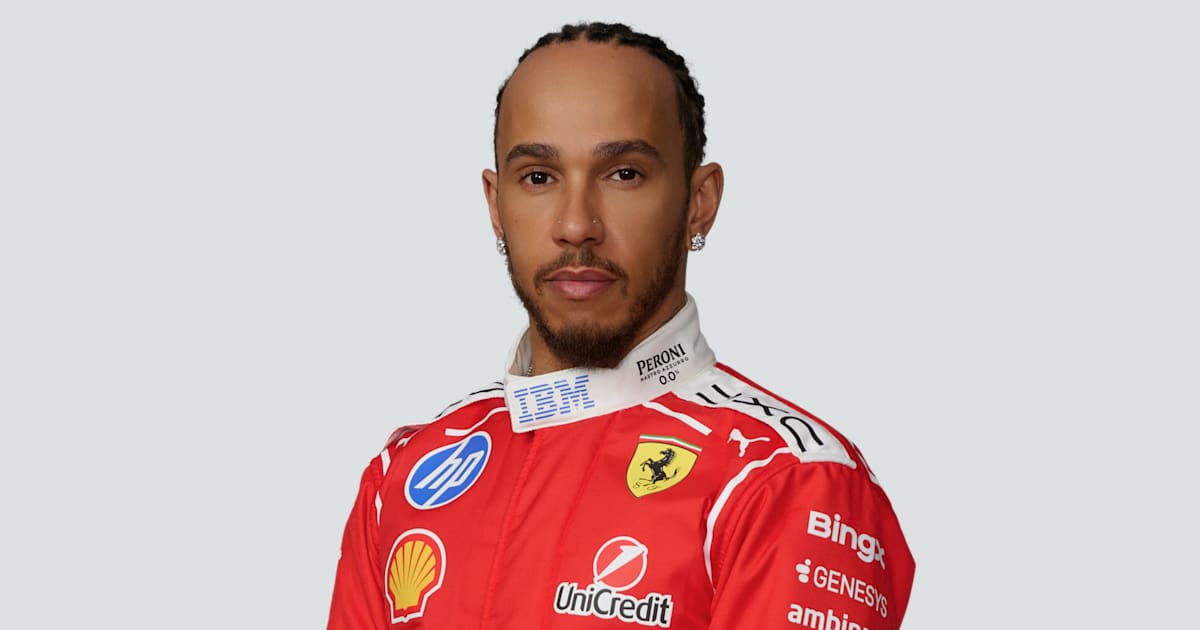
On the other side, and I genuinely did a double take when I read this: Lewis Hamilton, forty-one years old, seven championships, who said of the new racing, "personally, I loved it." Lewis Hamilton loves it. The elder statesman, the driver with the most to lose from gimmickry and the longest memory of what pure racing felt like, is having the time of his life. He qualified second at Suzuka, finished fourth after a race-long fight, and seems to be thriving in the chaos of the new formula.
What do you do with that? The generational split scrambles every easy narrative. It is not the young chargers versus the old guard defending tradition. It is almost the reverse. The teenager leading the championship, Antonelli, is thriving under rules the veterans call dangerous. The forty-one-year-old legend is delighted. And some of the angriest voices belong to drivers in their prime who feel the sport has been taken away from them and replaced with an energy-management exercise.
There is a reading of this that is genuinely optimistic, if you squint. New regulations always produce winners and losers, and the winners always love the rules. In 2009, the double diffuser made heroes of Button and Brawn while the established giants fumed. In 2014, the hybrid era crowned Mercedes and left everyone else complaining about the sound. The pattern is as old as the sport: the drivers who are winning call it racing, and the drivers who are losing call it artificial. The difference this time is the safety dimension, which is the one part of the complaint that cannot be waved away with "you're just mad you're slow." Speed differentials of 30 to 50 kph are a safety issue no matter who is winning, and that is the part the April 20 vote has to address.
What Happens Now
So here we are, in the middle of the strangest April in recent Formula 1 memory. No racing for five weeks, a driver revolt in full swing, a stakeholder vote nine days away, and a sport arguing with itself about what it even is anymore. Let me tell you what I am watching.
First, the April 20 vote. Everything flows from this. The changes are aimed at debuting in Miami, which gives the teams roughly two weeks to implement whatever is agreed. That timeline tells you the changes will be parameters, not philosophy: deployment maps, boost limits, the kind of software adjustments that can be pushed to the cars without redesigning them. Nobody is rewriting the technical regulations in a fortnight. The question is whether parameter changes can fix a problem the drivers describe as fundamental.
Second, Verstappen. His flirtation with walking away is the story that could swallow all the others. A sabbatical, a switch, a genuine goodbye: all of it is suddenly on the table in a way it was not a month ago. Jos Verstappen's worry about his son's motivation is the detail that sticks with me, because motivation is the one thing you cannot engineer. You can fix a power unit. You cannot fix a driver who has stopped caring. Wolff's public hope that Verstappen stays is the paddock's collective anxiety given a microphone.
Third, the calendar. Remember Sainz's list: Baku, Singapore, Las Vegas. The sport is about to go racing on street circuits with walls for scenery, in cars the drivers say have unpredictable closing speeds. The FIA knows this. The drivers know the FIA knows this. If Miami arrives with nothing but tweaks and then something happens at a street circuit, the conversation we are having now will look quaint. That is the nightmare scenario driving the urgency behind the scenes, even if the public statements are all about process and stakeholder engagement.
And finally, the vibe. I keep coming back to the WhatsApp group, because it tells you something about where power sits in modern Formula 1. The drivers are more organized, more communicative, and more willing to go public than any previous generation. Wurz and Sainz are not just lending their names to a press release. They are channeling a genuinely furious workforce that talks to each other every day and has decided, collectively, that it has had enough. The FIA can promise tweaks. The drivers have a group chat. In 2026, I am not sure which one is more powerful.
One more thing worth saying, because it gets lost in the shouting. Nobody in this debate is arguing for boring racing. The drivers loved close racing long before active aero existed. What they are asking for is racing where the outcome is decided by bravery and skill rather than by who has battery charge at the right moment, and where a mistake costs you positions rather than risking a 50g meeting with a barrier. That does not sound unreasonable. It sounds like the bare minimum. On April 20, we will find out whether the sport's rulemakers agree.
FAQ
What happened in Oliver Bearman's crash at Suzuka?
On lap 22 of the Japanese Grand Prix at Suzuka on March 29, Bearman's Haas crashed heavily at the Spoon hairpin. The impact was recorded at 50g. He suffered a contusion to his right knee but no fractures. The safety car that followed handed Kimi Antonelli, the only leader yet to pit, a cheap stop that carried him to victory.
What exactly are the drivers complaining about?
The 2026 regulations' active aerodynamics and energy deployment systems create straight-line speed differences of 30 to 50 kph under boost, meaning cars behave unpredictably relative to each other on straights. Drivers including Franco Colapinto have called the resulting racing "artificial and dangerous," and the GPDA argues the speed mismatches are a safety risk, especially on street circuits with walls instead of runoff.
What is the April 20 stakeholder vote?
Following the April 11 crisis talks, which ended with only "tweaks" promised, Formula 1's stakeholders will vote on April 20 on regulatory changes aimed at debuting at the Miami Grand Prix. The vote is expected to focus on adjustable parameters like deployment maps and boost limits rather than a full rewrite of the technical regulations.
Is Max Verstappen really going to leave Formula 1?
Verstappen has openly admitted he could walk away amid frustration with the 2026 rules and Red Bull's struggles, and his father Jos has said he fears his son could lose motivation. Nothing is decided, and Toto Wolff has publicly said he hopes Verstappen stays, but the speculation has already fueled the early 2027 driver market.
A Note on Sources
Driver quotes, crash details, the GPDA's public statements, and the timeline of the FIA's April 11 crisis talks and the April 20 stakeholder vote were verified against the official Formula1.com reports and cross-checked with coverage from Reuters, BBC Sport, Sky Sports, Crash.net, PlanetF1, and The Race. Race results cited are from the official classification of the 2026 Japanese Grand Prix.