
By Paulina Phan, Senior Editorial Contributor | April 20, 2026
There is no racing this weekend. There has been no racing for weeks, and there will be no racing until Miami. In any normal sport, this would be the deadest part of the year. In Formula 1, it is the part where everyone becomes an aerodynamicist. With the cars locked in garages and the drivers scattered to the winds, the paddock's considerable gossip energy has exactly one outlet: the technology. And this week, the technology delivered. We have a front wing controversy at Mercedes that the FIA is desperately trying to downplay, a Ferrari rear wing nicknamed the Macarena that is spreading through the field like a dance craze, and Adrian Newey's Aston Martin being called a failed design by an expert who did not mince a single word. Pour yourself something cold. The nerds are fighting, and it is glorious.
The Two-Phase Front Wing Affair
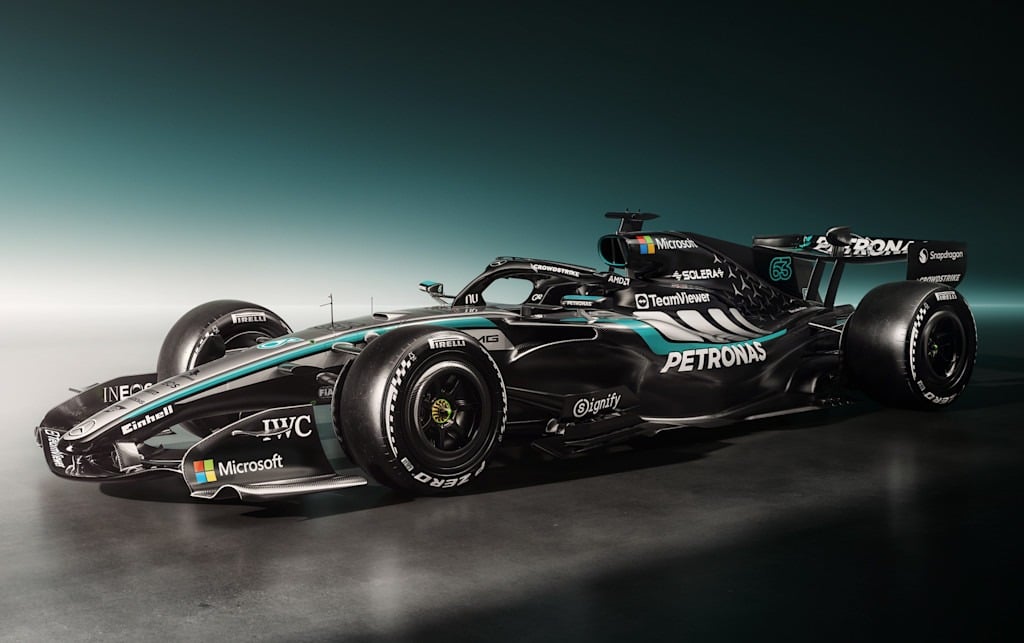
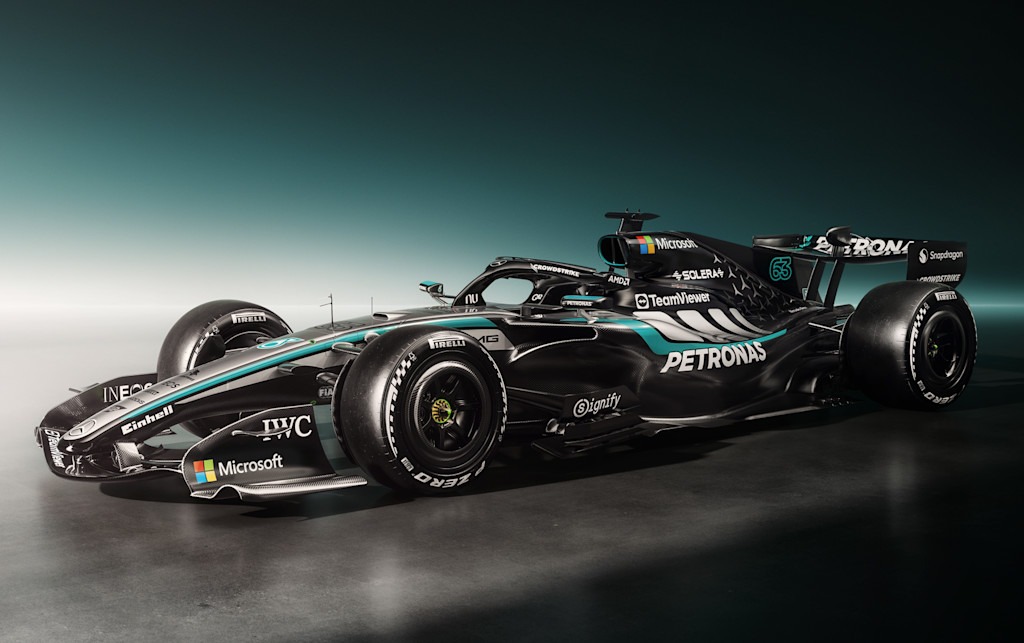
Let us start with the champions, because controversies involving the fastest team are always the spiciest. The row of the week concerns Mercedes' front wing, specifically a "two-phase" design that rival teams have been squinting at since the season began. The allegation, dressed up in the usual technical language, is essentially this: the wing appears to behave differently in different phases of a lap, flexing or shifting its aerodynamic behavior in a way that gives Mercedes an advantage its rivals cannot replicate within their reading of the rules.
Now, before anyone reaches for the rulebook, here is what the FIA did about it. The governing body moved to calm the row, insisting the issue was minor and not worthy of formal action. Read that sentence the way a paddock insider would: nothing to see here, please disperse. The FIA looked at Mercedes' two-phase front wing, decided it was within the spirit and letter of the regulations, and told everyone to get back to work.
If you believe that settled the matter, you have never met a Formula 1 team principal. In this sport, an FIA "nothing to see here" is never the end of a controversy. It is the beginning of a quieter, more expensive one. Because here is how these rows actually work: a team spots something on a rival's car, complains loudly enough to get the FIA to look, and when the FIA declines to act, the complaining team goes back to its factory and builds its own version. The history of Formula 1 is littered with innovations that were controversial right up until everyone had one. The double diffuser. The blown diffuser. The F-duct. Today's protest is tomorrow's photocopy.
The girly translation of all this: Mercedes showed up to the party in a dress everyone else claims violates the dress code, the bouncer looked at it and waved her through, and now half the guest list is in the bathroom trying to figure out how to get the same dress. That is the two-phase front wing affair in a nutshell. The FIA says it is fine. The rivals say it cannot possibly be fine. And the stopwatch, which does not care about anyone's feelings, keeps saying Mercedes is fastest.
There is a serious point buried in the gossip, which is that the 2026 regulations were supposed to make this kind of thing harder. Active aerodynamics, tighter deflection tests, prescriptive geometries: the rulebook was written by people who had seen every trick in the book and tried to close every loophole in advance. And yet, three races in, here we are, arguing about a front wing. It turns out you cannot legislate away cleverness. You can only hope to spot it quickly, which is exactly what the FIA claims to have done. Whether the rivals accept that verdict will determine how loud May gets.
Everybody Is Doing the Macarena
If the Mercedes story is about controversy, the Ferrari story is about contagion. Ferrari arrived in 2026 with a radical rear wing concept that the paddock has nicknamed the "Macarena," and if you are wondering why a piece of carbon fiber is named after a 1990s dance craze, welcome to Formula 1, where the engineers have the sense of humor of tired dads and the naming conventions to match. The wing's distinctive shape, with its stepped, rhythmic profile, apparently reminded someone of the dance. The name stuck. The concept is now spreading.
Here is the thing about a good idea in Formula 1: it has a half-life measured in weeks. Ferrari's Macarena rear wing began the season as a curiosity, the kind of aggressive interpretation that makes rival aerodynamicists frown at their screens. Then the stopwatch started talking, and suddenly it is not a curiosity anymore. It is a trend. The concept has begun spreading across the field, with teams studying, copying, and adapting Ferrari's solution at a pace that would make fast fashion blush.

The most telling adopter is Red Bull, which has been testing the solution ahead of its Miami upgrade package. Think about what that means. Red Bull, the team of Adrian Newey's successors and heirs, the operation that spent years setting the aerodynamic agenda for the entire sport, is now taking rear wing lessons from Ferrari. There is no shame in it. Copying is the sincerest form of aerodynamic flattery, and every team on the grid runs a photographic intelligence operation that would make spy agencies jealous. But it tells you something about the pecking order of ideas in 2026. Ferrari, which spent the April break treating the gap as a "mini pre-season" reset to chase Mercedes, is not just making up ground. It is setting trends.
The Macarena's spread also tells a story about the nature of the 2026 regulations. When a radical concept can be identified, understood, and replicated within weeks, it suggests the design space is legible in a way that rewards fast followers almost as much as originators. That is good news for the racing, in theory. It means advantages are fragile, gaps close quickly, and no team can run away with a trick for long. It is bad news for anyone who thought their clever idea would stay secret. In 2026, there are no secrets. There are only ideas that have not been photographed yet.
The Failed Design
And then there is Aston Martin, where the gossip took a darker turn. A Japanese expert has labelled Adrian Newey's Aston Martin concept a "failed design" suffering from an "unthinkable mistake," and if those words sound brutal, they are meant to be. This is Adrian Newey we are talking about, the most successful designer in the history of the sport, the man whose cars have won championships across four decades. For an expert to look at his work and see failure is the aerodynamic equivalent of telling a Michelin chef his souffle has collapsed.
Let us add the context, because it matters. Aston Martin's 2026 has been painful. At Suzuka, Honda's home race, Lance Stroll retired with water pressure issues and Fernando Alonso finished a lap down in eighteenth. A lap down. At the engine manufacturer's home Grand Prix. The Honda partnership, which was supposed to be the foundation of Aston's championship ambitions, has instead produced a car that cannot stay on the lead lap. And now Honda has warned there is no quick fix for Aston in Miami, which is the kind of statement that lands like a diagnosis.
What is the "unthinkable mistake"? The expert's critique, as reported, centers on a fundamental conceptual error in how the car's aerodynamics interact with the new active systems, a wrong turn taken early in the design process that cannot be fixed with updates because it is baked into the car's architecture. If that assessment is right, Aston Martin is not one upgrade away from competitiveness. It is one concept away, which in Formula 1 means one season away. You cannot patch a philosophy.
There is a particular cruelty in this happening to Newey's first Aston Martin. The great designer's move to Silverstone was the story of last year, the coup that was supposed to transform a midfield team into a contender. Instead, the new regulations have humbled him the way they have humbled so many great minds before him. The history of rule changes is a graveyard of genius: brilliant designers who mastered one formula and could not master the next. Newey has survived more regulation changes than any designer alive, which is why writing him off would be foolish. But the Japanese expert's verdict, combined with Honda's warning, paints a picture of a team facing a long, hard year. Miami will not save them. Nothing short of a rethink will.
And honestly? There is something almost comforting about it. If Adrian Newey can get it wrong, then the 2026 regulations are genuinely difficult, genuinely new, genuinely capable of humbling anyone. The playing field is not just level. It is quicksand. Everyone is figuring it out in real time, including the smartest man in the room.
Why the Gossip Matters
It is easy to treat all of this as paddock theater, and to be fair, some of it is. But the tech gossip of a development break is the closest thing Formula 1 has to a transfer window, and what happens in April determines what happens in May. Here is why each thread of this week's gossip will matter when the lights go out in Miami.
The Mercedes front wing row matters because it sets the boundaries of the season. If the FIA's "minor issue" verdict holds, Mercedes keeps its advantage and everyone else starts building two-phase wings of their own, which means the competitive order stays roughly where it is. But if a rival team finds a smarter way to frame the protest, or if the FIA's technical department takes a second, harder look under pressure, the champions could be forced into a redesign at the exact moment everyone else is bringing upgrades. Dominant teams hate uncertainty more than they hate losing. Uncertainty is what April is selling.
The Macarena's spread matters because it is the clearest evidence yet that the field is converging. Ferrari's concept going from curiosity to paddock-wide trend in a matter of weeks suggests that the performance gaps of the early season are not structural. They are informational. Once everyone understands the fast ideas, everyone gets faster, and the racing gets closer. That is the theory, anyway. The practice depends on whether the copying teams can integrate the concept as well as the originators, which is never as easy as it looks. A rear wing does not work in isolation. It works as part of a whole car, and bolting Ferrari's idea onto a Red Bull is not the same as building a Ferrari.

And the Aston Martin story matters because it is a warning. If a team with Newey, Honda power, and Lawrence Stroll's resources can get the new regulations this wrong, then nobody's concept is safe. Every team principal reading the "failed design" verdict is quietly asking their own technical director the same question: are we sure about our car? The honest answer, three races into the most radical regulation change in a generation, is that nobody is sure about anything. The teams that admit that fastest will recover fastest.
There is also the calendar to consider. Miami is not just the next race. It is the deadline the entire paddock has been working toward since the April 20 stakeholder vote on the regulations set the terms of engagement. Upgrade packages that were planned for the European season have been pulled forward. Concepts that were experimental are being rushed into production. Ferrari's mini pre-season, Red Bull's Macarena-inspired updates, Mercedes' defense of its wing philosophy: all of it converges on one weekend in Florida. The development race is real, it is expensive, and it is happening right now, in factories that have not slept properly since March.
What to Watch in Miami
So when the circus finally reconvenes, here is your cheat sheet for the tech storylines that will actually decide the racing.
Watch the Mercedes front wings in practice. Not the lap times, the wings. Photographers will be shooting them from every angle, rival engineers will be studying the images, and the body language of the FIA technical delegates will tell you everything. If the wing looks the same as it did in Suzuka, Mercedes has won the argument. If it looks different, someone lost.
Watch the rear wings across the field and count the Macarenas. Every team running a stepped, Ferrari-style profile is a team that has conceded Ferrari had the better idea. The more Macarenas on the grid, the more the field has converged, and the closer the racing should be. It is the simplest possible barometer of how fast ideas are traveling in 2026.
Watch Aston Martin, not for performance but for philosophy. If the car arrives in Miami looking fundamentally the same, Honda's warning about no quick fix was honest and the team is in for a long year. If it arrives looking radically different, someone in Silverstone has decided the expert was right and started over. Either way, you will learn something about how the team sees itself.
And watch the gaps. The real test of everything, the front wing rows, the Macarena contagion, the failed designs and the mini pre-seasons, is whether the field is closer in Miami than it was in Suzuka. Mercedes dominated the opening triple-header with three poles and two one-twos. If that dominance survives the break, the 2026 story is a familiar one: one team figured it out first. If the gaps close, then the gossip was right, the development race is real, and we are in for a season where the cleverest team wins rather than the first team. That is the season every fan wants. That is the season the drivers' revolt was really about. Not just safer racing, but racing where the outcome is not decided in March.
One last thought, because the girly lens demands it. There is something delicious about a sport where the biggest drama of the month involves no driving whatsoever. No overtakes, no crashes, no champagne. Just wings and whispers and grown adults arguing about carbon fiber the way the rest of us argue about hemlines. Formula 1 likes to pretend it is about the racing. This week proved, once again, that it is about everything around the racing too. The technology is the gossip. The gossip is the sport. And Miami cannot come soon enough.
FAQ
What is the row over Mercedes' "two-phase" front wing?
Rival teams questioned whether Mercedes' front wing behaves differently in different phases of a lap, giving the champions an advantage. The FIA examined the design and moved to calm the row, insisting the issue was minor and not worthy of formal action. Expect rivals to develop their own versions rather than let the matter drop.
What is Ferrari's "Macarena" rear wing?
Ferrari's radical 2026 rear wing concept, nicknamed the Macarena for its stepped, rhythmic profile. The design has begun spreading across the field as rival teams study and copy it, with Red Bull testing the solution ahead of its Miami upgrade package. It is the clearest sign yet that the field is converging on the fast ideas.
Why did an expert call Adrian Newey's Aston Martin a "failed design"?
A Japanese expert labelled Newey's Aston Martin concept a "failed design" with an "unthinkable mistake," suggesting a fundamental conceptual error baked into the car's architecture. The verdict follows a painful start to 2026: Stroll retired with water pressure issues and Alonso finished a lap down at Honda's home race at Suzuka, and Honda has warned there is no quick fix for Aston in Miami.
When does Formula 1 racing resume?
After a five-week April break with no racing, following the cancellation of the Bahrain and Saudi Arabia rounds, the season resumes at the Miami Grand Prix. The April 20 stakeholder vote on the regulations and every team's upgrade packages converge on that weekend.
A Note on Sources
The FIA's position on the Mercedes front wing, Ferrari's rear wing concept and its adoption across the field, the expert verdict on the Aston Martin concept, and Honda's warning were verified against the official Formula1.com reports and cross-checked with coverage from Reuters, BBC Sport, Sky Sports, Crash.net, PlanetF1, and The Race. Interpretations of what the technical developments mean for the Miami Grand Prix are the author's editorial analysis.