
By Paulina Phan, Senior Editorial Contributor | June 15, 2026
Six hundred and eighty-six days. That is how long Lewis Hamilton waited between Grand Prix victories, how long he carried the quiet question of whether the wins were done, how long he listened to the paddock wonder aloud whether the Ferrari move had been a beautiful mistake. On Sunday afternoon at the Circuit de Barcelona-Catalunya, the wait ended in the most emphatic way possible. Hamilton did not luck into this win. He did not inherit it. He took it, with a bold three-stop strategy, a perfectly timed pit stop under the Virtual Safety Car, and a final stint of such crushing pace that he crossed the line nearly twenty seconds clear of the field. His 106th career victory. Ferrari’s first win in 595 days. The first win for a British driver in red since Eddie Irvine in 1999. Sometimes a race is just a race. This one felt like history clearing its throat.
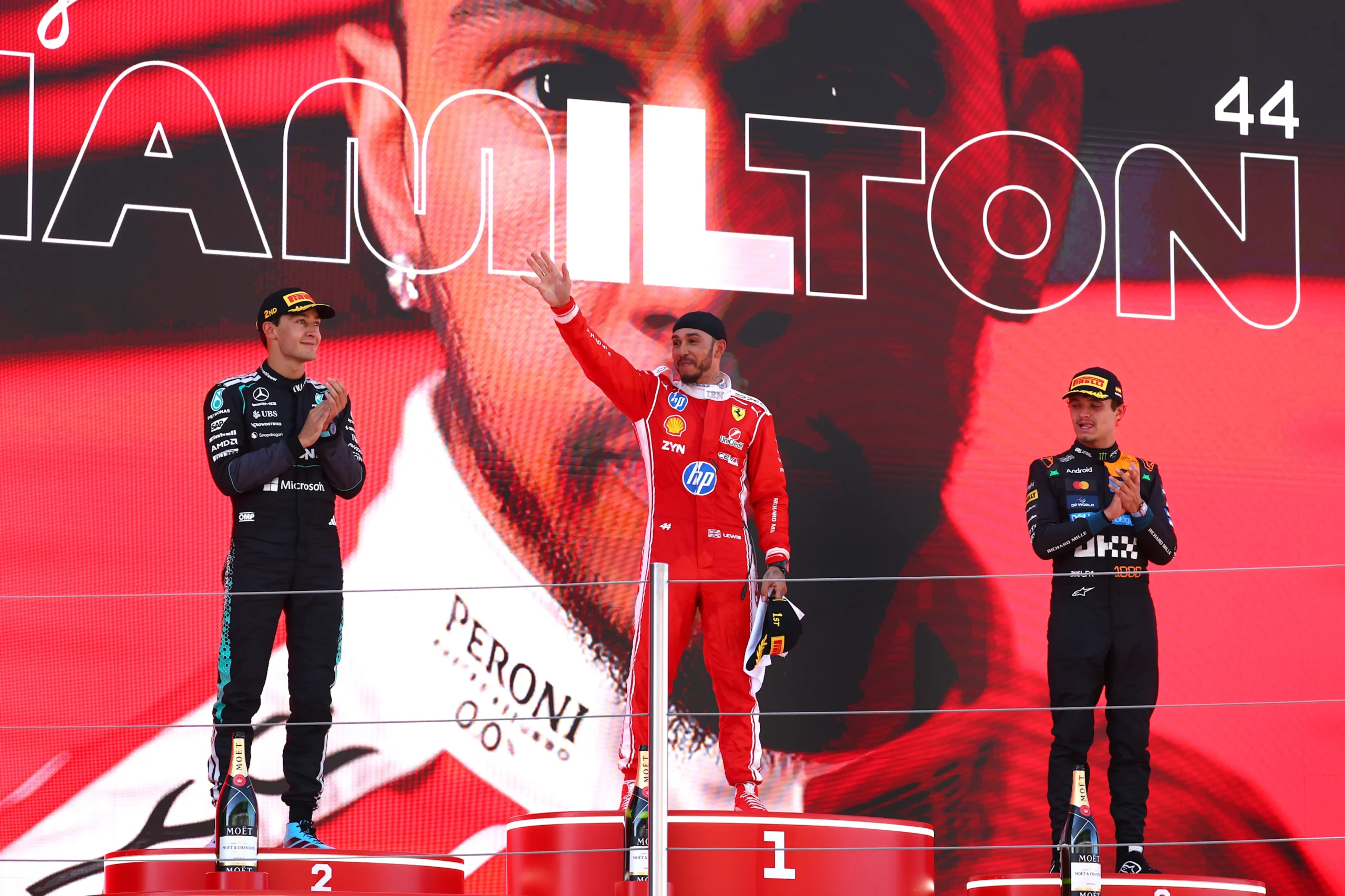
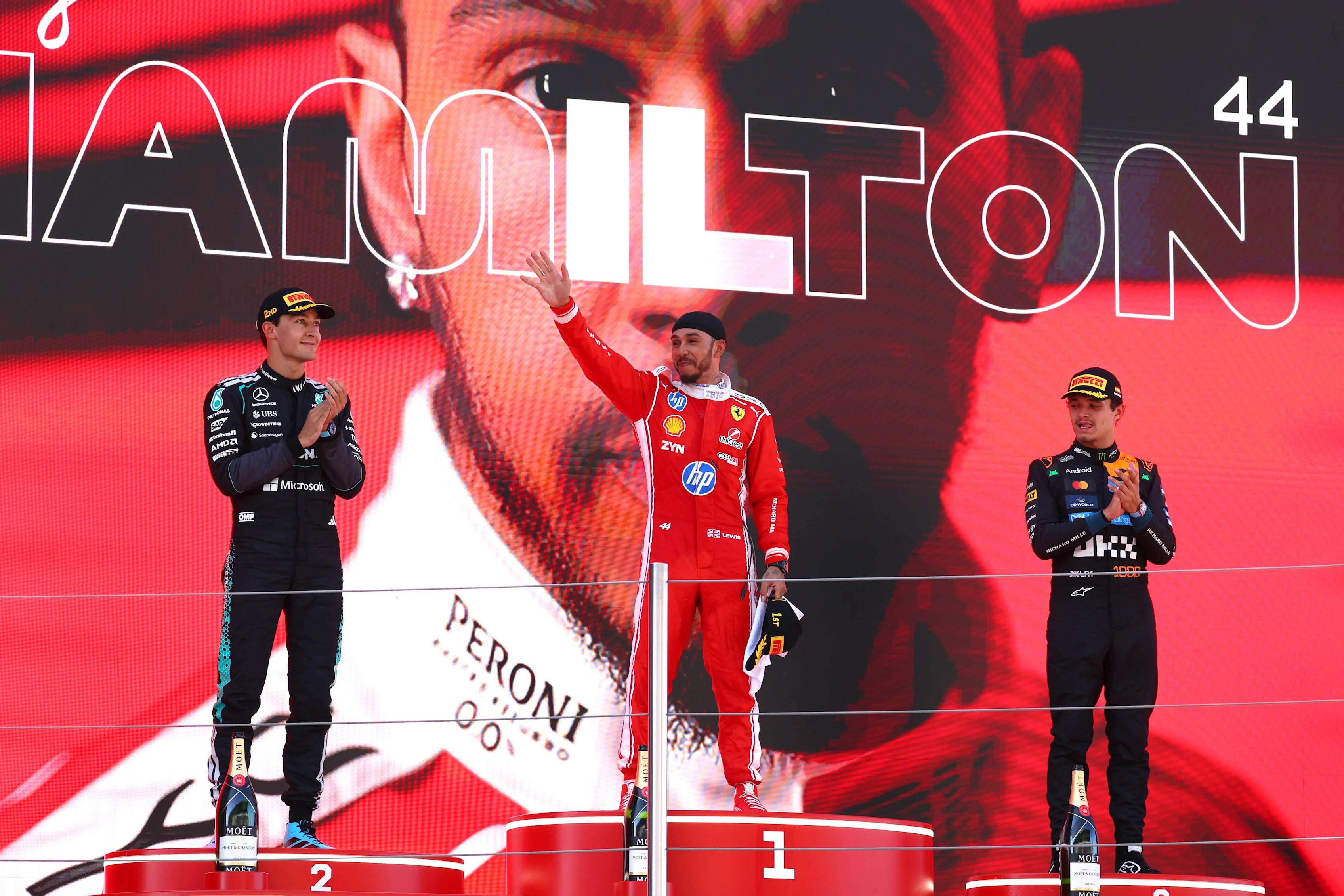
What made it sweeter still was the company on the podium. George Russell, Hamilton’s old Mercedes teammate, finished second. Lando Norris, the reigning world champion, finished third. Three Britons on the three steps, the first all-British podium in Formula 1 since 1968, more than 57 years ago.
This is the full story of the day the drought broke: the milestone pole on Saturday, the crash that shook Ferrari, the Virtual Safety Car that decided everything, the heartbreak that nearly stole the headlines, and what win number 106 means for the championship, for Ferrari, and for a 41-year-old champion who keeps reminding everyone exactly who he is.
The Short Version
You are busy, so here is everything that mattered, fast.
The podium
Lewis Hamilton won the Formula 1 MSC Cruises Barcelona-Catalunya Grand Prix for Ferrari, his first victory with the Scuderia and the 106th of his career, extending his all-time record. He beat George Russell’s Mercedes by 19.561 seconds after executing a flawless three-stop strategy, with Lando Norris third for McLaren. It was the first all-British podium since 1968.
How the grid looked
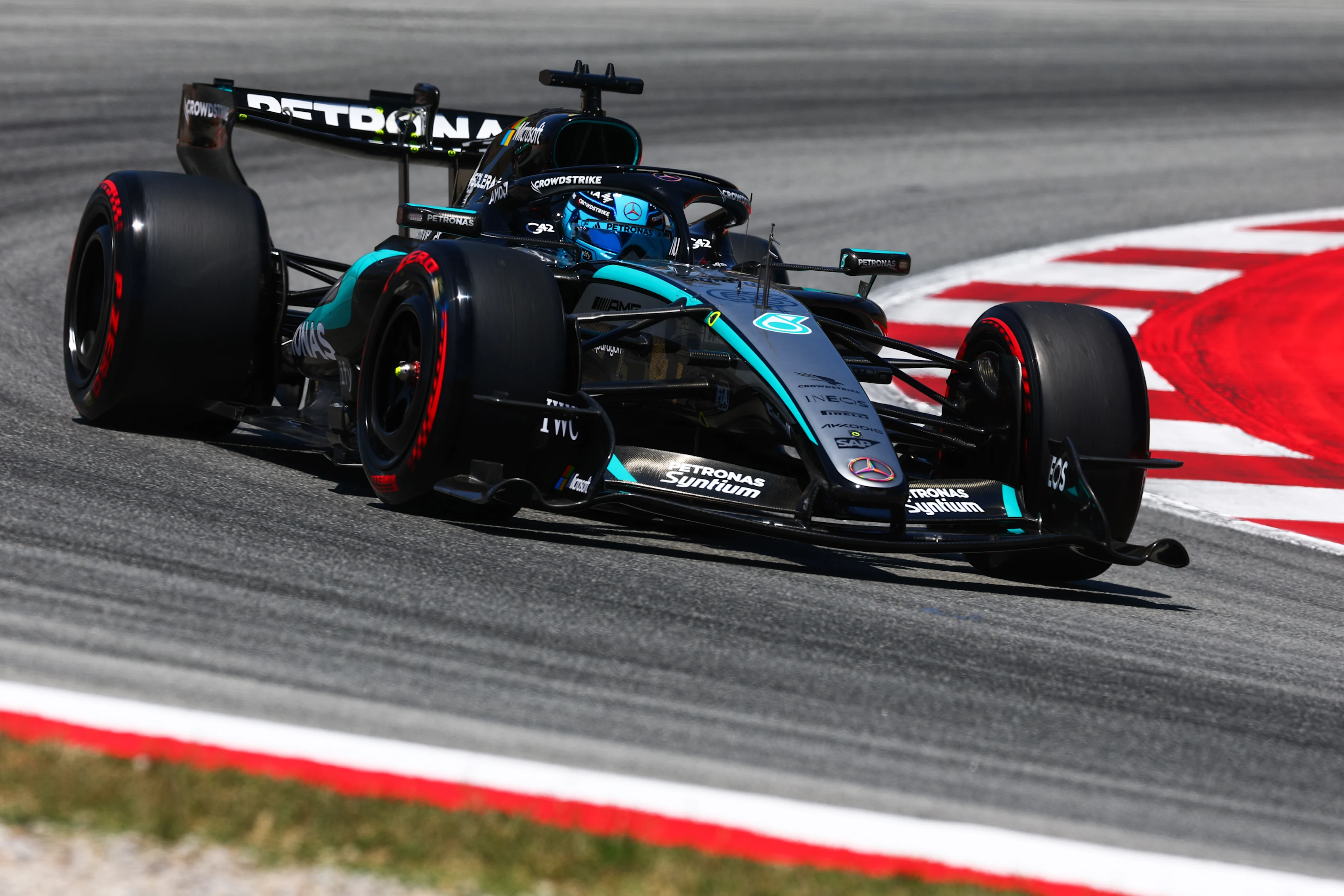
Saturday belonged to George Russell. The Mercedes driver, in his 100th Grand Prix weekend for the Silver Arrows, took his 10th career pole position with a stunning 1:14.679, just 0.064 seconds clear of Hamilton’s Ferrari. It was Russell’s third pole of the season and a emphatic response to a miserable Monaco weekend. Hamilton’s second place put the two old teammates on the front row together, while championship leader Kimi Antonelli could only manage third, his lowest qualifying result of the season and his first non-front-row start of 2026. Lando Norris qualified fourth for McLaren, ahead of the Red Bulls of Max Verstappen and Isack Hadjar, with Oscar Piastri seventh.
The drama of the session belonged to Charles Leclerc. The Ferrari driver, fastest for much of the weekend and fresh off signing a contract extension with the Scuderia, suffered a snap at Turn 4 early in Q3, overcorrected, slid through the gravel, and crashed heavily into the barriers. With no lap time set, he would start tenth. “No excuses,” he said afterward. “I just feel ashamed.” It was his second straight weekend ending in the wall after his Monaco crash.
Saturday: Russell’s Redemption and Leclerc’s Wall
To understand Sunday, you have to understand Saturday, because Barcelona’s qualifying hour contained two of the weekend’s most human stories.
For George Russell, pole position was personal. He arrived in Spain reeling: pointless in Montreal with an engine issue, pointless in Monaco amid the pit-lane penalty fiasco, and 68 points behind his teenage teammate in the championship. Russell answered the only way he knows how, by topping FP1 and FP3 and then delivering a lap in Q3 that nobody could touch. His 1:14.679 was a statement, and his words afterward were revealing: “It’s been a great weekend so far. I kind of feel like my old self again, where every lap I’m doing my job and always fighting in those top positions.”
For Charles Leclerc, Saturday was the opposite. He had been the faster Ferrari all weekend, the kind of pace that makes a driver believe pole is his, and then one snap of oversteer at Turn 4 ended it all. The crash was heavy, the red flag lasted ten minutes, and the long walk back to the garage must have felt even longer. His quote, “No excuses. I just feel ashamed,” is the kind of brutal honesty that makes Leclerc so easy to root for, even when he is his own worst enemy. Two crashes in two weekends, days after signing a contract extension, is the sort of run that tests a driver’s relationship with his own confidence. Sunday would test it further.
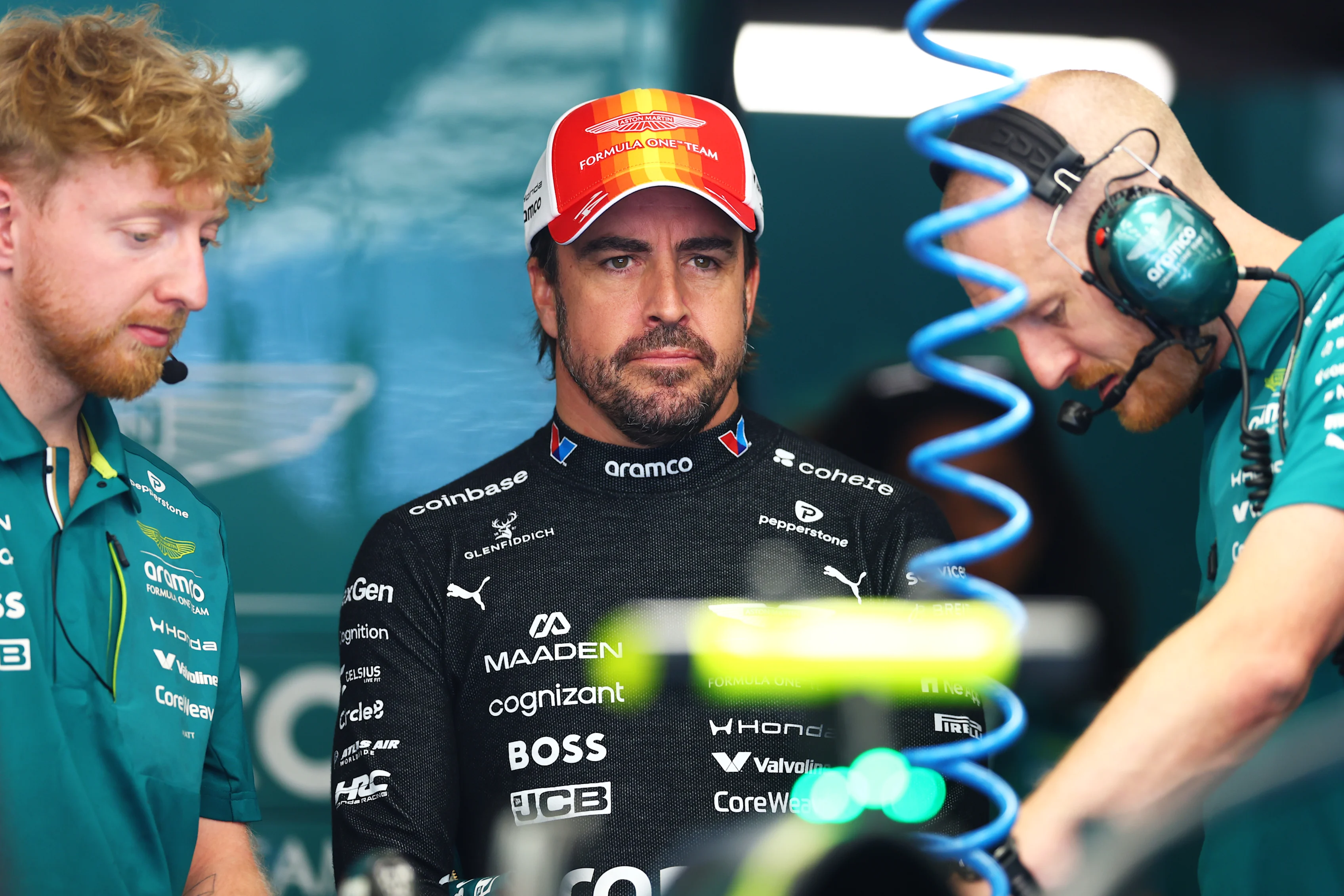
At the back of the grid, Fernando Alonso’s weekend told its own quiet story. The 44-year-old Aston Martin driver qualified slowest, was outqualified by teammate Lance Stroll for the first time in 42 races, and would start from the pit lane after the team changed his ESME and MGU-K. Before the race, he said it was likely his last Grand Prix in Barcelona. The Circuit de Barcelona-Catalunya, where he won his last race to date back in 2013, was saying goodbye to its greatest son, and nobody knew yet how decisive his farewell would become.
The Virtual Safety Car That Decided Everything
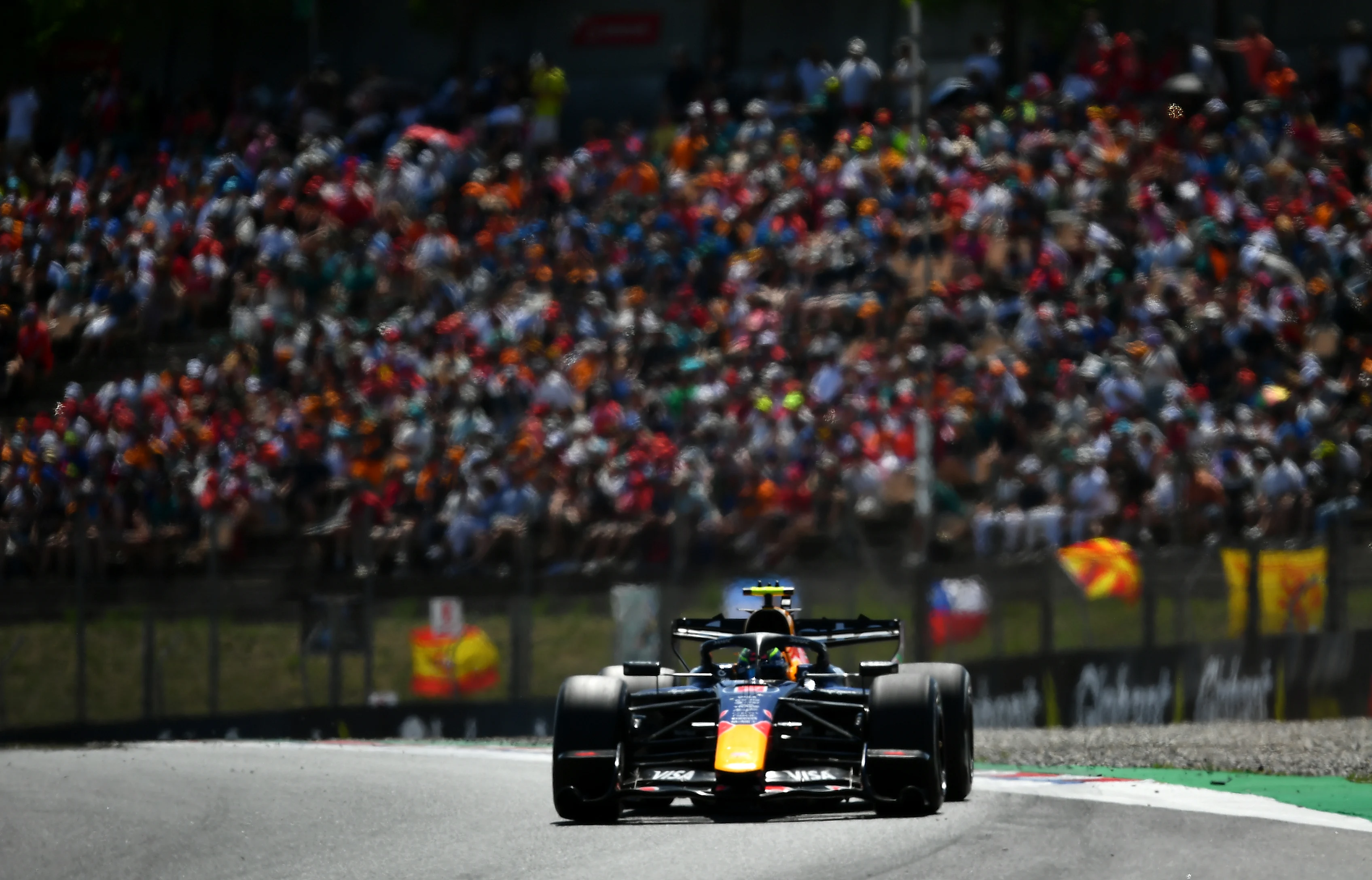
Sunday was the hottest Grand Prix of the year so far, with track temperatures soaring past 50 degrees Celsius before the formation lap, and the heat shaped everything. Pirelli had brought softer compounds than last year, tire degradation was savage, and every team on the grid was planning a two-stop race. Every team except Ferrari.
Hamilton started on the soft tires, gambling on an aggressive launch, and when the lights went out, Russell’s reactions were perfect. The pole sitter held the lead into Turn 1, Hamilton slotted into second, and the order at the front settled: Russell, Hamilton, Antonelli, Norris, Verstappen. Behind them, Leclerc, starting tenth, gained three places on the opening lap, a small redemption arc beginning. The first stops came around lap 12, Hamilton first, switching to hards, Russell covering him a lap later with a flawless stop. So far, so conventional.
Then Ferrari rolled the dice. On lap 23, with Hamilton running second, the Scuderia called him in again, far earlier than a two-stop would require. It was the tell: they were committing to a three-stop strategy, a gamble that would only work if Hamilton could build enough pace on fresh rubber to make the extra stop pay. His first lap on fresh mediums was stellar, around 2.5 seconds quicker than the Mercedes pair, and suddenly the net race lead was his.
But motor racing has a way of humbling even the best strategies, and for twenty laps the tension was exquisite. Russell, warned that his teammate Antonelli was quicker behind him, focused on defense. Antonelli, shown the black-and-white flag for track limits and reported to the FIA by McLaren for the same offense, kept pushing anyway, the 19-year-old refusing to be managed. Norris lurked in fourth, waiting for someone to blink. Hamilton, out front on paper but with another stop still to serve, needed something to go his way.
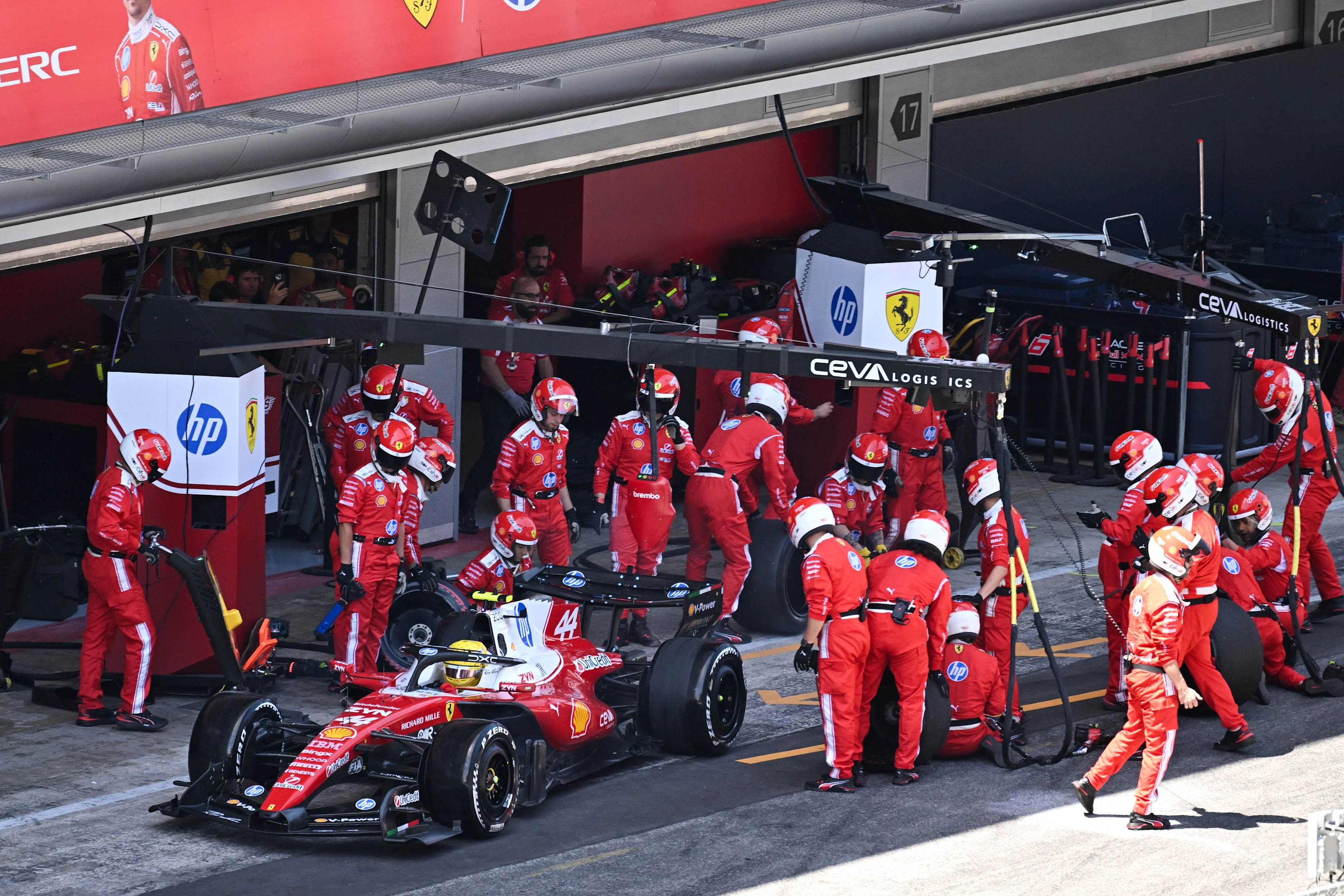
On lap 41, it did. Fernando Alonso, running his likely last Barcelona Grand Prix, pulled his Aston Martin off the track and retired. The Virtual Safety Car was deployed, and Ferrari called Hamilton in for his final stop. He emerged with the lead intact, just under three seconds clear of Russell, on fresh hard tires, with 24 laps to run. From there, Hamilton did what Hamilton does: he built the gap, lap after lap, until the lead was ten seconds, then fifteen, then nearly twenty. When he crossed the line 19.561 seconds clear, it was the most dominant Ferrari victory in years.
Antonelli’s Heartbreak
If Hamilton’s afternoon was a masterclass, Kimi Antonelli’s was a tragedy in three acts, and it nearly overshadowed everything.
The championship leader had not had a comfortable weekend. He admitted to overdriving the car in the warm conditions, qualified a season-worst third, and spent much of the race bottled up behind his teammate, his engineer pleading with him not to race Russell too hard while McLaren reported his track-limits transgressions to the stewards. But the kid is a racer. With five laps to go, he finally fought his way past Russell and snatched second place, the kind of move that reminds you why Mercedes built its future around him.
And then, on lap 62 of 66, it broke. A broken endplate, a sudden loss of pace, the Mercedes slowing and pulling onto the grass. Retirement, four laps from the flag, from second place. Almost simultaneously, Charles Leclerc took a trip through the gravel and reported broken power steering. His race was over too.
For Antonelli, it was his first retirement of the season, and the cruelest possible kind: a podium, maybe even a win, turned to dust with the finish in sight. He handled it with the grace that has defined his season, and his words for Hamilton afterward were genuinely moving: “I’m very happy for Lewis because he’s been chasing that first win with Ferrari for so long, and I’m really happy for him to see him succeed in that.” The teenager who replaced Hamilton at Mercedes, applauding the man he replaced. There are not many sports where you see that.
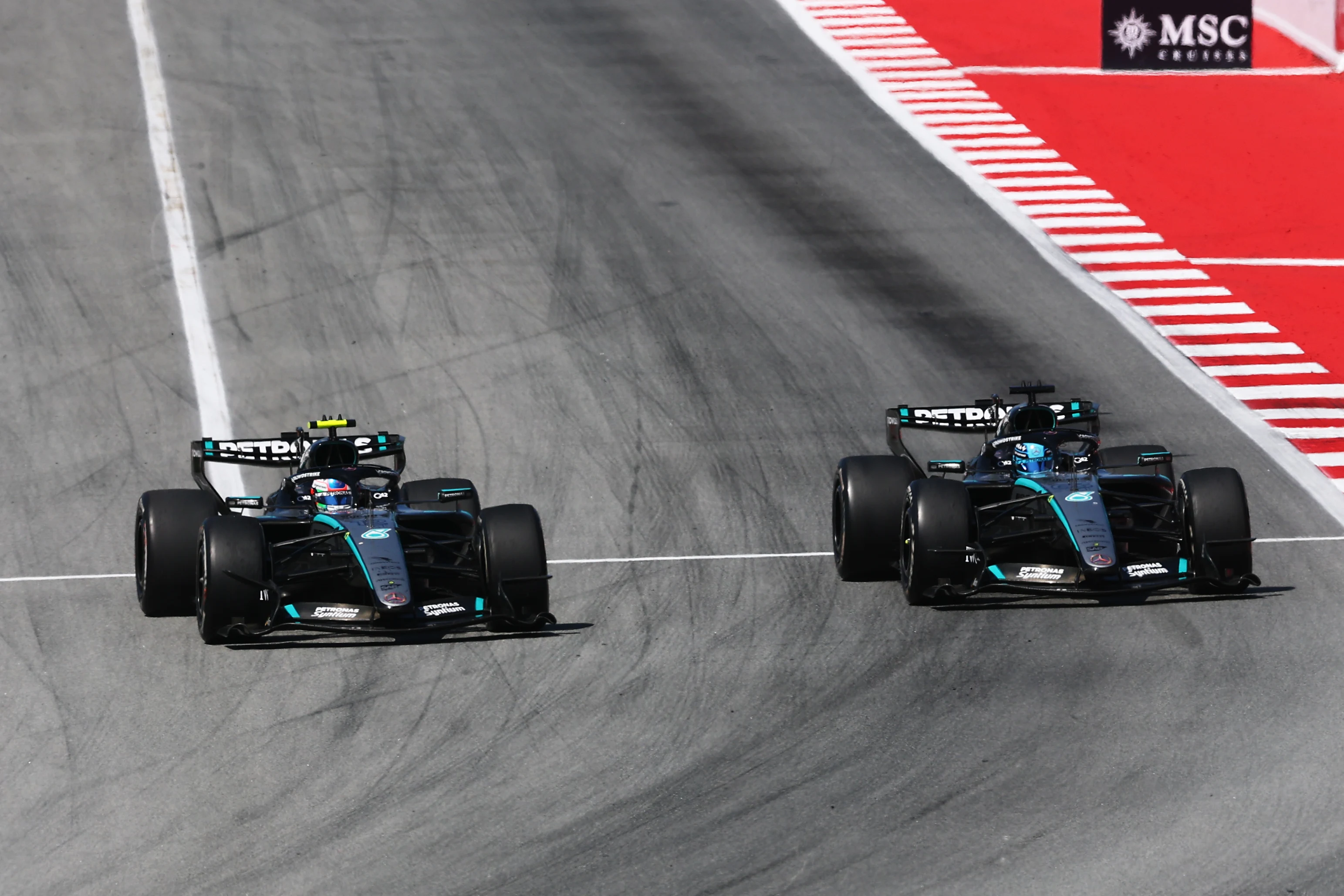
The mathematics were stark. Antonelli’s championship lead, which had been 68 points over Russell coming into the weekend, was cut dramatically. Hamilton’s victory, combined with Antonelli’s zero, shrank the gap at the top to 41 points. The title race, which had looked like a coronation in waiting, was suddenly alive again.
What 106 Means
Let us talk about the numbers, because with Lewis Hamilton the numbers are the story.
One hundred and six Grand Prix victories, extending a record that was already untouchable. Six hundred and eighty-six days since the last one, 41 races of waiting. Ferrari’s first win in 595 days, since the 2024 Mexico City Grand Prix. The first British driver to win for Ferrari since Eddie Irvine at the 1999 Malaysian Grand Prix. The oldest Grand Prix winner since Jack Brabham in 1970; at 41, Hamilton is competing in an era when drivers are supposed to be finished at 35. And the only driver in history to win Grands Prix for McLaren, Mercedes, and Ferrari, the three most storied teams in the sport.
Then there is the symmetry. Hamilton’s first win for Ferrari came at the Circuit de Barcelona-Catalunya, almost exactly 30 years after Michael Schumacher’s first win for Ferrari at this same circuit in 1996. Hamilton’s win felt like the same kind of announcement. Thirty years apart, the same red cars, the same corner of Catalonia, the same feeling that something has shifted.
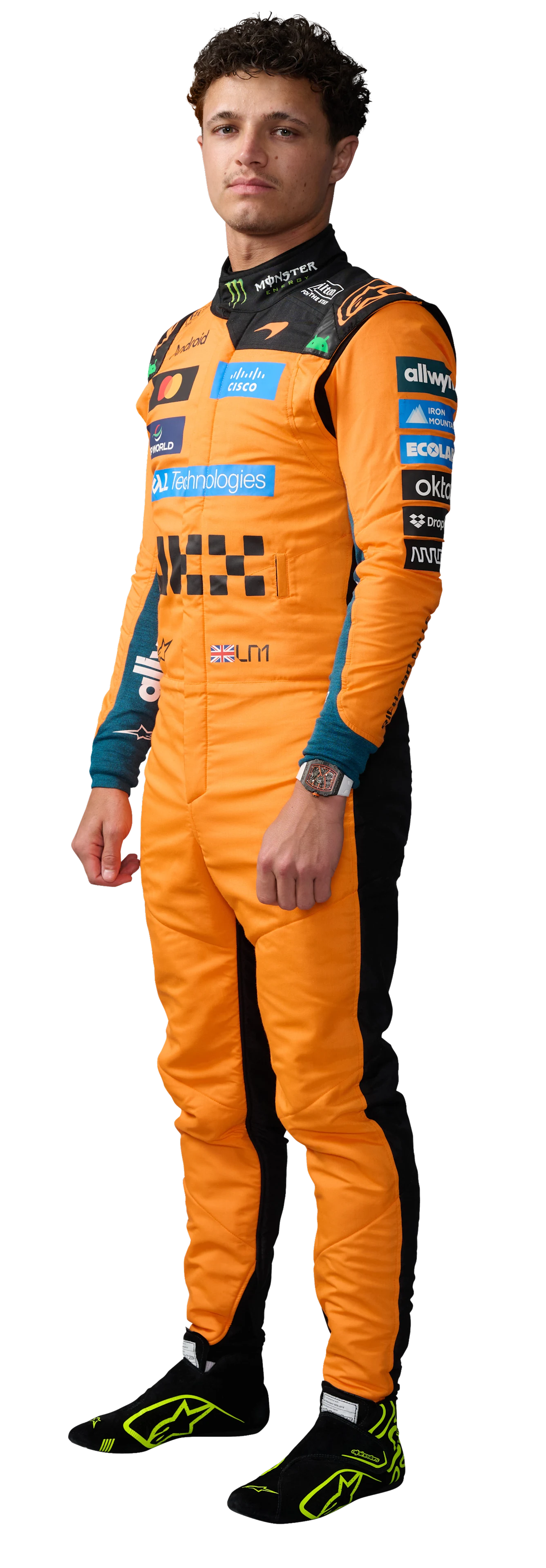
And the all-British podium. Stewart, Hill, and Surtees at Watkins Glen in 1968, and now Hamilton, Russell, and Norris at Montmelo in 2026. Fifty-seven years between all-British podiums, and it happened on Spanish soil, in front of a crowd that had come to see Alonso. Norris summed up the mood: “Very happy for him, nice to see him on podium. Nice to see it was an all-British podium since 1968. A cool podium to be up there with George and Lewis.” Russell, who spent three seasons as Hamilton’s teammate and watched him leave for Ferrari, was gracious in defeat: “Huge congrats to this guy because I know how hard he works. We spent a lot of years together at Mercedes, so I’m really pleased to see him back to the Lewis I remember when I was growing up watching Formula 1.” When your fiercest rivals are happy for you, you know the win meant something beyond points.
The Title Picture Now
With the dust settled in Catalonia, the championship has a new shape. Antonelli still leads, but the aura of inevitability is gone. His advantage is down to 41 points, and Barcelona exposed two truths: the Mercedes is not bulletproof, and Ferrari is coming. The Scuderia brought upgrades to Spain and they worked. With the European summer stretch ahead, starting with the Austrian Grand Prix at the Red Bull Ring on June 26-28, the development race is about to matter as much as the driving.
For Russell, second place was both balm and frustration. After two pointless weekends, 18 points and a pole position represent a genuine reset, and he is firmly back in the title conversation. But he will know, watching Hamilton disappear up the road in the final stint, that on pure pace on Sunday, the win was never his. For Norris, third place was a quiet triumph after retirements in Canada and Monaco, and for Verstappen and Piastri, fourth and fifth, it was a solid damage-limitation afternoon for Red Bull and McLaren.
The Moments We Will Keep
Every great race leaves behind moments that outlive the result, and Barcelona gave us plenty.
There is Hamilton’s team radio, the rawest we have heard from him in years: “Thank you so much. You’ve helped me achieve this dream and I can’t thank you enough… To my family, I love you. To my fans, thank you for continuing to remind me who I am.” In the cool-down room, his voice kept catching. Afterward, he said simply: “They (wins) are all special in their own way but this one is something else.” And then there was the Instagram post that broke the internet that evening: “REMEMBER WHO YOU ARE” and “DREAM THE IMPOSSIBLE… Grazie mille @scuderiaferrari.” For a driver who has always understood the power of image, it was the perfect caption for the perfect day.
There is Alonso’s farewell, the old lion pulling off the track on lap 41, unknowingly triggering the Virtual Safety Car that decided the race. There is Leclerc’s long walk back from Turn 4, and his honest, aching quote. And there is Antonelli on the grass, climbing out of a broken Mercedes, his championship lead suddenly fragile.
But the moment we will keep above all is the podium. Three Britons, three generations of the same dream, standing together in the Spanish sun. Fifty-seven years of waiting, ended by the three drivers who grew up watching each other. You could not have scripted it better.
Next Stop: Austria
The paddock does not rest, and neither does the story. Formula 1 heads to the Red Bull Ring for the Austrian Grand Prix on June 26-28, the next chapter of a season that refuses to follow the script. The questions write themselves. Can Ferrari back up its Barcelona breakthrough on a very different circuit? Can Antonelli bounce back from his first retirement and reassert his authority? Can Russell build on his pole and podium, or was Barcelona a one-weekend wonder? And can anyone, anywhere, stop a 41-year-old in red who has just remembered how to win? The European summer stretch is here, the championship is alive, and after Sunday, anything feels possible. See you in Spielberg.
FAQ
How did Lewis Hamilton win the Barcelona-Catalunya Grand Prix?
Hamilton and Ferrari committed to an aggressive three-stop strategy while most rivals planned two stops. Starting on soft tires, he pitted on lap 12 and again around lap 23, building pace on fresh rubber. When Fernando Alonso’s retirement on lap 41 triggered a Virtual Safety Car, Ferrari pitted Hamilton for his final stop and he emerged still in the lead on fresh hard tires, pulling away to win by 19.561 seconds.
What records did Hamilton’s 106th win set?
It was his 106th career victory (extending his all-time record), his first for Ferrari after 686 days and 41 races without a win, Ferrari’s first win in 595 days, the first win for a British Ferrari driver since Eddie Irvine in 1999, and made him the oldest Grand Prix winner since Jack Brabham in 1970 at age 41. He also became the only driver to win Grands Prix for McLaren, Mercedes, and Ferrari.
Why was it an all-British podium, and when was the last one?
Hamilton (Ferrari), George Russell (Mercedes), and Lando Norris (McLaren) are all British, making it the first all-British podium since Jackie Stewart, Graham Hill, and John Surtees at the 1968 United States Grand Prix, more than 57 years earlier.
What happened to Kimi Antonelli and Charles Leclerc?
Antonelli passed Russell for second with five laps to go but retired on lap 62 of 66 with a mechanical failure (a broken endplate), his first DNF of the season. Leclerc retired at almost the same moment with apparent power-steering failure after a trip through the gravel. Both had been running in podium contention.
A Note on Sources
Race results, qualifying times, strategy details, and championship standings in this recap were verified against the official Formula1.com race and qualifying reports and cross-checked with coverage from ESPN, Reuters, BBC Sport, Sky Sports, and The Race. Driver quotes are as reported by Formula1.com. Historical records (win counts, drought durations, the 1968 all-British podium, Schumacher’s 1996 Barcelona win) were verified against Formula1.com’s historical coverage.