
By Paulina Phan, Senior Editorial Contributor | July 1, 2026
There is a particular kind of electricity that moves through the Formula 1 paddock when the summer stretch begins. The championship fight is real, the points are piling up, and underneath every press conference and every tire strategy debate, there is a quieter, juicier conversation happening in motorhomes and on yachts and in WhatsApp threads that will never see the light of day. Who is going where next year.
Welcome to the 2027 silly season, and this year it has arrived right on schedule, at the halfway point of the season, with the driver market split into two camps. Twelve drivers on the grid already know where they will be racing when the 2027 season begins. Ten do not, at least not publicly. And the gap between those two numbers is where all the drama lives.
This is the scoreboard as it stands at the midpoint of 2026: who is safe, who is shopping, and why the next two months will decide more than the championship.
The State of Play: Twelve In, Ten in the Air
Let us start with the big number, because it frames everything else. At the season's halfway point, twelve drivers hold contracts that run beyond the end of 2026. That is more than half the grid already spoken for, which sounds reassuring until you realize what it means for the rest. Ten seats, nearly half the field, are still technically open. Some of those will be renewals, the kind of quiet paperwork that gets announced in a Tuesday press release and forgotten by Thursday. Some will not.
The 2027 market, as it stands, has five teams yet to confirm their lineups at all: Red Bull, Racing Bulls, Aston Martin, Haas, and Cadillac. Five teams, ten seats, and between them they employ some of the most famous names in the sport. When more than half of your undecided seats sit inside just five organizations, every rumor lands with a thud.
And then there is the context that makes this particular silly season so delicious. The championship leader at the midpoint is Kimi Antonelli, the teenage Mercedes sensation who has spent the season's middle stretch turning Monaco and Barcelona into his personal highlight reel. The man chasing him is his own teammate, George Russell, whose contract happens to expire at the end of this season. And the sport's biggest star, Lewis Hamilton, just won for Ferrari in Barcelona and has had his 2027 future publicly guaranteed by his team principal in the Italian press. None of this is a coincidence. In Formula 1, contract season and championship season are always the same season.
Mercedes: The Most Watched Garage in the Sport
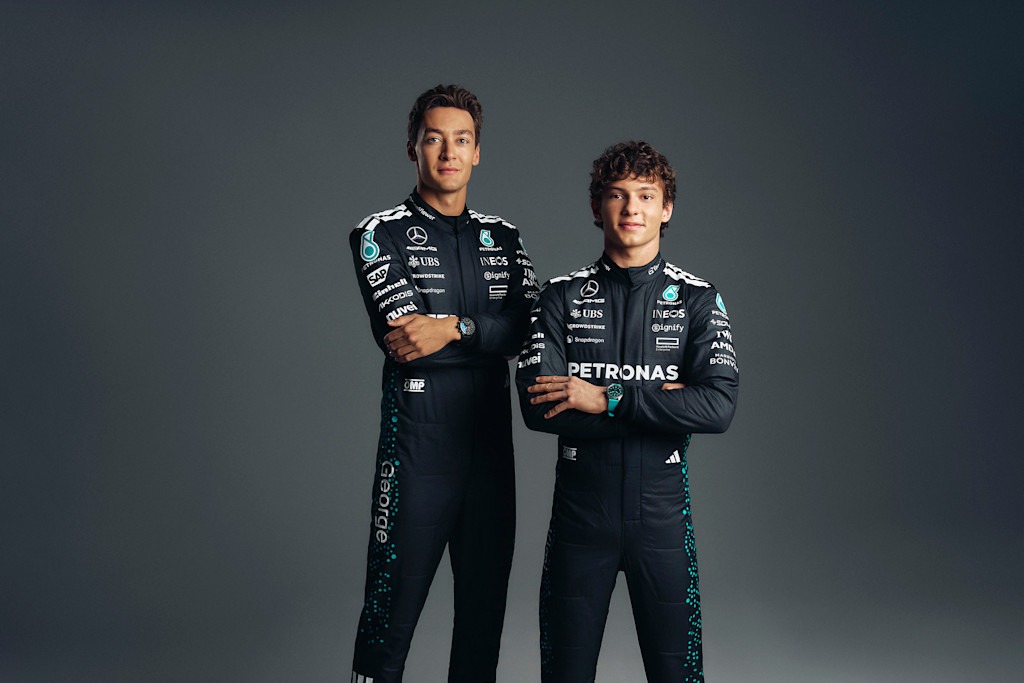
No team principal walks through the paddock this summer with more cameras following him than Toto Wolff, and no garage holds more intrigue than the one painted silver. Mercedes leads the championship, fields the two fastest young drivers of the new era, and somehow enters the summer with both seats technically undecided beyond December. It is the strangest, most fascinating contradiction in the sport.
Russell and the expiring deal
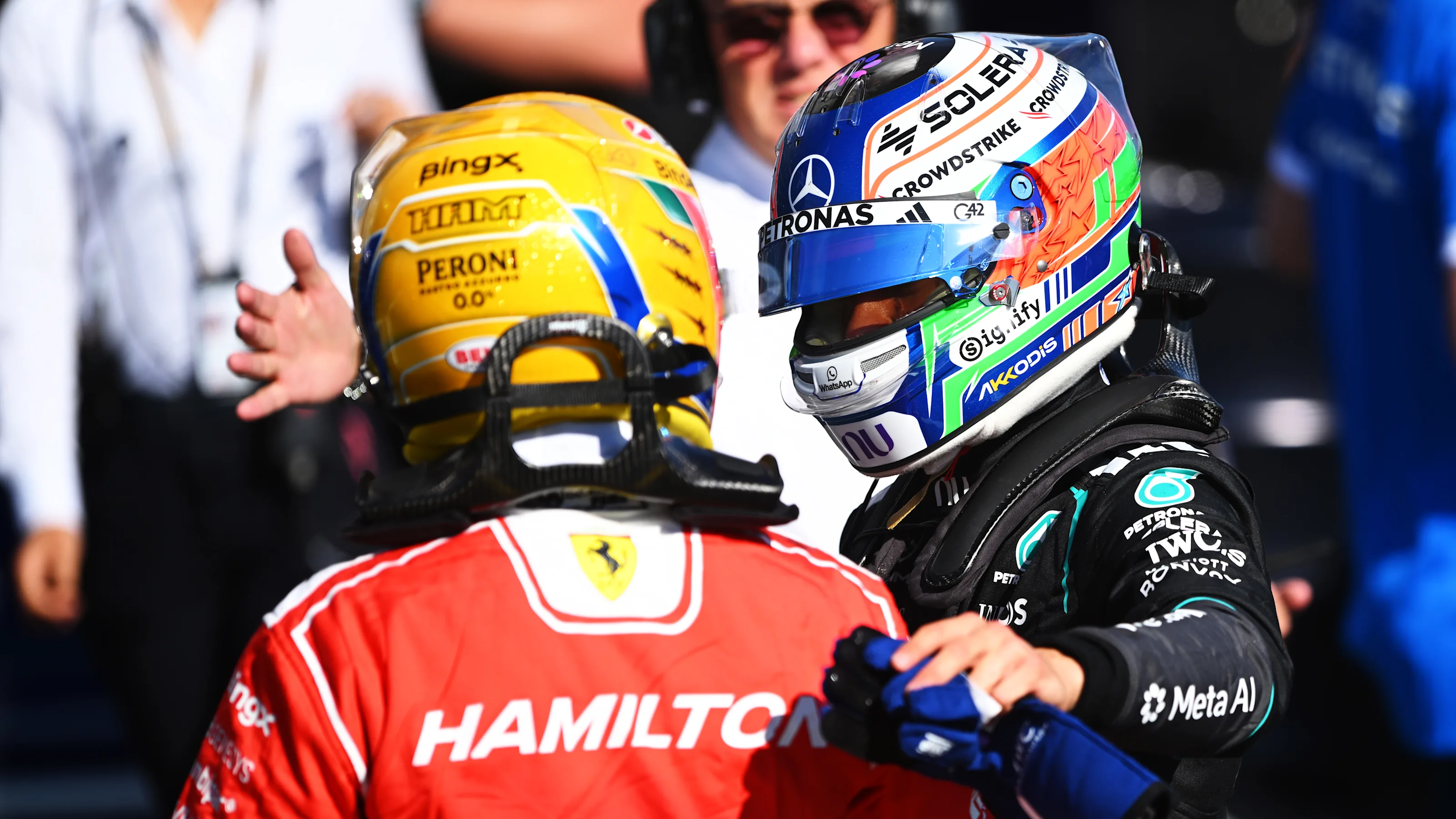
George Russell's contract expires at the end of 2026, and everything about how Mercedes has handled that fact is worth examining. This is not a driver clinging to a seat. Russell has been superb this season, the kind of superb that makes you wonder why the paperwork is not already done. His deal carries performance clauses, the sort of provisions that protect both sides and usually signal that a renewal is a matter of when, not if. Renewal talks are ongoing. In the normal rhythm of Formula 1, that combination, a fast driver, clauses that keep everyone honest, and active negotiations, ends with a signature.
But the timing is everything. Russell is not negotiating from a position of weakness. He is negotiating from second in the championship hunt, with race wins in his pocket and the leverage that comes from being exactly the kind of proven, polished, media friendly lead driver every top team wants. The performance clauses cut both ways: they give Mercedes flexibility, but they also tell Russell, and every rival team principal watching, that his future is genuinely open. In a market where Red Bull has not confirmed a single seat for 2027, that openness is not a detail. It is the whole story.
Antonelli and the one-year leash
And then there is the other side of the Mercedes garage, which might be the strangest contract situation in modern Formula 1. Kimi Antonelli leads the world championship at the halfway point of the season. He is the story of the year, the teenager who was handed the keys to the fastest car in the sport and proceeded to win in Monaco and Barcelona and make it look like the most natural thing in the world. And Mercedes has kept him on one-year deals.
Read that again. The championship leader, the driver every other team would trade their wind tunnel for, is employed twelve months at a time.
There is logic to it, of course. Mercedes signed Antonelli as a teenager with enormous talent and almost no Formula 1 experience. Short deals let the team evaluate, adjust, and keep its options open as the new regulations mature. It is the kind of arrangement that made perfect sense when he was a rookie gamble. It makes considerably less sense now that he is the benchmark of the entire field. Every week that Antonelli leads the championship on a one-year deal, his bargaining power grows, and so does the theoretical temptation for a rival to make the kind of offer that changes the sport.
The paddock consensus, for what such things are worth, is that Antonelli is going nowhere. Mercedes built its future around him, and he has repaid that faith beyond anyone's wildest projections. But silly season does not run on consensus. It runs on paperwork. And until the paperwork says 2027, the championship leader is, technically, a free agent in waiting.
Red Bull and the Piastri Whisper
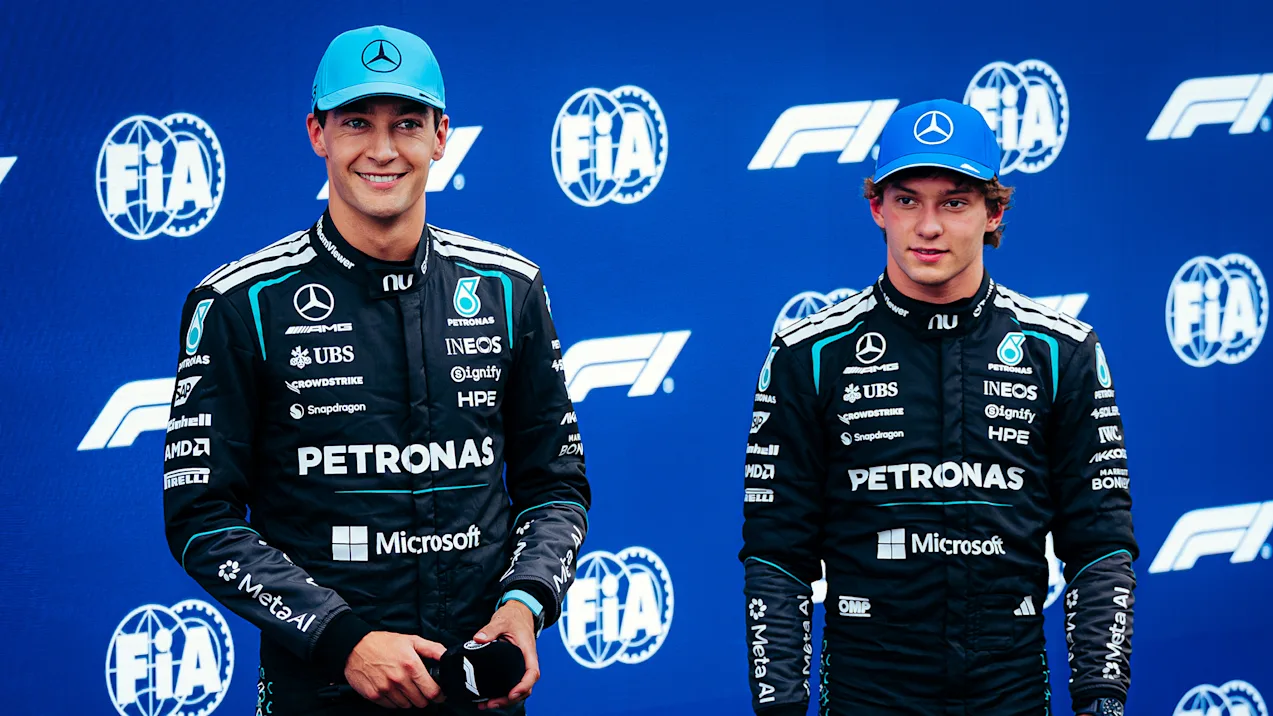
If Mercedes is the market's most watched garage, Red Bull is its loudest rumor factory, and the rumor at the center of it is the kind that makes team principals reach for their phones. Red Bull has reportedly targeted Oscar Piastri in a potential swap deal involving Max Verstappen. Let that sentence sit for a moment. A swap. The two defining drivers of the new era, traded like baseball cards.
Now, before anyone clears their schedule for a press conference, note the framing: reportedly. And note the fine print, which is doing a great deal of work here. Both drivers are locked into long deals. Piastri is tied to McLaren until at least 2028. Verstappen's Red Bull contract initially runs to 2028 as well. These are not the contracts of men about to be swapped. They are the contracts of men whose teams have built entire commercial and technical programs around them.
So why does the rumor exist at all? Because silly season is not just about what is happening. It is about what could happen, and about the leverage that possibility creates. Red Bull has not confirmed a single seat for 2027, not Verstappen's, not his teammate's. In a sport where uncertainty is currency, keeping both seats officially open is either a masterstroke of negotiation or a genuine sign that the team is weighing options that would have been unthinkable two years ago. The Verstappen era at Red Bull has defined this sport. The idea that the team would even entertain a conversation about a swap tells you how fluid the new regulations have made the old certainties.
For McLaren's part, there is no indication of interest, and why would there be. Piastri is signed, settled, and fast. But in July, with the summer break approaching and every agent in the paddock working the phones, even a rumor that goes nowhere changes the temperature of every negotiation happening around it. If Red Bull is dreaming about Piastri, then every team with an unsigned driver is now negotiating against that dream.
The teammate question
Beneath the headline rumor sits a quieter, arguably more consequential question: who drives the second Red Bull in 2027. Red Bull's junior pipeline has always been the sport's most ruthless meritocracy, and the Racing Bulls seats are unconfirmed too, which means the entire Red Bull ecosystem, four seats across two teams, enters the summer officially undecided. That is an extraordinary position for an organization of this size, and it guarantees that the next two months will be dominated by speculation about who fits where. The junior drivers know it. The veterans watching from other teams know it. Everyone is waiting for the first domino.
Ferrari: Signed, Sealed, and Announced in Italy
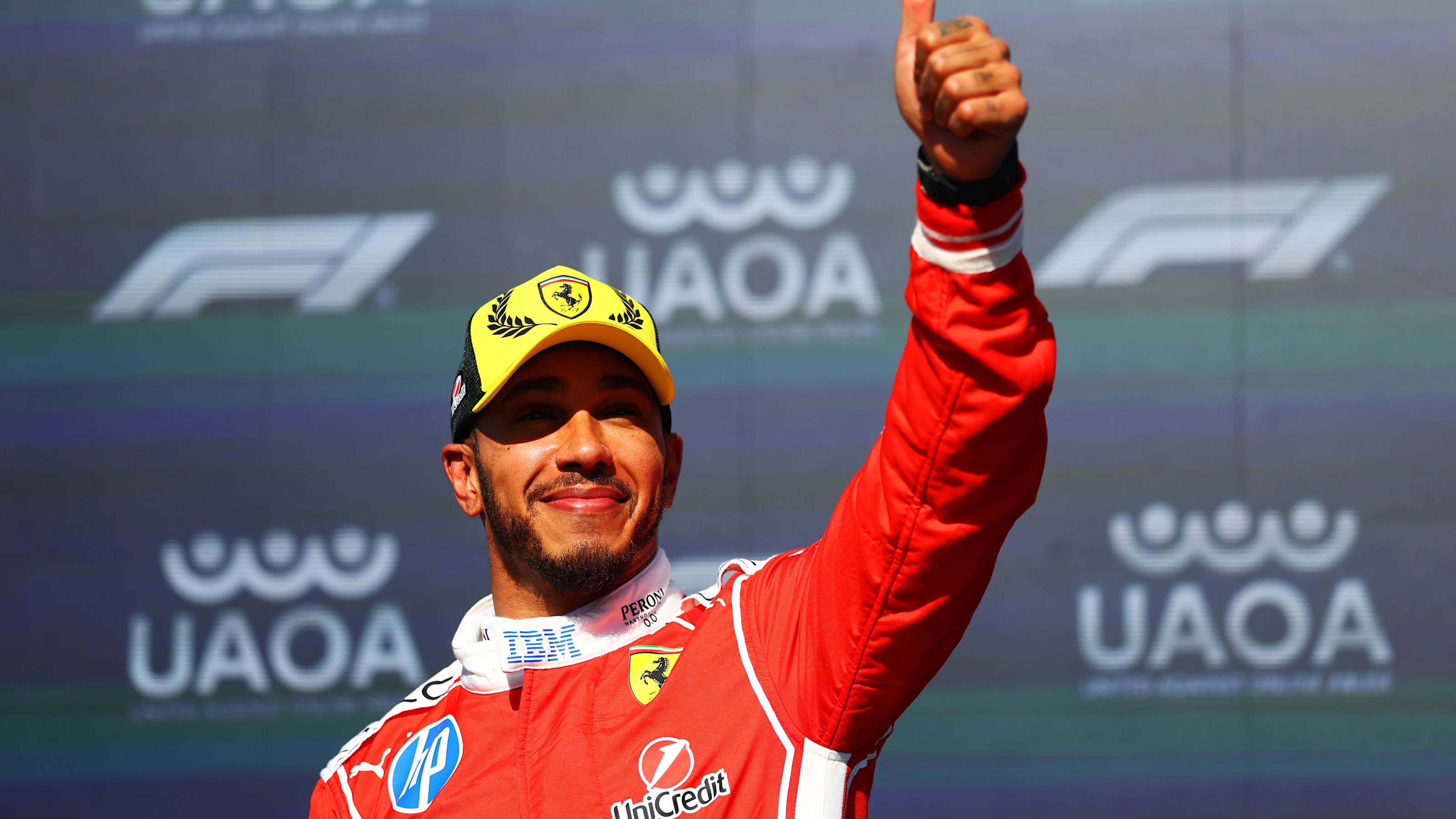
If Red Bull is the market's rumor mill, Ferrari is its opposite: the team that decided to end the conversation before it started. Frederic Vasseur told the Italian press that Lewis Hamilton will be a Ferrari driver in 2027, confirming the framework of the seven-time champion's stay through at least the end of 2027. In the careful language of Formula 1 team principals, that is about as definitive as it gets.
The timing was no accident. Hamilton had just won for Ferrari in Barcelona, the kind of victory that turns a promising partnership into a love story. The Italian press adores nothing more than a Ferrari fairy tale, and Vasseur gave them one: the greatest driver of his generation, in red, committed, winning. It was a announcement with the dual purpose that all great Ferrari announcements have. It thrilled the tifosi, and it told every rival team principal that Hamilton is not available at any price.
What it means for the other Ferrari seat is the natural follow-up question, and it is one the team has wisely declined to turn into a summer storyline. Stability is the message from Maranello. After the Barcelona win, stability is also the mood. When your star driver is winning and your team principal is telling the home press that he is staying, you have already won the silly season. Everyone else is playing for second.
The Five Who Have Said Nothing
Now we come to the heart of the scoreboard: the five teams yet to confirm a single driver for 2027. Red Bull, Racing Bulls, Aston Martin, Haas, and Cadillac. Ten seats, five organizations, and almost no public information. This is where the summer will be won and lost.
Red Bull and Racing Bulls we have covered: the Piastri whisper, the open teammate seat, the junior pipeline. The intrigue there is about ambition. What does a team that has defined an era do when the regulations have reset the board and its champion's long-term future is the subject of swap rumors? Whatever Red Bull decides will ripple through every other negotiation, because Red Bull seats are the ones every ambitious driver wants and every rival team fears losing a star to.
Aston Martin's silence is a different kind of interesting. This is a team that has spent enormous money to become a contender, with a factory, a wind tunnel, and ambitions that stretch well beyond the midfield. An unconfirmed lineup at a team with those resources is not an oversight. It is a choice, and it suggests the team believes it can attract better than it has. The question is who they think "better" is, and whether "better" agrees.
Haas and Cadillac are the market's wildcards, and in some ways the most fun to watch. Haas has always been the grid's great opportunist, the team that finds value where others see risk. Cadillac is the new arrival, the eleventh team, the American project trying to build credibility in a European sport. For both, 2027 is not just about hiring drivers. It is about signaling intent. A young charger says one thing. A veteran winner says another. The driver market is also a messaging market, and these two teams have the most to say.
Williams and the Sainz Option
Somewhere between the locked-in and the wide open sits Carlos Sainz, whose situation deserves its own chapter. His Williams deal expires at the end of 2026, which in the binary language of silly season makes him an expiring contract. But the deal includes an extension option, and that single clause changes the entire character of his summer.
An option is not a guarantee, but it is close to a plan. It means both sides contemplated this exact moment and agreed on the mechanism for handling it. Sainz bet on Williams, on the project, on the idea that a storied team with new investment could build something worth staying for. The option is the team's side of that bet: if it goes well, he stays, and the terms are already set.
Whether the option gets exercised will be one of the summer's quieter but more telling stories. It is a referendum on the Williams project itself, conducted in contract language. If Sainz stays, it means the plan is working. If he starts shopping, it means one of the grid's most respected racers has decided his future lies elsewhere, and the market will suddenly have a proven race winner in play. Watch this space. In silly season, the quietest clauses make the loudest noise.
Why This Summer Matters More Than Most
It is worth stepping back to ask why the 2027 market feels so charged, because it is not just gossip. The new regulations have scrambled the competitive order, and the teams are still learning what they have. A driver who looked like a franchise cornerstone under the old rules might look like a luxury under the new ones. A rookie who looked like a gamble might now look like the future. Every team principal in the paddock is simultaneously evaluating this season and projecting the next one, and those two exercises do not always point the same way.
Add the calendar pressure. The summer break is when deals get done, because it is when everyone is in the same place with time to talk. Agents use the quiet weeks to test the market. Teams use them to make decisions they cannot afford to make during race weeks. By the time the paddock reconvenes for the second half of the season, the 2027 grid will look significantly more settled than it does today. The scoreboard you are reading now is a snapshot, and snapshots in July have a way of looking quaint by September.
There is also the championship itself, which refuses to stay out of the contract conversation. Antonelli leads, Russell chases, Hamilton wins for Ferrari. Every result between now and the break is also a data point in a negotiation. A win in July is worth more than a win in May, because it is fresher in the memory when the lawyers sit down. The drivers know this. The teams know this. It is one more reason the next few races will be absolutely unmissable.
FAQ
How many drivers are confirmed for 2027?
At the season's halfway point, twelve drivers hold contracts that run beyond the end of 2026. That leaves ten seats across the grid still to be resolved, with five teams, Red Bull, Racing Bulls, Aston Martin, Haas, and Cadillac, yet to confirm their lineups at all.
Is George Russell leaving Mercedes?
Nothing is decided. Russell's contract expires at the end of 2026, it includes performance clauses, and renewal talks are ongoing. He is negotiating from strength as a race winner in the championship hunt, and while the paddock expectation is a renewal, the paperwork is not done, which is why his name appears in every silly season conversation.
Could Oscar Piastri really move to Red Bull?
Red Bull has reportedly targeted Piastri in a potential swap deal involving Verstappen, but both drivers are locked into long contracts, Piastri to McLaren until at least 2028 and Verstappen to Red Bull initially to 2028. Treat the rumor as leverage and theater for now, not as an impending announcement.
Will Lewis Hamilton stay at Ferrari in 2027?
Yes, according to his team principal. Frederic Vasseur told the Italian press that Hamilton will be a Ferrari driver in 2027, confirming the framework of his stay through at least the end of 2027, fresh off Hamilton's victory for the team in Barcelona.
A Note on Sources
Contract statuses, the twelve-driver count, the Sainz extension option, the Piastri swap report, and Vasseur's comments on Hamilton's 2027 future were compiled from paddock reporting across Reuters, BBC Sport, Sky Sports, The Race, and the Italian press, cross-checked against team announcements. Championship context reflects the season's midpoint standings. Rumors are framed as reported, not confirmed.