
By Paulina Phan, Senior Editorial Contributor | May 20, 2026
Only four races into its Formula 1 life, the Cadillac Formula 1 Team got the weekend it had been waiting for. The Miami Grand Prix, May 1 to 3, was the first time the sport's eleventh team raced on American soil, and Cadillac treated it like the milestone it was: a bespoke stars-and-stripes livery, Miami-specific race suits, a two-day fan takeover at its Jungle Plaza headquarters in the Miami Design District, and a grid full of celebrities there to witness the newest team in the sport introduce itself to its home crowd. "There's no place like home" became the team's unofficial motto for the weekend, and for three days in May, it felt true.
The on-track results were modest, sixteenth and eighteenth for Sergio Perez and Valtteri Bottas, last of the runners. But both cars finished, for the third straight race, with the team's first significant upgrade package on the cars and the pressure of a home debut weighing on everyone. Team CEO Dan Towriss put it best afterward: "I'm proud of the team this weekend. The pressure of racing for the first time on home soil, with our first significant upgrade package, has been huge, but the team and drivers have performed well."
This is the story of a homecoming, told the way it deserves to be told: through the fashion, the branding, the celebrities, and the quiet pride of an American team planting its flag.
The Livery as a Fashion Statement
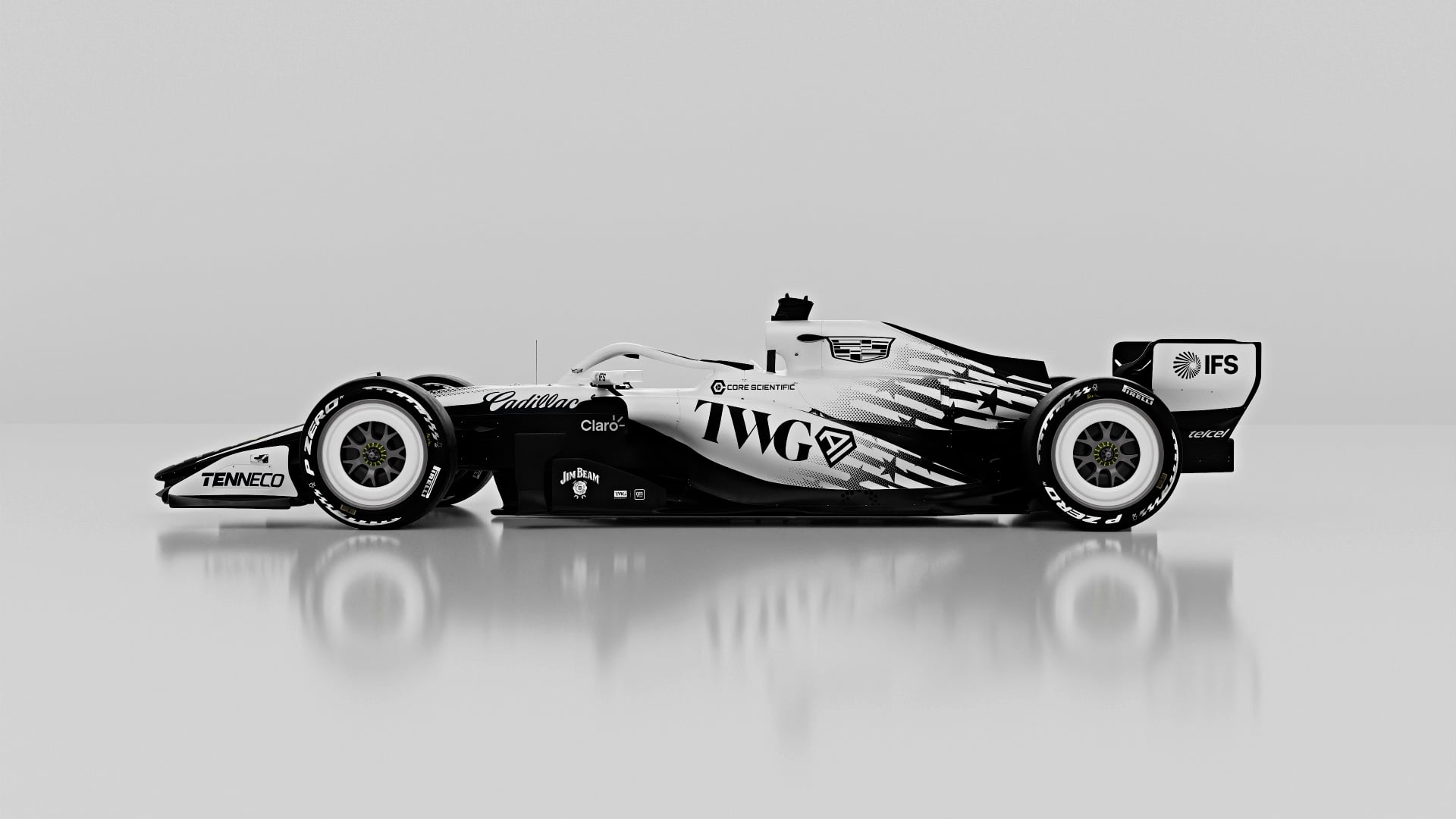
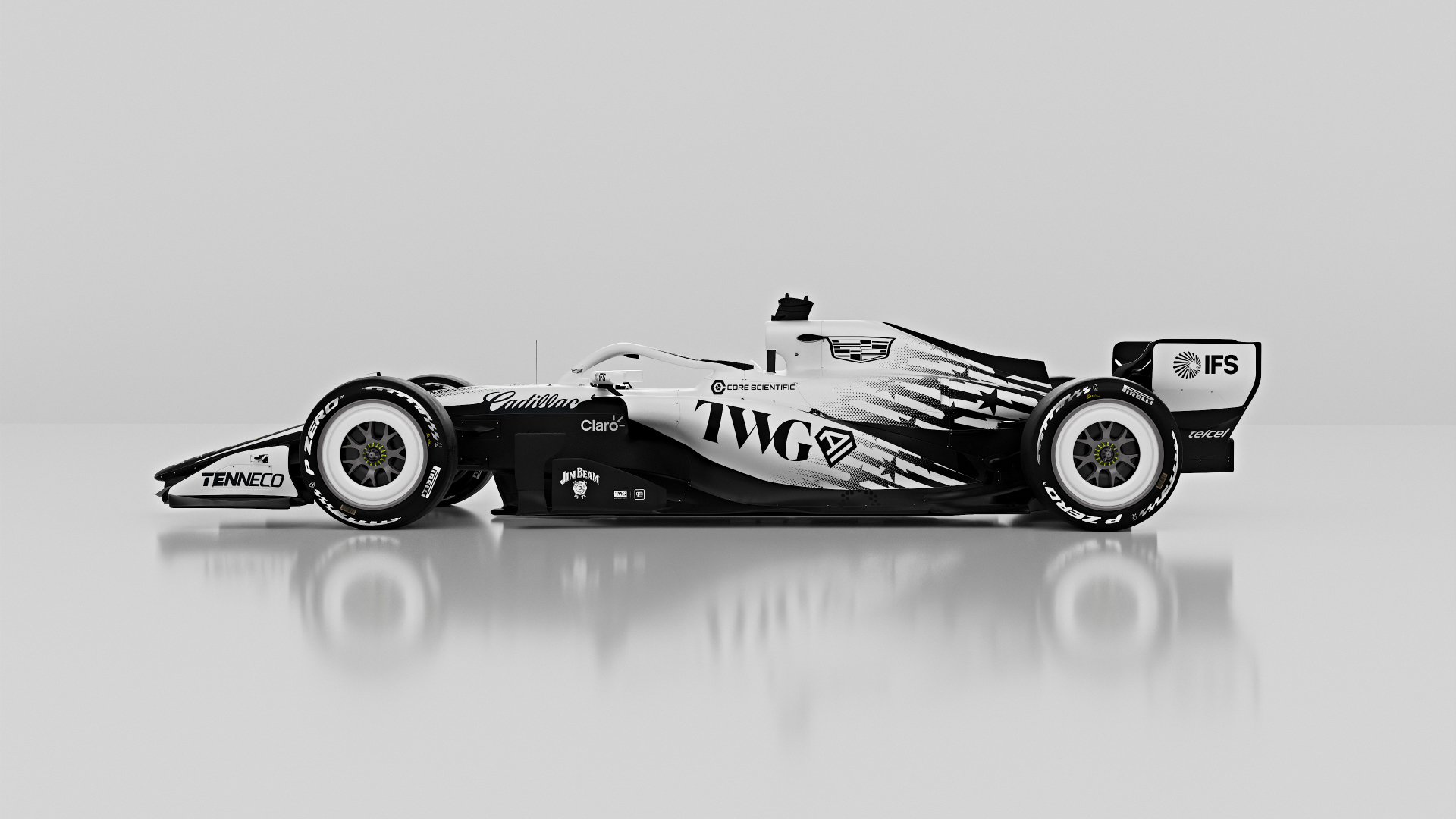
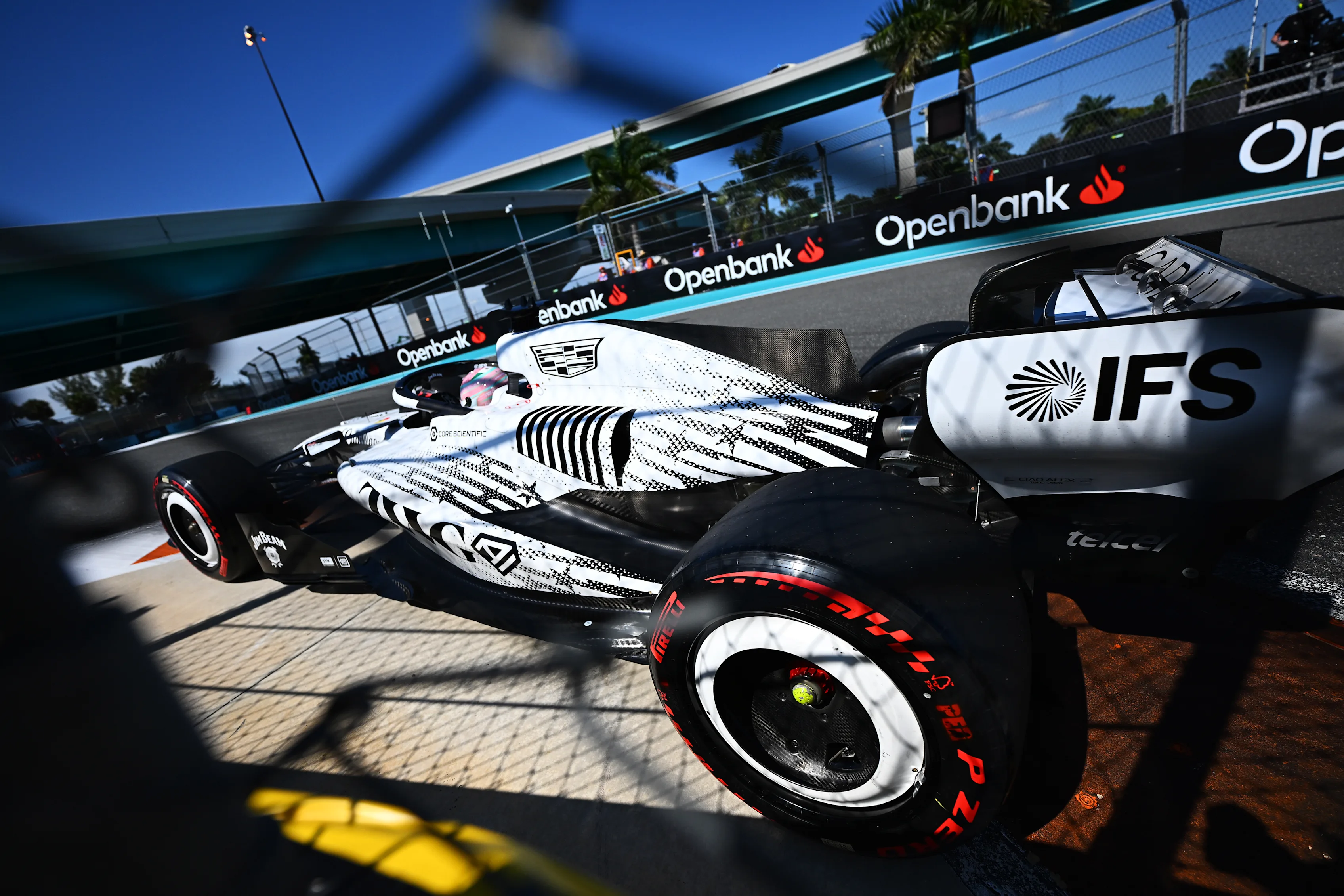
Let us begin with the obvious, because in Miami the obvious was spectacular. For its first home race, Cadillac unveiled a one-off livery that wove the Stars and Stripes into the team's signature black-and-white scheme, and the result was the single most talked-about paint job of the weekend. The front wing carried 50 stars, one for each American state. The rear wing wore "USA" in red, white, and blue, a nod to the shared American heritage of Cadillac and its primary partner, TWG AI, which presented the livery. There was even a splash of red inside the wheels, the finishing touch on the color story.
What made it work was restraint. The team's base identity, a moon landing-inspired black-and-white scheme first revealed during Super Bowl LX back in February, is deliberately monochrome, and the Miami livery was the first time the team had used color at all. The stars and stripes did not replace the identity; they accessorized it. "The Cadillac Formula 1 Team's special Miami Grand Prix livery is a natural extension and speaks without excess," said Cassidy Towriss, the team's chief brand advisor. "It's deliberate and confident. This is our first home race, and it mattered to us that fans still recognize what they've come to know."
That discipline is harder than it looks. Special liveries are a crowded art form in modern Formula 1, and the temptation is always to do too much, to plaster the car until it looks like a billboard that happens to go 300 kilometers per hour. Cadillac's design team resisted that. The idea for the Miami look was already in development before the base livery was even revealed in February, which meant it was conceived as part of the identity rather than bolted on afterward. The team has said it asked itself how far to push the concept without losing what fans had already come to recognize, and the answer was a livery that reads as Cadillac first and Americana second. In fashion terms, it is the difference between a costume and a collection. One you wear once for attention. The other becomes part of how people see you.
The drivers dressed for the occasion too. Perez and Bottas wore Miami-specific race suits carrying expressive notes of American identity intertwined with understated pride, because in Formula 1 the driver is a walking billboard and a home race is a red carpet. The whole package, car and suits together, read less like a racing livery and more like a fashion collection: cohesive, confident, and unmistakably American. TWG AI president Drew Cukor framed the livery as a statement of intent rather than decoration: "This new livery for the first American race is more than just a design, it's a statement of identity and intent. It celebrates the shared heritage of two American brands coming together, united by a relentless drive to push boundaries and innovate."
And like any good fashion moment, it spawned collaborations. The team released F1-inspired Dunk Low trainers in partnership with Nike, mirroring the livery's design, and Tommy Hilfiger marked the occasion with its CF1 Miami Fanwear collection, celebrating Cadillac's first home race with the kind of all-American branding the designer has owned for decades. When the sneakers match the race car, you know the marketing department is having fun.
The Weekend on Track
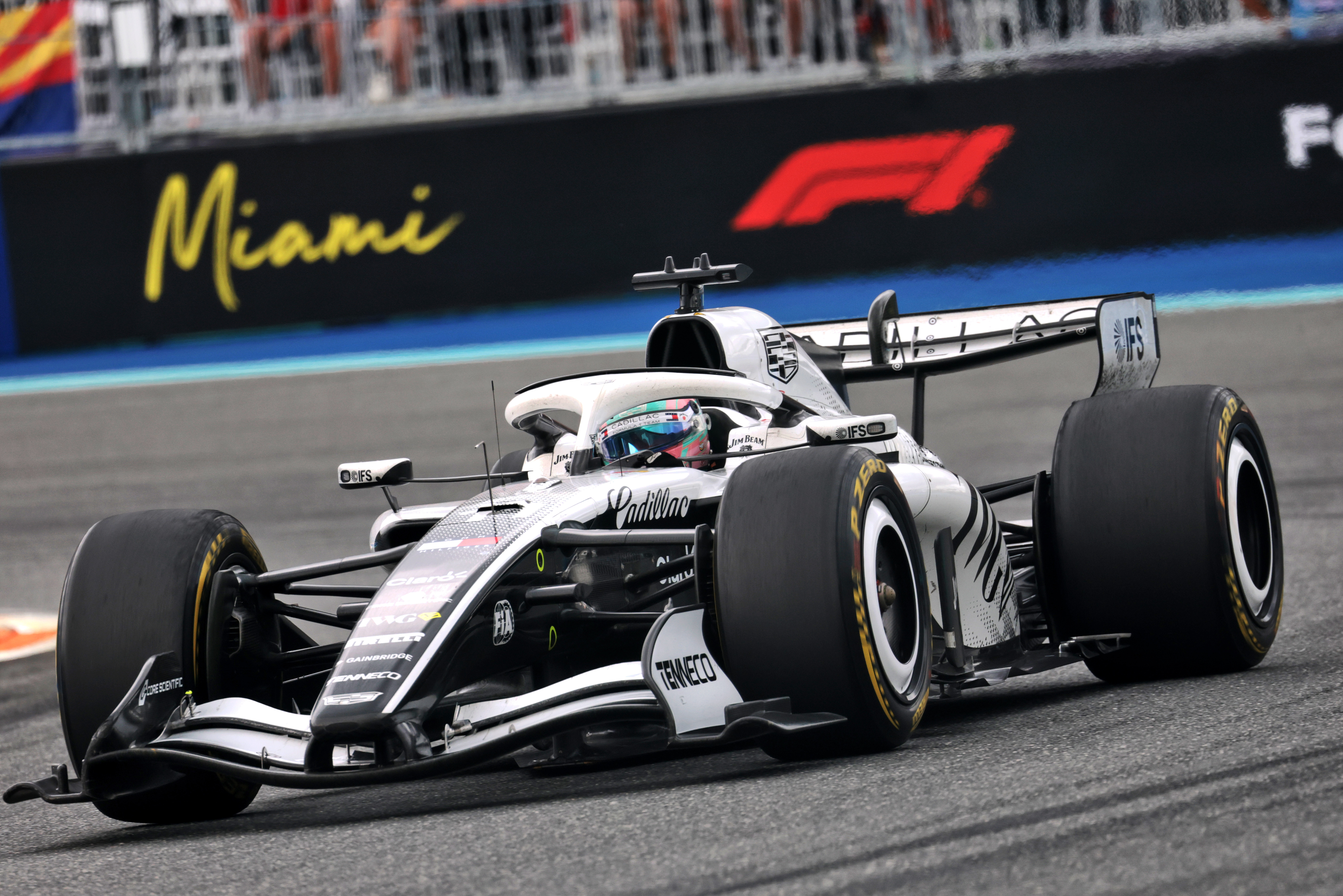
Beneath the pageantry, there was serious business happening. Miami was the first race for Cadillac's first significant upgrade package of the season, new parts aimed at moving the team closer to the midfield after three learning races. The hope, as ever for a new team, was progress you could measure in lap times rather than headlines.
The measuring was honest. Perez brought the car home sixteenth and Bottas eighteenth in Sunday's 57-lap Grand Prix, last of the classified runners, with the pair split around the Aston Martins. There were bright spots if you knew where to look: Perez had impressed in Saturday's sprint, finishing ahead of Alex Albon's Williams and Lance Stroll's Aston Martin, and both drivers kept their cars clean in a race that claimed four retirements. Bottas did pick up a drive-through penalty for speeding in the pit lane, the kind of small error that betrays a team still learning its rhythms, but the headline number was the one that mattered. Both Cadillacs reached the chequered flag, making it three consecutive races that both cars have finished, in a new regulation era where reliability is anything but guaranteed.
That consistency is the real story of Cadillac's season so far. New teams in Formula 1 usually spend their first year breaking down, literally and figuratively. Cadillac has spent its breaking in. The upgrade package did not vault them into the midfield overnight, and nobody inside the team pretended otherwise. "We want to continue to push and find ways to move up and compete with more cars," Towriss said. "This is an ambitious team, it's an ambitious group. You talk to Sergio and Valtteri, it's push, push, push. How do we get more performance out of the car?" Bottas, the veteran of multiple championship campaigns, framed it as a long game: "It's a project for us. For me, the pleasure is now seeing progress. That's the carrot, that's the trophy at the end, if we improve. But it's still a long way to go, we still need to make big steps."
For Perez, the weekend carried an extra layer of meaning. "It is very exciting to be racing here for an American team, and to have Latin support here is special," he said ahead of the race, referring to the Mexican fans who had made the trip across the border. "You can feel the atmosphere driving for an American team leading up to it here. We have new colours this weekend. We're enjoying it a lot and the fans have been amazing." There is something genuinely moving about a driver in the twilight of a long career finding a new home and a new crowd, and the Mexican flags in the Miami grandstands suggested the feeling was mutual. Perez has always been one of the sport's most beloved figures, and Cadillac has been smart enough to let that affection do some of its marketing for it.
The Off-Track Takeover
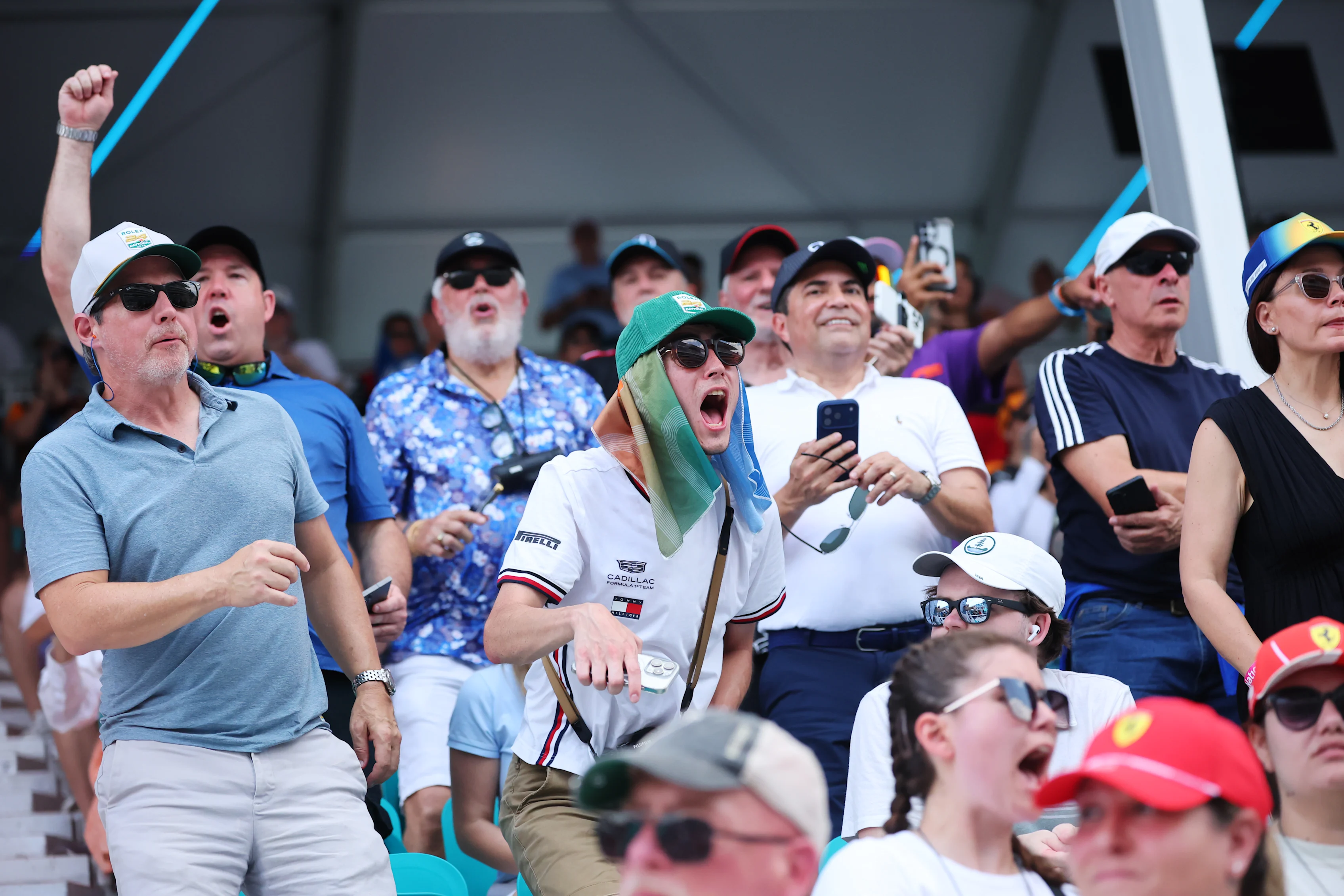
If the on-track story was about patience, the off-track story was about arrival. Cadillac's Miami headquarters at Jungle Plaza in the Design District hosted a two-day fan experience that felt more like a festival than a corporate activation: local Miami food, racing simulators, music, exclusive merchandise available nowhere else, and a livestream of the on-track action. Thousands of fans showed up wearing team merchandise, and the grandstands told the story, a sea of black and white with a distinctly American energy.
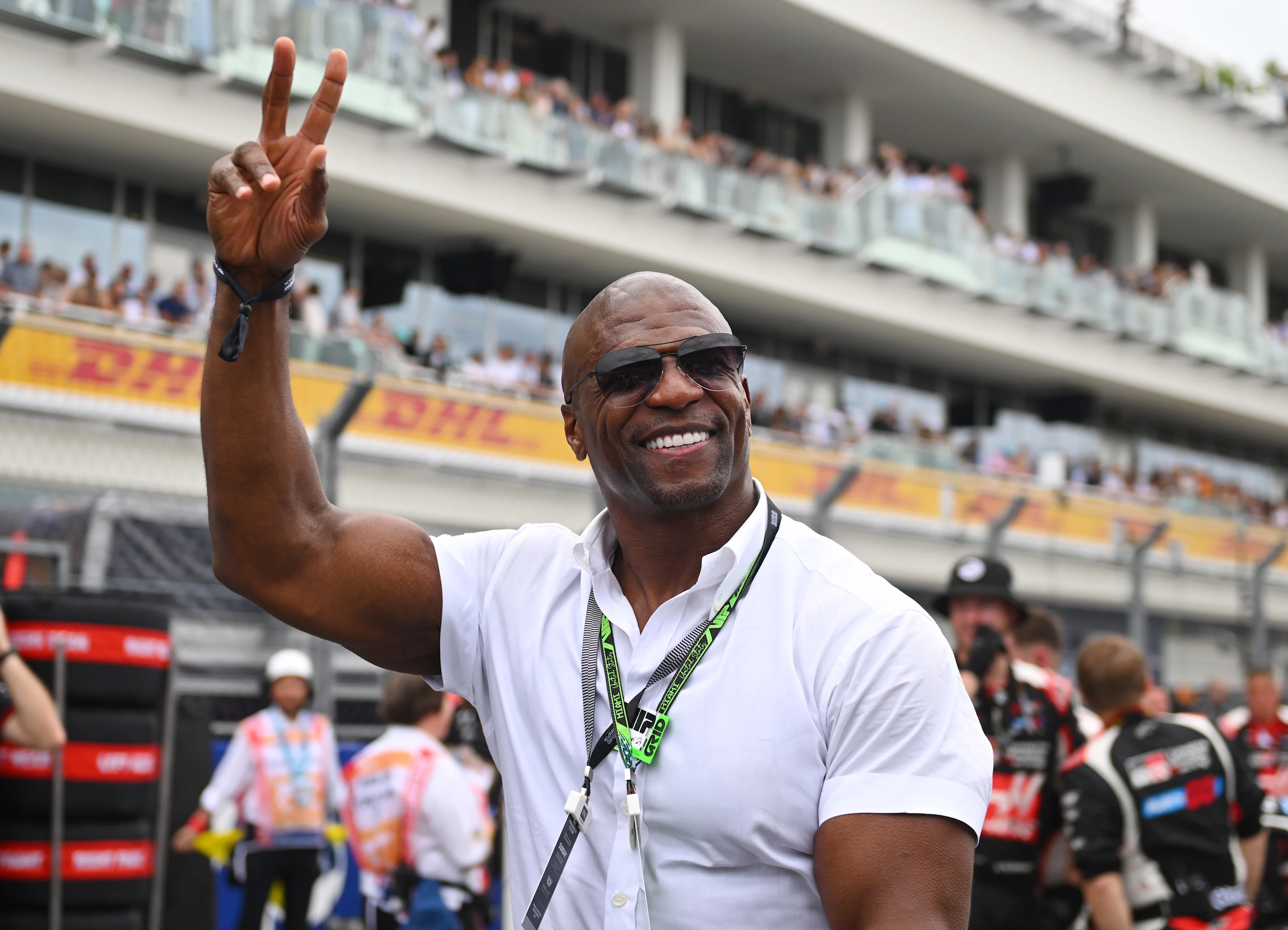
The celebrity wattage was pure Miami. Actor Terry Crews was on the grid, which was no surprise given his role as an official Cadillac ambassador, a partnership announced at the start of the season that includes a YouTube series called Crews Control following the team's maiden campaign. The series debuted on May 5, just after the race weekend, promising a behind-the-scenes look at the American team's journey in the spirit of the Drive to Survive boom. Rafael Nadal waved the chequered flag. Serena Williams, Lionel Messi, Patrick Dempsey, and Colin Farrell all passed through the paddock. And in the moment that set social media alight, Alix Earle was spotted in the Cadillac garage, the kind of crossover cameo that tells you a team has crossed from the sports pages into the culture pages.
That crossover is the whole point. Formula 1 in America has always been part sport, part spectacle, and Cadillac understands the assignment better than any new team in recent memory. The livery, the sneakers, the fan festival, the celebrity ambassadors, it is all one coherent argument: this is not just a racing team, it is an American brand having a moment. The racing will come. The branding is already here, and in Miami, the branding was the story almost as much as the race itself.
How We Got Here
It is worth remembering how improbable all of this was not long ago. Cadillac's entry into Formula 1 was a saga in itself. The effort began with Michael Andretti, son of motorsport's most famous naturalized American citizen, and the push to join the grid was often frustrating, taking the better part of fourteen months before the team was finally approved to compete. When it debuted in 2026, it became the first new American constructor in decades, joining Haas, owned by California businessman Gene Haas, as the second American squad on a grid otherwise dominated by European operations. Its 2026 challenger carries the name of Mario Andretti, a touch of heritage for a team with no history yet.
Cadillac markets itself as the only true American team in the European-dominated series, and the distinction matters to them. It is the American dream narrative, the idea that a Detroit-born luxury brand can walk into the most technologically demanding sport on earth and belong there. Dan Towriss, the team's CEO, is himself a part-time South Florida resident, living in nearby Fort Lauderdale, which made the Miami weekend something of a home game in the most literal sense. "Racing at home for the first time is a major milestone for this team and something we've been looking forward to for a long time," he said ahead of the weekend. "There's a lot of pride in representing the United States as the American team, especially in front of our home fans. We understand what that means, and we're focused on showing up and delivering for them."
The driver lineup was a statement of intent. Rather than gambling on rookies, Cadillac hired two of the most experienced hands in the sport: Sergio Perez, the fan favorite with a devoted following across the Americas, and Valtteri Bottas, the Finn with ten Grand Prix victories and years at the sharp end with Mercedes. Perez gave the team its maiden finish in Melbourne, bringing the car home sixteenth in the season opener, a result celebrated inside the team like a victory. Both drivers have spoken about the project with the patience of men who have seen how long success takes in this sport.
There have been growing pains, and Bottas has not hidden them. He hinted earlier in the season at quality and consistency issues inside the team, describing some components as "lottery parts" and suggesting differences between the two cars. For a team four races old, that kind of honesty is healthier than corporate polish. New teams are built in public now, every upgrade, every mistake, every lesson visible to millions. The ones that survive are the ones that learn fastest.
What a Home Race Means
There is a reason the home race mattered so much, beyond the marketing. The United States now hosts three Grands Prix, in Miami, Austin, and Las Vegas, and an American team has a unique opportunity to turn national pride into a durable fanbase. Cadillac markets itself as the true American team in a European-dominated series, and the Miami weekend was the first chance to make that identity tangible: the livery, the suits, the festival, the celebrities, all of it saying the same thing. We are from here. This is ours.
The commercial imagination on display was equally American. Alongside the race weekend, the team unveiled a 26-example CT5-V Blackwing F1 Collector Series road car, a limited-run machine tying the street brand to the racing program. It is the kind of halo product that American performance brands do best, and it underscored the deeper logic of the whole project. Cadillac is not in Formula 1 as a vanity exercise. It is here to sell cars, to build the brand, and to prove that an American manufacturer can compete at the highest level of motorsport.
There is also a quieter significance to getting the branding right this early. New teams usually arrive with generic liveries and corporate messaging, and spend years developing a visual identity that fans actually care about. Cadillac arrived with a Super Bowl reveal, a moon-landing-inspired aesthetic, and a home-race livery that people are still talking about weeks later. The design language is already distinctive enough that you can spot the car from across the circuit, which is more than some teams with decades of history can say. In a sport where identity is currency, that is an asset worth as much as any upgrade package.
Four races in, the verdict is promise rather than proof. The cars are reliable, the team is learning, the brand is electric, and the home crowd has been introduced. Austin and Las Vegas are still to come this season, two more chances for the stars and stripes to fly on home soil. If Miami was the introduction, the rest of the year is the conversation. And if the first chapter is anything to go by, it will be worth following.
FAQ
When did Cadillac debut in Formula 1?
Cadillac joined the Formula 1 grid for the 2026 season, becoming the first new American constructor in decades and the eleventh team on the grid. Its drivers are Sergio Perez and Valtteri Bottas, and its 2026 challenger is named after Mario Andretti.
What was special about the Miami livery?
For its first home race, Cadillac ran a bespoke stars-and-stripes livery presented by primary partner TWG AI. The design wove American motifs into the team's black-and-white scheme, with 50 stars on the front wing (one per state) and "USA" in red, white, and blue on the rear wing. Perez and Bottas also wore Miami-specific race suits, and the team released matching Nike Dunk Low trainers.
How did Cadillac perform at the Miami Grand Prix?
Sergio Perez finished sixteenth and Valtteri Bottas eighteenth, last of the classified runners, in a race with four retirements. The brighter news was reliability: both cars finished for the third consecutive race, with the team's first significant upgrade package on the cars. Perez had also impressed in Saturday's sprint, finishing ahead of Albon's Williams and Stroll's Aston Martin. Team CEO Dan Towriss said he was proud of the team, noting the huge pressure of racing for the first time on home soil with a major upgrade package, and praised how the team and drivers performed.
What is next for Cadillac in 2026?
The team continues its development push with two more American races to come later in the season in Austin and Las Vegas. The stated goal from CEO Dan Towriss is to keep finding performance and move up to compete with the midfield runners, with the experienced Perez-Bottas pairing leading the development effort. Off track, expect the branding momentum to continue, with the Crews Control YouTube series and the team's growing merchandise and fashion collaborations keeping Cadillac in the cultural conversation between races.
A Note on Sources
Livery details, team quotes, and weekend activities were verified against the Cadillac Formula 1 Team's official April 28 livery announcement and official Formula1.com coverage of the Miami weekend, including the team's first-home-race feature. Race results and classifications were verified against official Formula1.com race and sprint reports. Background on the team's entry and driver lineup was cross-checked with contemporary reporting from the Associated Press and Sports Illustrated.