
By Paulina Phan, Senior Editorial Contributor | August 17, 2026
The break is over, the factories are humming again, and Formula 1 returns this weekend at Zandvoort with ten races left to decide the 2026 season. Ten races. That sounds like a lot until you remember how quickly a championship can slip through your fingers: one retirement, one safety car at the wrong moment, one upgrade package that works better on someone else's car. Kimi Antonelli leads George Russell by about 45 points. Behind them, McLaren is coming. Ahead of everyone, Monza looms with engine upgrades that could redraw the competitive map.
This is the part of the season where every storyline converges, where the championship fight, the driver market, the engine formulas, and the farewells all start sharing the same weekends. So before the lights go out at Zandvoort, let us lay out the five questions that will decide 2026. The answers will arrive between now and December. The drama starts now.
1. Can McLaren catch Mercedes?
Start with the question the Mercedes garage is asking itself. Kimi Antonelli, the championship leader, has declared McLaren "the new fastest team." George Russell, his teammate and title rival, calls them "the one to beat." When both drivers of the dominant team independently name the same threat, you listen. This is not paddock politeness. This is a warning siren.
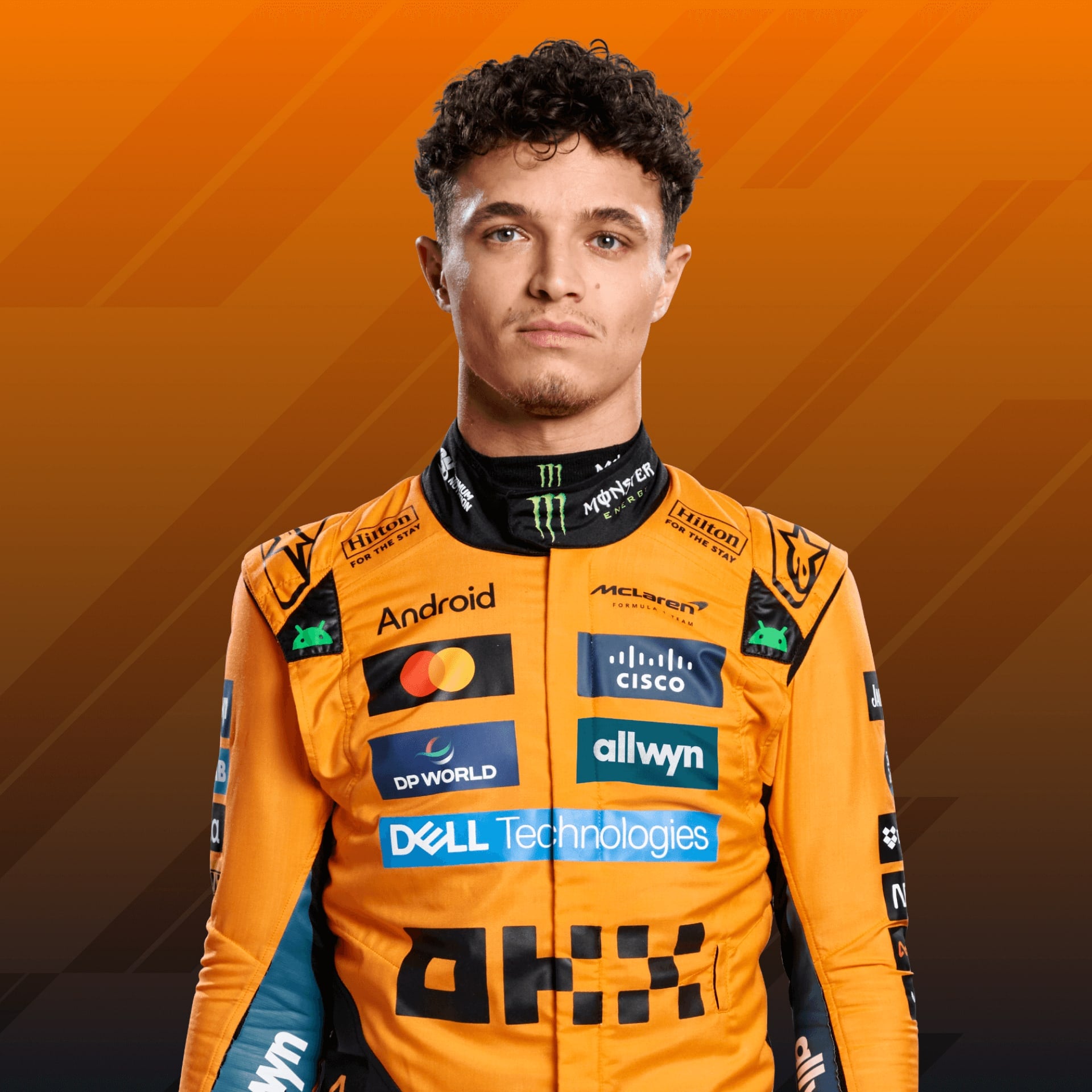
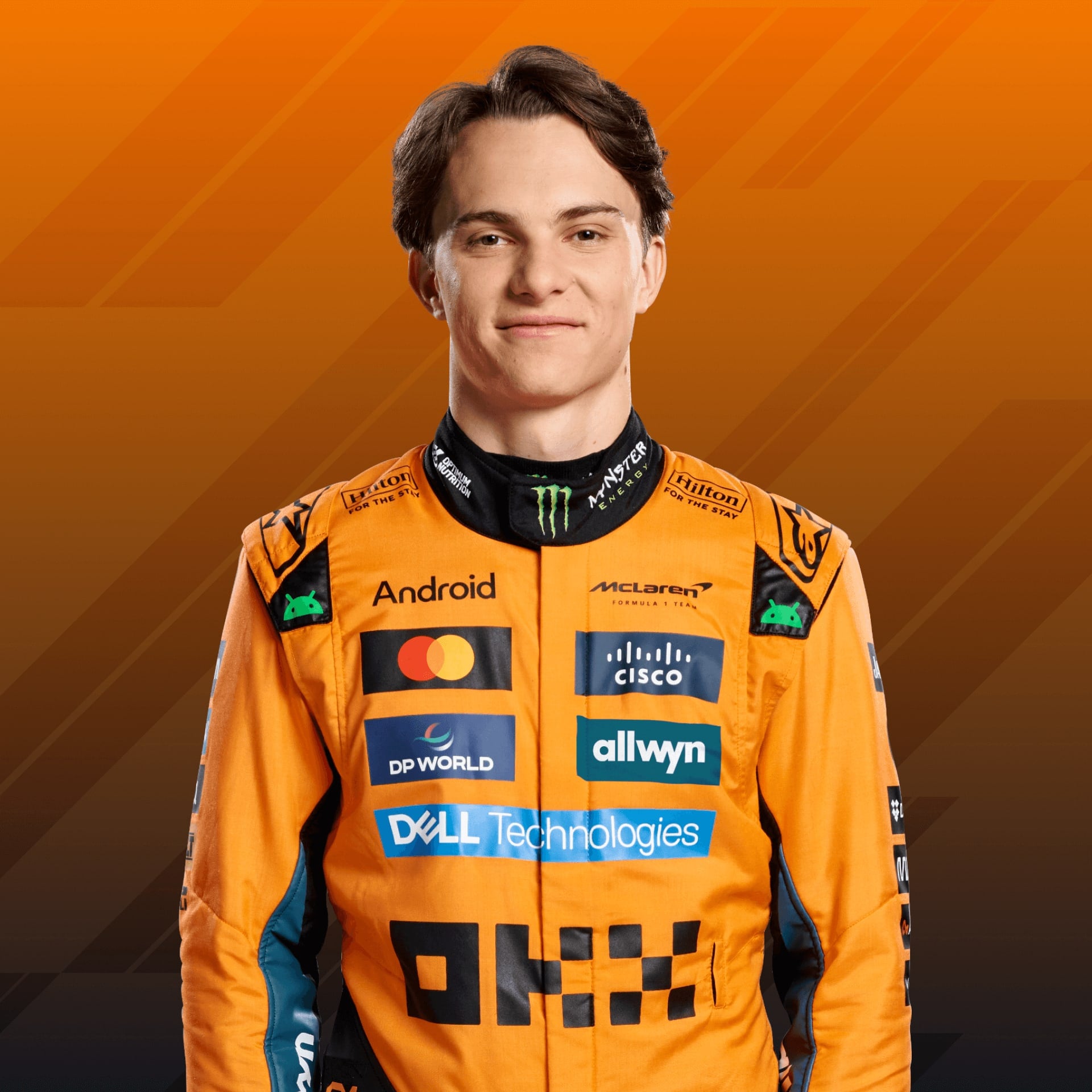
The papaya surge changes everything about the run-in. A straight Mercedes duel for the title is one kind of season; a three-way fight where McLaren can steal wins from both silver cars is another entirely. Every race that Lando Norris or Oscar Piastri wins is a race that Antonelli and Russell do not, and in a championship separated by about 45 points, the identity of the spoiler matters enormously. If McLaren takes points off Antonelli more often than it takes them off Russell, the gap shrinks without Russell having to do anything heroic. If the reverse happens, Antonelli's cushion grows and the title race effectively ends early.
There is also the constructors' dimension. Mercedes has built its season on the most consistent driver pairing in the sport, but a resurgent McLaren threatens that foundation too. The team championship brings its own prize money, its own prestige, and its own pressure, and Toto Wolff's operation does not do well with pressure it cannot control. The girly lens notes, with some amusement, that nothing in Formula 1 is quite as entertaining as a calm, collected team principal forced to smile through a rival's winning streak.
The deeper question is whether McLaren's pace is real and repeatable, or a hot streak built on circuits that suited them. The run-in will answer that quickly. Zandvoort, with its banked corners and beachside winds, is a very different test from Monza's flat-out temple of speed, and the flyaway races after that will test development rates as much as raw pace. If McLaren is genuinely the fastest team now, as Antonelli claims, then the final ten races become a referendum on whether Mercedes can develop its way out of trouble. If it was a mirage, the silver cars will reassert themselves and this question answers itself.
One imagines the Mercedes debrief rooms this week: quiet, focused, and just a little bit rattled. Being hunted is a different feeling from hunting. Russell, fresh off his engagement and his self-declared mental reset, now has to chase his teammate while both of them glance nervously in their mirrors at papaya. That is the kind of pressure that reveals character. We are about to learn a lot about all four drivers.
There is a particular cruelty in the timing, too. Mercedes spent the first half of the season as the hunter that became the hunted: first they had to catch whoever started strongest, then they became the benchmark everyone else aimed at. Now, just as the championship fight between their two drivers was settling into its rhythm, a third force arrives to complicate every calculation. Do the Mercedes drivers race each other harder, or do they start racing McLaren? Team orders, strategic cooperation, the delicate politics of a garage with two title contenders: all of it gets harder when there is a papaya car in the mix. The next ten races will test not just the drivers but the team's ability to manage them.
2. Will Verstappen's winless streak really last all season?
Now the question that would have been unthinkable eighteen months ago. Max Verstappen, four-time world champion, winner of everything in sight for years, has not won a single race in 2026. Not one. As the season resumes, the possibility sits there, stark and strange: could this be the first winless season of his career since his rookie year?
The context matters. This is Red Bull's first season with its own power unit project, the Ford partnership, and the story of the year has been Mercedes power setting the standard while everyone else plays catch-up. Verstappen has been driving the wheels off a car that, on most weekends, has simply not been fast enough. His talent has never been in doubt; his machinery has been the limiting factor, week after week, in a way he has not experienced since he was a teenager.
But here is why the question is genuinely open rather than rhetorical: the ADUO engine upgrades are coming, and Red Bull Powertrains, notably, was disqualified from those concessions because it had the most powerful combustion engine. Read that again. Red Bull's own engine project produced the strongest internal combustion engine on the grid. The deficit, wherever it is, lies elsewhere: in the electrical deployment, the packaging, the drivability, the thousand tiny integrations that turn a powerful engine into a fast car. Those are fixable problems, and Red Bull has the deepest technical bench in the sport.
There is also the Verstappen factor, which no statistical model can quite capture. Champions of his caliber do not accept winless seasons quietly. The second half of a lost year is often when a great driver produces the drives people remember, the wet-weather masterclasses, the opportunistic victories snatched from chaos. All it takes is one strange Sunday, one safety car lottery, one rain shower at the right moment, and the streak is over. The paddock knows it. The fans know it. One suspects Verstappen knows it best of all, and is quietly furious about it.
The girly editorial take: there is something almost romantic about a fallen king fighting his way back. The 2026 season has belonged to the new generation, to Antonelli's cool consistency and Russell's polished ambition. But the old king is still on the grid, still furious, still Max. Ten races is plenty of time for a reminder.
3. Will the ADUO upgrades change the power order at Monza?
Now the technical question, and potentially the most consequential one of the run-in. ADUO, the Additional Development and Upgrade Opportunities, is the sport's homologation relief valve: power unit manufacturers rated 2% or more off the benchmark are entitled to in-season upgrades. Mercedes was rated at least 2% off the benchmark and gets its upgrade chance. Ferrari, Audi, and Honda were 4% or more adrift and get two upgrade chances each. Red Bull Powertrains, with the most powerful combustion engine, gets nothing.
Monza is the first real examination of what those upgrades are worth. The Italian Grand Prix, the European season finale, is the fastest circuit on the calendar, a place where power unit performance is laid bare with nowhere to hide. If the ADUO upgrades work as intended, the gaps should compress: Ferrari should step forward at its home race, in front of the tifosi, with all the emotional electricity that entails. Audi and Honda should find something too. And Mercedes, entitled to its own upgrade, will be trying to make sure nobody catches it.
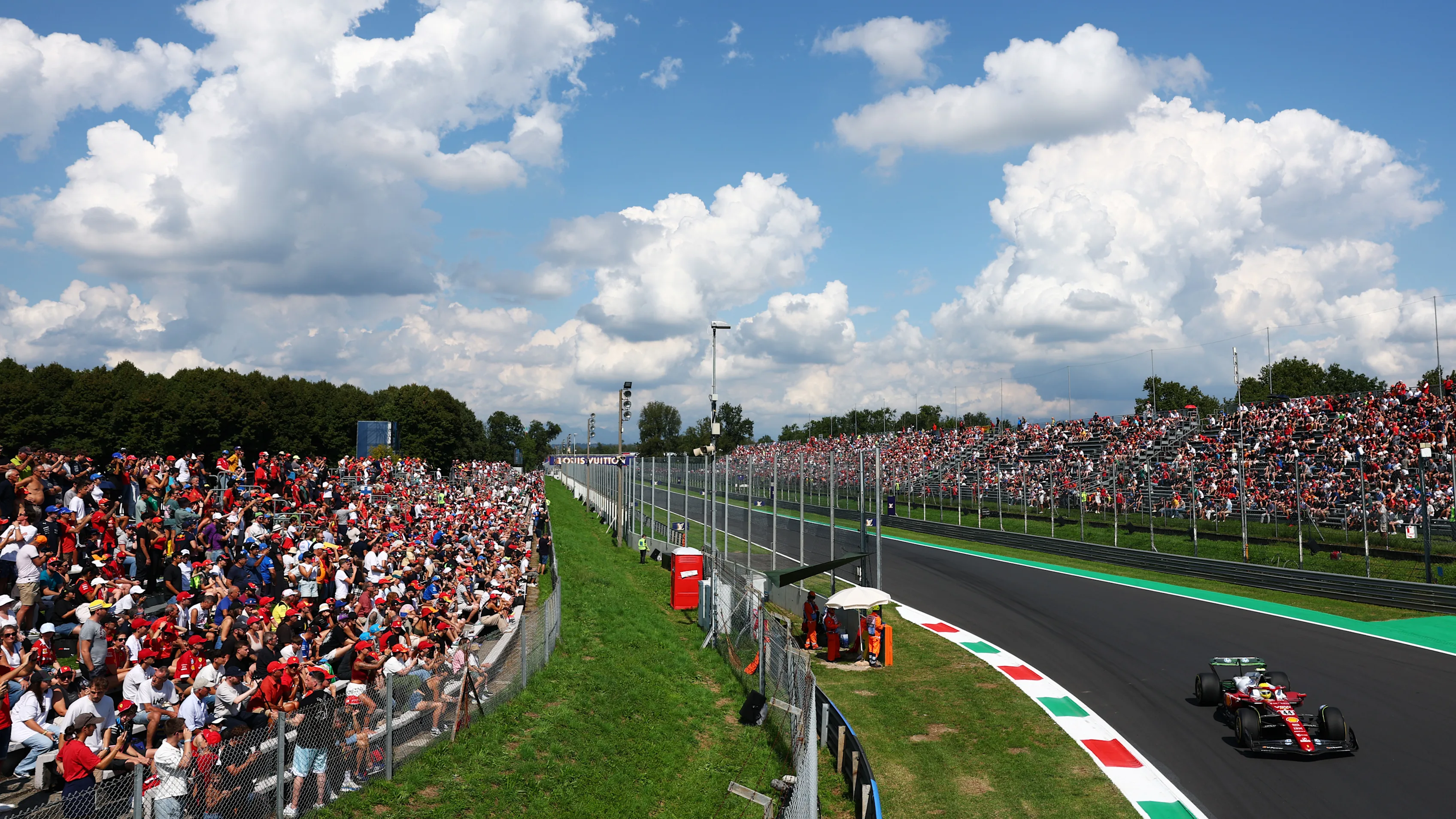
Think about what is at stake here. The entire 2026 competitive order has been shaped by the new regulations and the initial power unit homologation. If ADUO does its job, the second half of the season could look meaningfully different from the first: a Ferrari that can genuinely fight at the front would transform both championships, giving Charles Leclerc and Lewis Hamilton the machinery to play spoiler or even contender. A Honda step forward changes the calculus for every Honda-powered team. And if the upgrades do not work, if the gaps stay frozen, then the rest of the season is a development race fought with one hand tied behind most teams' backs.
Monza itself deserves a moment of appreciation. The Temple of Speed, the tifosi, the sea of red, the podium ceremony underneath it all: there is no more romantic setting for a technical plot twist. The girly lens is fully engaged here, because Monza in September is pure cinema, all golden light and screaming grandstands and drivers who speak Italian to the crowd. If Ferrari's ADUO upgrade delivers at home, in front of those fans, the noise will be heard in Maranello. If it does not, the silence will be deafening.
The honest answer to the question is that nobody knows, which is exactly why it is the question. Engine upgrades are the sport's great unknowns: dyno numbers do not always translate to lap time, and integration gremlins have humbled many a promising package. But the potential is real, the timing is perfect, and Monza is the stage. Watch the speed traps. They will tell you everything.
4. Who fills the last five cockpits?
While the championship fight dominates the headlines, the driver market is quietly approaching its own deadline, and five teams have yet to confirm their 2027 lineups: Red Bull, Racing Bulls, Aston Martin, Haas, and Cadillac. Five teams. Potentially ten seats. And ten races for every candidate to make their case.
The timing is delicious. The run-in is not just a championship battle; it is a rolling audition, ten consecutive job interviews conducted at 300 kilometers an hour in front of the entire world. Every overtake is a line on a CV. Every mistake is a red flag on a background check. The drivers whose futures are uncertain cannot afford a quiet autumn, and the teams with open seats cannot afford to choose wrong.
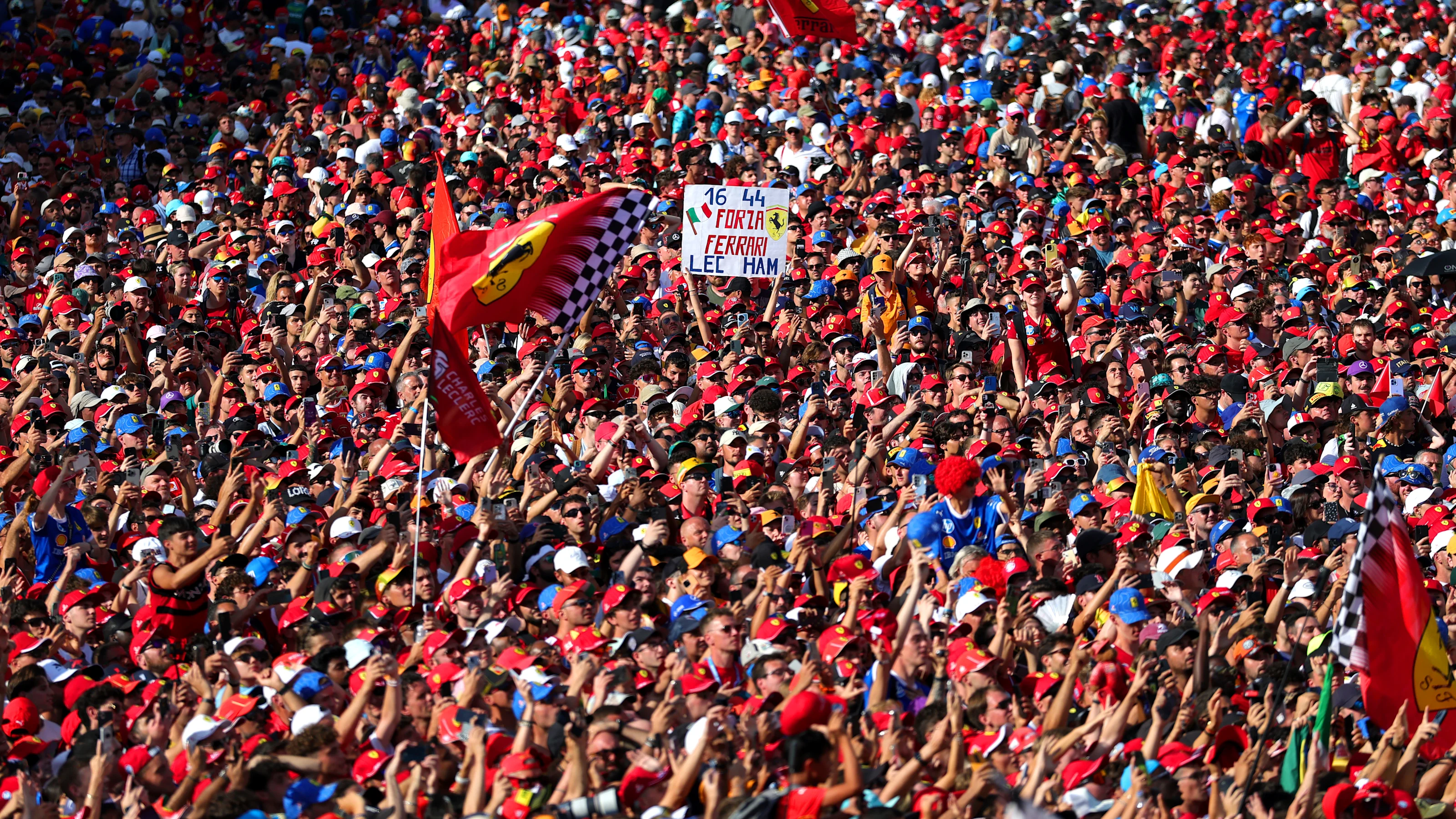
Red Bull's situation is the most fascinating, because the energy drink empire's driver program has always been the sport's most ruthless meritocracy. Racing Bulls exists, in part, as the audition room, and the performances of its drivers over these ten races will be scrutinized with unusual intensity. Aston Martin, Haas, and Cadillac each have their own calculations: experience versus youth, sponsorship versus speed, the known quantity versus the gamble. Cadillac, as the newest name on the grid, faces the additional pressure of building a lineup that announces its ambitions to the world.
And then there is the human side, which the girly lens refuses to let us ignore. Behind every "unconfirmed lineup" is a driver who does not know where he will be working next year, who is trying to perform at the absolute limit of human capability while his professional future hangs in the balance. That is a special kind of pressure, and it produces special kinds of performances: the desperate lunge, the inspired drive, the meltdown. The driver market does not just decide 2027. It flavors every lap of the rest of 2026.
5. How does Zandvoort say goodbye?
Finally, the emotional question. This weekend's Dutch Grand Prix, on August 23, is Zandvoort's last dance. The promoter declined to extend the race beyond 2026, and so Formula 1 says farewell to the banked, beachside circuit that gave the Verstappen era its homecoming. A crowd of 325,000 fans is expected across the weekend, a sea of orange for the final bow.
Farewell races have their own special energy. The grandstands will be louder, the emotions rawer, the sense of occasion heavier than a normal Sunday. Zandvoort returned to the calendar as the centerpiece of the Verstappen phenomenon, and it leaves as a monument to it: the banked final corner, the dunes, the relentless orange smoke. Whatever happens in the race itself, the weekend will be a celebration, and the sport is usually at its best when it lets itself feel things.
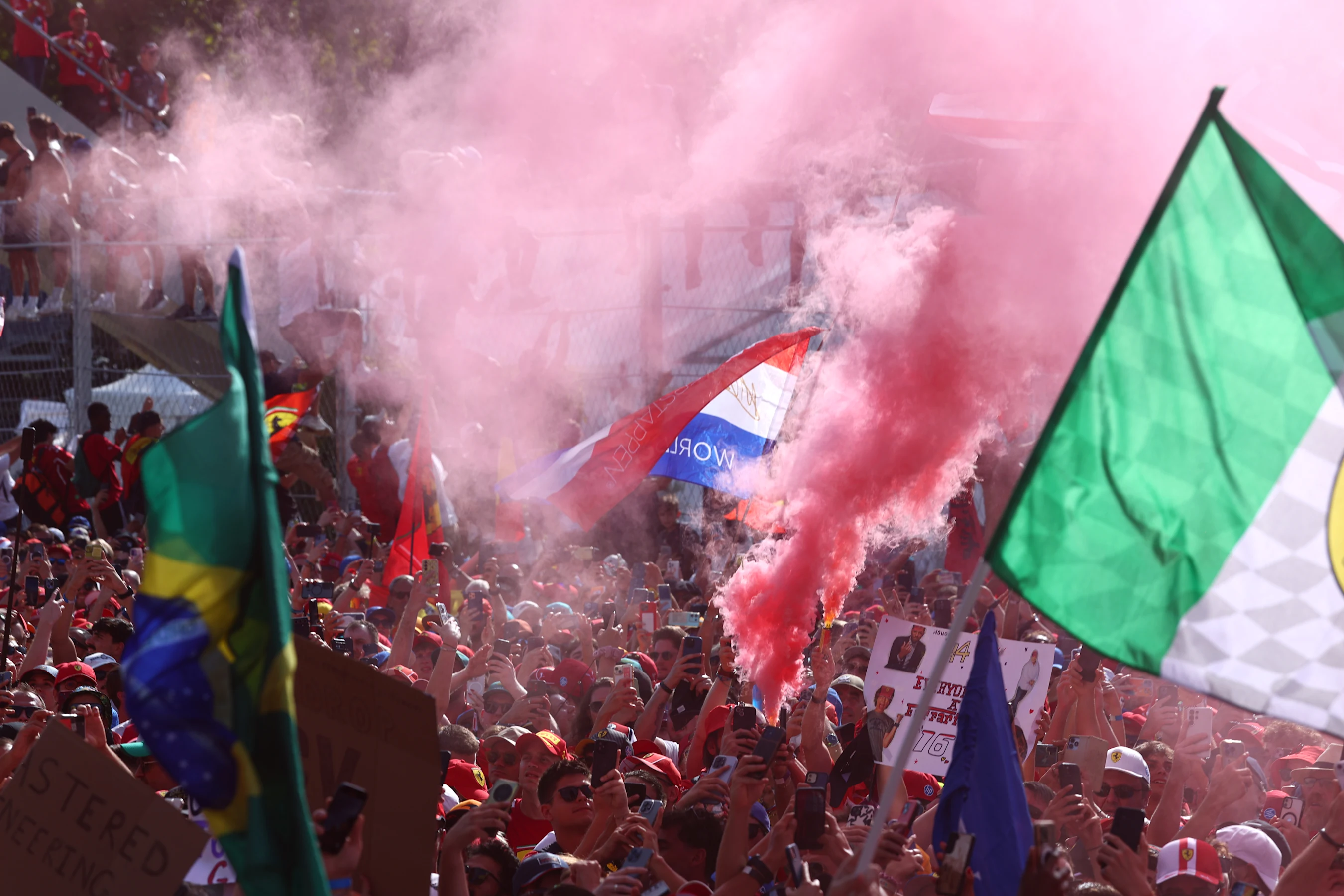
Then it is on to Monza for the European season finale, and the championship goes global for the long run to December. The rhythm of the run-in is part of its romance: the last European summer races, all golden light and tifosi and farewells, giving way to the flyaway stretch where titles are decided under lights in distant time zones. For the drivers, it is ten races of escalating intensity. For the rest of us, it is ten weekends of the best reality television on earth.
Beyond the Five Questions: The Shape of the Run-In
There is one more thing worth saying about ten races, which is that ten races is where championships reveal who the drivers really are. The first half of a season is about machinery: who built the best car, who understood the regulations first. The second half is about people. Fatigue accumulates. The travel grinds. The same motorhome coffee tastes a little more bitter in October than it did in March. And into that weariness comes the sharpest pressure in sport: the knowledge that every single weekend from now on could be the one that decides everything.
Momentum is the sport's favorite superstition, and the run-in is where it either proves real or gets exposed as narrative. A driver who wins at Zandvoort arrives at Monza feeling ten feet tall, and confidence, as George Russell himself has been saying since his engagement, might just be worth a couple of tenths. Conversely, a bad weekend at the wrong moment can start a spiral: one retirement becomes two, the questions in the media pen get sharper, and suddenly a 45-point lead feels fragile. Antonelli has been admirably immune to all of this so far, the teenager with the veteran's temperament. The run-in will test whether that temperament has limits.
Then there is the development race, the invisible championship fought in wind tunnels and simulators while the visible one plays out on track. Ten races is a long time in development terms: enough for two or three meaningful upgrade packages, enough for a team that understands something in September to be winning with it by November. McLaren's emergence is itself a development story, and the question for Mercedes is whether its own pipeline can respond. The teams that keep developing to the final race are the teams that believe the championship is still alive. Watch who brings upgrades in the autumn. It tells you who still believes.
And finally, the weather, the great unscripted variable. The European summer gives way to autumn, the flyaways bring their own climates, and somewhere in these ten races there will be a wet Sunday that scrambles everything. Rain is the sport's great equalizer and its greatest dramatist, and a single chaotic race can do more to a 45-point gap than a month of development. Nobody plans for it. Everybody dreams about it. The run-in always delivers at least one.
So there they are: the five questions. Can McLaren catch Mercedes? Will Verstappen win at all? Will the engines reshuffle at Monza? Who gets the last five seats? And how do you say goodbye to Zandvoort? The answers begin this Sunday, in the dunes, in front of 325,000 fans in orange. Ten races left. Nothing is decided. Everything is about to be.
FAQ
How many races are left in the 2026 season?
Ten races remain as the season resumes at the Dutch Grand Prix at Zandvoort on August 23.
What is the championship situation at the break?
Kimi Antonelli leads George Russell by about 45 points. Both Mercedes drivers have identified McLaren as the emerging threat, with Antonelli calling them "the new fastest team" and Russell calling them "the one to beat."
What are the ADUO engine upgrades?
ADUO stands for Additional Development and Upgrade Opportunities: homologation relief for power unit manufacturers rated 2% or more off the benchmark. Mercedes was rated at least 2% off and is entitled to in-season upgrades; Ferrari, Audi, and Honda were 4% or more adrift with two upgrade chances each; Red Bull Powertrains had the most powerful combustion engine and was disqualified from concessions. Monza is the first major test of their impact.
Why is the 2026 Dutch Grand Prix Zandvoort's last?
The promoter declined to extend the race beyond 2026, so the August 23 Dutch Grand Prix is Zandvoort's farewell, with 325,000 fans expected. Monza then hosts the European season finale.
A Note on Sources
The facts in this article, including driver quotes, the ADUO framework and manufacturer ratings, the unconfirmed 2027 lineups, and the Zandvoort farewell details, are based on official team and series communications during the August 2026 break. The championship gap figure reflects the verified standings at the break. Editorial framing and analysis are the author's own.