
By Paulina Phan, Senior Editorial Contributor | April 1, 2026
There is a particular silence that falls over a sport when the calendar promises noise and delivers nothing. April was supposed to be the month Formula 1 found its rhythm. Three flyaway races were done, the European season was still a rumor, and the championship had two perfect spring evenings waiting in the desert: under the lights in Sakhir on April 12, then under the lights again in Jeddah on April 19. Instead, April is empty. No engines, no fireworks, no podium champagne. Just a statement, a quote from Stefano Domenicali, and the strangest feeling in racing: a month with nothing to look forward to except waiting.
This is the story of how Formula 1 lost two Grands Prix, why losing them was the only possible decision, and what a five-week hole in the middle of a brand-new era does to the people who live for this sport. It is also, if we are being honest, a story about perspective. Because as much as we love the racing, some things are bigger than racing, and this spring reminded us of that in the starkest possible way.
What Actually Happened
On March 15, Formula 1 announced that the Bahrain Grand Prix and the Saudi Arabian Grand Prix would not take place as scheduled, citing the ongoing conflict in the Middle East. The Bahrain race had been set for April 12 at the Sakhir circuit; Saudi Arabia was to follow on April 19 at the Jeddah Corniche Circuit. Both are gone from the calendar now, and with them went the entire support program: the Formula 2, Formula 3 and F1 Academy rounds scheduled for those weekends were cancelled as well.
The announcement
The news landed on March 15, right in the middle of the flyaway stretch, and it landed the way these things always do: a short statement, carefully worded, with the weight of the decision sitting between the lines. F1 CEO Stefano Domenicali did not hide behind corporate language. "While this was a difficult decision to take, it is unfortunately the right one at this stage considering the current situation in the Middle East," he said. "We cannot wait to be back with them as soon as the circumstances allow us to do so."
Read that quote twice. The first sentence is the language of responsibility, the acknowledgement that cancelling a Grand Prix is never done lightly, that thousands of people, from mechanics to marshals to the fans who bought tickets months ago, are affected. The second sentence is the language of hope, and it matters. Domenicali was not closing a door. He was leaving it open, promising a return when the circumstances allow. In a sport that visits more than twenty countries a year, that promise is both a courtesy and a necessity. Formula 1 will be back in the region. Just not now.
More than just Formula 1
It is easy to forget, when the headlines say "Grand Prix cancelled," how many championships actually disappear with those words. The Formula 1 race is the main event, but a Grand Prix weekend is an ecosystem. Formula 2, Formula 3 and F1 Academy were all scheduled to race in support at these rounds, which means three more grids of young drivers, three more sets of teams, engineers and mechanics, and hundreds of careers at the sharp end of the junior ladder all lost two weekends of racing in a single announcement.
For the F1 Academy drivers especially, the loss stings in a particular way. Their calendar is shorter, their spotlight narrower, and every round matters more when you are trying to prove you belong in the pipeline. Losing two weekends is not a scheduling inconvenience for them. It is a genuine setback, fewer chances to impress, fewer data points for the teams watching from above. When we talk about the cost of these cancellations, the cost is not only measured in television hours. It is measured in opportunities, and the youngest drivers always pay the highest price.
Why There Was No Other Choice
Let us be clear about something: nobody wanted this. Not the promoters, who had spent months preparing two night races in the desert. Not the teams, who had built their early-season logistics around back-to-back Middle Eastern rounds. Not the drivers, who love racing under lights more than almost anything. And certainly not the fans in Bahrain and Saudi Arabia, who had every right to expect a home race this spring. But wanting something does not make it safe, and Formula 1 learned long ago that the show cannot go on regardless.
The 2022 precedent
This is not the first time the sport has made this call. In 2022, Formula 1 cancelled the Russian Grand Prix after the invasion of Ukraine, removing the Sochi race from the calendar and ultimately ending the relationship entirely. That decision set the template: when the world shifts under a race's feet, the sport steps back. It does not negotiate with geopolitics. It does not wait to see how bad things get. It leaves, and it leaves early enough that nobody has to ask whether it should have left sooner.
The Bahrain and Saudi Arabia cancellations follow that precedent exactly. The announcement came a full month before the first of the two races, which is the responsible version of this decision: time to reroute freight, rearrange plans, and give the promoters the dignity of a clean, early call rather than a chaotic last-minute scramble. There is an art to cancelling well, if such a thing can be said, and this was it.
People before podiums
Strip away the logistics and the calendar math, and the decision comes down to something simple: a Grand Prix is a small city that appears for four days and then vanishes. It brings thousands of team members, media, contractors and fans into one place, and it asks them to focus on racing while the world around them does something else entirely. When the region is in conflict, that ask becomes unreasonable. You cannot in good conscience fly three thousand people into uncertainty and tell them to think about tire strategy.
Domenicali's quote carries that understanding. "The right one at this stage" is doing a lot of work in that sentence. It says: we looked at this, we took it seriously, and we chose people over podiums. For a sport that is so often accused of caring about nothing but money and spectacle, it was a quietly principled moment, and it deserves to be recognized as one.
24 Becomes 22
The original 2026 calendar was a 24-race marathon, the joint-longest in Formula 1 history, stretching from Melbourne in March to Abu Dhabi in December. With Bahrain and Saudi Arabia removed, it is now a 22-race season. Two races might not sound like much in a championship this long, but in the fine margins of a title fight, two races are everything.
The arithmetic of a shorter season
Fewer races means fewer points on the table, which means every remaining weekend carries slightly more weight. A retirement that might have been a shrug in a 24-race season becomes a small crisis in a 22-race one. The margin for error shrinks, the value of consistency grows, and the drivers who bank solid points every single weekend, rather than swinging between wins and zeroes, gain a quiet advantage.
It also changes the development race. Teams plan their upgrade packages around the calendar, targeting specific races for new floors, new wings, new ideas. Take two races away and the whole schedule compresses; some upgrades will arrive earlier relative to the season's end, some teams will have to choose which races matter most for testing new parts. In a year of brand-new regulations, when every team is still learning what its car actually wants, losing two data-gathering weekends is a genuine competitive wrinkle, not just an administrative footnote.
What two missing races change
Here is the part that should make every championship contender slightly nervous: in a 22-race season, luck matters more. A safety car at the wrong moment, a rain shower in qualifying, a rival's engine letting go, any of these can swing a championship when there are fewer weekends to absorb the damage. The 2026 title fight, which had been shaping up as a season-long chess match, just became a slightly shorter game of chess, and shorter games reward the bold.
The Five-Week Hole
The Japanese Grand Prix at Suzuka ran on March 29. The next race, the Miami Grand Prix, is on May 3. Between them: nothing. Five full weeks without a Grand Prix, in the middle of a season that had just started to tell its story. In modern Formula 1, where races arrive like clockwork and the paddock barely has time to do laundry between flyaways, a five-week gap in April feels almost unreal, like a song stopping in the middle of the chorus.
Momentum, interrupted
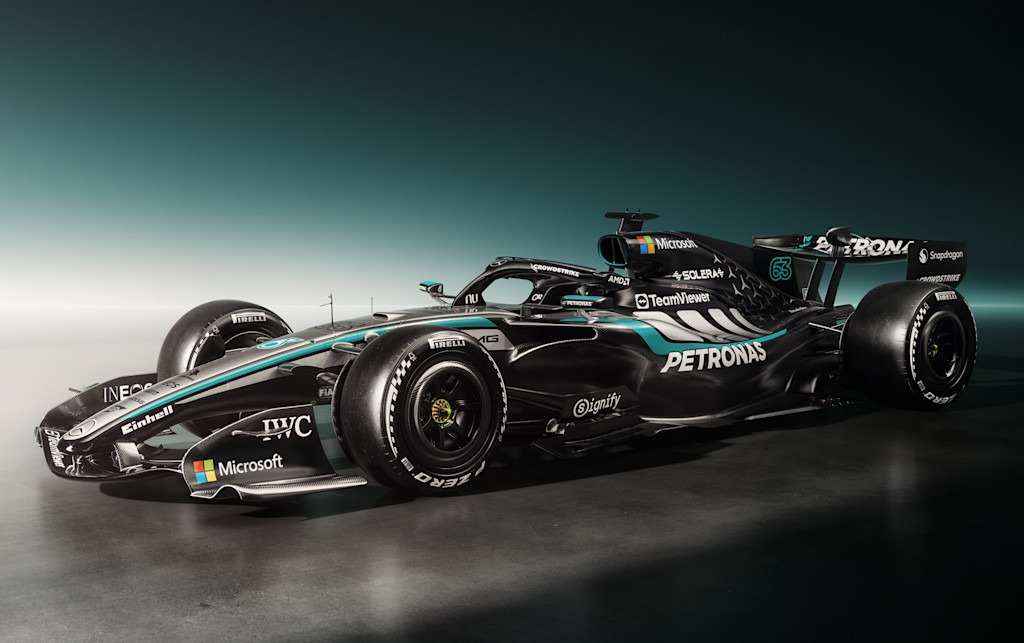
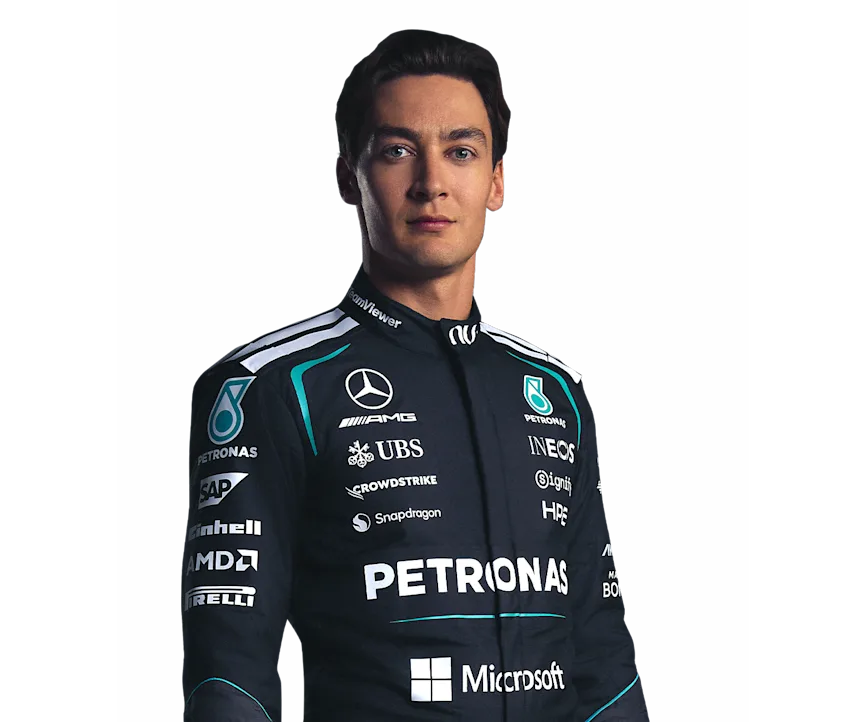
And what a story it was becoming. Kimi Antonelli, nineteen years old, two wins from the first three races, the youngest championship leader in the sport's history, carrying the momentum of a prodigy who looks more inevitable every weekend. George Russell, his teammate, with a victory in China and the points lead after round two, proving that the intra-team battle at Mercedes is going to be one of the defining duels of this era. Mercedes with three poles and two one-two finishes, a team that has started the new regulations exactly the way it started the last ones: in front.
Now all of that has to sit in a garage for five weeks. Momentum in Formula 1 is a real thing, even if the engineers will tell you it is just a story we tell about random variance. Drivers talk about rhythm, about the feeling of arriving at a circuit already knowing the car will do what they ask. Teams talk about rolling, about the operational sharpness that comes from doing the same high-pressure dance every seven days. A five-week break does not erase any of that, but it pauses it, and nobody knows exactly what resumes on the other side. Antonelli has never led a championship into a break this long. Nobody has, at nineteen, in a brand-new era, with the whole sport watching to see what he is made of.

What the factories do with silence
Here is the good news hidden inside the bad: Formula 1 teams are not built for idleness. Five weeks without racing means five weeks of factory time, five weeks of wind tunnel runs and simulator sessions and quiet, uninterrupted development work. For the teams that started the season behind, and there are several, this is an unexpected gift. McLaren, chasing electrical gremlins that ruined their opening rounds. Aston Martin, chasing answers after a bruising home race for Honda at Suzuka. The strugglers get something they almost never get in modern F1: time.
The mandatory shutdown rules still apply, of course; the sport long ago decided that factories cannot simply run their people into the ground. But within those rules, expect the gap to be used aggressively. By the time the paddock reassembles in Miami, several cars should look subtly different, and at least one team will arrive believing the break saved its season.
Miami on the horizon
So we wait for May 3, and waiting is its own kind of drama. The Miami Grand Prix, a sprint weekend around the circuit at Hard Rock Stadium, will now carry the weight of two missing races on its shoulders. It becomes the season's reset button, the moment we find out whether the first three races told the truth or just the opening chapter. Will Antonelli pick up where he left off, the teenage leader with the world at his feet? Will Russell's China form reassert itself? Will Mercedes' qualifying dominance survive five weeks of everyone else catching up?
Five weeks is a long time to wonder. But wondering, it turns out, is part of the fun.
The Paddock Never Really Stops
A five-week gap in Formula 1 is never truly quiet. It is only quiet in public, which is a very different thing.
The crisis talks
On April 11, the FIA held crisis talks over the new 2026 regulations, and the verdict was a politely British shrug: only "tweaks" were promised, with a decisive stakeholder vote set for April 20 and any changes aimed at debuting in Miami. The paddock split along generational lines in a way that was almost too perfect. Lando Norris called the racing under the new rules "completely artificial," while Lewis Hamilton said simply, "personally, I loved it." That disagreement quietly became one of the defining debates of the new era.
Silly season loves a vacuum
Nothing fills a news vacuum like driver-market gossip. Fresh speculation swirled about a possible 2027 Verstappen sabbatical, Ralf Schumacher publicly told the reigning champion to stop "moaning" about the regulations, and by April 16 Jos Verstappen was rubbishing claims that a Mercedes switch was already agreed. Then George Russell insisted he expects to remain at Mercedes beyond 2026 despite all the Verstappen chatter. It was all rumor and posture, but in an empty month, rumor and posture were the entertainment.
The Part Nobody Talks About
For all the championship arithmetic and factory intrigue, the people most affected by these cancellations are not the ones fighting for the title. They are the fans who bought tickets, booked flights, and planned their spring around two nights in the desert.
For the fans who had tickets
Imagine being a young fan in Manama or Jeddah, counting down the days to your home race, and then reading that statement on March 15. The disappointment is real, and it deserves more than a footnote. Home races are sacred in this sport. They are the weekends when the grandstands fill with your flag, when the drivers make the extra effort at the fan events, when the whole circus feels like it came to town just for you. Losing that, through no fault of your own, is genuinely sad, and no amount of calendar logic makes it less so.
Domenicali's promise matters most to these fans: "We cannot wait to be back with them as soon as the circumstances allow us to do so." It is not much, as promises go, but it is something. Hold onto it.
A note from the future
Here is something we could not have known on April 1, and it feels worth sharing now that this column is being read with the full season in view: Bahrain did come back. Not to Sakhir, not yet, but the Bahrain Grand Prix was reinstated later in the season at the Sepang International Circuit in Malaysia, where it ran on October 4 as Formula 1's first race at Sepang in nine years. Max Verstappen won it, in the rain, in one of the great chaotic afternoons of the modern era. Sometimes the calendar finds a way to give back what it took away, just not in the shape you expected.
That is the thing about this sport. The races you lose in April can become the stories you tell in October.
FAQ
Why were the Bahrain and Saudi Arabian Grands Prix cancelled?
Formula 1 cancelled both races due to the ongoing conflict in the Middle East. The decision was announced on March 15 by F1 CEO Stefano Domenicali, who called it "a difficult decision" but "the right one at this stage considering the current situation in the Middle East." The Bahrain race had been scheduled for April 12 and Saudi Arabia for April 19.
Will the two races be rescheduled later in the 2026 season?
At the time of the announcement, no replacement dates were given, and the calendar was reduced from 24 races to 22. Domenicali said Formula 1 could not wait to return to both countries "as soon as the circumstances allow," leaving the door open without making a promise. (As this archive column now knows, the Bahrain Grand Prix was eventually reinstated at Sepang, Malaysia, on October 4.)
What happened to the Formula 2, Formula 3 and F1 Academy rounds?
The support series rounds scheduled for both weekends were cancelled along with the Grands Prix. For the junior categories, and especially for F1 Academy with its shorter calendar, the lost weekends meant fewer chances for young drivers to impress in front of the Formula 1 paddock.
When is the next Formula 1 race?
The Miami Grand Prix at the Miami International Autodrome, a sprint weekend, on May 3, 2026. It follows a five-week gap after the Japanese Grand Prix at Suzuka on March 29.
A Note on Sources
Calendar dates, the March 15 cancellation announcement and the statement from F1 CEO Stefano Domenicali were checked against official Formula1.com reporting, with background and context from Reuters, BBC Sport, Sky Sports and The Race. Championship details reflect the standings after the first three rounds of the 2026 season.