
By Paulina Phan, Senior Editorial Contributor | April 8, 2026
The most important fight of April did not happen on a racetrack. There were no racetracks, remember; the calendar was empty. Instead, the fight happened in interviews and press briefings, in the space between what the rules say and what the teams wish they said. It started when a nineteen-year-old suggested that Ferrari might already have been handed the keys to catch Mercedes. It escalated when Toto Wolff warned the FIA that engine help must not change the competitive order. And it boiled over when Red Bull's Laurent Mekies publicly told Wolff he was wrong. The subject of it all has four letters, and if you want to understand the rest of this season, you need to understand it: ADUO.
This column follows the full arc of the April engine debate, from Antonelli's early-month suggestion through Wolff's April 21 warning to Mekies' April 27 rebuttal. But first, the explainer, because none of the drama makes sense until you know what ADUO actually is.
So What Is ADUO, Exactly?
The name and the idea
ADUO stands for Additional Development and Upgrade Opportunities, and it is one of the most quietly radical ideas Formula 1 has ever written into its rulebook. Here is the concept in plain language: under the 2026 power unit regulations, engines are homologated, which is a technical way of saying frozen. All five manufacturers submitted their homologated designs on March 1, and from that date the power units are essentially locked, with changes permitted only under strict conditions. That freeze is meant to control costs and reward the teams that did the best homework.
But the sport learned a hard lesson from the last great regulation change. When the turbo-hybrid era began in 2014, Mercedes built an engine so superior that it defined the better part of a decade. Nobody in the sport wants a repeat of that kind of stranglehold, so the 2026 rules include a safety valve. If a manufacturer's engine falls far enough behind the best one, the FIA grants it extra chances to develop and upgrade, a structured, legal way to close the gap. That safety valve is ADUO. It is not charity. It is not punishment for being good. It is the sport's insurance policy against boredom.
The 2% line that changes everything
Everything about ADUO hinges on a single number: two percent. The FIA monitors each manufacturer's internal combustion engine, the ICE, and builds what it calls an ICE Performance Index. If a manufacturer's ICE is rated 2% or more off the benchmark power unit, the best-performing engine on the grid, then ADUO is granted. Fall short of that line and you get nothing. Cross it and the rulebook opens up.
The rewards scale with the size of the deficit, and they are genuinely meaningful. A manufacturer between 2% and 4% behind the benchmark earns one additional homologation upgrade in the current season, plus another in the following season. Fall 4% or more behind and the entitlement doubles: two extra upgrades this year, two more next year. There is money attached, too, in the form of cost cap relief, up to 3 million dollars for the smaller deficit band and scaling all the way up to 11 million dollars for deficits above 10%. In a cost-capped sport, that kind of headroom is real power.
Two things are worth emphasizing, because they get lost in the shouting. First, ADUO is not Balance of Performance, the system used in series like the World Endurance Championship where regulators directly equalize cars. Nobody is bolting weights onto the Mercedes or shrinking its air intake. Manufacturers who qualify for ADUO are given the space to find performance themselves, through their own engineering, with extra upgrade slots and extra budget. Nothing is artificially equalized. The help is real, but the work is still theirs.
Second, the assessment is about the internal combustion engine only. The 2026 power units are deeply hybrid, with the electrical side contributing roughly half the total output, but ADUO's index looks at the ICE alone. The FIA is upfront that this is not representative of full power unit performance, since the energy recovery system plays a crucial role in the overall package. That distinction matters, because a team can have a middling ICE and a brilliant hybrid system, or vice versa, and ADUO only sees half the picture by design.
How the FIA keeps score
So how does the governing body decide who is 2% off and who is not? The ICE Performance Index is built from measured data across race weekends, considering engine speed, input shaft torque, MGU-K power, and a weighting for how sensitive lap time is to power at each circuit. It is a serious piece of analysis, not a vibes-based award, and it is calculated over defined monitoring periods across the season.
The 2026 season was originally divided into three assessment windows covering races one through six, seven through twelve, and thirteen through eighteen. But the cancellation of the Bahrain and Saudi Arabian Grands Prix scrambled the calendar, and the FIA adjusted accordingly: the first monitoring period now covers the season's first five races, Australia, China, Japan, Miami and Canada, with the results to be communicated no later than two weeks after the Canadian Grand Prix. Once the results are out, eligible manufacturers are notified of their allowance and can introduce upgrades as early as the very next race.
That timeline is the quiet engine of all the April drama. The first official assessment has not happened yet. Nobody has been formally granted anything. But everyone in the paddock can do the same math the FIA will do, and everyone has an opinion about what the numbers will say. Which brings us to the fight.
April's Engine Drama, Week by Week
Early April: Antonelli points at Ferrari
It started, as so many 2026 stories do, with Kimi Antonelli saying something interesting. In early April, the championship leader suggested that Ferrari may already have been given a green light to close the engine gap to Mercedes, essentially claiming that ADUO relief for the Italian manufacturer was a done deal before the FIA had published a single assessment. He said it in the breezy, matter-of-fact way of a teenager who does not yet know which sentences cause earthquakes.

Whether Antonelli was speculating, repeating paddock gossip, or revealing something he had actually been told is impossible to know, and that is precisely why it mattered. The suggestion landed in a paddock already primed for suspicion. Ferrari had been Mercedes' closest challenger in the opening rounds, sitting second in the constructors' championship with podiums from the first three races. If anyone was going to benefit from ADUO, the smart money said it would be Maranello, and here was the championship leader saying it out loud.
The reaction was immediate and predictable. Ferrari said nothing, which in Formula 1 is its own kind of statement. Mercedes went very still, in the way of a team deciding how angry to be. And the rest of the paddock started doing the thing it loves most: whispering. Was there a quiet deal? Had the FIA already made up its mind? Was the first assessment a formality? None of those questions had answers, but in April, with no racing to distract anyone, the questions were the whole show.
April 21: Wolff draws his line
On April 21, Toto Wolff decided he had heard enough. The Mercedes team principal issued a public warning to the FIA: the ADUO concessions, he said, "must not change the order." It was a short sentence with a very long shadow. Translated from team-principal speak, it meant this: help the struggling manufacturers if you must, but do not you dare use it to take wins away from us.
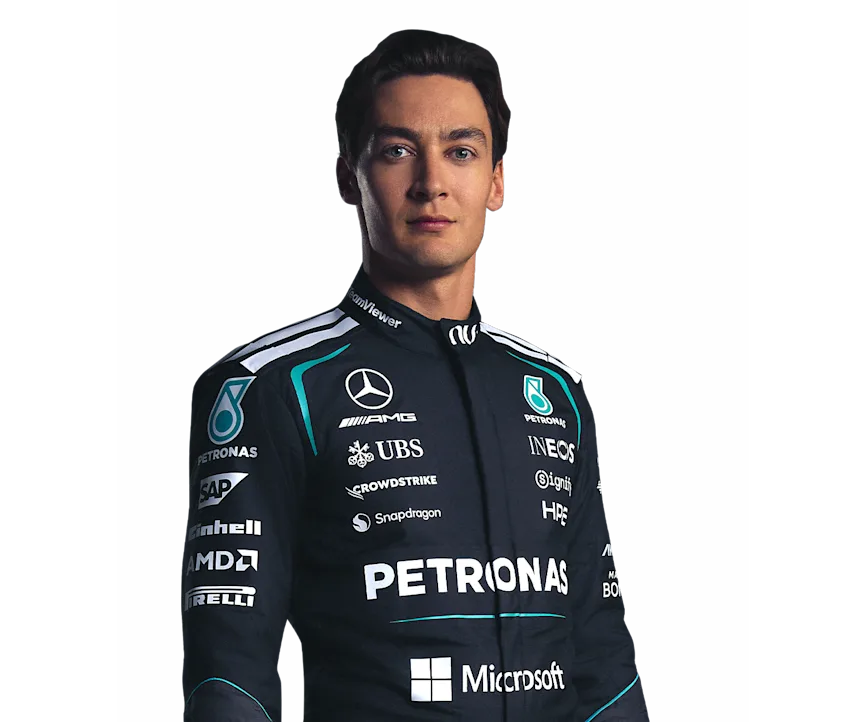
There is a lot to unpack in Wolff's position, and fairness demands we take it seriously. Mercedes built the benchmark power unit under the same rules as everyone else. It did the best homework, spent its budget wisely, and arrived at the new era with the fastest package. From Brackley, ADUO can look less like an insurance policy and more like a tax on excellence: build the best engine, and the sport will hand your rivals extra upgrades and extra millions until they catch you. Wolff's warning was the voice of a team that believes it earned its advantage and should be allowed to keep it.
But there is another way to read April 21, and the paddock read it too. This is also what gamesmanship looks like. By drawing his line publicly, Wolff was putting pressure on the FIA before the first assessment, framing any future Ferrari upgrade as suspect in advance. It was a preemptive strike, the kind of political move that costs nothing and might buy everything. In a month with no racing, politics is the racing, and Wolff has always been one of its fastest drivers.
April 27: Mekies says no
Six days later, on April 27, the pushback arrived from an unexpected direction. Laurent Mekies, the Red Bull team principal, publicly rejected Wolff's stance, siding against the Mercedes boss in a dispute that, on paper, had nothing to do with his team. Red Bull, in the first year of its own power unit project with Ford, was not the team anyone expected to qualify for ADUO relief. Mekies waded in anyway, and the paddock sat up straight.
Why would Red Bull take Ferrari's side in an engine fight? The most convincing answer is principle, or at least enlightened self-interest dressed as principle. Mekies' argument, in essence, was that the rules are the rules: ADUO was written into the regulations with everyone's agreement, the thresholds are objective, and a team cannot lobby the referee after the game has started just because it does not like where the numbers are pointing. If the FIA's index says a manufacturer qualifies, it qualifies. Complaining about it publicly is just noise.

There is also a longer game being played. Red Bull's Ford power unit project is young, and young projects have bad days. Mekies knows that one day it might be his team on the wrong side of the 2% line, hoping the system works as designed. Defending ADUO now is an investment in the day Red Bull might need it. That does not make his position cynical. It makes it strategic, which in Formula 1 is the highest compliment.
And let us not overlook the pure theater of it. A Mercedes team principal and a Red Bull team principal, publicly disagreeing about engine regulations, in a month with no racing, with the whole sport watching. This is the stuff the Netflix cameras dream about. April gave us no Grands Prix, but it gave us a genuine rivalry of ideas, and honestly, it was almost as entertaining.
Why This Matters More Than Any Upgrade Package
The team with the best engine today might not be allowed to keep it
Here is the sentence that should keep every Mercedes fan up at night and give every Ferrari fan a small, secret thrill: the team with the best engine today might not be allowed to keep its advantage. Not because anyone is cheating. Not because of some scandal. Because the rulebook says so, in black and white, with percentages and dollar figures attached.
Think about what that means for the championship. We have spent the first three races learning that Mercedes has the benchmark power unit, the car that sets the standard every Saturday. But ADUO means that advantage has an expiry date that Mercedes does not control. If Ferrari, or Honda, or Audi qualifies for relief after the Canadian Grand Prix assessment, they get extra upgrades and extra budget, and they get to spend both on the specific problem of catching Mercedes. The gap that looks so comfortable in April could look very different by the summer.
This is genuinely new territory for the sport. Formula 1 has always had dominant teams, and it has always relied on regulation changes to eventually bring them back to the pack. ADUO is the first mechanism that tries to do it mid-cycle, automatically, without waiting for the next rulebook. It is the sport saying: we will not let another 2014 happen. Whether that is wise or whether it punishes excellence is the debate Wolff and Mekies just had in public, and it is a debate the sport will be having for years.
For the girly romantics among us, and yes, that includes this column, there is something deliciously dramatic about it. The championship is no longer just about who builds the fastest car. It is about who builds the fastest car under a system designed to erode fast cars. It is racing with a handicapper, a love story with a chaperone, a fairy tale where the fairy godmother works for the FIA. The engineers hate it. The fans should love it. Uncertainty is the whole product.
What to watch next
The calendar now does the talking. Racing resumes in Miami on May 3, then the paddock heads to Canada, and within two weeks of the Canadian Grand Prix the FIA will publish its first ADUO assessment. That document, dry as it will surely be, is the most important piece of paper of the season so far. It will name names. It will say, in the language of performance indices, who is allowed extra help and who is not.
Watch for three things. First, whether Ferrari qualifies, because Antonelli's early-April suggestion will either look prophetic or embarrassing. Second, how Mercedes reacts, because Wolff has already shown he will fight this in public, and a formal ADUO grant to a rival will test that posture. Third, whether any surprise names appear on the list, because the index measures the ICE alone, and a team that looks fine on Sundays might be hiding an engine deficit behind a brilliant hybrid system or a superb chassis.
And if you want the bigger picture, here it is: ADUO is the story of the 2026 season hiding inside the engine covers. The wins and the podiums are the visible drama, but the invisible drama, the percentages and the upgrade slots and the millions in cost cap relief, might decide the championship just as surely. April taught us that the engine war is real, that the principals will fight it in the open, and that the FIA is holding a referee's whistle it has never blown before. When it finally blows, in the weeks after Canada, everything changes. See you in Miami.
FAQ
What does ADUO stand for?
ADUO stands for Additional Development and Upgrade Opportunities. It is the mechanism in the 2026 Formula 1 Technical Regulations that grants extra engine development and upgrade slots, plus cost cap relief, to power unit manufacturers whose engines fall far enough behind the benchmark.
How far behind does a manufacturer have to be to qualify?
The threshold is 2%. If the FIA's ICE Performance Index rates a manufacturer's internal combustion engine 2% or more behind the best-performing engine, ADUO is granted. Manufacturers 2% to 4% behind earn one extra homologation upgrade this season and one next season, plus up to 3 million dollars in cost cap relief. Those 4% or more behind earn two upgrades per season and larger budget relief, scaling up to 11 million dollars.
Is ADUO the same as Balance of Performance?
No. Balance of Performance, used in series like the World Endurance Championship, directly equalizes competing cars through weights, air restrictors and similar measures. ADUO gives qualifying manufacturers extra upgrade opportunities and budget headroom to find performance themselves. Nothing is artificially equalized; the engineering work is still theirs to do.
When will we know which manufacturers get ADUO relief?
The first monitoring period covers the season's first five races, Australia, China, Japan, Miami and Canada, adjusted after the Bahrain and Saudi Arabia cancellations. The FIA will communicate the results no later than two weeks after the Canadian Grand Prix, and eligible manufacturers can introduce upgrades as early as the next race.
A Note on Sources
The ADUO mechanism, its thresholds and the FIA assessment process were verified against the official Formula1.com explainer and the 2026 FIA Technical Regulations, with background from RacingNews365, Pitpass and The Race. The April statements from Kimi Antonelli, Toto Wolff and Laurent Mekies were reported across the Formula 1 press during the month.