
By Paulina Phan, Senior Editorial Contributor | July 15, 2026
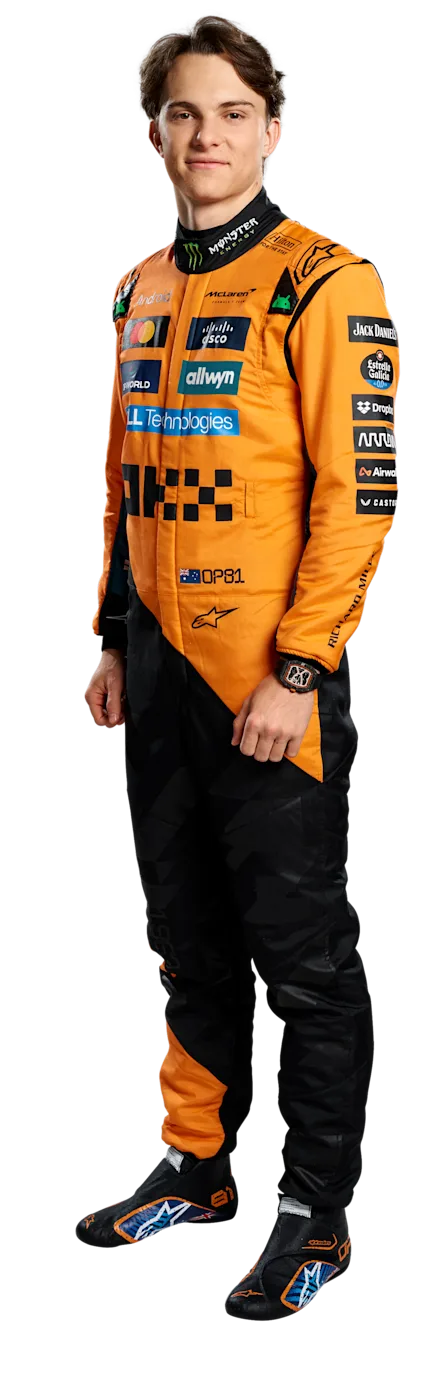
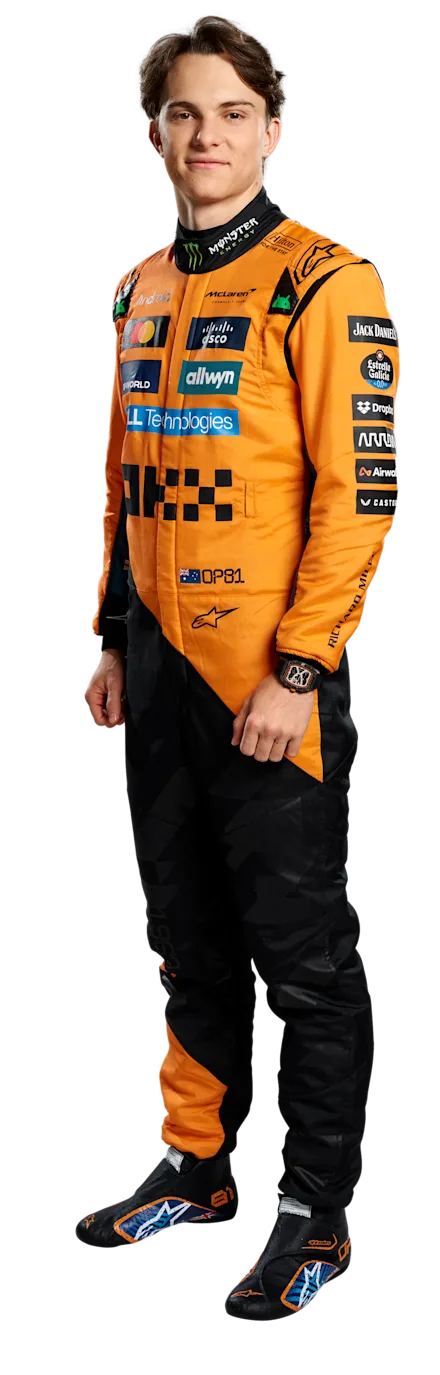
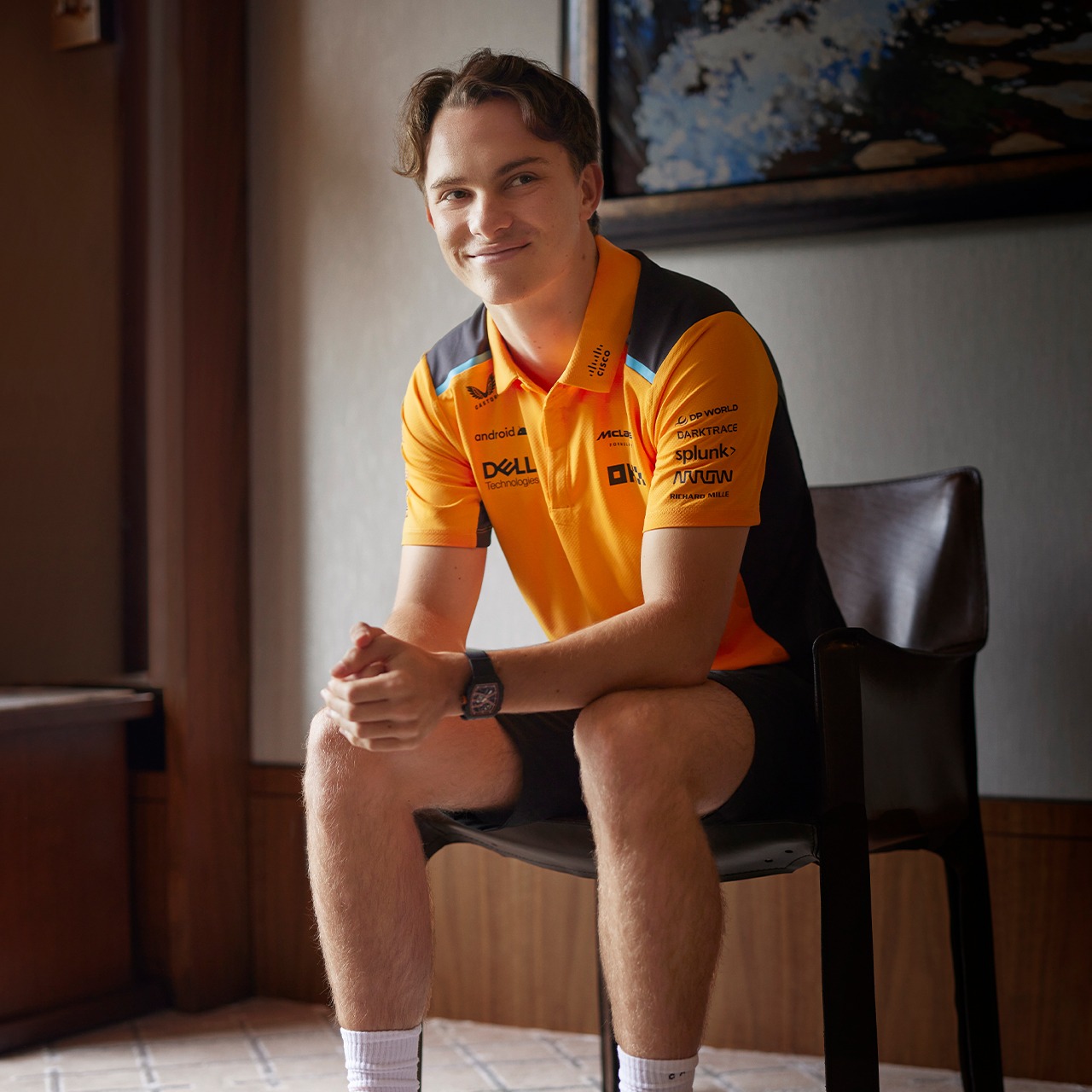
Every silly season has a name that makes team principals reach for their phones and journalists reach for their notebooks. This year, that name is Oscar Piastri. The quiet Australian with the metronomic qualifying record and the thousand-yard stare has become the most coveted asset in Formula 1, the driver every top team wants and the driver McLaren has absolutely no intention of letting go.
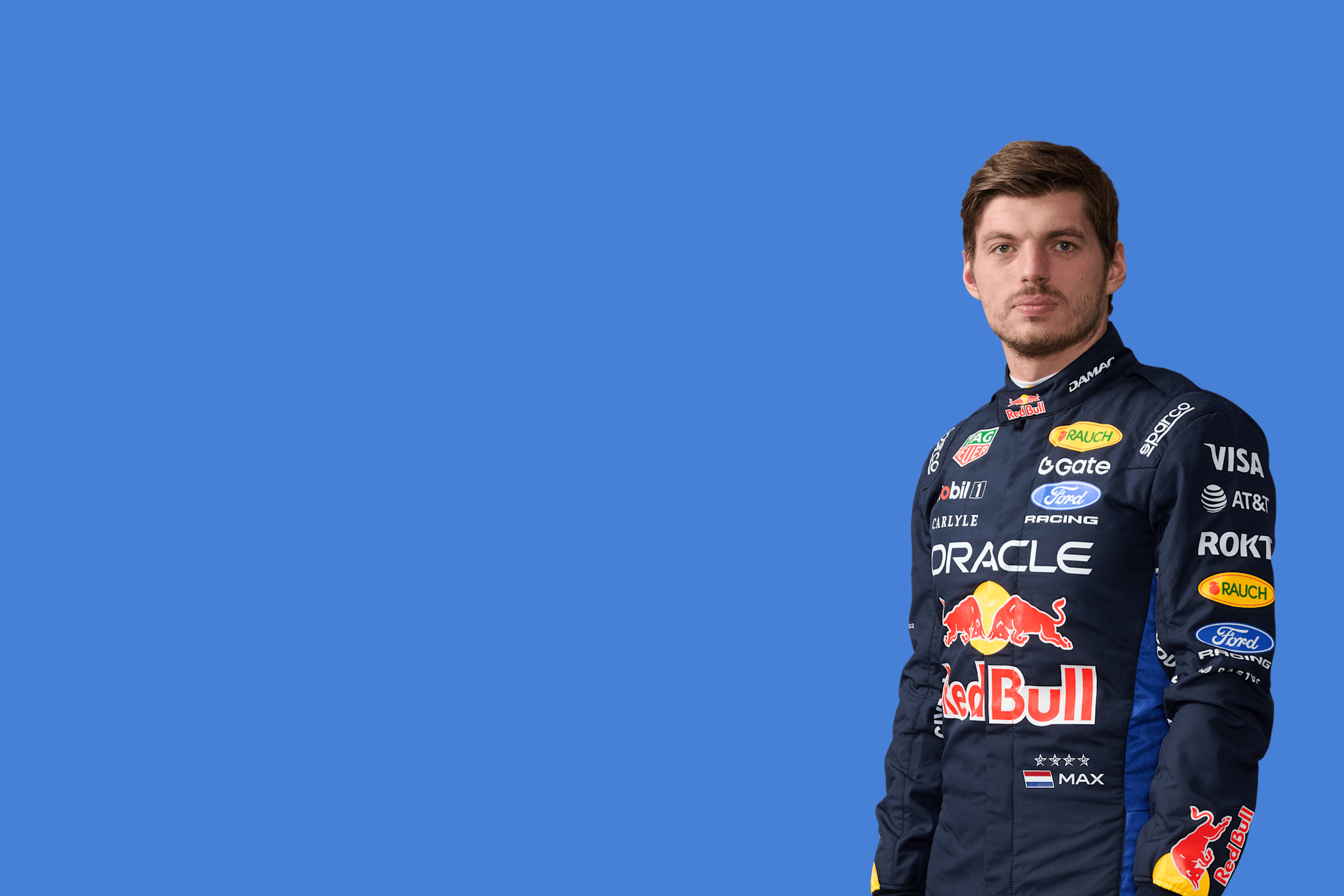
The rumor mill went into overdrive when reports emerged that Red Bull had targeted Piastri in a potential swap deal involving none other than Max Verstappen. Let that sink in for a moment. Red Bull, the team that has built its entire modern identity around Verstappen, reportedly explored a world in which the four-time champion went one way and the young Australian went the other. It sounds like fantasy football. In Formula 1, where contracts are supposed to be ironclad and loyalties run deeper than blood, it sounded almost unthinkable.
And yet, here we are. Because when a driver combines Piastri's speed, his consistency, and his age, the normal rules of the driver market start to bend. Both men, it should be said, are locked into long-term deals, with Piastri committed to McLaren until at least 2028. The word "reportedly" is doing a lot of heavy lifting in this story, and it should, because nothing has been confirmed and both camps have every reason to keep things quiet. But in a sport where smoke almost always means fire, the paddock is treating this one very seriously indeed.
So who is Oscar Piastri, really? Why does every top team want him? And why will McLaren fight to the death to keep him? Pull up a chair. This is the full file.
The Rumor That Refused to Die
Silly season rumors are like Belgian weather: they appear suddenly, change direction without warning, and are wrong as often as they are right. But the Piastri-to-Red-Bull story has shown unusual staying power, and that tells you something about how the paddock views the Australian.
The reported outline is delicious in its audacity. Red Bull, sensing an opportunity or perhaps sensing a vulnerability, targeted Piastri as part of a potential swap deal involving Verstappen. The mechanics of such a deal are mind-bending to contemplate: the sport's established superstar and its brightest young star trading places, two teams' futures rewritten in a single negotiation. It would be the biggest driver-market earthquake in a generation, the kind of move that gets its own documentary series.
Here is where reality taps the brakes. Both drivers are locked into long-term contracts. Piastri's McLaren deal runs until at least 2028, which means any team wanting him would need McLaren's blessing, a mountain of money, or both. Verstappen's Red Bull commitment is similarly long-term, the product of years of mutual investment between driver and team. In the modern era, contracts of this length are designed precisely to prevent the kind of chaos being rumored.
But contracts in Formula 1 have always been more like guidelines than guarantees. Performance clauses, exit clauses, handshake agreements made over dinner in Monaco; the sport's history is littered with deals that were supposed to be unbreakable until they suddenly were not. The "reportedly" framing matters here, and honest journalism requires it. Nobody has confirmed anything. But the fact that serious people in the paddock are discussing this rumor seriously tells you everything about Piastri's stock right now.
McLaren, for its part, has given no indication of entertaining any of this. Why would they? We will get to that. But first, to understand why Piastri is worth this kind of frenzy, you need to understand the season he has had.
Two Sundays That Never Happened
Imagine training your entire life for a moment, arriving at the pinnacle of your sport, and then watching the first two races of the season happen without you. Not because you were slow. Not because you were injured. Because the universe decided to play a particularly vicious joke.
That is how Oscar Piastri's 2026 began. In Australia, his home race, the race every Australian driver dreams of winning, Piastri crashed on the out-lap to the grid. The out-lap. Before the race had even started, before the lights had gone out, before a single racing lap had been completed, his Sunday was over. For a driver of Piastri's precision and composure, it was the kind of mistake that simply does not compute. He is not a crasher. He does not do drama. And yet there he was, a passenger in his own nightmare, in front of his home crowd.
If that was cruel, what happened in China was cosmically unfair. A McLaren electrical failure meant Piastri's car had to be wheeled off the grid before the start. Two races, two DNS entries, zero laps completed, through no fault of the driver whatsoever in the second case and through a freak error in the first. The statistics will forever show two blank Sundays at the start of 2026. The reality is that Piastri barely got to participate in his own season.
Here is what makes those two weekends so revealing, though. Most drivers would have unraveled. Two DNS results to open a season can destroy a driver's confidence and poison a driver's relationship with his team. The paddock watched closely to see how the quiet Australian would respond. Piastri did what Piastri always does. He said very little, worked very hard, and waited. The ice in his veins, the quality that first marked him as special in the junior categories, held firm. Speed can be found. Composure like that cannot be taught.
Suzuka: The Redemption
Every great sports story needs a turning point, and Piastri's came at Suzuka. In his first start of the season, after two weekends of nothing, the Australian drove to second place. Let the symmetry of that land: first start, first podium. P2 at one of the most demanding circuits on the calendar, against the best drivers in the world, after a month of sitting on the sidelines watching everyone else race.
It was also McLaren's first podium of the 2026 season, which tells you something about how difficult the team's year had been up to that point. The defending constructors' champions, the team of Lando Norris, the reigning world champion, had gone podiumless until their second driver finally got to start a race. That is not a sentence anyone expected to write in 2026, but it is the truth, and it underscores just how much McLaren needed Piastri back on the grid.
The drive itself was pure Piastri. No drama, no heroics, no lunges from three car lengths back. Just metronomic pace, perfect execution, and a podium that felt less like a surprise and more like the restoration of the natural order. Suzuka rewards precision above all else, and Piastri was flawless. It was the kind of performance that makes team principals reach for their phones.
Since Suzuka, the season has been a steady confirmation of what McLaren always believed. The podiums have kept within reach, the qualifying performances have remained elite, and the driver who missed the first two races has become one of the stories of the year. Which brings us to the number that explains everything.
The 90.24% Man
Forget wins and podiums for a moment. Forget the silly season noise. There is a single statistic that explains why Oscar Piastri is the most wanted man in Formula 1, and it is this: 74 Q3 appearances from 82 qualifying sessions. That is a 90.24% hit rate, the highest in the history of the sport.
Read it again. Ninety point two four percent. In a sport where qualifying is the purest measure of a driver's raw speed, where the difference between Q2 and Q3 is often a tenth of a second and a lifetime of reputation, Piastri has reached the final shootout more consistently than anyone who has ever done this. Not Senna. Not Schumacher. Not Hamilton. Piastri.
This is the statistic that team principals whisper about in hospitality units. Race pace can be managed and strategy can be optimized, but qualifying speed, the ability to deliver a perfect lap when it matters most, Saturday after Saturday, is the closest thing Formula 1 has to a pure measure of talent. And by that measure, Piastri is statistically the most reliable qualifier the sport has ever seen.
Why Every Top Team Wants Him
So now the picture is complete, and the frenzy makes sense. Every top team wants Oscar Piastri because he is the total package, and the total package almost never becomes available.
Start with the obvious: he is fast. The 90.24% Q3 record is not a fluke or a product of dominant machinery. It is a career-long pattern of delivering when it matters. Then add the race craft. Piastri is not just a Saturday specialist; his Sunday performances, Suzuka included, show a driver who can manage tires, manage gaps, and manage pressure. He does not make unforced errors. He does not get rattled. He does not beat himself.
Then consider the age curve. Piastri is young enough to build a team around for a decade, old enough to have proven himself at the highest level. In driver-market terms, that is the sweet spot, the narrow window where a driver is both a proven commodity and a long-term investment. Teams do not get many chances to sign a driver like this. When one might become available, even theoretically, the phones come out.
There is also the intangible factor, the thing that does not show up in statistics but shows up in championships. Piastri has the temperament of a champion. The two DNS disasters to open 2026 would have broken lesser drivers. He absorbed them, waited, and then stood on the podium at Suzuka in his first start as if nothing had happened. Team principals have sports psychologists and data analysts telling them exactly this, in presentations with charts.
And finally, there is the market dynamic. When Red Bull is reportedly interested, everyone becomes interested. The driver market in Formula 1 is like the property market: nothing raises a price like a bidding war, and nothing starts a bidding war like the most successful team of the modern era showing its hand.
Why McLaren Will Not Let Go
Here is the other side of the story, and it is just as compelling. McLaren will not let Oscar Piastri go, and they have every reason to fight for him with everything they have.
First, the contract. Piastri is locked in until at least 2028, which gives McLaren all the leverage. They do not need to sell. They do not want to sell. In the modern Formula 1 economy, where the cost cap has leveled the financial playing field, elite driver talent is the scarcest resource in the sport. Letting Piastri go would be like a football club selling its star striker with no replacement available. It simply does not make sporting sense.
Second, the partnership. Piastri and Lando Norris form one of the strongest driver pairings on the grid, a blend of the defending 2025 champion's experience and Piastri's metronomic consistency. Norris is the champion, the face of the team, the driver McLaren built its resurgence around. Piastri is the perfect complement: fast enough to push Norris, professional enough not to destabilize the team, consistent enough to bank the points that win constructors' championships. Breaking up that pairing would be an act of sporting self-harm.
Third, the investment. McLaren identified Piastri's talent years ago, fought to secure him, and have developed him into one of the sport's elite. The Suzuka podium, the qualifying record, the composure under pressure; all of it is the return on that investment. Teams do not spend years building a driver into a superstar and then hand him to a rival. That is not how this sport works.
And fourth, the message it would send. If McLaren let Piastri go to Red Bull, of all teams, it would be an admission that Woking is a stepping stone rather than a destination. For a team that has fought its way back to the top, that employs the defending world champion, that believes it can win championships for years to come, that message is unthinkable. McLaren sees itself as Piastri's team for the long term, not as a holding pen until someone bigger comes calling.
So the standoff is set. The paddock wants Piastri. McLaren is not selling. The contract runs to at least 2028. Something will have to give eventually, because in Formula 1 it always does, but do not expect it to give quietly or cheaply.
There is a particular glamour to being the driver everyone wants and no one can have. It turns every qualifying session into an audition and every contract story into a headline, and Piastri wears it all with the same unbothered calm he brings to a flying lap. Whatever the paddock decides his future holds, the present is already quite the statement.
Predicting the driver market is a fool's game, but that has never stopped anyone in the paddock from trying, so here is the honest assessment, clearly labeled as speculation.
The most likely outcome is the boring one: nothing happens. Piastri stays at McLaren, the contract runs its course, and the rumor mill moves on to its next obsession. This is what usually happens with drivers locked into long-term deals at top teams. The noise is real, the interest is real, but the contractual walls are real too, and they tend to hold.
But the second most likely outcome is the fascinating one. Contracts have exit clauses. Relationships evolve. If McLaren's competitiveness were to fade, or if Piastri were to decide that his championship window lies elsewhere, the conversations that are reportedly happening now could become the foundation of something real later. The 2028 horizon is not that far away in Formula 1 terms. Two seasons pass in the blink of an eye.
And there is a third possibility worth considering: that all of this noise actually strengthens Piastri's position at McLaren. Being wanted is leverage. Leverage gets you the number one treatment, the best engineers, the most favorable contract terms. Even if Piastri never has any intention of leaving, having Red Bull reportedly interested is the best negotiating position a driver can have. His management will know this. McLaren will know this. Everyone is playing chess.
One thing is certain: the quiet Australian will not be the one making noise about any of this. That is not his style. While the paddock obsesses over his future, Piastri will do what he always does. He will qualify in the top ten, because he almost always does. He will drive a clean, fast, drama-free race. And he will let his numbers do the talking, all the way to that extraordinary 90.24%.
The most wanted man in silly season is also the least likely to tell you he knows it. That, as much as anything, is why they all want him.
FAQ
Is Oscar Piastri really leaving McLaren for Red Bull?
Nothing has been confirmed. Reports have linked Piastri to a potential Red Bull swap deal involving Max Verstappen, but both drivers are locked into long-term contracts, with Piastri committed to McLaren until at least 2028. McLaren has given no indication of wanting to sell, so treat this as paddock speculation for now.
What happened to Piastri at the start of the 2026 season?
Piastri recorded DNS results at the first two races. In Australia, he crashed on the out-lap to the grid at his home race. In China, a McLaren electrical failure meant his car had to be wheeled off the grid before the start. He made his first start of the season at Suzuka.
What is Piastri's qualifying record?
Piastri has reached Q3 in 74 of 82 qualifying sessions, a 90.24% hit rate that is the highest in Formula 1 history. It is the statistic that best explains why every top team is interested in signing him.
How did Piastri perform at Suzuka in 2026?
In his first start of the season at Suzuka, Piastri finished second. It was McLaren's first podium of the 2026 campaign and a redemptive result after the DNS disasters of Australia and China.
A Note on Sources
Contract details, the reported Red Bull interest in a potential swap deal involving Max Verstappen, and Piastri's commitment to McLaren until at least 2028 are presented with "reportedly" framing, as nothing has been officially confirmed. Piastri's 2026 results, including the Australia and China DNS weekends and the Suzuka P2 finish as McLaren's first podium of the season, along with his career qualifying record of 74 Q3 appearances from 82 sessions (90.24%), were cross-checked against Formula1.com reporting. Championship context, including Lando Norris as the defending 2025 champion, reflects the official standings.