
By Paulina Phan, Senior Editorial Contributor | May 4, 2026
Five weeks is a long time to go without the sound of a Formula 1 grid. After the enforced break that split the 2026 season in two, the paddock rolled into the Miami International Autodrome on Sunday with the slightly giddy energy of a reunion, and then the racing did its very best to remind everyone what we had been missing. The Crypto.com Miami Grand Prix gave us a spun Red Bull on the opening lap, a flipped Alpine, two safety car periods' worth of drama compressed into one long opening sequence, a pit wall chess match between Mercedes and McLaren, and, when the Florida dust finally settled, the same young man standing on the top step for the third race in a row. Kimi Antonelli won the Miami Grand Prix. Lando Norris and Oscar Piastri made it a McLaren double podium behind him. And somewhere in between, Miami did what Miami always does: it turned a motor race into a three-day spectacle.
The Short Version
You are busy, so here is everything that mattered, fast.
The podium
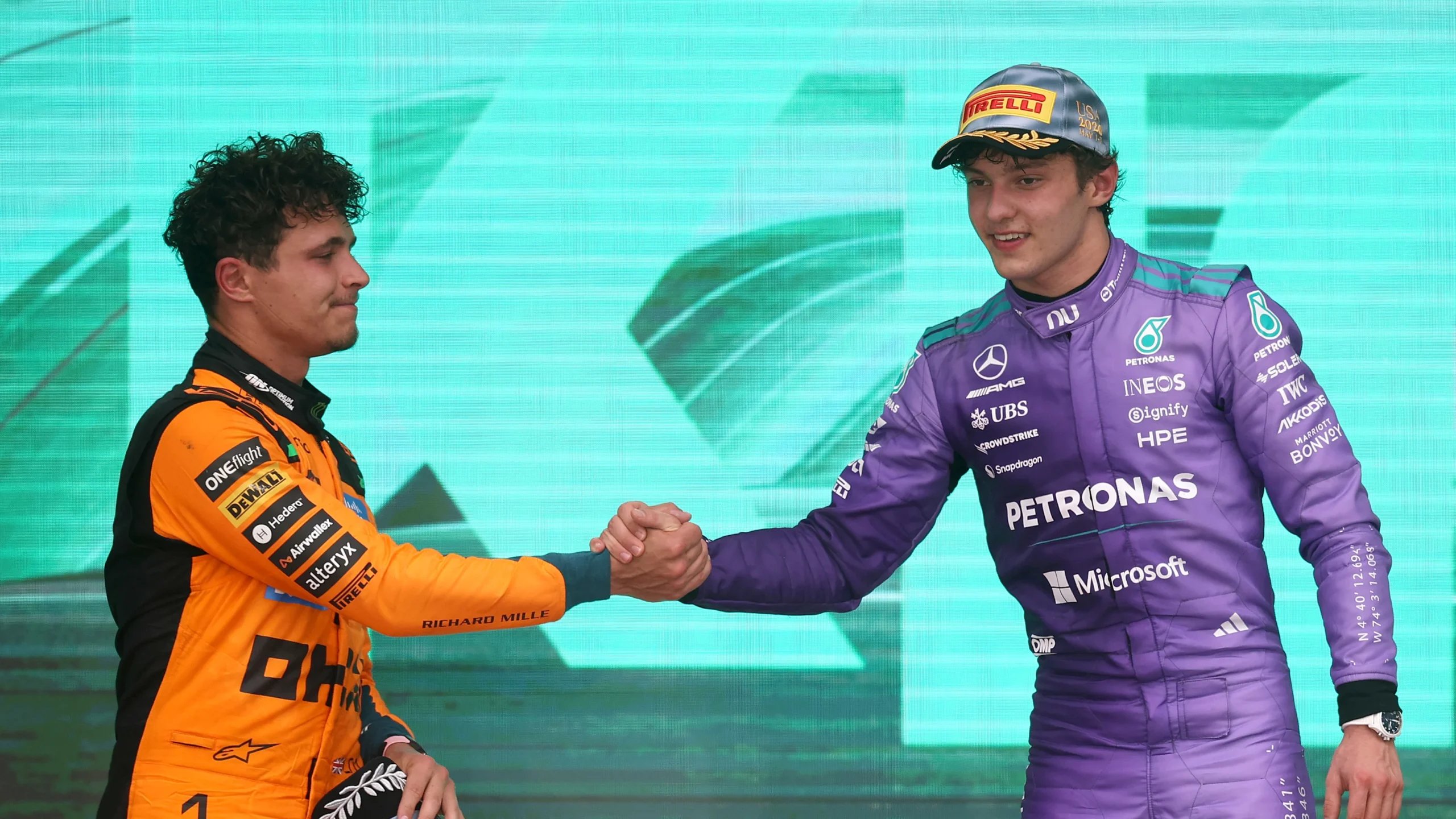
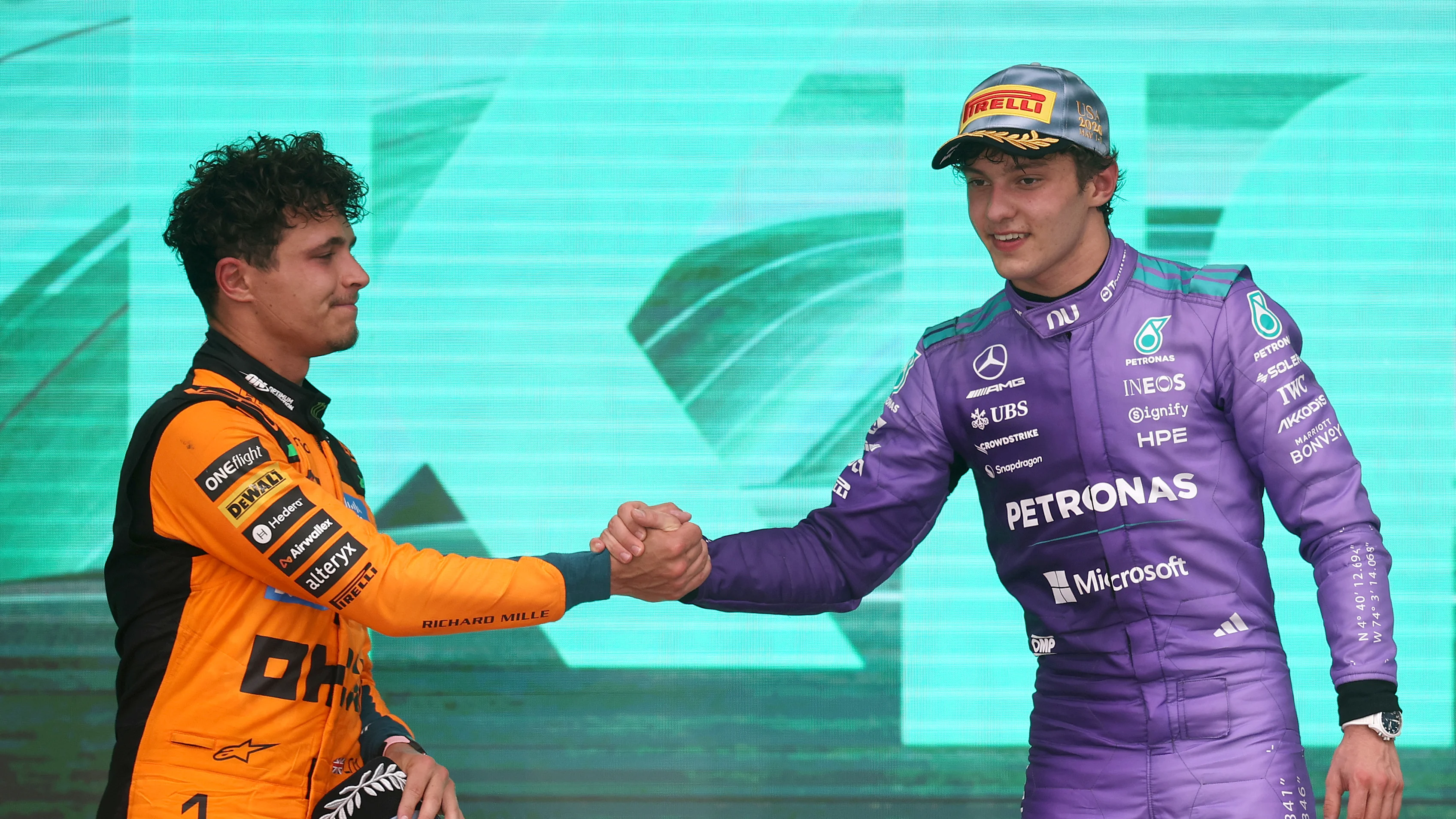
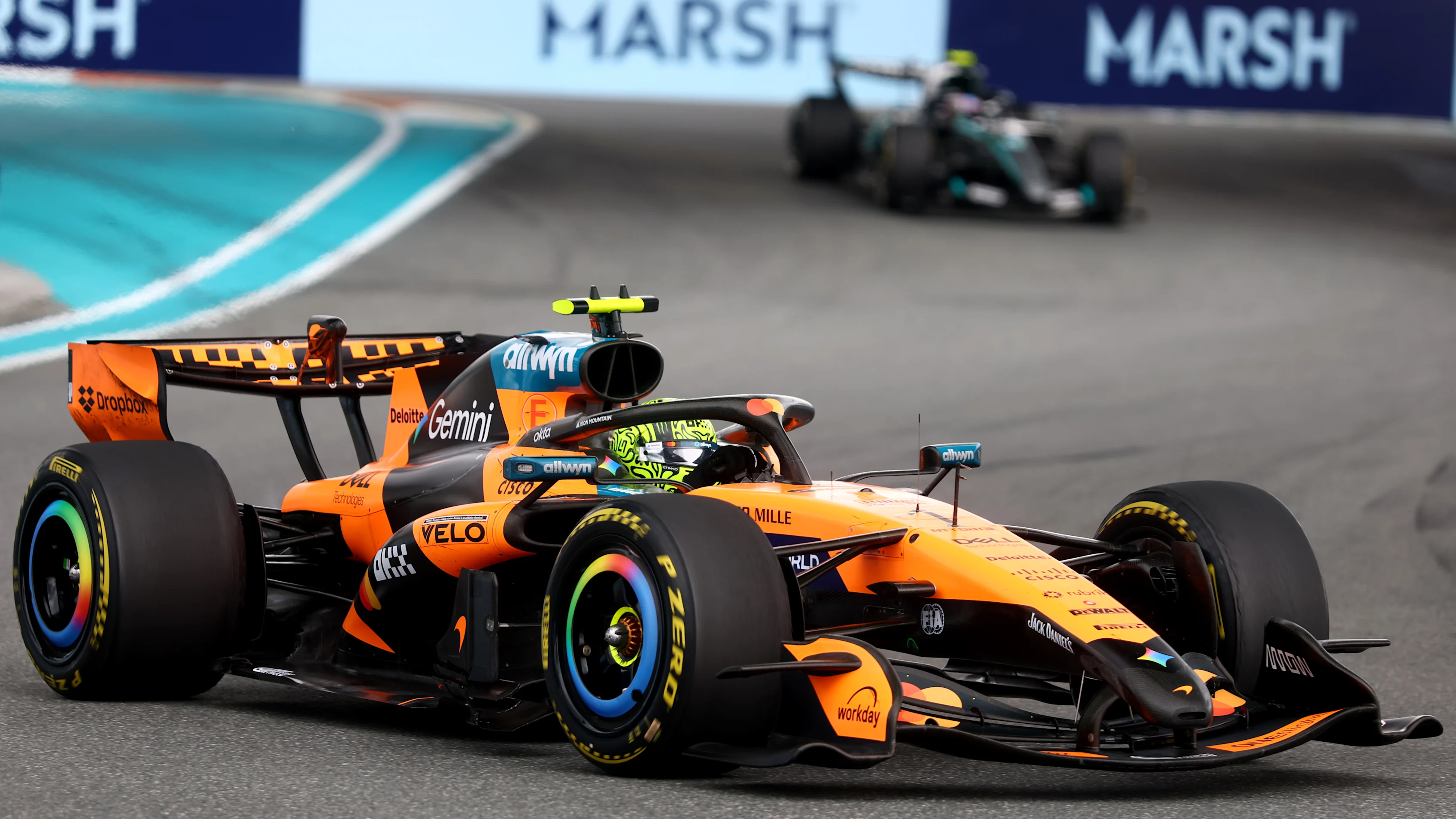
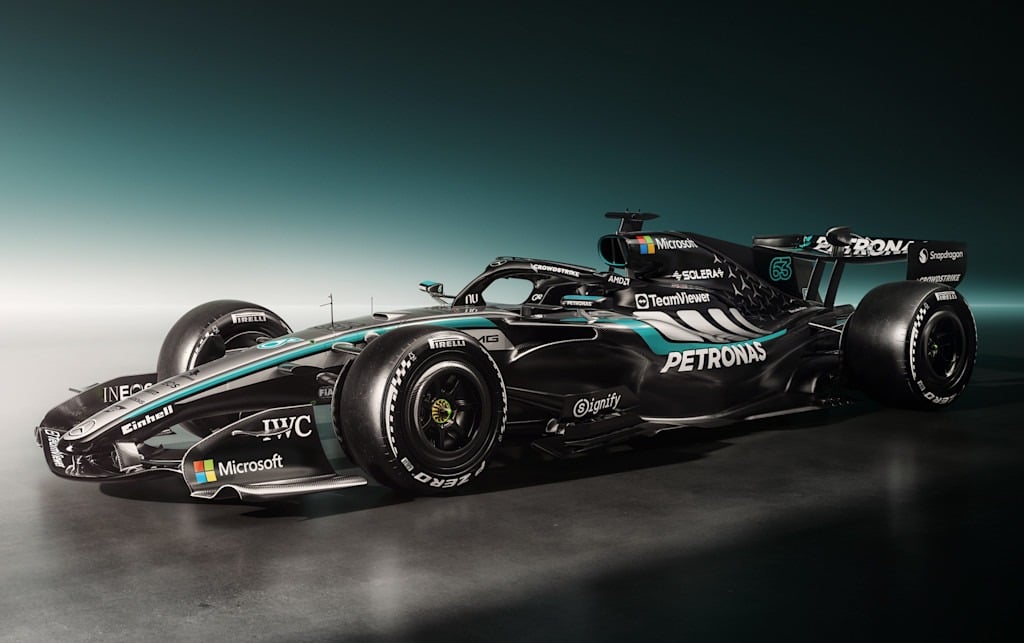
Kimi Antonelli won the Miami Grand Prix for Mercedes, his third consecutive victory of the 2026 season after China and Japan, and the third time in three races that he converted pole position into a win. He beat Lando Norris by 3.264 seconds, with the McLaren driver holding station in second after leading the middle stint of the race. Oscar Piastri finished third for McLaren, snatching the final podium place from Charles Leclerc in the chaotic final two laps. It was McLaren's first double podium of the year and the strongest statement yet from their upgraded package.
How it unfolded
Pole sitter Antonelli lost the lead at the start to a fast-launching Leclerc, while Max Verstappen locked up and spun a full 360 degrees in the opening corners. Lewis Hamilton and Franco Colapinto collided at Turn 11, scattering bodywork. Separate crashes for Isack Hadjar at the Turn 14 chicane and Pierre Gasly, whose Alpine flipped after contact with Liam Lawson, brought out the safety car. Norris seized the lead after the lap 12 restart, but Mercedes struck first in the pit window: Antonelli's lap 26 stop undercut Norris, who pitted a lap later and emerged just behind the Mercedes. Antonelli then nursed a possible gearbox issue and worn rear tires to the flag.
The standings picture
Antonelli extended his championship lead over Mercedes teammate George Russell to about 20 points. Russell finished fourth after a messy but combative afternoon. Verstappen recovered to fifth despite a post-race five-second penalty for crossing the pit exit line, a penalty that did not cost him the position. Leclerc's heartbreaking final two laps, a spin and a brush with the wall at Turn 3 followed by a 20-second post-race penalty for repeatedly cutting the track, dropped him from sixth to eighth. That promoted Hamilton to sixth and Colapinto to seventh for Alpine.
Saturday Belonged to Lando
Before Sunday's chaos, Saturday was the day the 2026 season changed shape. All year the story had been Mercedes dominance, three pole positions and three wins, all for the Silver Arrows. Miami was the first weekend where that story wobbled, and it was Lando Norris who did the wobbling.
Friday's sprint qualifying gave McLaren its first pole of any kind this season. Norris took the top slot, edging Antonelli, and it was the first non-Mercedes pole position of 2026. The McLaren upgrade package, the one the team had been promising would reset their season after a rough opening trio of races, worked exactly as advertised. You could see the shift in the paddock body language immediately. The Mercedes garage, so used to controlling a weekend, suddenly had company at the front.
The 19-lap sprint itself was Norris's from lights to flag. He made the clean start he needed, quickly settled into a rhythm, and controlled the pace in clean air while Piastri slotted into second behind him. The result was McLaren's first 1-2 finish of any kind in 2026, with Leclerc completing the podium for Ferrari. For the Woking team, it was the clearest possible evidence that the season was no longer under Mercedes control.
Antonelli, meanwhile, had a Saturday to forget and then to avenge. He made another poor start from near the front of the sprint grid, fell behind Piastri and Leclerc, and spent the 19 laps in the wrong battles. A five-second post-sprint penalty for track limit infringements dropped the Italian from fourth to sixth. But here is the thing about champions, even teenage ones: they respond. Hours later, Antonelli strapped back in for Grand Prix qualifying and produced a 1:27.798 to take pole position, his third consecutive Grand Prix pole. Verstappen joined him on the front row in the resurgent Red Bull. Hadjar, meanwhile, was disqualified from qualifying for a technical infringement, which meant he started Sunday's race from the pit lane.
Sunday Chaos: The Opening Laps
Sunday's race nearly did not happen at its scheduled time at all. With heavy thunderstorms forecast for later in the afternoon, the FIA confirmed ahead of the event that the start would be moved three hours earlier, to 1 p.m. local time. Rain had already fallen on Sunday morning, but the showers abated as the new start time approached, leaving the clouds lingering over Hard Rock Stadium and a 40 percent chance of rain during the race hanging over every strategy call. The expected plan was a one-stop in dry conditions, with everyone keeping one eye on the sky.
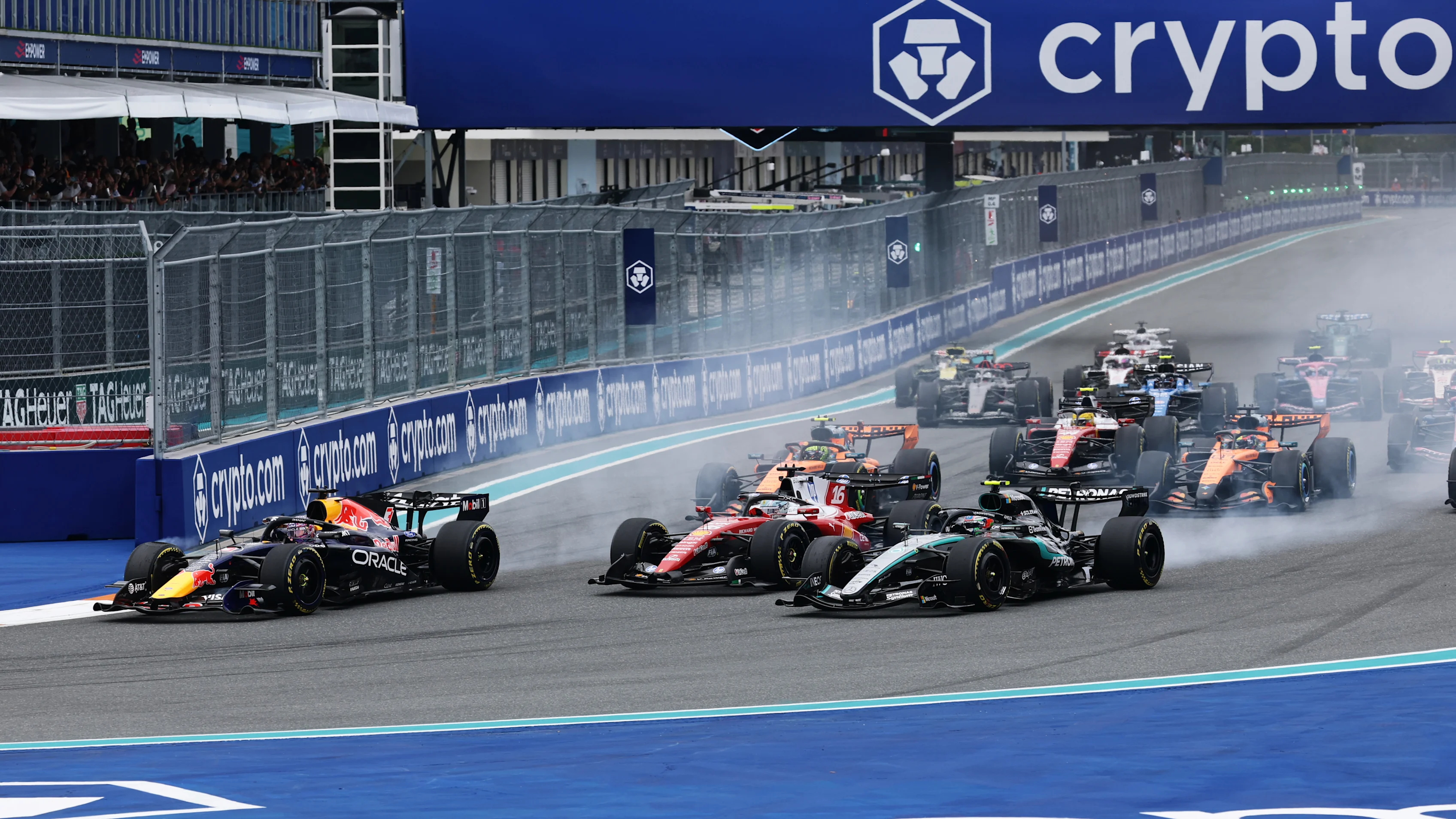
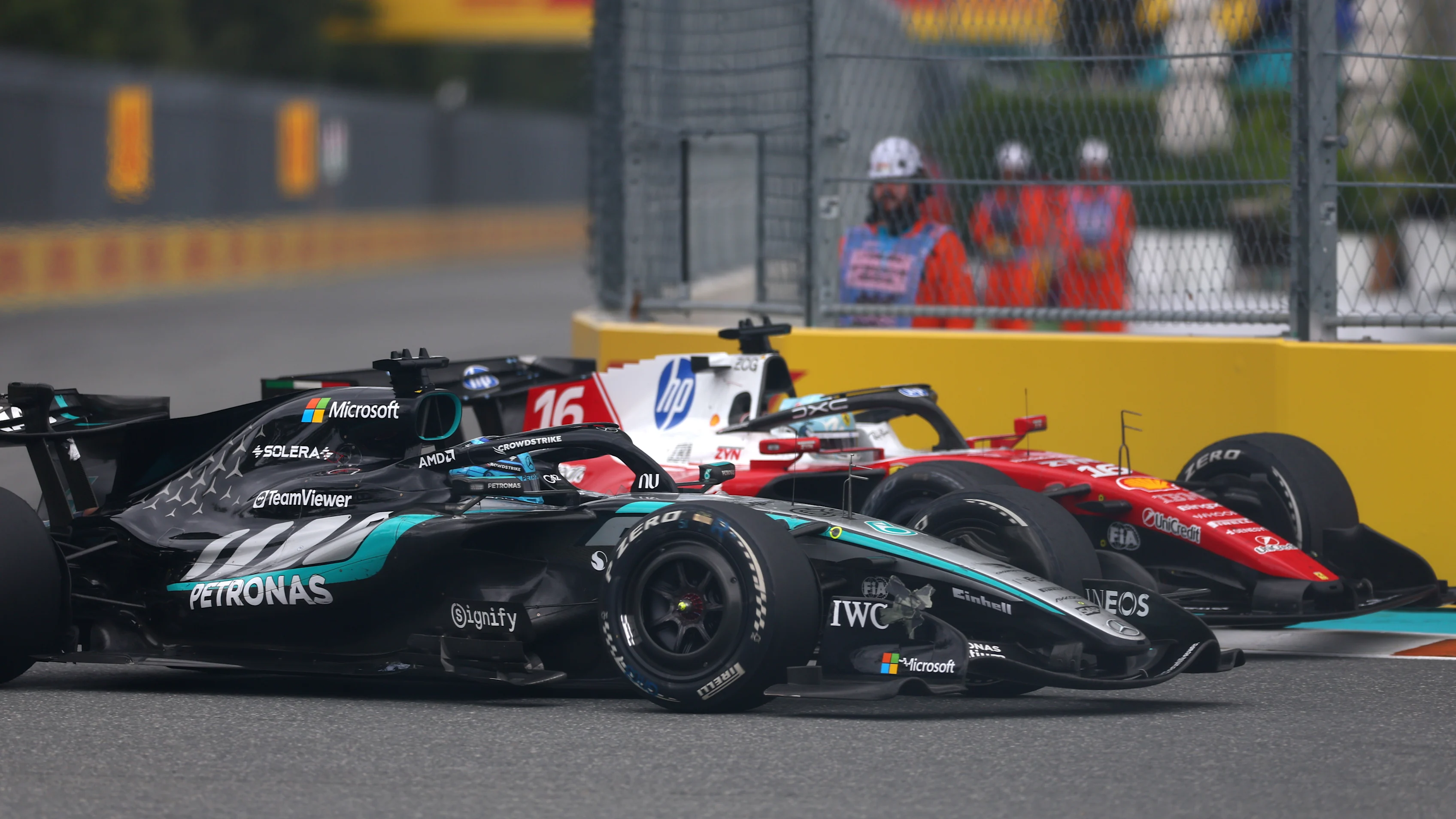
The start was everything the weather had promised the race would be: electric, messy, and slightly unhinged. Antonelli got away slowly, and Leclerc launched beautifully to sweep into the lead. Verstappen, trying to force his way through on the inside, locked up into the first corner and spun 360 degrees, narrowly avoiding collecting anyone else as the pack streamed around him. Further back, Hamilton and Colapinto made contact at Turn 11, and pieces of bodywork went flying. The stewards noted the incident, then decided no further action was necessary, a small mercy for both drivers.
By the end of the first lap the order had been thoroughly shuffled, with Leclerc leading from Antonelli and Norris while Verstappen tumbled down the field. On lap 3, Russell picked off Piastri for fourth. A lap later Antonelli surged past Leclerc into Turn 17 to take the lead, only for the Monegasque to find his way back in front of the Mercedes almost immediately. The lead was changing hands like a hot potato, and Norris was watching all of it from third, biding his time.
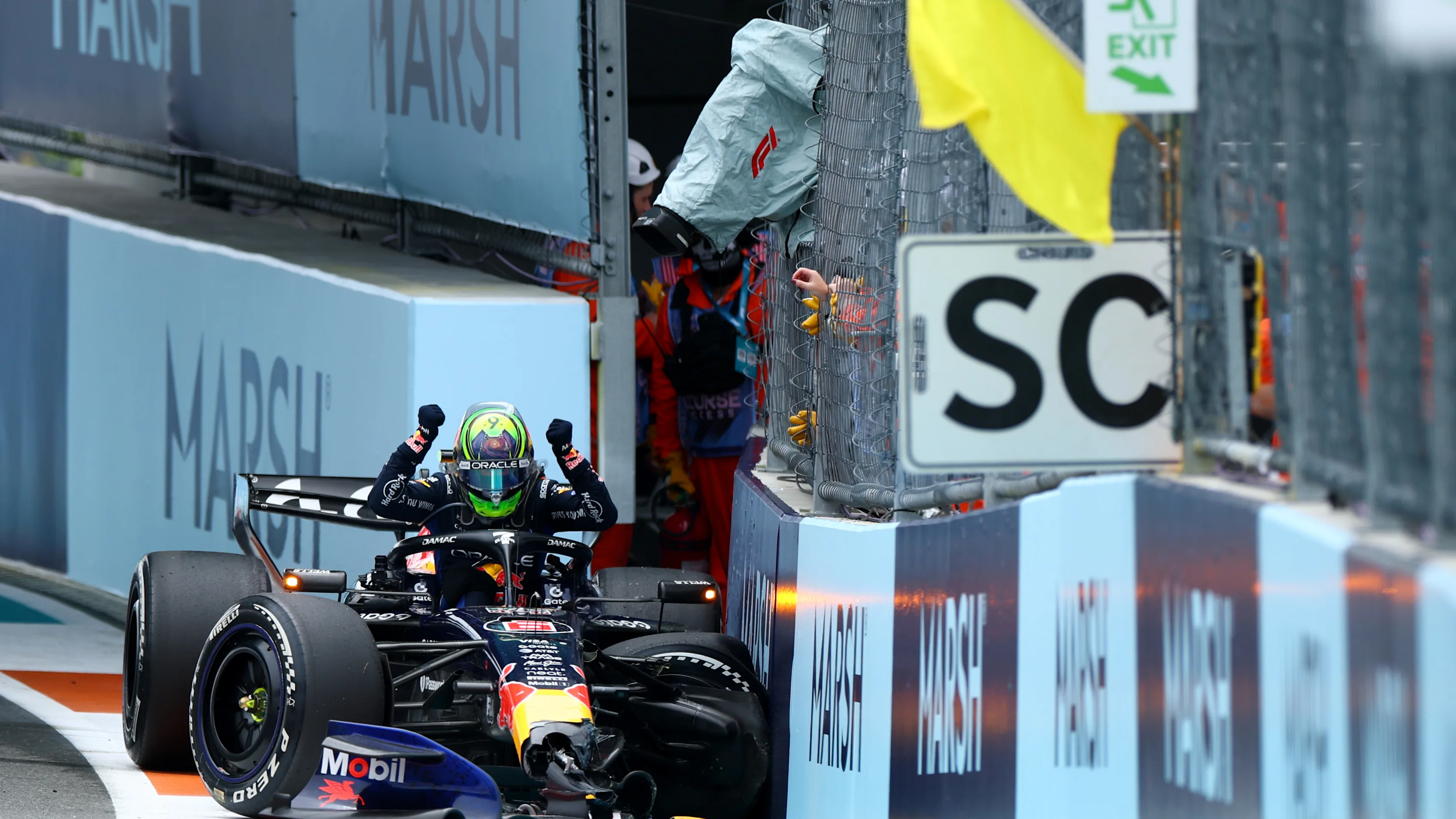
Then the afternoon turned genuinely dramatic. Just as Norris picked off Antonelli for second, Hadjar hit the wall at the Turn 14 chicane, the Frenchman visibly slamming his steering wheel in frustration as he climbed out of the wrecked Red Bull. Moments later, in a completely separate incident, Gasly went into the barriers, his Alpine flipping over after contact with Lawson's Racing Bulls. The safety car was deployed while the two stricken cars were cleared. Lawson headed into the pits to retire his car, and Hulkenberg brought his Audi into the garage to retire as well. Four drivers were out of the Grand Prix before it had truly begun.
The Restart and the Undercut
The safety car peeled in at the end of lap 11, and Leclerc executed a clean restart from the front. But his time at the head of the field was running out. Norris, who had been patient all afternoon, snatched the lead from the Ferrari, and suddenly the race had its defining shape: a McLaren out front, a Mercedes hunting it down, and a pit window approaching that would decide everything.
The strategic battle played out exactly the way the best races do, as a series of small decisions with enormous consequences. Verstappen had pitted during the safety car in a gamble that would eventually pay off handsomely. Russell was the first of the leaders to blink, stopping a few laps before the main window to trigger the pit sequence. Ferrari brought in Leclerc in response, but the race was already slipping away from the Monegasque.
Then came the move that won the Grand Prix. Antonelli pitted on lap 26. Norris responded one lap later, and the two emerged nearly side by side, but the Mercedes' warmer tires carried Antonelli to the net lead. The undercut had worked, the margin was small but decisive, and first and second were set. The only question was whether Antonelli's car would hold together.
It nearly did not. The Italian reported a possible gearbox issue, and as Norris closed in, Antonelli was also struggling with his rear tires. Norris, meanwhile, was managing a rear-wing issue of his own, which gave Antonelli a little breathing room, and the championship leader stretched the lead back out as the laps ticked down. When he crossed the line 3.264 seconds clear, the radio erupted. "What a race, man, woo! Oh my God!" Antonelli shouted, and then, a little more composed: "The team did a great strategy and we had a massive undercut."
Norris was gracious in defeat, and his assessment was brutally honest. "We just got undercut. We should have boxed first, but Kimi did a good job and hats off to him and Mercedes." Sometimes the simplest explanation is the right one. Mercedes saw the window, took it, and their driver made it stick.
Leclerc's Heartbreak
For most of Sunday afternoon, Charles Leclerc drove like a man who believed he could win. He led the opening laps, he traded the lead with Antonelli, and after the pit stops shook out he held a lonely fourth that became third as others faltered. With a few laps to go he was the only thing standing between McLaren and a double podium, and Piastri was all over his gearbox.
The end, when it came, was cruel. Piastri picked off Leclerc for third, and the Ferrari driver, pushing to respond, spun and brushed the wall at Turn 3. He kept going, but the car was wounded. Russell swept past for fourth, and Verstappen grabbed fifth from Leclerc at the very line. Afterward Leclerc admitted the car had not been functioning properly in right-hand corners, which explained the strange, ragged final laps.
Then the stewards finished the job the wall had started. Leclerc was handed a 20-second post-race penalty for repeatedly leaving the track, and he tumbled from sixth to eighth. Hamilton inherited sixth, Colapinto moved up to seventh, and a day that had promised so much for Ferrari ended with damage limitation. For Hamilton, sixth place after his first-lap contact with Colapinto was a respectable salvage job. For Colapinto, seventh was another mature points finish in a quietly impressive season for the young Argentine.
There was a historical footnote worth savoring amid the wreckage. Antonelli's win made him the first driver in Formula 1 history to convert his first three career pole positions into victories. Three poles, three wins, all at the start of his second season. The record books will remember the numbers. Those of us who watched will remember a teenager holding off a world champion with a sick gearbox and cooked rear tires, in the Florida heat, after five weeks away from racing.
For Alex
There was a deeper current running beneath the Miami weekend, one that had nothing to do with points or penalties. Earlier that week, the motorsport world had lost Alex Zanardi, the former Formula 1 driver and two-time CART champion who died at 59, a man whose career left a mark across global motorsport and Paralympic sport alike. The paddock felt it. McLaren dedicated their breakthrough sprint 1-2 to him, with team principal Andrea Stella telling Sky Sports: "A one-two, but before we talk about that allow me please to remember and pay tribute to Alex Zanardi. A very special man. Driver. Athlete. A real symbol and example for what it means to love life. An inspiration for everyone. So this victory is for him."
And then, on Sunday, the Italian teenager did the same. Antonelli dedicated his Miami Grand Prix victory to Zanardi, his fellow Italian and fellow Bolognese, saying simply: "I wanted to win for him." He had carried an inscription for Zanardi on his Mercedes all weekend. There is something quietly moving about the generational symmetry of it: a 19-year-old at the very start of his story, honoring a man whose story taught the sport what resilience looks like. Three poles, three wins, and a tribute. However the season is remembered, Miami will always be the weekend the kid from Bologna won one for Alex.
What Miami Tells Us About 2026
So what did we actually learn in Miami, beyond the fact that Kimi Antonelli does not know how to lose a Grand Prix he starts from pole? Quite a lot, actually.
First, the competitive order has genuinely shifted. Russell said it plainly after the race: "Pretty surprising how big a jump McLaren and Ferrari made." That is not the kind of thing a Mercedes driver says lightly, and the evidence backed him up. McLaren took the weekend's first pole, won the sprint 1-2, and put both cars on the Grand Prix podium. Ferrari had the pace to lead and the misfortune to throw it away. Mercedes still won the race that mattered, which tells you everything about the difference between having the fastest car and having the best team, but the Silver Arrows will not be enjoying weekends like this.
Second, the championship is tightening at exactly the right time. Antonelli's lead over Russell is about 20 points, which sounds comfortable until you remember that a single retirement can erase it. Russell's messy fourth place, earned the hard way, kept him within striking distance. Behind them, Norris's 18 points and Piastri's 15 have dragged McLaren back into the conversation, and Verstappen's recovery drive to fifth, penalty and all, was a reminder that the Red Bull is coming alive.
Third, and this is the fun part, the season now heads to Canada for the year's third sprint weekend, and nobody has any idea what to expect. If Miami proved anything, it is that the 2026 regulations have produced a field where upgrades can genuinely reshuffle the deck from one race to the next. The five-week break is over. The restart delivered. And the kid from Bologna is still the one everyone has to beat.
Next Stop: Montreal
Formula 1 heads north to the Canadian Grand Prix on May 23, and for the first time ever, Montreal hosts a sprint weekend. The Circuit Gilles Villeneuve has a habit of producing chaos of its own, and with McLaren's upgrades working, Ferrari's pace real but fragile, and Mercedes still the team to beat, the championship fight is as open as it has been all year. Antonelli will arrive as the favorite. Everyone else will arrive believing. See you in Canada.
FAQ
When and where was the 2026 Miami Grand Prix?
The Formula 1 Crypto.com Miami Grand Prix took place on Sunday, May 3, 2026, at the Miami International Autodrome in Miami Gardens, Florida. It was the fourth round of the 2026 season and the first race after an enforced five-week break.
Why did the Miami GP start earlier than planned?
The race start was moved three hours earlier, to 1 p.m. local time, because heavy thunderstorms were forecast for later in the afternoon. Morning rain had already fallen, and while the showers abated before the new start time, teams faced the threat of rain returning during the 57-lap race.
Who won the Miami sprint race?
Lando Norris won the 19-lap sprint on Saturday, leading teammate Oscar Piastri home for McLaren's first 1-2 finish of any kind in 2026. Charles Leclerc finished third for Ferrari. Kimi Antonelli crossed the line fourth but was dropped to sixth by a five-second post-sprint penalty for track limit infringements.
What happened to Charles Leclerc at the end of the Grand Prix?
Leclerc was running third when Oscar Piastri passed him in the final two laps. He then spun and brushed the wall at Turn 3, admitting afterward the car was not functioning properly in right-hand corners. He finished sixth on the road but was given a 20-second post-race penalty, converted from a drive-through, for repeatedly cutting the track on the final lap, which dropped him to eighth.
What happened to Alex Zanardi?
The article mentions the passing of former Formula 1 driver and two-time CART champion Alex Zanardi at age 59 in the week leading up to the Miami Grand Prix. Both McLaren and Kimi Antonelli dedicated their Miami victories to him.
A Note on Sources
Race results, lap-by-lap events, qualifying times, penalties, and driver quotes in this recap were verified against the official Formula1.com race report and the FIA's official classification documents, and cross-checked with coverage from Reuters, BBC Sport, Sky Sports, Autosport, and The Race.