
By Paulina Phan, Senior Editorial Contributor | April 29, 2026
Formula 1 may have been on a break, but the people of Formula 1 were not. While the cars sat quiet between Japan and Miami, the sport's extended family was out living loudly: a four-time world champion running 26.2 miles through London, a Schumacher speaking candidly about the hardest chapter of her life, and a 15-year-old with the most famous surname in Finnish motorsport climbing into a single-seater for the first time. Add in a calendar shake-up that brings back Turkey, demotes Melbourne, and nearly sells out Madrid, and honestly, the off weeks had more plot twists than some actual race weekends. Here is absolutely everything that happened beyond the track this month.
Seb Runs Sub-Three
Let us start with the most quietly astonishing athletic feat of the month. Sebastian Vettel, retired four-time world champion, ran the London Marathon in 2 hours, 59 minutes, and 8 seconds. On his debut. At 38 years old.
The goal
Vettel did not show up in London to jog it in for the cameras. He showed up with a target that separates serious amateur runners from everyone else: breaking three hours. In marathon running, sub-three is the magic barrier, a time that puts you in roughly the top few percent of finishers worldwide. It requires averaging about 4 minutes and 14 seconds per kilometer for 42.195 kilometers, without fading, without cramping, without the wheels coming off in the lonely stretch past mile 20. Vettel told the BBC he had set himself the goal deliberately: "I set myself an ambitious goal, which I managed to achieve. I wanted to be just below three hours, which I did, so I'm very happy with that."
Think about what that means for a man who has not raced a car competitively in years. The fitness did not evaporate when he left the cockpit. If anything, it found a new outlet. "I have always wanted to do a marathon," he said. "I've obviously always kept fit and done a lot of running, cycling, so I thought it's about time."
The run
By all accounts, it was a beautifully judged debut. Vettel ran metronomic splits, the kind of even pacing that echoed his grand prix days, when he would tick off qualifying-style laps with eerie consistency. He crossed the line in 2:59:08, exactly 52 seconds under his target, and sounded genuinely moved at the finish. "It felt very long, but it was my first time, so I didn't know what to expect," he told BBC Sport. "But it's been amazing how many people there were next to the course, and how happy everyone is, so it's a really great experience."
He was not alone out there, either. Vettel ran much of the race alongside F1 presenter Tom Clarkson, who finished in 3:58:51. The two had trained and planned together, and there is something lovely about the image: a four-time world champion and a broadcaster, suffering side by side through the streets of London like any other pair of running buddies. Vettel even had a favorite moment picked out: seeing Tower Bridge for the second time and realizing how far he still had to go, carried through by a crowd he described as incredibly supportive.
The cause
The run was about more than a personal best. Vettel and Clarkson were raising money for two charities close to the sport's heart: the Grand Prix Trust, founded by Sir Jackie Stewart to support F1's trackside and factory personnel in times of hardship, and the Brain and Spine Foundation, established by the legendary Professor Sid Watkins, the man who transformed medical care in Formula 1. Their initial target was 5,000 pounds. They smashed it, with the total climbing toward 9,000.
That choice of charities says everything about Vettel. He could have run for any cause on earth. He ran for the people who work in the shadows of the sport he loves: the mechanics, the marshals, the factory staff, and the medical legacy of the professor who saved so many lives. "Now that I've experienced it, I can only recommend that everyone try it themselves," he said at the finish, still buzzing. Classic Seb: turns a personal challenge into a group invitation.
Gina-Maria Opens Up
If Vettel's story was about physical endurance, Gina-Maria Schumacher's was about the emotional kind. In a rare new documentary, Michael Schumacher's daughter has spoken candidly about coping after her father's 2013 skiing accident, offering an unusually personal glimpse into the most private family in sports.
Horsepower
The documentary is called "Horsepower: The World of Gina Schumacher," produced by German broadcaster ZDF as part of its Sportschau series. It follows the 29-year-old's life as one of the world's leading Western riders, with behind-the-scenes access to the family's ranches in Texas and Switzerland. It became available for streaming on April 17 in the ZDF Mediathek, with a television broadcast scheduled for May 17. For a family that has guarded its privacy with legendary discipline for over a decade, the very existence of this film is news.
What she said
According to an exclusive preview by the newspaper Bild, Gina-Maria describes how she threw herself into her riding in the aftermath of the accident. "After Dad's accident, I really threw myself into it because I had to do something," she said. "The horses have always been important. But since then, they've truly become… I mean, I couldn't do without horses. They helped me get through it all."
Read that quote twice. There is no polish on it, no media training smoothing the edges. It is a daughter describing, plainly, the thing that kept her upright when her world collapsed. She was a teenager when the accident happened. The horses were already her passion. Afterward, they became her anchor. "I'm grateful that I can do this," she added. "My parents made it possible. That's why it's always been important to me to work hard in this area, so that I can do it as well as I possibly can."
The family
Her mother Corinna appears in the documentary too, and shares a striking memory: a prediction Michael once made about their daughter. "Michael once said to me, when Gina was 10: 'Gina will be much better than you,'" Corinna recalled. His reasoning, she said, was that Gina is more selfish in the way athletes have to be. "If you're an athlete, you have to be selfish in a certain way. And that's great. Otherwise, you won't amount to anything." Corinna added, with the wisdom of hindsight: "Today I think he was so right."
It is a remarkable thing to hear, a seven-time world champion's scouting report on his own child, delivered years before anyone else saw it. And he was right. Gina-Maria has become one of the elite riders in Western reining, a discipline that demands exactly the blend of feel, timing, and competitive selfishness her father described. The documentary is, in its way, a story about inheritance: not of fame, but of drive.
The Next Hakkinen
From one famous surname to another. Ella Hakkinen, the 15-year-old daughter of two-time world champion Mika Hakkinen, has made her single-seater debut, and the next chapter of one of motorsport's great family stories is officially underway.
The announcement
Ella will contest the 2026 Formula 4 Central European Zone Championship with Jenzer Motorsport, the Swiss outfit that has dominated the series in recent seasons. She is also the youngest member of the McLaren Driver Development Programme, which she joined in November 2025, completing a very neat circle: her father won both of his world championships with McLaren, in 1998 and 1999.
"I'm proud to start a new chapter with such an experienced and competitive team such as Jenzer Motorsport, along with the support from the McLaren Driver Development Programme," Ella said. "This is a big step in my journey, and I'm motivated more than ever to keep progressing." She arrives with genuine credentials: wins and podiums in karting across Europe, and a reputation as a fierce competitor. This is not a marketing exercise. It is a racing driver starting the climb.
There is a lovely detail in her story, too. Ella races under a Czech licence, with the Czech flag on her car, because her mother hails from Pilsen in the west of the Czech Republic. So the daughter of a Finnish legend is, in racing terms, Czech. Motorsport families are never simple, and that is part of the charm.
The debut weekend
Her first weekend, at the Red Bull Ring in Austria in mid-April, was exactly what a debut should be: promising without being fairy-tale. Thrown into a 27-car grid, Ella qualified a superb sixth for her very first car race, finished ninth on the road before a time penalty dropped her to 11th, then backed it up with a top-10 finish in race two and a 15th in race three. She also stood on the podium for the women's trophy alongside Mathilda Paatz and Jade Jacquet.
No wins, no miracles, just a 15-year-old learning fast in deep water. That is precisely the right start. The drivers who last are the ones who treat debut weekends as data collection, and everything about Ella's approach, and her team's, suggests she understands that.
The name
Of course, the surname brings its own weather system. Mika himself has been characteristically direct about his daughter's potential, telling the Finnish newspaper Ilta-Sanomat: "Ella is an extremely talented racing driver. I say this not only as a father, but based on my observations as a former top driver. Her motivation is impressive. She desperately wants to become a racing driver." He went further, predicting that in a few years, Formula 1 will see a female driver again, whether it is Ella or someone else, noting that the new generation of F1 fans is around 40 percent female and the sport needs to reflect that.
He is right about the direction of travel, and the last woman to compete in a Formula 1 race remains Italy's Lella Lombardi, back in 1976. Fifty years is a long time to wait. Ella Hakkinen is 15, fast, and backed by McLaren. The road from F4 CEZ to Formula 1 is brutally long, and most who start it do not finish it. But every journey up the ladder starts with a first weekend, and hers just happened, in front of a crowd that knew exactly whose daughter she is.
The Calendar Shuffles
Beyond the personal stories, April brought real news about where Formula 1 is headed. The calendar is the sport's skeleton, and three separate developments this month showed it shifting.
Turkey returns
The headline act: the Turkish Grand Prix will rejoin the calendar from 2027, with the first of five contracted races scheduled for October at Istanbul Park. The circuit hosted seven grands prix between 2005 and 2011, plus two pandemic-era races in 2020 and 2021, and it has been genuinely missed. Turn 8, the fearsome quadruple-apex left-hander, is one of the great corners in the sport's history, a place that sorts the brave from the merely quick.
Turkey's return is part of a 2027 calendar that also welcomes back Portugal, a sign that Formula 1's expansion era is making room for beloved classics alongside the new markets. Twenty-four races, more sprints, and two old favorites back in the fold. The traditionalists are smiling.
Melbourne steps back
But every calendar gives as well as takes. Melbourne looks set to lose its cherished season-opener slot from 2027, with Bahrain tipped to open the season on March 14 with a sprint weekend, followed by Saudi Arabia, and Australia dropping to round three in early April, also as a sprint.
There is logic to it: Ramadan concludes earlier in 2027, freeing Bahrain to take the opening slot, and Sakhir hosts pre-season testing anyway, making it the natural place to start. But it will sting in Australia, where the season opener has been a point of national sporting pride. Albert Park held the opening race in all but two years from 1995 to 2019, lost it during the pandemic years, and only recently reclaimed it. To lose it again, just as the home crowd has a genuine championship contender to cheer, feels like a cruel bit of timing. Melbourne will still get its race, and a sprint at that. It just will not get the "lights out for the season" moment. Some traditions are harder to give up than others.
Madrid sells out
And then there is Madrid, the story that keeps getting better. The Spanish capital's new Grand Prix at the IFEMA-based Madring circuit, debuting this September, is now 97 percent sold out, despite having the most expensive tickets in Europe, averaging around 600 euros.
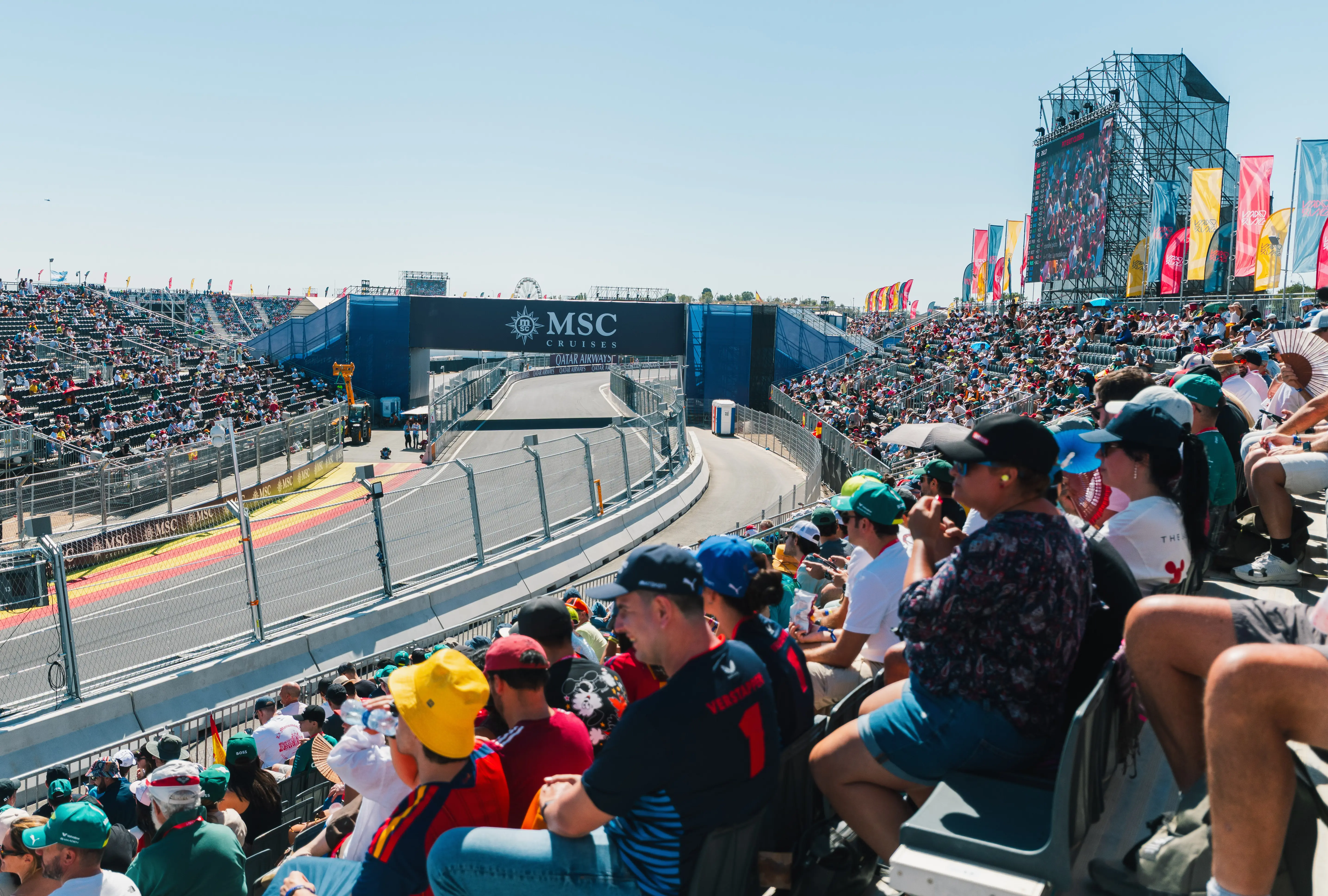
Let that number sit for a moment. Six hundred euros on average, the priciest grand prix tickets on the continent, and more than 90,000 already gone. Circuit boss Jose Vicente de los Mozos insists preparations are on track, dismissing rumors of delays, and he offered a telling explanation for the demand: "Those who used to go to the Middle East now want to come to Madrid." With regional conflict keeping some fans away from Middle Eastern races, Madrid has become the alternative, and the Spanish capital is seizing the moment.
It is also, not incidentally, Fernando Alonso's home race in all but name, and you can feel the national excitement building. Madrid has not hosted a Grand Prix in over four decades. September cannot come soon enough.
The Silly Season Starts Early
Beyond the feel-good stories, April quietly delivered the first real tremors of the driver market, and they came from the most dramatic corner of the paddock.
The engineer who is leaving
On April 9, Red Bull and McLaren confirmed that GianPiero Lambiase, Max Verstappen's long-time race engineer and the voice of a thousand calm radio calls, will leave Red Bull no later than 2028 to become McLaren's Chief Racing Officer. Helmut Marko called it a "significant loss." Verstappen gave his blessing. In a sport where driver-engineer pairings are marriages, this is a divorce with consequences, and McLaren just landed one of the paddock's sharpest minds. Watch what it does to the atmosphere at Red Bull, because these moves always ripple.
Verstappen's future, again
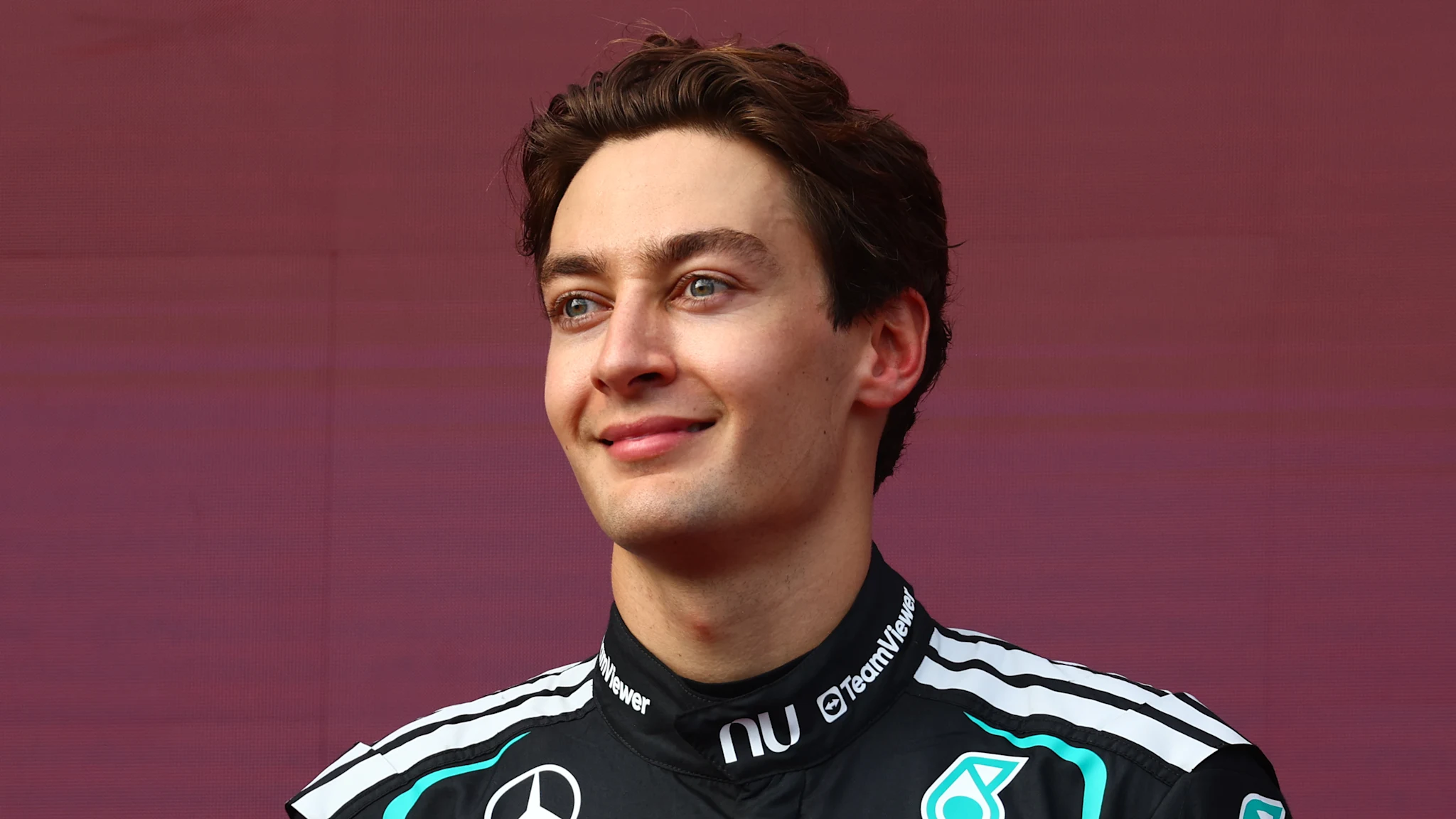
And then there is the driver himself. After the Bearman crash at Suzuka and the GPDA backlash that followed, Verstappen openly admitted he could walk away from Formula 1 amid his frustration with the regulations and Red Bull's struggles. His father Jos worried his son could lose motivation. Toto Wolff publicly said he hoped Verstappen would not leave. Speculation about a 2027 sabbatical flared in early April, Ralf Schumacher told him to stop "moaning," and by April 16 Jos was rubbishing claims that a Mercedes switch was already agreed. Through it all, Russell insisted he expects to remain at Mercedes beyond 2026. The market is a game of musical chairs, and in April, the music started playing early.
The Sport Keeps Spinning
A marathon, a documentary, a debut, and a calendar reshuffle: not bad for five weeks without a race. This is the thing people outside the sport sometimes miss. Formula 1 is not just 24 Sundays a year. It is the people, the families, the comebacks, the kids with famous surnames and heavy expectations, and the circuits rising out of exhibition centers in Madrid. The cars come back this weekend in Miami, and the championship fight resumes with everything to play for. The stories, as always, never left.
FAQ
What time did Sebastian Vettel run in the London Marathon?
Vettel completed the 2026 London Marathon in 2 hours, 59 minutes, and 8 seconds, beating his sub-three-hour goal by 52 seconds. He ran with F1 presenter Tom Clarkson to raise money for the Grand Prix Trust and the Brain and Spine Foundation.
What is the Gina-Maria Schumacher documentary?
"Horsepower: The World of Gina Schumacher" is a ZDF documentary following Michael Schumacher's daughter's career as an elite Western rider. In it, she speaks candidly about leaning on her horses to cope after her father's 2013 skiing accident. It streamed from April 17, 2026, with a TV broadcast set for May 17.
Who is Ella Hakkinen?
Ella Hakkinen is the 15-year-old daughter of two-time Formula 1 world champion Mika Hakkinen. She is making her single-seater debut in the 2026 Formula 4 Central European Zone Championship with Jenzer Motorsport and is the youngest member of the McLaren Driver Development Programme.
What are the 2027 calendar changes?
The Turkish Grand Prix returns from 2027 at Istanbul Park, Melbourne looks set to lose the season-opener slot to Bahrain, and Madrid's new Madring circuit, debuting in September 2026, is already 97 percent sold out despite Europe's most expensive tickets.
A Note on Sources
Marathon results, documentary details, driver quotes, and calendar developments in this roundup were verified against official Formula1.com reporting and cross-checked with coverage from BBC Sport, Reuters, Grandprix.com, Crash.net, RacingNews365, Formula Scout, and ZDF.