
By Paulina Phan, Senior Editorial Contributor | April 15, 2026
Silly season is supposed to start in the summer. That is the deal Formula 1 has always made with its fans: race hard through the spring, then spend August gossiping about who is going where while everyone pretends to be on a yacht. Nobody told 2026. With no racing in April, a driver revolt raging over the new regulations, and the sport's biggest star openly musing about walking away, the driver market has kicked off four months early, and it kicked off with a bombshell. GianPiero Lambiase, the voice in Max Verstappen's ear for his entire championship-winning prime, is leaving Red Bull for McLaren. If that sentence did not make you gasp, you have not been paying attention to how Formula 1 actually works. Drivers get the statues. But the people on the pit wall, the ones who talk a champion through the chaos lap after lap, are the relationships that make dynasties. And one of the great ones just ended.
The Breakup Nobody Saw Coming
Let us be precise about what happened, because the details matter. On April 9, Red Bull and McLaren confirmed that GianPiero Lambiase, Verstappen's long-time race engineer, will leave Red Bull no later than 2028 to become McLaren's Chief Racing Officer. Not a lateral move. Not a consultant role. Chief Racing Officer, at the team that has spent the season chasing Mercedes and cursing its own electrical gremlins. Helmut Marko, never one for understatement, called it a "significant loss." Verstappen, to his credit, gave Lambiase his blessing.
Now, if you are a casual fan, you might be wondering why the departure of an engineer, even a senior one, qualifies as silly-season dynamite. Here is the thing about race engineers that the television coverage never quite captures. The race engineer is the driver's person. Through every practice session, every qualifying lap, every chaotic safety-car restart, there is one voice in the driver's ear, and over a decade together, that voice becomes something closer to a co-pilot, a therapist, and a translator all at once. Lambiase was the calm in Verstappen's storm. When Max was furious on the radio, and Max is often furious on the radio, it was Lambiase who talked him down, who filtered the rage into information, who told the four-time champion what he needed to hear rather than what he wanted to hear. Their radio exchanges are the stuff of legend, the dry British wit meeting the Dutch fury, and they worked because of a trust built over years of winning together.
Losing that is not like losing a strategist or an aerodynamicist. It is like losing a marriage. And in the middle of a season where Verstappen is already frustrated with the regulations, already struggling with Red Bull's new power unit project, and already admitting he could walk away from the sport, the timing could not be more loaded. Is Lambiase leaving because he sees the writing on the wall at Red Bull? Is McLaren's offer simply too good, a chief officer title and a new challenge, at the perfect moment? Or, and this is the question the whole paddock is whispering, does Lambiase know something about Verstappen's own plans that the rest of us do not?
The Blessing and What It Signals
The detail that keeps nagging at me is the blessing. Verstappen gave Lambiase his blessing, publicly, graciously, without a hint of the fury that usually accompanies his radio messages. On the surface, that is just class. Champions do not trash departing colleagues. But in the coded language of Formula 1, a blessing is also a signal, and signals have audiences.
To Lambiase, the blessing says: no hard feelings, go be brilliant. To McLaren, it says: you are getting the real thing, with my compliments. And to Red Bull, well. A driver who is fully committed to his team's future does not usually wave goodbye to his race engineer with quite so much grace. He fights to keep him, or at least he is seen to fight. Verstappen's public serenity about losing the most important professional relationship of his career reads, to this observer, like a man who has already made his peace with change. Maybe that change is a sabbatical. Maybe it is a new team. Or maybe, and this is the least dramatic reading, it is simply maturity: a twenty-eight-year-old champion secure enough to let a colleague chase a promotion. All three readings are plausible. Only one of them is boring, and this is Formula 1, so you can guess which one the paddock has discarded.
Sabbatical Season
Because here is the other shoe, and it dropped weeks ago. At the start of the month, fresh speculation emerged that Verstappen could take a sabbatical in 2027, stepping away from the sport entirely rather than enduring another season of regulations he dislikes in a car that is not winning. Let that sink in. The most talented driver of his generation, twenty-eight years old, in his absolute prime, potentially pressing pause on his career because he does not like the rules. In any other sport, this would be unthinkable. In Formula 1 in 2026, it is Tuesday.
The reaction was immediate and, in at least one case, deeply unsympathetic. Ralf Schumacher, never shy about an opinion, told Verstappen to stop "moaning" about the regulations. Moaning. That is a choice of words with real sting in it, the kind of thing a former driver says when he believes the current generation has it soft. And look, there is a version of this argument that lands. Verstappen won four championships in cars that suited him perfectly. Now the rules have changed, the car is not the best, and suddenly the sport is broken? It is not hard to see why that reads as sour grapes to some.
But there is another version, and it is the one Jos Verstappen keeps pushing. The elder Verstappen fears his son could lose motivation, and he has spent the last two weeks rubbishing claims that a Mercedes switch is already agreed. That denial matters, because it tells you what the rumor mill has been churning: not just that Verstappen might leave Red Bull, but that he might already have a destination. Mercedes. The team currently dominating the new era. The team whose principal publicly said he hopes Verstappen does not leave the sport, while presumably keeping a seat warm just in case.
Think about the psychology of a sabbatical threat for a moment. It is the ultimate leverage. A driver of Verstappen's caliber does not need to name a team. He just needs to let it be known that he is unhappy, and suddenly every contract negotiation in the paddock shifts. Red Bull has to ask itself what it will do to keep him. Mercedes has to ask itself what it would pay to get him. And the FIA, staring at the April 20 stakeholder vote on the regulations, has to reckon with the possibility that its rules are so unpopular they are driving the sport's biggest star toward the exit. Whether Verstappen means it or not almost does not matter. The threat is the story.
The Mercedes Seat Puzzle
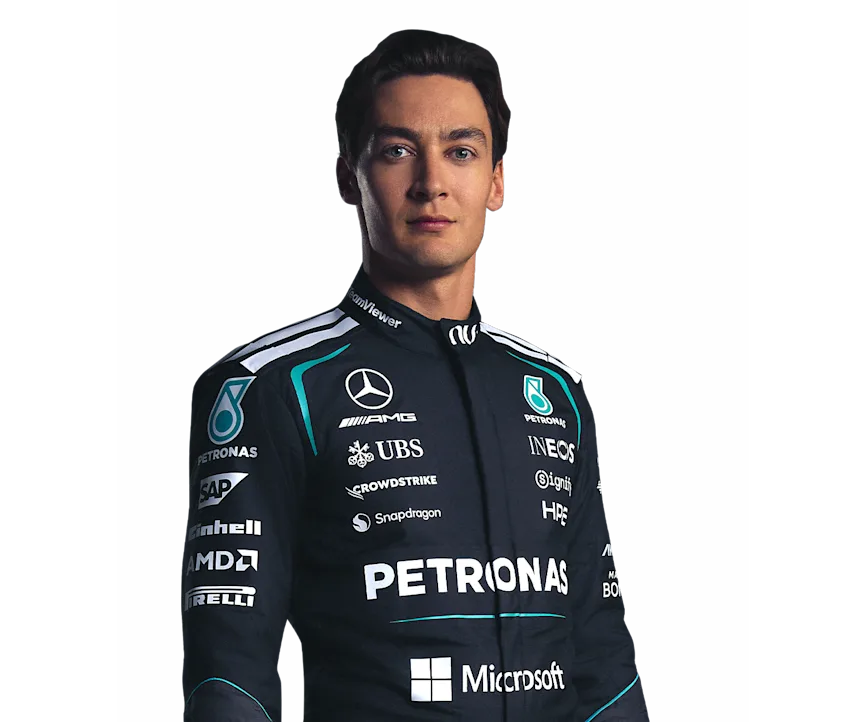
Which brings us to the most awkward man in the paddock right now: George Russell. Russell has done everything right in 2026. He won in China, he has been Antonelli's closest challenger, and he sits at the heart of the team dominating the new regulations. His reward for all of this is to spend every press conference answering questions about whether Max Verstappen is going to take his seat.
To his credit, Russell is not playing along. In comments reported ahead of next Monday's stakeholder vote, he insisted he expects to remain at Mercedes beyond 2026 despite the Verstappen speculation. And why would he not? He is driving for the best team, performing at a high level, and partnered with a nineteen-year-old championship leader who represents the team's future. From Russell's perspective, the Verstappen rumors are noise. From everyone else's perspective, they are the only story.
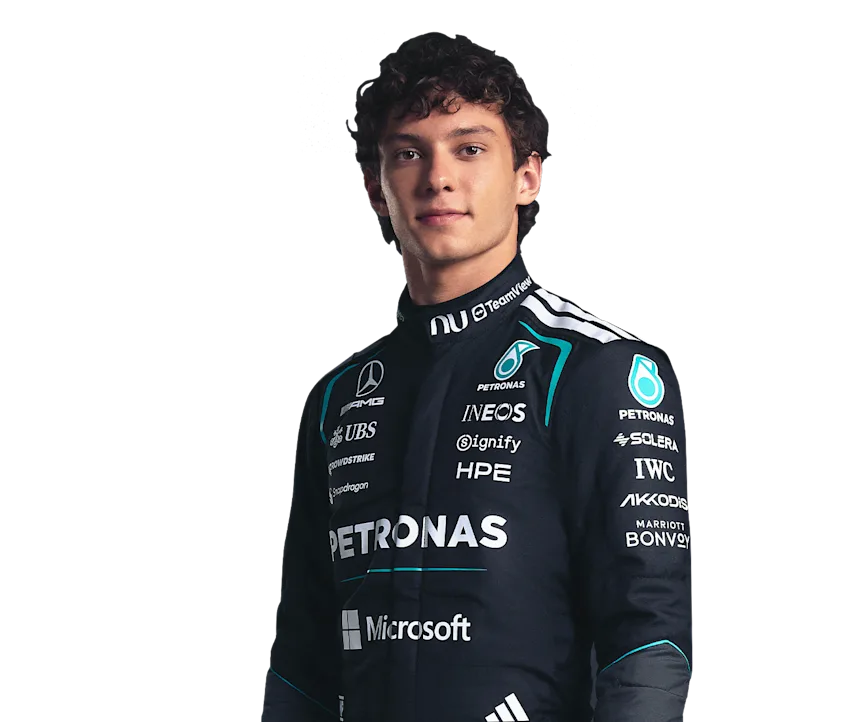
Here is the thing about the Mercedes seat puzzle that makes it so delicious. There are only so many chairs at the top table, and right now every scenario involves someone important being disappointed. If Verstappen stays at Red Bull, the speculation dies and Russell breathes easy. If Verstappen takes a sabbatical, the market freezes, because nobody makes a franchise-altering move while the biggest free agent in history is sitting on the sidelines. And if Verstappen goes to Mercedes, then either Russell or Antonelli is out, and good luck to Toto Wolff explaining to a teenage championship leader that he is being replaced. Every option is dramatic. Every option reshapes the grid. No wonder silly season could not wait for August.
There is also a quieter subplot worth your attention, which is what McLaren is actually building. Luring Lambiase as Chief Racing Officer is not the move of a team content with its current trajectory. McLaren has the drivers, with Norris and Piastri forming one of the strongest pairings on the grid, but the 2026 season has exposed operational and technical fragility, from the electrical gremlins that ruined Piastri's early races to the qualifying gap to Mercedes. Hiring the man who engineered four Verstappen championships is a statement of intent: McLaren is not just trying to be best of the rest. It is building the infrastructure of a championship team, one poached genius at a time. If you are Lando Norris, watching your team sign your rival's race engineer to run the racing operation, you have to feel pretty good about where this is going.
Why Is This Happening in April?
It is worth stepping back and asking why the driver market, normally a summer indulgence, has erupted in the middle of a racelles month. The answer is that 2026 has compressed about three seasons of drama into three races, and the market is simply responding to pressure.
First, the regulations. The driver revolt over the new rules is not just a sporting story. It is a market story. Drivers make career decisions based on where they think they can win, and right now, nobody is sure what winning even requires. The April 20 stakeholder vote could change the competitive order overnight. If you are a driver out of contract, or a driver with an escape clause, you are watching that vote like it is a championship decider, because for your career, it is.
Second, Red Bull's vulnerability. The team's first season with its own power unit project has been humbling. Verstappen went fifteen rounds without a win to open the season, an almost inconceivable drought for a driver of his stature, and while the project is clearly improving, the aura of invincibility is gone. Rival teams can smell it. When Helmut Marko calls losing your race engineer a "significant loss," he is also telling the world that Red Bull is a team in transition, and teams in transition get raided. That is how this sport works. The vultures do not circle the healthy.
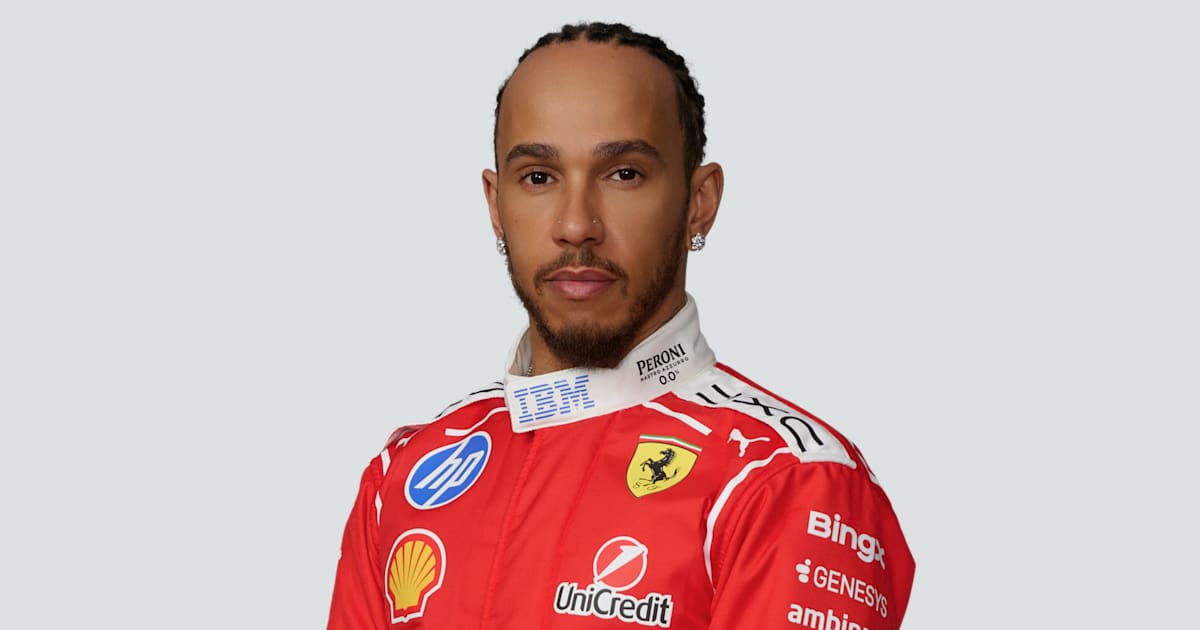
Third, the new kids. Audi's arrival as a works outfit and Cadillac's debut as the eleventh team have added seats, ambition, and money to the market. New teams need experienced hands, and there is nothing a new operation likes more than a big name to build around. Every driver weighing a sabbatical or a switch is doing the math on what Audi and Cadillac might offer, not just in salary but in the chance to be the face of something new. Silly season loves a blank canvas.
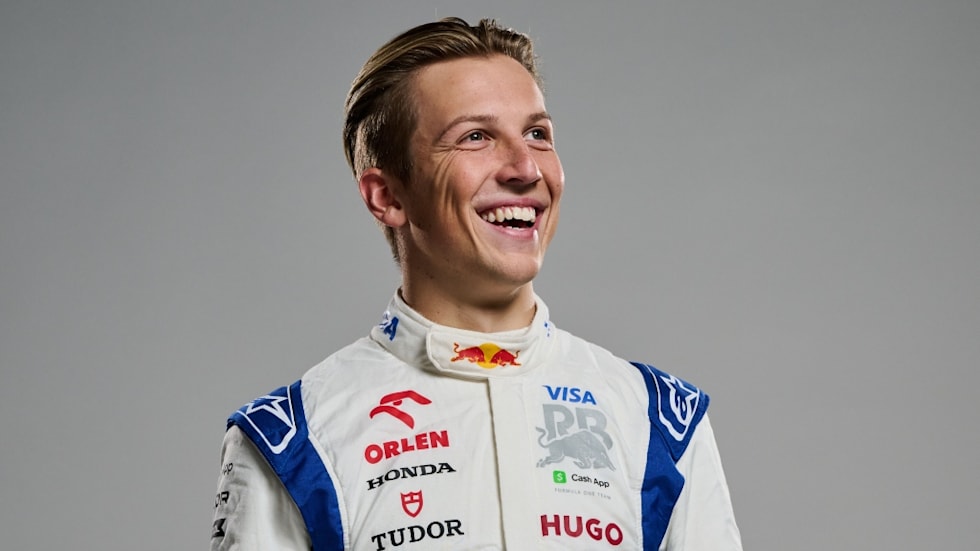
And fourth, the calendar quirk. With no racing in April after the Bahrain and Saudi Arabia cancellations, the paddock has had five weeks with nothing to do but talk. Nature abhors a vacuum, and Formula 1 abhors silence. Into that silence has poured every rumor, every briefing, every carefully placed story. The April break did not pause the season. It just moved it from the track to the press.
The Dominoes to Watch
So where does this go? Let me lay out the dominoes as I see them, with the caveat that this is educated gossip, the kind you share over coffee with the understanding that Formula 1 has humbled better predictors than me.
Domino one is the April 20 vote. If the stakeholders deliver meaningful changes to the regulations, and the changes actually improve the racing, much of the Verstappen unrest could evaporate. Drivers are pragmatic creatures. They complain about rules they are losing under and fall silent about rules they are winning under. Fix the racing, or at least fix the perception of the racing, and the sabbatical talk starts to look like a bad month rather than a career plan.
Domino two is Lambiase himself. His move to McLaren is confirmed, but the timeline, no later than 2028, leaves room for intrigue. Gardening leave, handover periods, the fine print of when he can actually start shaping McLaren's racing operation: all of it will be pored over. And every time Verstappen has a bad weekend between now and then, someone will ask whether the engineer saw it coming.
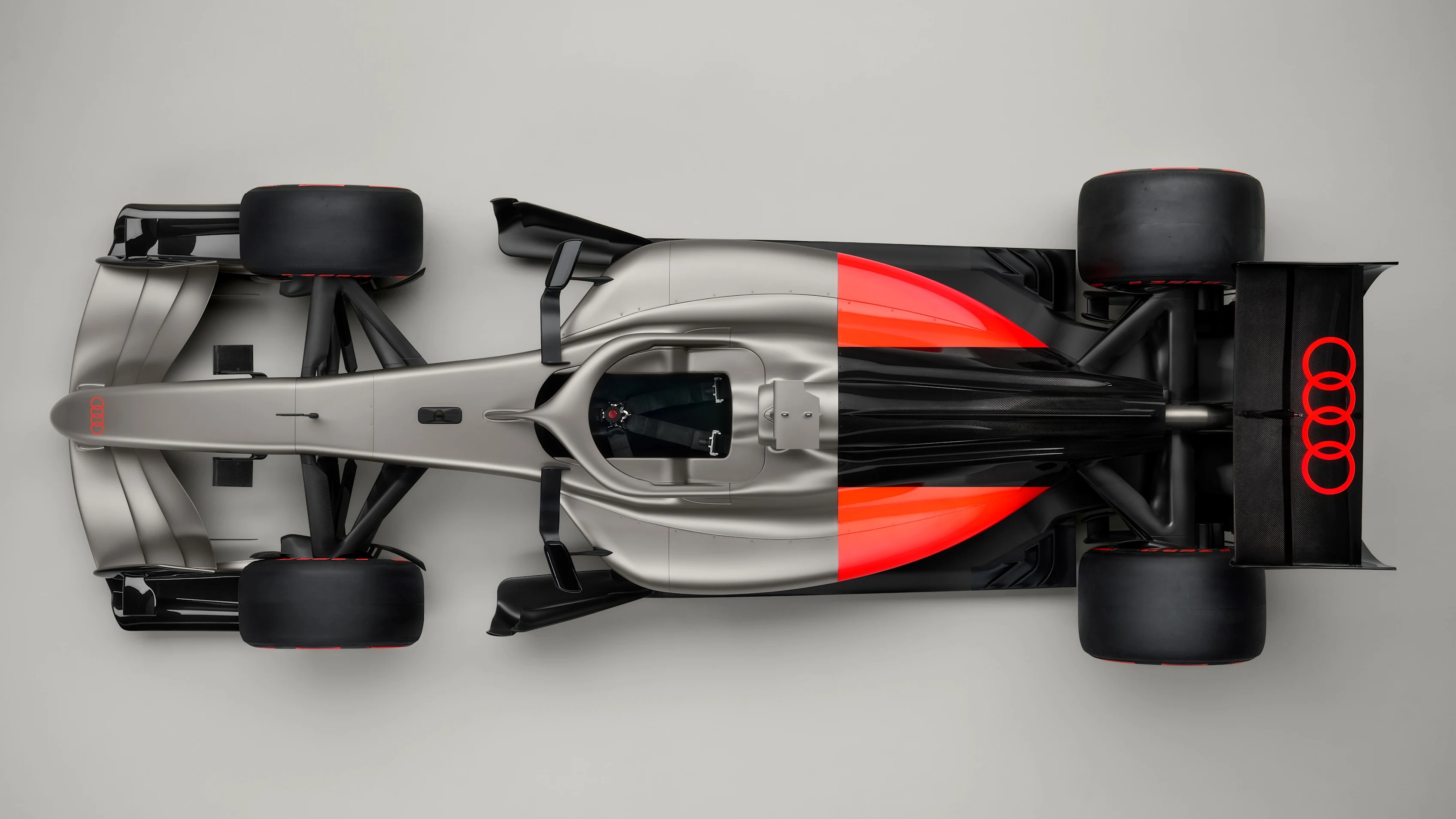
Domino three is Russell's contract. His insistence that he will stay at Mercedes is the public position, and it may well be the private reality. But contracts in Formula 1 are written in pencil until they are written in stone, and the Verstappen shadow will hang over every negotiation until Max's own future is resolved. Russell's best play is to keep performing, keep scoring, and make himself undroppable. So far, so good.
Domino four, the one nobody wants to say out loud, is whether Verstappen's frustration is really about the regulations at all. Here is a thought I cannot shake: what if this is about Red Bull? What if the greatest driver of his generation has looked at the new power unit project, looked at Mercedes disappearing into the distance, and concluded that his championship window at his current team is closing? The regulations make a convenient villain, because criticizing the rules is safer than criticizing your employer. But drivers do not threaten sabbaticals over boost maps. They threaten sabbaticals when they have decided they cannot win where they are. That is the scenario that should keep Christian Horner up at night.
And the final domino is us, the audience. Silly season is entertainment, and 2026 is serving it early and often. Every rumor, every denial, every pointed quote is part of a negotiation conducted in public, and we are all participants whether we like it or not. The drivers know we are watching. The teams know we are watching. Jos Verstappen rubbishing a Mercedes rumor is not just a denial. It is a message, sent through us, to whoever needs to hear it. Welcome to the theater. The summer break is months away, and the show has already started.
FAQ
Who is GianPiero Lambiase and why does his departure matter?
GianPiero Lambiase has been Max Verstappen's race engineer throughout the Dutchman's championship-winning prime, the calm voice in his ear through every session. On April 9, Red Bull and McLaren confirmed he will leave Red Bull no later than 2028 to become McLaren's Chief Racing Officer. Helmut Marko called it a "significant loss," while Verstappen gave Lambiase his blessing.
Is Max Verstappen really considering a 2027 sabbatical?
Fresh speculation emerged in early April that Verstappen could step away from Formula 1 in 2027 amid frustration with the 2026 regulations and Red Bull's struggles. Ralf Schumacher publicly told him to stop "moaning" about the rules, while Jos Verstappen has said he fears his son could lose motivation and rubbished claims that a Mercedes switch is already agreed. Nothing is decided.
Will Verstappen replace George Russell at Mercedes?
That is the rumor, but Russell is not entertaining it. In comments reported ahead of the April 20 stakeholder vote, Russell insisted he expects to remain at Mercedes beyond 2026 despite the Verstappen speculation. With Antonelli leading the championship as his teammate, displacing either Mercedes driver would be a dramatic call.
Why is silly season starting in April instead of August?
A perfect storm: a five-week April break with no racing, the driver revolt over the 2026 regulations, Red Bull's vulnerability in its first power-unit season, and new manufacturers in Audi and Cadillac adding seats and money to the market. With the April 20 vote potentially reshaping the competitive order, nobody wants to wait until summer to start maneuvering.
A Note on Sources
The Lambiase move, Marko's and Verstappen's comments, the sabbatical speculation, Ralf Schumacher's remarks, Jos Verstappen's denials, and Russell's contract comments were verified against the official Formula1.com reports and team announcements, and cross-checked with coverage from Reuters, BBC Sport, Sky Sports, Crash.net, PlanetF1, and The Race. Interpretations of what the moves mean for the 2027 grid are the author's editorial analysis.