
By Paulina Phan, Senior Editorial Contributor | May 6, 2026
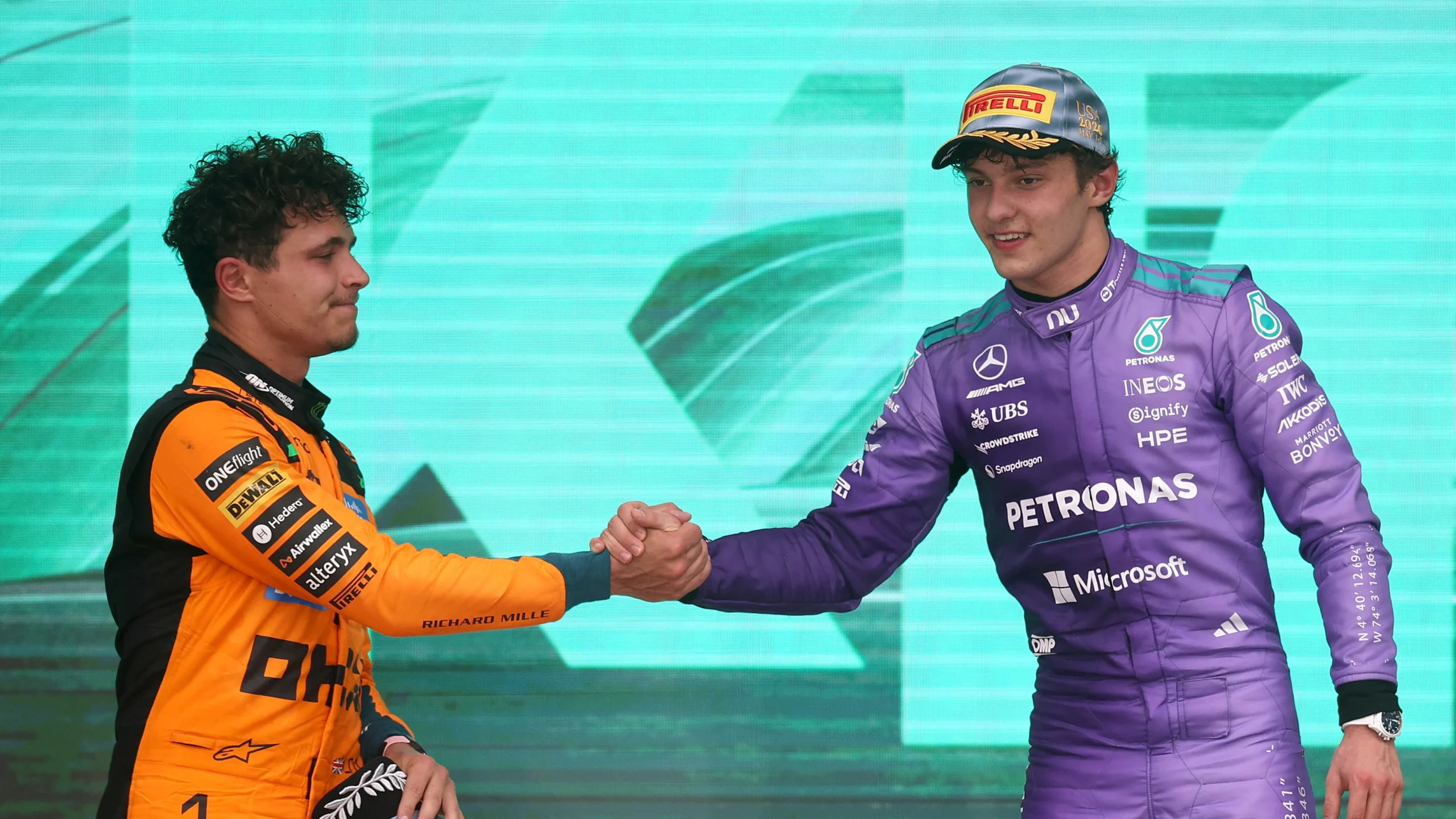
There are race weekends, and then there is Miami. On Sunday, the biggest moment of the afternoon might not have happened on the track at all. It happened in the Mercedes garage, where Lionel Messi folded his famous frame into the cockpit of Kimi Antonelli's race-winning car while cameras rolled and the internet collectively lost its mind. The footage spread across social media within minutes: Messi, grinning, wedged into a Formula 1 cockpit, while the newly crowned Miami Grand Prix winner looked on. If you needed proof that Formula 1's American moment is not a marketing slogan but a cultural fact, there it was, in a racing seat built for a teenager.
The Short Version
You are busy, so here is everything that mattered, fast.
The headline act
Lionel Messi attended Sunday's Miami Grand Prix with his family, toured the Mercedes garage, met George Russell, Kimi Antonelli, and Franco Colapinto, and climbed into Antonelli's cockpit. The footage spread rapidly across social media and became the defining off-track image of the weekend.
The guest list
The paddock and the grid were stacked: Jimmy Fallon, Alix Earle (spotted at the Cadillac garage), DJ Khaled, Rafael Nadal (at the Aston Martin garage), Winnie Harlow, Ciara, Hailey Bieber, and Olympic gymnast Suni Lee were all in attendance across the weekend.
The brand plays
Fashion and luxury houses treated Miami like a runway with engines. Tommy Hilfiger celebrated Cadillac's first home race alongside their CF1 Miami Fanwear collection, TAG Heuer hosted a pre-race cocktail event, Boss launched a Summer Resort 2026 pop-up at Soho House, and designer Silvia Tcherassi hosted a race-week soiree attended by Kelly Piquet.
Messi Mania
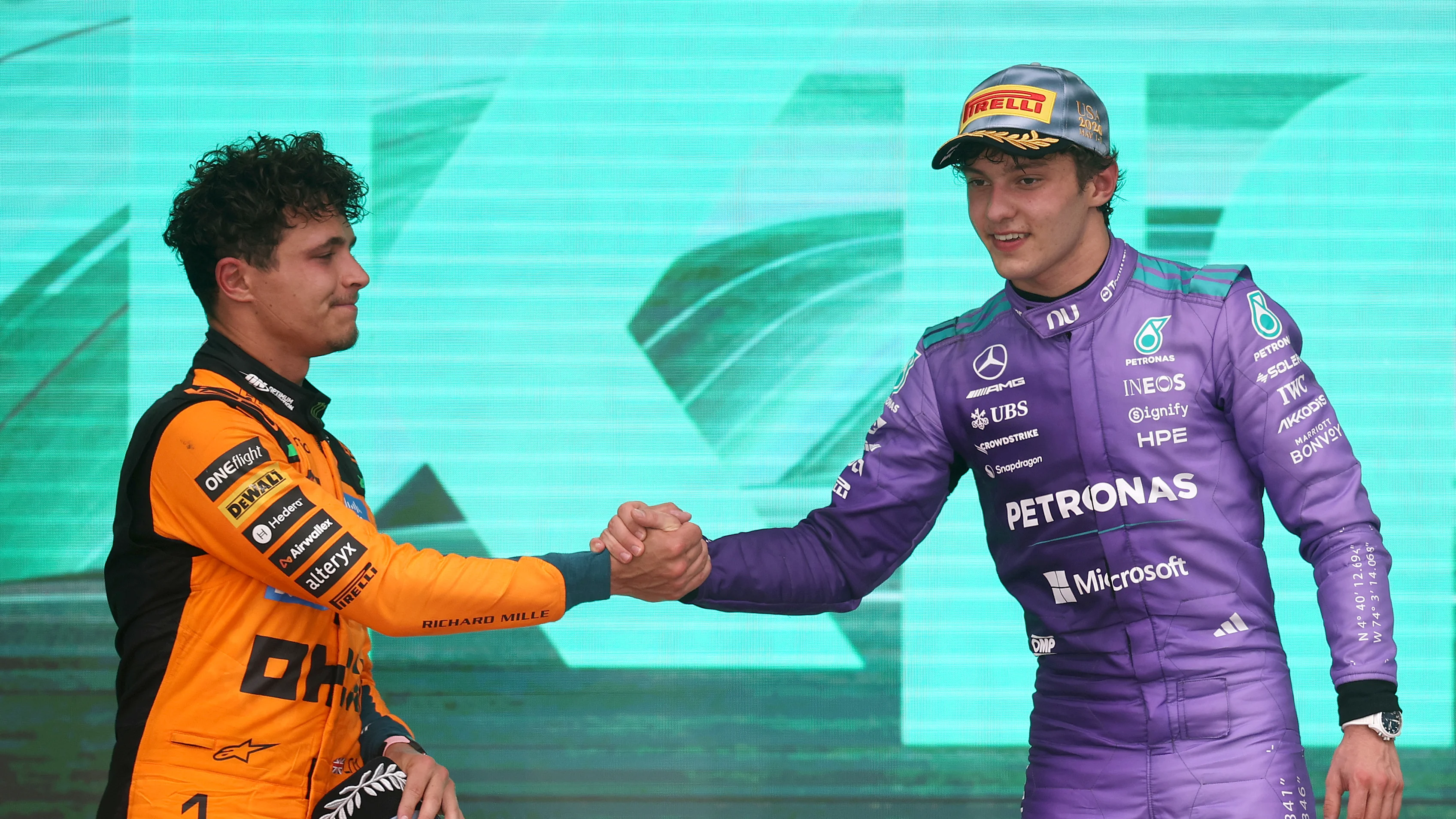
Let us start with the obvious, because everyone else already has. Lionel Messi does not do casual appearances. When the eight-time Ballon d'Or winner shows up somewhere with his family, it is an event, and his Sunday at the Miami International Autodrome was no exception. Messi toured the Mercedes garage, spent time with George Russell and race winner Kimi Antonelli, and caught up with fellow Argentine Franco Colapinto, the Alpine driver, in a meeting of the country's two biggest sporting exports that the paddock photographers quite rightly treated like a summit.
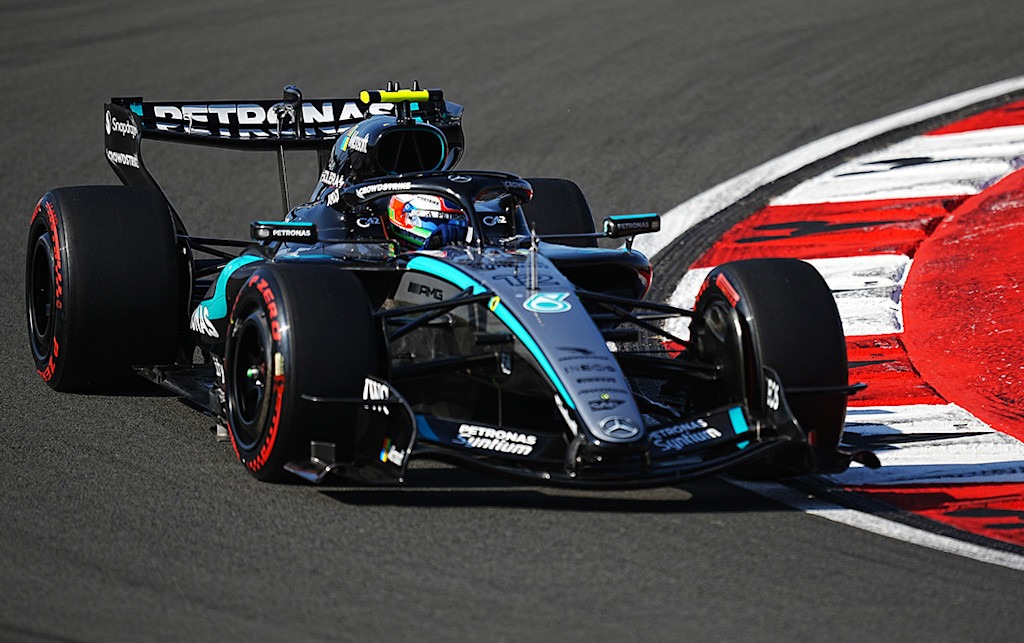
And then came the cockpit. Someone, and history will surely record whose idea it was, suggested that Messi try Antonelli's seat for size. The resulting footage, Messi lowering himself into the tight carbon fiber cockpit of a Formula 1 car, laughing as he settled in, is the kind of content that does not need a caption. It was everywhere within the hour: fan accounts, sports pages, group chats, your cousin's story. A footballer trying a racing seat is not new, but there was something about this one, the world's most famous athlete in the car of the sport's brightest teenage star, on the afternoon the kid won his third straight Grand Prix, that felt like a genuine cultural crossover rather than a photo opportunity.
The Messi-Colapinto meeting deserves its own moment, because it tells you something about where Formula 1 sits in 2026. Colapinto is 22, Argentine, and having the kind of quietly excellent season that gets team principals talking. For him to welcome Messi, a national hero, into the paddock, and for the footage of the two of them together to travel as fast as it did, is a reminder that F1's driver roster now produces the kind of cross-sport moments that used to belong exclusively to football and basketball. The paddock has not always known what to do with that kind of attention. Miami suggests it is learning.
There is a business story underneath the fanfare, too. Messi lives in Miami and plays for Inter Miami, so his presence was not a fly-in celebrity booking; it was a local hero showing up to the biggest sporting event in his adopted city. That is exactly the kind of organic star power that money cannot buy. The sport did not have to convince Messi to care about the Miami Grand Prix. He was already there.
The Guest List
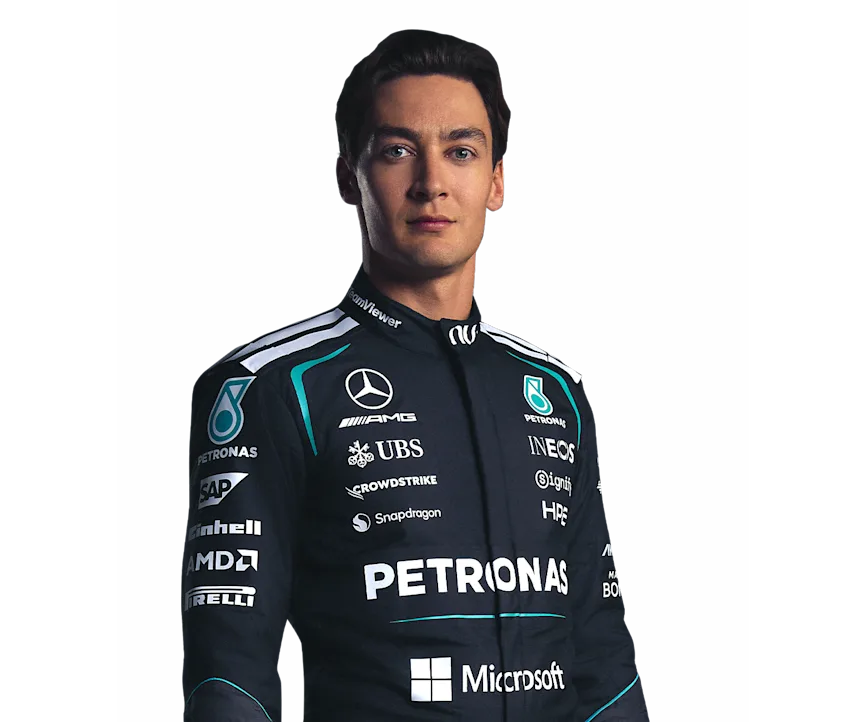
Messi may have been the headline, but he was far from the only famous face in the paddock. The Miami Grand Prix has become the race where celebrity attendance is not a sidebar but a feature, and this year's edition did not disappoint.
Jimmy Fallon was on the grid walk, which on this occasion included biting Martin Brundle's microphone during Sky Sports' famously chaotic pre-race stroll. The grid walk has become appointment television precisely because of unscripted moments like that one, and when late-night hosts treat the Grand Prix like a variety show taping, the sport has crossed over.
Alix Earle was spotted at the Cadillac garage, which was fitting, because Cadillac was having a weekend worth being seen at. The American team was contesting its first home race, with Sergio Perez and Valtteri Bottas in the cars, and the garage had the buzz of a debutante ball. Earle, whose influence with the exact demographic Formula 1 is desperate to keep, chose the right garage to be photographed in.
DJ Khaled, Miami royalty, was in attendance, because of course he was. You cannot hold a major sporting event in Miami without DJ Khaled materializing somewhere near the VIP areas, and his presence has become as much a part of the weekend's texture as the palm trees.
Rafael Nadal visited the Aston Martin garage, continuing the grand tradition of tennis royalty gracing the Formula 1 paddock. Nadal's appearances at Grands Prix always carry a particular weight; here is an athlete who understands better than almost anyone what it means to compete at the absolute limit of a sport, and his interest in the machinery and the people is visibly genuine rather than ceremonial.
The fashion and beauty contingent was out in force. Winnie Harlow, Ciara, and Hailey Bieber were all spotted across the weekend, each of them the kind of guest whose attendance gets covered by outlets that do not normally write about racing. That is the whole point. When the style pages start filing from the paddock, the audience for the sport gets bigger in ways that no marketing budget can engineer. Olympic gymnast Suni Lee rounded out the guest list, another crossover athlete whose presence signals how thoroughly Formula 1 has embedded itself in the broader sports culture.
The Brands Take Over
If the celebrities were the guests, the fashion and luxury houses were the hosts. The Miami Grand Prix has become the single most important brand activation weekend on the Formula 1 calendar, and this year the paddock's off-track calendar was as crowded as the on-track one.
Tommy Hilfiger went big. The American brand celebrated Cadillac's first home Grand Prix, a natural partnership given the shared stars-and-stripes energy, and used the weekend to push their CF1 Miami Fanwear collection. The logic is impeccable: Cadillac is the new American team, Miami is the American race, and Hilfiger is the American brand. Tying the three together in one weekend of content was the kind of marketing synergy that gets presented in boardrooms with a straight face because it actually works.
TAG Heuer, Formula 1's longtime timing partner, hosted a pre-race cocktail event, the kind of polished, watch-on-every-wrist gathering that has become a staple of the luxury brand's race weekend playbook. There is something pleasingly old-school about it: while the rest of the paddock chases viral moments, TAG Heuer throws a cocktail party, and everyone who matters shows up.
Boss took over Soho House for a Summer Resort 2026 pop-up, which might have been the most Miami sentence of the entire weekend. Soho House, the members' club that functions as the unofficial headquarters of the creative class during race week, was the perfect venue: part retail, part party, all content. The pop-up model, temporary, exclusive, aggressively photographable, is tailor-made for a Grand Prix weekend, and Boss executed it exactly the way the playbook demands.
And then there was Silvia Tcherassi, the Colombian designer whose race-week soiree drew Kelly Piquet, among others. Tcherassi's event was the insider's party of the weekend, the one the fashion people actually wanted to attend, and Piquet's presence, she is paddock royalty in her own right, gave it exactly the right kind of credibility. These are the rooms where the sport's fashion future gets negotiated, one soiree at a time.
The Content Machine: Why the Cockpit Clip Broke the Internet
It is worth pausing on the mechanics of the Messi moment, because it explains so much about how Formula 1 works in 2026. The clip itself was nothing fancy: a phone video, a garage, a footballer squeezing into a racing seat while people laughed. There was no press release, no staged interview, no brand logo strategically positioned in frame. And that is precisely why it traveled. In an era when every team employs an army of content creators and every driver has a media-trained smile, the moments that break through are the ones that feel unplanned.
The reach was staggering. Within hours the footage was on every major sports account, every fan page, and a healthy share of accounts that had never posted about racing before. That last category matters most: Formula 1's American growth has been built on accidental ambassadors, people with no prior interest in the sport who encounter it through someone they already follow. The Messi clip was a gateway, and the sport did not pay for a single impression.
The drivers, to their credit, have learned to feed the machine without being consumed by it. Antonelli's own channels leaned into the weekend with the ease of a teenager who has never known a world without front-facing cameras. Russell, long one of the paddock's most polished media performers, played the gracious host. Colapinto, whose meeting with Messi was arguably the most meaningful of the three for Argentine fans, handled it with the low-key warmth that has made him one of the grid's most likable figures. Nobody overdid it. Nobody issued a statement. They just let the moment be a moment, which in 2026 is a genuine skill.
There is a lesson here for the teams and the sport's commercial operation, and it is a slightly uncomfortable one: the most valuable content of the weekend cost nothing to produce and could not have been planned. You cannot storyboard Messi deciding to try a cockpit. You can only create the conditions, an open garage, a relaxed atmosphere, drivers who are comfortable with chaos, and hope the internet does the rest. Miami, better than any other race, creates those conditions. The paddock is looser, the whole weekend has the relaxed confidence of a party the hosts actually want to be at. That is not an accident. It is culture, and culture is the hardest thing in sports to manufacture.
The Style Stakes: Paddock Fashion as a Competitive Sport
And then there is the fashion, which in Miami is not a sideshow but a parallel competition. The paddock arrival has become the sport's unofficial runway, and race week here raises the stakes beyond anything the European season produces. Everyone knows it, especially the brands who dress a meaningful share of the grid.
What makes the Miami edition distinct is the collision of dress codes. The European races have a certain uniform: tailored, understated, expensive in a quiet way. Miami throws that out. The brief is resort wear with an edge, color, print, sunglasses as a personality trait, and the drivers respond accordingly. It is the one weekend where the paddock looks less like a corporate retreat and more like the world's most athletic pool party, and the photographers, who outnumber the technical journalists three to one by Sunday, are there for exactly that.
The women's presence in the paddock has transformed this dynamic. Partners, creators, guests, and designers all treat race week as a legitimate fashion moment, and style outlets that would never cover a Grand Prix on sporting merit now file galleries from Miami as a matter of course. That coverage builds a parallel audience, and the overlap between the two is where the sport's growth lives.
None of this diminishes the competition. If anything, it raises it. When the whole world is watching the paddock, the pressure to perform on track intensifies, and the drivers who thrive in Miami tend to be the ones comfortable with the spotlight in all its forms. Antonelli, winning his third straight race while hosting the most famous athlete on earth in his garage, looked entirely at ease. That poise, as much as the pace, is what marks him as the sport's next era-defining star.
Why Miami Wins the Paddock Popularity Contest
It is worth asking why this works so well here and nowhere else quite the same way. Part of it is geography: the Miami International Autodrome wraps around Hard Rock Stadium, which means the race has the infrastructure of a Super Bowl and the weather of a vacation. Part of it is timing: early May, the season still young, the championship still open, everyone still happy to be there. But mostly it is cultural. Miami is the one Grand Prix where the sport does not have to choose between being a serious competition and being a spectacle. It is both, simultaneously, without apology.
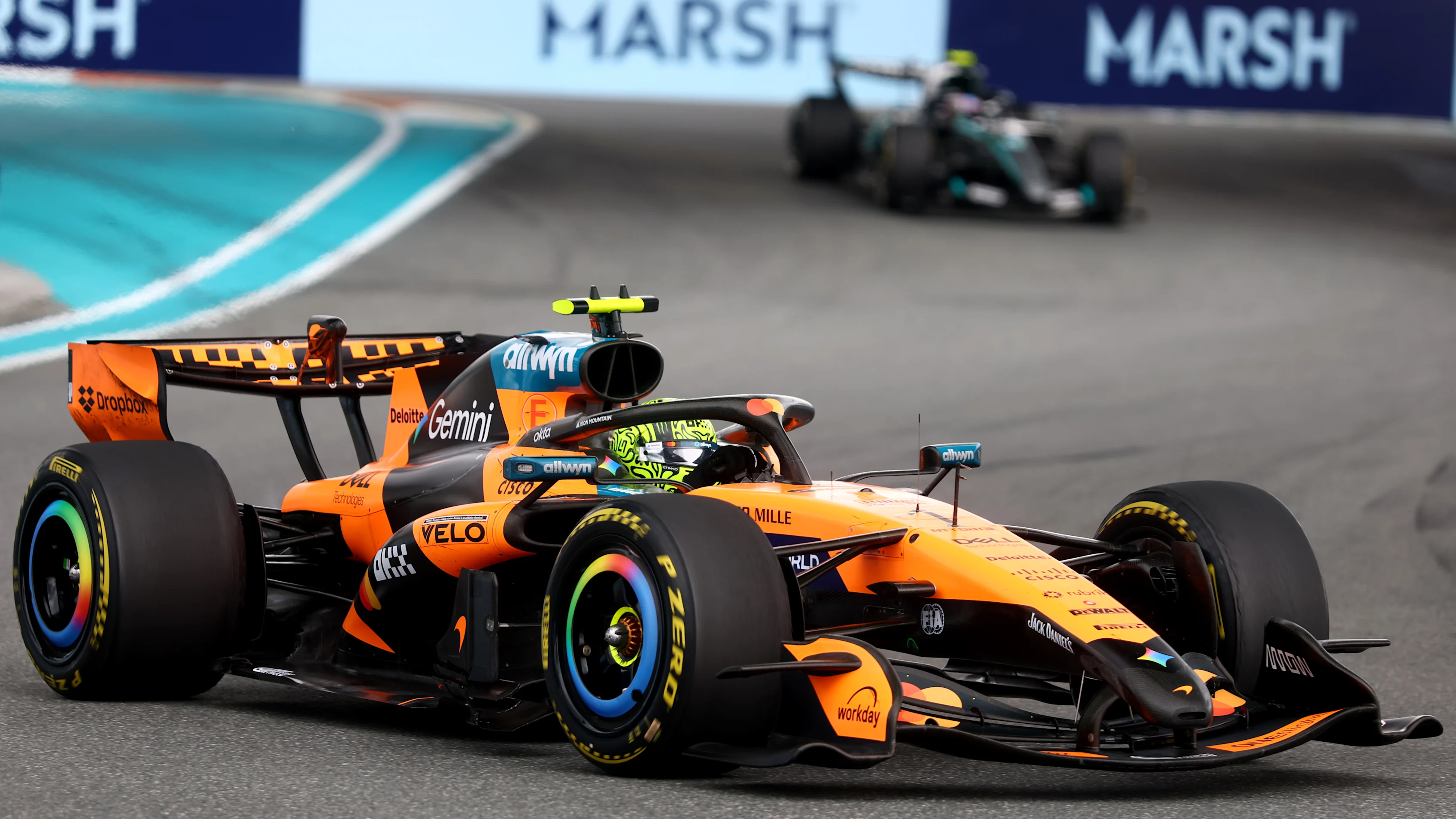
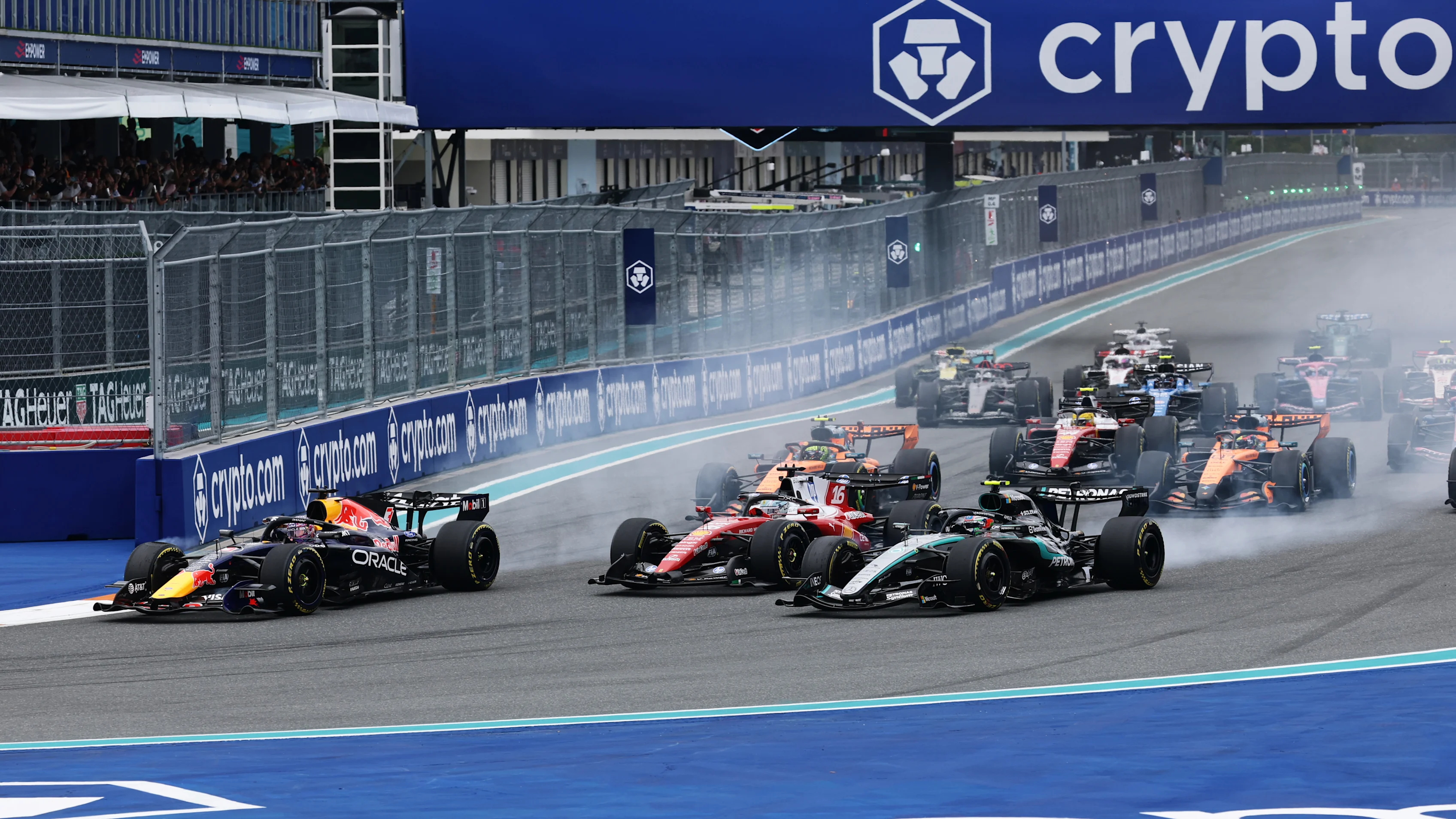
This was the fourth round of the season, the first race after a five-week enforced break, and the grandstands were full of fans starved of racing. The on-track product delivered: a first-lap spin for Verstappen, a flipped Alpine, a strategic duel between Mercedes and McLaren, and a third straight win for the championship leader. But for the casual viewer scrolling on Sunday night, the Messi cockpit video probably did more for the sport than any overtake.
That is not a complaint. It is the business model. Formula 1's American boom has always been about more than television ratings; it is about cultural penetration, about the sport becoming part of the conversation in rooms where racing was never discussed before. When Messi climbs into a cockpit, when Hailey Bieber is photographed in the paddock, when Boss throws a party at Soho House and the style pages cover it, the sport is not selling out. It is buying in, to a bigger audience, a broader culture, and a future where the Grand Prix is as much a social event as a sporting one.
The drivers understand this better than anyone. Watch the post-race content from the weekend and you will see a paddock completely comfortable with the circus: Antonelli laughing through his media duties with a third straight winner's trophy, Norris gracious in defeat, the whole grid leaning into the content machine. There is no tension between the racing and the razzmatazz in Miami. They feed each other. The racing gives the weekend its stakes; the spectacle gives it its scale.
The Fashion Week of Motorsport
Here is the thesis, stated plainly: the Miami Grand Prix is now Formula 1's fashion week. The teams treat it that way, with limited-edition merchandise and driver appearances scheduled like runway shows. The brands do, as this weekend's activation calendar proved. The celebrities do, treating the paddock like a front row. The only people who pretend otherwise are the purists, and even they were posting the Messi video.
Not every race should try to be Miami; what makes Miami work is that it is unapologetically itself. But the sport can learn the right lessons: cultural relevance is not the enemy of sporting credibility, a pop-up at Soho House and a last-lap overtake can coexist, and the kid winning everything can share a cockpit with the greatest footballer alive while everybody wins.
Next year, the guest list will be longer, the activations will be bigger, and the footage will travel faster. That is not a prediction. It is just what happens in Miami.
FAQ
Did Lionel Messi really climb into a Formula 1 cockpit in Miami?
Yes. Messi attended the Miami Grand Prix on Sunday, May 3, 2026, with his family, toured the Mercedes garage, met George Russell, Kimi Antonelli, and Franco Colapinto, and climbed into Antonelli's cockpit. Footage of the moment spread rapidly across social media.
Which celebrities attended the 2026 Miami Grand Prix?
The reported guest list included Lionel Messi (with his family), Jimmy Fallon, Alix Earle (spotted at the Cadillac garage), DJ Khaled, Rafael Nadal (at the Aston Martin garage), Winnie Harlow, Ciara, Hailey Bieber, and Olympic gymnast Suni Lee.
What brand activations took place during Miami race week?
Tommy Hilfiger celebrated Cadillac's first home race and promoted their CF1 Miami Fanwear collection, TAG Heuer hosted a pre-race cocktail event, Boss launched a Summer Resort 2026 pop-up at Soho House, and designer Silvia Tcherassi hosted a race-week soiree attended by Kelly Piquet.
Why is the Miami GP such a big celebrity event?
The Miami Grand Prix wraps a street circuit around Hard Rock Stadium in early May, combining a serious sporting contest with vacation weather and the cultural gravity of Miami itself. As Formula 1's American boom has grown, Miami has become the race where sport, fashion, music, and celebrity mix most freely, making it the paddock's biggest off-track weekend of the year.
A Note on Sources
Celebrity attendance and brand activations in this feature were verified against trackside photo agency captions, official team and brand announcements, and coverage from Sky Sports, Reuters, AP, and the fashion press. One widely circulated fashion detail from the weekend could not be verified and has been omitted.